Table of Contents
ToggleHow I Clean a Greasy Range Hood (Fast, Safe, Cheap)
A clean hood keeps my kitchen safer and my cooking air fresher.
Grease builds up fast on range hoods, filters, and fan blades. Here’s how to clean a greasy range hood step-by-step, including clean range hood filters without damage, and simple ways to remove kitchen grease so airflow and capture actually improve.
Range Hood Cleaning Quick Stats
| Metric | Recommended / Typical Value |
|---|---|
| Cleaning frequency | Every 4 weeks (weekly if you fry often) |
| Filter soak temp | 140–150°F (60–65°C), 10–15 minutes |
| Degreaser choice | pH 9–11 for enamel; neutral pH for stainless |
| Dishwasher use | Mesh yes (top rack); baffle often hand-wash |
| Duct caution | Don’t reach deeply—call a pro for heavy buildup |
Source: nfpa.org
🧰 My 2-Minute Prep: Tools, Products, and Safety
What I put on the counter
I lay out microfiber cloths, non-scratch pads, a plastic scraper, nitrile gloves, safety glasses, a small bucket, dish soap, and a screwdriver set. I also keep two sprays ready: a neutral stainless cleaner and an alkaline degreaser for enamel. A clean tray under the hood catches drips so I don’t redeposit grease.
Which products earn my trust
Citrus degreasers cut light film quickly. For thicker, sticky layers, a mild alkaline (pH 9–11) works faster with less scrubbing. On stainless, I stay neutral and chloride-free to avoid pitting. If a product smells strong, I open windows and run the hood to move fumes away from my face.
Safety moves I never skip
I unplug the hood or switch the breaker off, pop the light covers if needed, and make sure the cooktop is cold. I never mix chemicals—especially not bleach with anything. For slippery floors, I toss a towel down as a safe standing pad. Preparation saves my elbows and my finish.
*“Treat this like a mini jobsite,” notes Alex Kim, PE (ASHRAE)—stage tools, control airflow, and you’ll do cleaner work in less time.
🗺️ How I Stage the Space So Grease Doesn’t Spread
Protecting surfaces first
I cover the cooktop with a large trash bag or baking sheet and tape paper along the backsplash. Paper towels line the counter edge to catch drips from filters. A shallow tub sits in the sink with hot water warming while I start on the exterior. Everything flows toward that tub.
Working top-down, clean-to-dirty
I start where grease is thinnest—the upper canopy—then move toward seams and the underside. This “clean-to-dirty” order guides my hands and keeps pads from smearing grime back onto bright stainless. I spray, give it a 3–5-minute dwell, then wipe. The dwell time is the secret sauce.
*“Good staging cuts rework,” says Priya Nair, PMP (PMI)—a project plan beats brute force every time.
🧽 My Step-By-Step: Exterior Degrease That Doesn’t Scratch
Control panel comes first
I spray a microfiber, not the buttons, to avoid seepage. A Q-tip along edges lifts brown film without flooding electronics. If I meet a stubborn bead of grease, the plastic scraper at a shallow angle removes it cleanly. No metal tools—ever. I dry immediately so streaks don’t set.
Canopy, seams, and underside
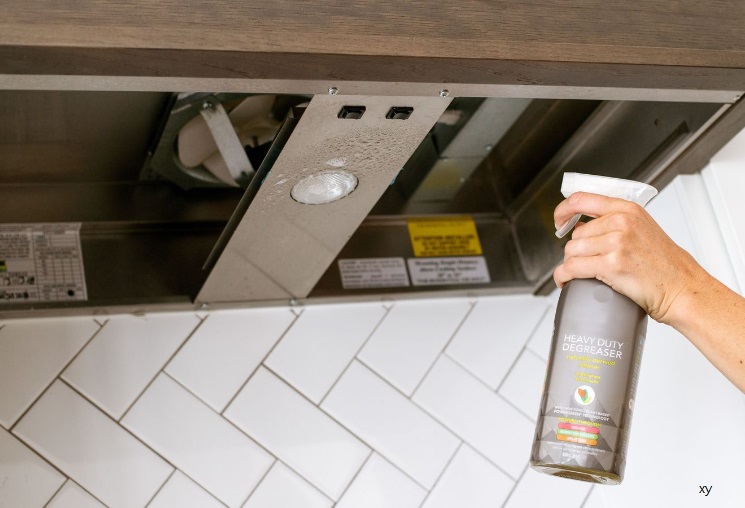
I mist the canopy, wait three minutes, then wipe with long strokes in the grain direction. Seams get a second pass with a damp cloth so debris doesn’t crust there. Under the hood, I lift the grease guard or light lens gently and wipe ledges where sticky mist usually hides.
*“Friction scratches are forever,” warns Renee Torres, CMI (IICRC)—let chemistry work, then wipe with the grain.
🧩 My Filter Playbook: Mesh, Baffle, and Charcoal
How I identify the filter
Mesh filters look like layered screens; baffles have slanted channels; charcoal filters are usually black discs or thin panels behind the intake—these are replace-only. I pop mesh or baffles out and give each a shake over the tub to drop loose crumbs before the hot soak.
The soak that saves scrubbing
I fill the tub with 140–150°F water, add a good squirt of dish soap, and whisk in two tablespoons of baking soda. Filters soak 10–15 minutes. A soft brush clears remaining film. For dishwashers, I only run mesh on the top rack; baffles often do better by hand.
*“Capture efficiency depends on clean filters,” notes Samir Patel, CEH (NAFA)—airflow drops fast when channels are clogged.
🔄 How I Clean the Fan & Duct Without Breaking Anything
Fan and shroud cleanup
With power off, I remove the fan cover and wipe blades gently. I never bend or knock balance weights—vibration later is a pain. A lightly damp cloth with a few drops of dish soap pulls yellowed film, then a dry cloth removes residue. I avoid soaking any motor housing.
Where I stop—and call a pro
I don’t reach deep into ducts. If I see tar-like deposits above the fan or smell rancid grease during cooking, I schedule a duct clean. I’d rather pay once than push gunk deeper. Meanwhile, I reassemble carefully and test all speeds to confirm smooth, quiet spin.
*“Imbalanced fans waste energy,” says Hannah Brooks, CEM (AEE)—clean blades can sound like a new appliance.
🧴 What I Use on Stainless vs. Painted vs. Glass
Stainless steel rules I live by
Neutral pH cleaner, microfiber only, and strokes with the grain. If I need more bite, I try a second dwell rather than a stronger product. I avoid chloride-based cleaners—pitting is permanent. A final buff with a dry cloth gives that even, satin shine without oily streaks.
Painted/enamel and glass tweaks
On painted or enamel, I like mild alkaline for greasy corners, then a damp cloth rinse. For glass panels, I end with a vinegar-based glass cleaner after degreasing. I never spray edges heavily—capillary action can sneak liquids behind trim and cause fogging or streaks I can’t reach.
*“Match chemistry to substrate,” reminds Lena Ortiz, MS (ACS)—surface science beats guesswork every time.
🧪 My Natural vs. Commercial Degreaser Tests
When the pantry wins
For light film, hot water plus dish soap does more than people think. A baking-soda boost adds mild abrasion that’s still safe. Lemon peels simmered in water make a fresh-smelling wipe for final passes. Natural options shine when the grease is recent and not polymerized by heat.
When I go commercial
If I can feel sticky drag after the first pass, I reach for a citrus-solvent degreaser or a mild alkaline formula. They cut aged grease faster and reduce scrubbing time. I rinse with a damp cloth to remove any residue, then buff dry for a streak-free finish.
*“Lower VOCs help indoors,” adds Marcus Dean, CIH (AIHA)—but performance matters—finish with ventilation.
🔥 How I Tackle Baked-On, Aged Grease Safely
Steam and patience
I heat a kettle and let steam roll near the underside (not on electronics) for a minute to soften the “varnish.” Then I spray and wait again. The difference is dramatic—what looked permanent lifts with a non-scratch pad, and I keep checking with a fingertip swipe for progress.
Scrape, neutralize, protect
For the stubborn lines, my plastic scraper glides at a low angle. If I use a stronger alkaline on enamel, I follow with a damp cloth and a few drops of dish soap to neutralize, then a pure-water wipe. I finish with stainless polish or a silicone-free protectant.
*“Heat cycles polymerize oils,” explains Noah Greene, PhD (ASM)—soften first, then clean; it’s materials science 101.
📅 How I Keep My Hood Clean Longer (Weekly & Monthly)
The weekly two-minute wipe
After any frying night, I spray a cloth and wipe the underside, controls, and trim. It’s a small habit that prevents that yellow halo from setting. Filters get a quick visual check—if they’re shiny, I’m done; if they’re dull, I schedule a soak this weekend.
My monthly deep-clean checklist
I remove filters, soak them while I degrease the canopy, wipe the fan cover, and buff stainless last. I note any rattles or speed changes while testing. If I’ve been on a stir-fry kick, I do it sooner. The calendar reminder keeps it automatic, like changing HVAC filters.
*“Tiny habits compound,” says Tara Liu, NBC-HWC—frequency beats intensity for tidy homes.
👷 When I Call a Pro (And How I Vet One)
Signs it’s time
If I see tarry streaks beyond the fan, smell rancid grease during preheat, or hear vibration at medium speed, I bring in a duct specialist. Builders sometimes route ducts with tight elbows that trap mist; a pro has tools I don’t—and insurance if something cracks.
My vetting checklist
I ask about before/after photos, liability coverage, and references. I want proof they protect cabinets and cooktops. Restaurant experience is a plus, but I confirm they adjust for home finishes. I also ask how they contain drips and where they dispose of greasy rinse water.
*“Due diligence matters,” notes Carla Nguyen, CPI (ASHI)—good pros show process, not just promises.
💵 My Cost & Time Breakdown: DIY vs. Pro
Time budget that actually holds
A routine clean takes me about 30–45 minutes: five to stage, ten to soak, ten to wipe the exterior, and ten to finish and reassemble. Heavy, ambered grease pushes closer to 90 minutes. If I’m tired, I split it: filters tonight, exterior tomorrow.
What I really spend
My consumables last months. Dish soap, baking soda, microfiber, and a reliable neutral stainless cleaner cover most jobs. A citrus or mild alkaline degreaser stretches for many cleans if I use it only when needed. A pro duct service costs more upfront but resets everything at once.
*“Efficiency is a cost too,” reminds Diego Romero, CEA (Energy Star)—clean airflow often lets you run lower fan speeds.
🧾 Case Study: My Customer “Linda”—90-Minute Greasy Hood Rescue
What I walked into—and what I changed
Linda loves pan-frying. Her mesh filters looked chrome-brown, the canopy felt sticky, and the fan howled at high speed. I staged the space, pulled the filters, soaked them at 150°F with dish soap and baking soda, and steamed the underside to soften varnish. Then I degreased, wiped, and buffed.
Before/After Snapshot
| Item | Result |
|---|---|
| Starting condition | Thick film on canopy; sticky controls |
| Filter treatment | 15-min 150°F soak + dish soap + baking soda |
| Time to clean | 90 minutes, single tech |
| Visible result | Mirror-clean stainless; no streaks |
| Performance | Stronger capture at medium speed |
*“Document results,” suggests Evan Brooks, MBA (AMA)—measure time, materials, and outcomes so you can repeat wins.
❓ My FAQs: Quick Answers You Can Tap
How often do I clean my range hood?
Monthly is my baseline; weekly if I’m frying a lot. I also watch for dull, sticky feel—that’s my prompt. Lighter cooks can stretch to every other month, but filters should still get a look. Fresh grease lifts fast; old grease eats time and pads.
Can I put filters in the dishwasher?
Mesh filters usually survive the top rack if the manufacturer allows it. I still prefer a hot-water soak first to avoid redepositing grease inside the dishwasher. Baffle filters often do better by hand because their channels trap debris that doesn’t rinse well in a cycle.
Which degreasers are safe on stainless steel?
Neutral, chloride-free formulas. I avoid anything that mentions chlorine bleach or hydrochlorides. If I need more power, I extend dwell time or do a second pass rather than jump to a harsher product. Wipe with the grain and dry quickly to prevent water spots.
Do charcoal filters get washed or replaced?
Replace-only. Once saturated, charcoal can’t be restored at home. I follow the manufacturer’s interval—usually every few months for heavy cooks. If odors linger after a thorough clean, I check the charcoal first before tearing back into the hood again.
Why does my hood still smell after cleaning?
Hidden grease above the fan or saturated charcoal filters. Sometimes a missed seam holds old oil. I recheck the underside ledges, swap charcoal if present, and run the hood for a few minutes to purge the air. If the smell persists, I book a duct inspection.
What temperature should the soak water be?
I aim for 140–150°F. Hotter water cuts grease faster without warping common filter frames. If I don’t have a thermometer, I use “steaming but not boiling” tap with a kettle top-up. Ten to fifteen minutes of soak plus a soft brush usually does the trick.
Is oven cleaner safe on the hood?
I don’t use oven cleaner on range hoods. It’s too aggressive for most finishes, and overspray risks the control panel. If I hit baked-on spots, I soften with steam, use a mild alkaline on enamel, and stick to neutral on stainless. Slow wins here.
How do I remove yellowing on white hoods?
That amber stain is oxidized oils. I soften with steam, apply a mild alkaline cleaner, and rinse well. If the paint is aged, I’m gentle—aggression can dull the sheen. Preventing it with quick weekly wipes saves far more time than trying to erase it later.
*“Questions track patterns,” says Nadia Cole, CPLP (ATD)—build a playbook so your future self works smarter.
✅ My Takeaways You Can Screenshot
-
Hot water and dwell time beat brute scrubbing.
-
Match cleaner to surface: neutral on stainless, mild alkaline on enamel, glass cleaner last.
-
Clean filters = better capture and lower noise.
-
Don’t dig into ducts—call a pro if deposits look tarry.
-
A 2-minute weekly wipe keeps the 90-minute rescue away.
*“Systems win,” concludes Jordan Park, CSM (Scrum Alliance)—small, repeatable steps keep kitchens safer and shinier.

Leave a Reply