Book Online

Carpet Drying & Flood Restoration Auckland
Carpet Drying Force provides 24/7 emergency flood restoration, water extraction and carpet drying across Auckland. After a leak, burst pipe or flood, we assess the water source and affected materials, extract water where appropriate, and use moisture checks to guide controlled drying.
Call our Auckland flood-restoration team for availability and an estimated arrival time. We provide moisture reports and photos to support your insurance claim.
24/7 availability check · moisture assessment · reports for insurance records
Member of IICRC, Carpet Cleaners Association of New Zealand (CCANZ) and Restoration Industry Association (RIA).
Who can help with water damaged carpet in Auckland?
Carpet Drying Force helps Auckland property owners with water damaged carpet through flood restoration, water extraction, moisture mapping and controlled drying. We provide moisture reports and photos for insurance records across North Shore, West, South, East Auckland and the CBD. Drying Combo hire is $75 + GST per day, with a three-day minimum and free Auckland delivery and pick-up.
Flood restoration in Auckland includes making the affected area safe, stopping the water source if possible, documenting damage, extracting standing water and assessing hidden moisture. Controlled drying may involve commercial fans and dehumidifiers to dry affected carpet, underlay, flooring, walls and ceilings. Moisture testing helps confirm drying progress.
For a closer look at the stages involved, read our Auckland flood restoration process guide for homes and businesses, covering moisture assessment, water removal, controlled drying and the practical differences between residential and commercial jobs.
Flooded Carpet? Auckland Carpet Drying Service
A flooded carpet needs more than surface airflow. We assess the water source and affected materials, extract water where appropriate, check carpet and underlay, set up controlled drying and use moisture readings to track progress.
If water is contaminated, has travelled into walls or several rooms, or the underlay is saturated, the restoration scope needs to be assessed before work begins.
What to do when your carpet floods
If it is safe, stop the water source, avoid wet electrical areas, take photos and contact your insurer. A carpet can feel dry on top while moisture remains in the underlay or around skirtings.
If your home has been affected by stormwater or overland flow, read our guide on what to do after storm flooding in Auckland before arranging carpet drying.
Call Now: 021-877-504
Water can spread beneath underlay and into wall framing even when the carpet surface looks dry. We inspect the affected materials, extract trapped water and set up drying equipment suited to your property. Prompt action helps limit further damage; completion is confirmed by moisture testing, not a fixed number of days.
Why a Dry Carpet Surface May Still Need Attention
A carpet can feel dry while moisture remains in the underlay, subfloor or nearby wall framing. Our emergency carpet drying guide for Auckland explains the first steps after a water event, while our wet underlay guide explains why moisture testing matters.

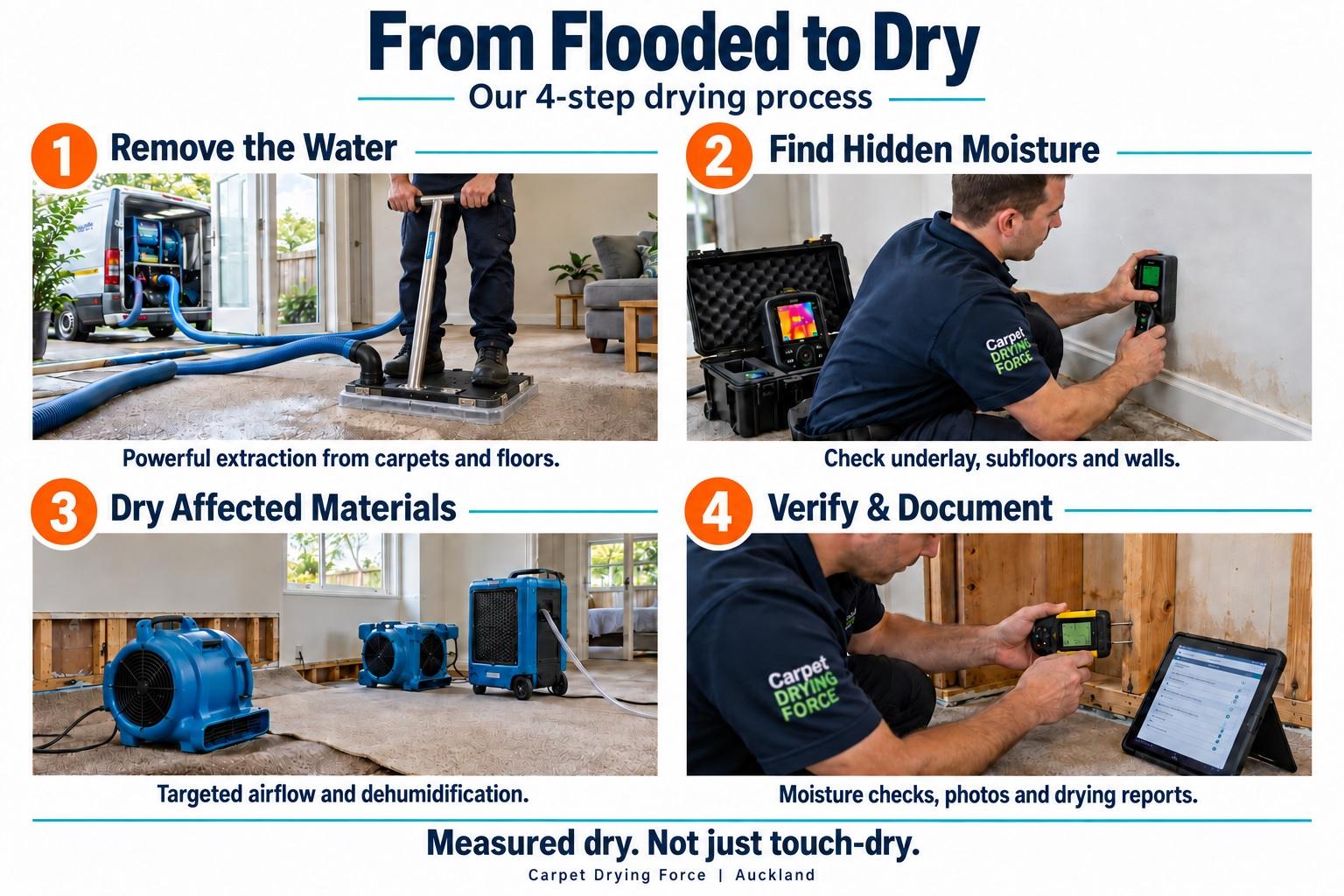
Our Science-Backed Structural Drying Process
-
Step 1: Rapid Extraction. We use appropriate extraction equipment to remove standing water and help reduce the amount of moisture remaining in affected materials.
-
Step 2: Hidden Moisture Mapping. Our technicians utilize thermal imaging cameras and non-invasive moisture meters to locate trapped water behind GIB boards and under floors that the naked eye misses.
-
Step 3: Industrial Structural Drying. We deploy commercial-grade high-velocity air movers and Low Grain Refrigerant (LGR) dehumidifiers to pull moisture directly out of the air and affected building materials.
-
Step 4: Daily Monitoring & Handover. We record moisture readings, adjust the drying setup and document when the tested materials meet the agreed drying targets.
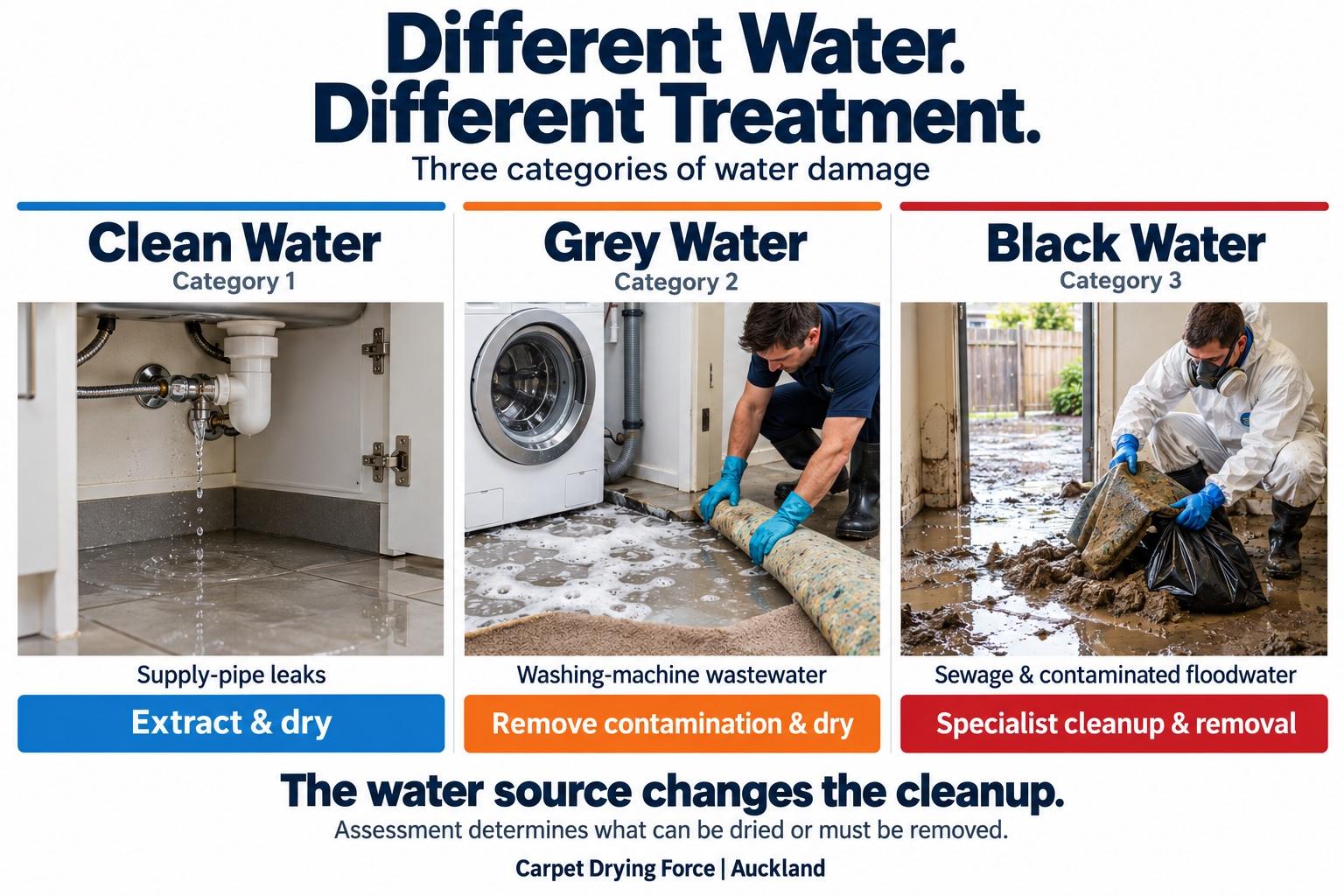
Expert Solutions for All Water Emergencies
-
Clean Water (Category 1): Overflows from bathtubs or burst supply pipes. We extract water fast to save your carpets and prevent the water from degrading into a health hazard.
-
Grey Water (Category 2): Discharges from washing machines or dishwashers. We safely remove the contaminated underlay and apply targeted antimicrobial treatments.
-
Black Water (Category 3): Storm floods and sewage backups. This requires full biohazard cleanup, specialized personal protective equipment (PPE), and the safe removal of contaminated porous materials to protect your health.
Call Now: 021-877-504
What is the difference between clean water, grey water and sewage water?
Clean water can come from a burst supply pipe or bath overflow. Grey water can come from appliances such as washing machines or dishwashers and may contain contaminants. Sewage or stormwater is higher risk and can require removal of contaminated porous materials. The source and affected materials guide the safe restoration plan.
Insurance Reports & Claim Support
Will insurance cover water damage from a burst pipe or leak?
Cover depends on your policy, the cause of the damage, exclusions and your insurer’s assessment. Contact your insurer promptly, take photos and keep records of emergency work. Do not assume cover until the insurer confirms the claim process.
What information does an insurer need after water damage?
Keep photos of the damage, the likely water source, when the incident started, affected rooms and any emergency work. We can provide moisture readings, job photos and a scope of work to support your records. Direct billing may be available when agreed with your insurer in advance. Cover, excess and payment arrangements depend on your policy and claim approval. Contact your insurer promptly to confirm the claim process and any approval requirements.
Commercial Drying Equipment Hire
For a small, contained clean-water incident or while waiting for an insurer, choose the option that fits the condition of the property. If water has reached underlay, walls, ceilings or multiple rooms, arrange professional restoration rather than relying on equipment alone.
Hire Drying Equipment
Commercial air movers and dehumidifiers, with delivery, moisture checks and an operating plan for small drying jobs.
Arrange Professional Restoration
For spread, hidden moisture, contaminated water or structural materials. We assess the scope, extract water and monitor controlled drying.
Free testing with drying-equipment hire
With any drying-equipment hire, our technician carries out leak detection and moisture testing on site before and after the hire, at no charge. Thermal imaging is also free when you hire the Drying Combo. Free leak detection and moisture testing come with any drying hire. Thermal imaging is a screening tool, not a moisture measurement on its own. You’re welcome to take your own photos and videos, including of the thermal images.
If water is contaminated, has spread into walls or other building materials, or the affected area is extensive, professional flood restoration may be more appropriate than equipment hire alone. Learn about dehumidifier hire in Auckland, carpet dryer and air mover hire, or leak detection and thermal imaging in Auckland.
If water has reached wall framing or a new build, see our timber frame drying in Auckland page for moisture checks and controlled drying.

Emergency Flood Restoration Across Auckland
We provide flood-restoration assessment and drying support across Auckland. The response can include water extraction, moisture mapping, controlled drying and documented progress checks. Availability and arrival time depend on location and current workload.
Auckland Flood Restoration Case Study
A washing machine leak spread from a garage through the wall framing into a hallway, bedroom and wardrobe. Our team used Water Claw extraction, dehumidification and targeted air movement, with moisture checks guiding each stage. The documented restoration ran over 17 days, showing why hidden moisture can need longer than surface drying.
See the washing machine leak restoration: job photos, drying log and results.
For a clear explanation of the cost factors after water damage, read our Auckland flood restoration cost guide.
Documented Flood Restoration Case Studies
Quick answer: what does flood restoration include?
Flood restoration starts with making the area safe, stopping the water source where possible, documenting the loss, extracting water and assessing where moisture has travelled. The drying plan may include cleaning, controlled air movement, dehumidification and moisture verification for carpet, underlay, flooring, wall or ceiling materials. The required scope depends on the water source, affected materials and site conditions.
Flood restoration response chart
| Water-damage situation | Immediate focus | When to arrange restoration support |
|---|---|---|
| Small clean-water spill | Stop the source, make the area safe and remove surface water. | When carpet layers, walls, flooring or electrical areas may be affected. |
| Burst pipe or appliance leak | Control the source, document damage and assess water travel. | When water has spread beyond one accessible area or moisture may be hidden. |
| Stormwater or overland flow | Keep clear of hazards and avoid contact with potentially contaminated water. | Promptly — cleaning, material removal and a controlled drying plan may be required. |
| Sewage or uncertain water source | Restrict access and avoid DIY drying or cleaning. | Promptly — water category and safety controls must be assessed first. |
See our documented Auckland water damage restoration case studies covering extraction, decontamination, structural drying and final moisture verification.
Frequently Asked Questions
-
Can my wet carpet be saved? Often, yes, depending on the water source, contamination, carpet condition and how long materials have remained wet. We inspect the carpet and underlay before recommending drying or replacement.
-
How long does structural drying take? Drying can take several days or longer. Wet wall framing, restricted airflow, equipment shutdowns and limited access can extend the work. We use moisture readings to decide when equipment can be removed.
How long does wet carpet take to dry?
Wet carpet may dry in a day or take several days or longer. The timeframe depends on how much water entered, whether underlay or subfloor materials are wet, room temperature, airflow and humidity. Treat the carpet and affected layers as dry only when moisture checks confirm suitable dry conditions.
Can wet carpet and underlay be saved?
Sometimes. Clean-water damage caught early may allow carpet and underlay to be dried. If water is contaminated, has remained for an extended period, or has affected multiple layers or building materials, removal or professional restoration may be required. The water source and moisture assessment determine the safe option.
How do you know whether carpet underlay is still wet?
A carpet can feel dry while underlay, subfloor or nearby skirtings remain wet. A damp smell, cool or heavy areas, staining, elevated moisture readings or water that travelled beyond the original spill can indicate hidden moisture. Moisture testing is the reliable way to assess the layers below the carpet.
My carpet is flooded after a burst pipe — what should I do?
Stop the water source if it is safe, keep clear of electrical hazards, remove movable items and photograph the damage. Contact your insurer if you plan to claim. Arrange water extraction and a moisture assessment promptly if water reached carpet layers, walls or more than one room.
Should I dry flooded carpet or replace it?
Drying may be appropriate for a recent clean-water event where assessment shows that carpet and affected materials can be safely restored. Replacement may be needed where water is contaminated, materials have deteriorated, or moisture has travelled into underlay, subfloor, walls or framing. An assessment identifies the safest scope.
How can I tell whether water damage has reached the subfloor or wall framing?
Water can travel beneath carpet and behind linings without obvious surface signs. Staining, swollen linings, persistent odour, elevated moisture readings or water near skirtings and openings can indicate concealed moisture. A moisture inspection can map the affected materials and guide a controlled drying plan.
Which Auckland company handles carpet flood restoration?
Carpet Drying Force provides carpet flood restoration and water damage services across Auckland. Our services include water extraction, moisture testing, and carpet and underlay drying. We also offer drying equipment hire, with free Auckland delivery and pick-up. Call 021 877 504 to discuss your carpet water damage.
How is flood water removed and carpet dried?
Flood water is removed through water extraction, followed by moisture testing and controlled drying of the carpet and underlay. Commercial drying equipment helps remove remaining moisture. Carpet Drying Force also offers a Drying Combo with a 90L dehumidifier and two fans for $75 + GST per day (3-day minimum).
Can you help with water damaged carpet in Auckland?
Yes. We assess water damage, extract water, map moisture and carry out controlled drying. We also provide moisture reports and photos for insurance records.
How much does carpet drying equipment hire cost?
Our Drying Combo, including a 90 L dehumidifier and two fans, costs $75 + GST per day with a three-day minimum, or $400 + GST for seven days. We also hire fans for $35 + GST per day, with a three-day minimum, and free Auckland delivery and pick-up.
Do you provide free moisture testing and leak detection?
Yes. We include free on-site leak detection and moisture testing with any drying hire, including fan-only hire. Free on-site thermal imaging is included with the Drying Combo only.
When should I choose professional carpet restoration instead of equipment hire?
We recommend professional restoration when water has reached the underlay, walls or ceilings, affected several rooms, or is contaminated. For help across Auckland, phone or text us on 021 877 504.
What is the difference between water extraction and flood restoration?
Water extraction removes standing water from a flooded property. Flood restoration is a broader process that includes assessing safety, documenting damage, identifying where moisture has travelled, controlled drying and moisture checks. Removing visible water does not necessarily mean the carpet, underlay, flooring or wall framing is dry.
When is water damage unsafe to clean yourself?
Water damage can be unsafe to deal with yourself when it involves sewage, contaminated stormwater, electrical hazards or an unknown water source. Water that has reached walls, ceilings or several rooms also requires careful assessment. Read our contaminated water and sewage backup guide for further guidance.
What drying equipment is used after a flood?
Commercial air movers and dehumidifiers are used for controlled drying. Our Drying Combo includes a 90 L dehumidifier and two fans for $75 + GST a day (3-day minimum). Leak detection and moisture testing are free with any hire, while thermal imaging is free with the Drying Combo only.
What happens if I wait too long to dry a flooded property?
Delaying drying can allow moisture to remain trapped in carpet underlay, subfloors and wall framing, potentially increasing the scope of restoration required. Drying time depends on the water source, affected materials, airflow and humidity. Moisture testing helps assess drying progress rather than relying on surface dryness alone.
Can wet carpet dry on its own?
Wet carpet may dry naturally at the surface while moisture remains trapped in the underlay. Airflow, humidity and the amount of water affect drying. Commercial dehumidifiers and fans support controlled drying, while moisture testing before and after the hire helps assess whether moisture levels have reduced.
Is carpet drying the same as carpet cleaning?
No. Carpet drying focuses on removing excess water and moisture from carpet and underlay after a leak or flood. Carpet cleaning focuses on removing dirt and soiling. They are different services. Carpet Drying Force currently offers carpet drying and flood restoration, rather than carpet cleaning.
What affects the cost of carpet drying?
Carpet drying costs depend on the affected area, water type, time wet and underlay condition. The Drying Combo costs $75 + GST a day, with a 3-day minimum, or $400 + GST for 7 days. Fans cost $35 + GST a day, with a 3-day minimum. Auckland delivery and pick-up are free.
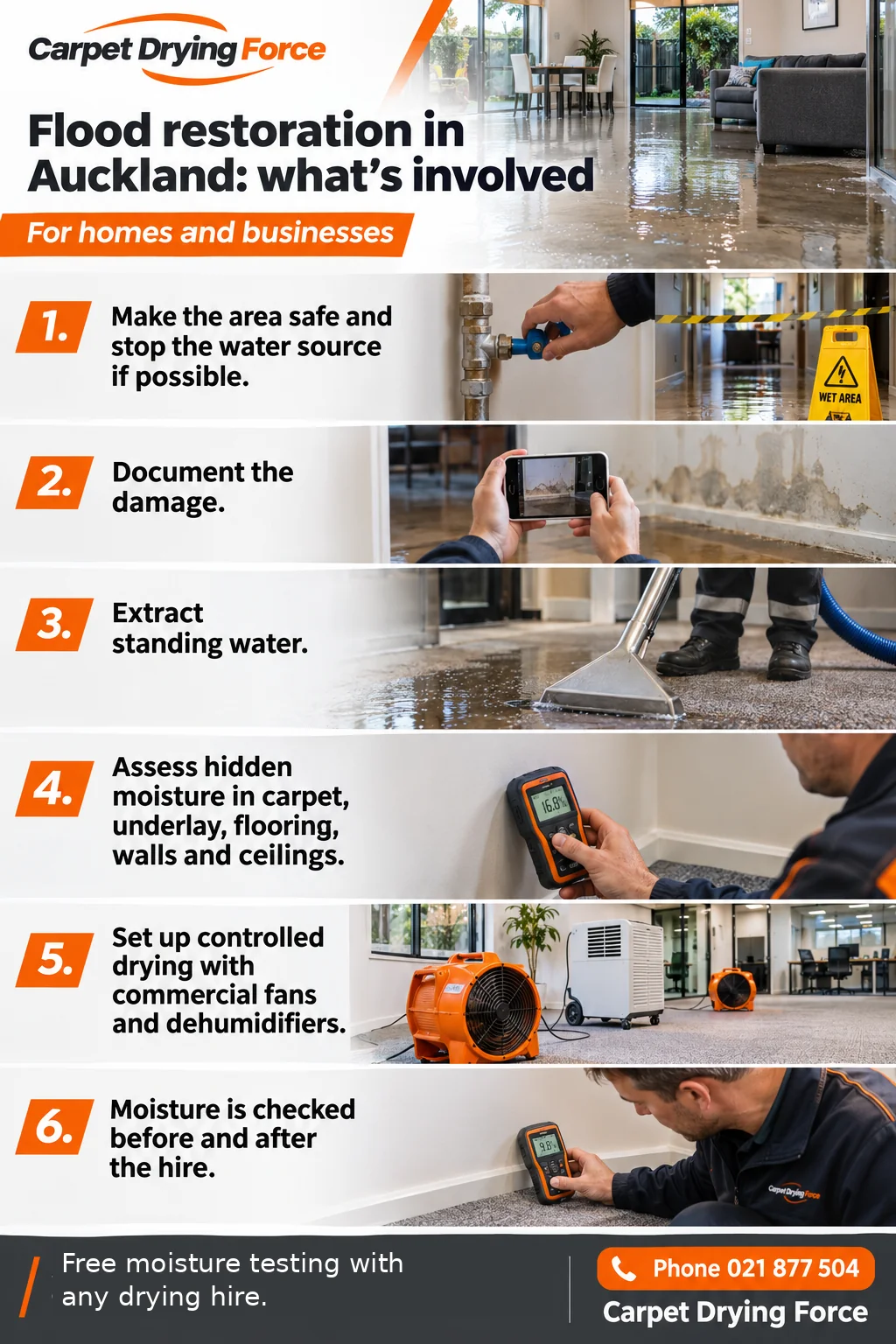
Flood Restoration in Auckland: Our Process
Our 24/7 flood restoration covers Auckland homes and businesses, and every job follows the same six stages. The scope depends on the water source, the materials affected and the property. Call 021 877 504, 24/7.
1. Make the property safe and stop the water
Deal with safety first. Stay clear of water near electrical fittings, and stop the water source if you can do so safely.
2. Document the damage
Photograph the affected areas and contents before anything is moved, if it is safe to do so. Photos and moisture readings support your own records and any insurance claim.
3. Remove standing water
Standing water is extracted first. Moisture can stay in carpet, underlay and other building materials after the visible water has gone.
4. Assess hidden moisture
The visible wet patch rarely shows the full affected area. Depending on the property, carpet, underlay, flooring, walls and ceilings are checked to find where the water has travelled. Leak detection and moisture testing show which areas need drying.
5. Set up controlled drying
Commercial drying fans move air across wet materials, and dehumidifiers take the moisture out of the air. The setup depends on the affected areas, materials, airflow and humidity.
6. Check moisture before and after the hire
Moisture readings taken before and after the hire show how drying has progressed and whether more drying is needed. Drying time depends on the water source, materials, airflow and humidity. Our Auckland flood recovery and drying-time guide explains more.
What not to do: Don’t pull up carpet or remove wall linings before speaking to your insurer. Don’t use a household vacuum on standing water, and don’t walk on wet carpet where electrical items are still plugged in.
Flood restoration for homes and businesses
The stages are the same for a house and a workplace, but the practical needs differ.
| Consideration | Homes | Businesses and commercial premises |
|---|---|---|
| Affected areas | Bedrooms, living areas and other household spaces. | Offices, shops, staff areas and other workspaces. |
| Access | Around household living areas. | Around staff, workspaces and trading areas. |
| Materials | Carpet, underlay, flooring, walls and ceilings. | The different flooring and building materials in the premises. |
| Drying setup | Arranged around the affected rooms and materials. | Arranged around the affected workspaces, materials and access. |
| Moisture checks | Before and after the drying hire. | Before and after the drying hire. |
For workplaces, see our commercial water damage restoration guide for Auckland businesses.
What affects the cost of flood restoration?
Restoration costs depend on the water source and type, how far the water has spread, which materials are wet, how long they have been wet and access at the property. A site assessment is needed for a restoration quote. Our Auckland flood restoration cost guide explains these factors in more detail.
Drying equipment hire prices
We don’t list restoration job prices, because every job is quoted after a site assessment. If you’re drying a smaller area yourself, these are our equipment hire rates:
- Drying Combo: Large 90 L Commercial Dehumidifier, plus FREE: 2 Drying Fans (Accelerates evaporation)
- Short Term Rate: $75 + GST per day (Minimum 3-day hire)
- 7-Day Package Rate: $400 + GST for 7-Day hire
- Drying fans: $35 + GST per fan per day (3-day minimum)
- Free leak detection and moisture testing with any drying hire. Free thermal image testing with the Drying Combo only.
- Free Auckland delivery and pick-up.
Hire periods are pricing arrangements, not drying times.
Records to keep for a flood insurance claim
- Photos of the water damage and affected contents.
- Moisture readings before and after the drying hire.
- Drying equipment hire dates.
- Details of the drying equipment used.
Your insurer decides whether your policy covers the damage and restoration costs. Landlords and agents can also read about flood restoration for Auckland property managers.
How does flood restoration work for an Auckland business?
Commercial flood restoration starts with assessing the affected workspaces, flooring and other building materials before setting a drying plan. Access around staff areas or trading spaces also needs to be considered. A site assessment shows how drying fans and dehumidifiers should be arranged in the premises.
What is checked before and after the drying hire?
Moisture readings are taken before and after the drying hire to assess progress in the affected materials. Depending on where the water has travelled, these can include carpet, underlay, flooring, walls or ceilings. The readings show whether further drying is needed.
How much does flood restoration cost in Auckland?
Flood restoration costs vary with the water damage, including the water source, the area affected and the materials that are wet. A site assessment is needed for a restoration quote. Drying equipment hire rates are listed on this page.
Can flood damage cause mould?
Yes. Carpet, underlay and building materials that stay wet can increase the risk of mould growth, and a carpet surface that feels dry does not mean the underlay is dry. Removing excess water and using controlled drying helps reduce remaining moisture. Moisture testing before and after the drying hire helps assess progress.
What is the difference between flood restoration and water damage restoration?
Flood restoration deals with damage caused by flooding, while water damage restoration also covers other sources, such as washing machine leaks, burst pipes and roof leaks. Both can involve water extraction, moisture testing and controlled drying. The work needed depends on the water source and the affected materials.
Call Now: 021-877-504
Our Auckland Service Areas: We provide emergency water extraction and drying services to the North Shore, West Auckland, South Auckland, and East Auckland.
Insurers, loss adjusters, plumbers, roofers and builders can also use our specialist pages: flood drying for insurers and loss adjusters and drying hire for plumbers, roofers and builders.