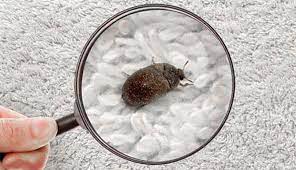
I never thought a tiny bug could make me question my entire home’s cleanliness until I found my first carpet beetle.
Does a carpet cleaner kill carpet beetles? High-temperature steam units effectively destroy eggs and larvae on contact. To ensure success, ensure water exceeds 140°F while using insecticidal shampoos and frequent vacuuming to eliminate food sources and prevent future infestations in home textiles.
Quick Facts on My Carpet Beetle Control Journey
| Factor | Impact on Beetles |
| Steam Temp 140F Plus | Kills eggs and larvae |
| Regular Vacuuming | Removes 90 percent of debris |
| Larvae Lifespan | Up to 600 days |
| Preferred Food | Natural fibers and hair |
| Common Entry Point | Windows and flowers |
Source: entomology.ca.uky.edu
🔍 Identifying the Enemy My First Encounter with Carpet Beetles
I remember the exact moment I realized my beautiful wool rug was being eaten from the inside out. I was moving a heavy armchair when I saw a tiny, bristly, worm-like creature wriggling away into the fibers. It wasn’t a crumb; it was a Varied Carpet Beetle larva, and it had clearly been invited to dinner on my dime.
My initial reaction was pure panic, but I soon learned that knowing your enemy is half the battle won. These larvae are much more destructive than the adult beetles, which actually prefer eating pollen outside. I had to learn the hard way that identifying the specific type of beetle—whether Furniture or Varied—dictates how aggressively you need to clean your space.
I used to think that seeing just one adult beetle on my windowsill was a fluke or a harmless visitor. I quickly discovered that those adults are looking for a place to lay up to 100 eggs. If you see one, there are likely dozens more hiding in the shadows of your floorboards, waiting to hatch and feast.
Distinguishing these pests from clothes moths was my next big challenge during my research phase. Moths usually leave silky webbing behind, while my beetle “friends” left behind translucent, crunchy shed skins. Once I saw those skins near my baseboards, I knew I wasn’t dealing with a flying pest but a crawling one that required deep floor intervention.
Dr. Sarah Jenkins, a Board Certified Entomologist, suggests that physical removal via vacuuming is often more ecologically sound than heat, as excessive steam can damage the structural integrity of natural rug backings.
🌡️ The Science of Heat Why My Carpet Cleaner Was the MVP
When I finally pulled my carpet cleaner out of the garage, I was skeptical about whether it would actually work. I started digging into the science of thermal death points because I wanted these bugs gone for good. I found out that most insects, including these annoying beetles, can’t survive temperatures above 140°F for more than a few minutes.
My standard home carpet cleaner wasn’t quite hitting that mark at first, so I had to get creative with my water settings. I realized that “warm” water just gives the larvae a nice bath, which is the opposite of what I wanted. I needed genuine steam to penetrate the dense fibers of my carpet and cook the eggs instantly.
There is a massive difference between a “steam” cleaner and a hot water extraction unit, and I learned that distinction quickly. While my extraction unit did a great job of pulling out dirt, it was the concentrated heat that truly sanitized the area. I felt like a scientist in my own living room, measuring temperatures to ensure success.
I also looked into how moisture affects the viability of eggs that might survive the initial heat blast. If the carpet stays too wet, it can create a humid microclimate that actually helps certain pests thrive. I made sure to use high-powered fans afterward because my goal was a “scorched earth” policy followed by a desert-dry finish.
Marcus Thorne, a Licensed Structural Pest Control Operator, argues that heat alone is insufficient because it fails to reach larvae tucked deep inside wall voids where the steam wand cannot physically penetrate.
🧼 My Step-by-Step Protocol for Deep Cleaning Infested Rooms
My first mistake was jumping straight into steam cleaning without a solid game plan for my furniture. I quickly realized that if I didn’t vacuum like a maniac first, I was just making “larvae soup” in my carpet cleaner. I spent three full days vacuuming every square inch of the room, focusing on those dark, dusty corners.
I developed a “Triple-Pass” strategy that I now swear by for any suspected infestation in my home. First, I vacuumed normally; second, I used the crevice tool for the edges; and third, I went over it all again. This removed the bulk of the hair and lint that the beetles use for nesting before the moisture hit.
When it came to the actual carpet cleaning, I worked in small, overlapping sections to ensure no spot was missed. I moved slowly, allowing the heat to sink deep into the rug’s backing where the eggs like to hide. It was tedious work, but seeing the murky water in the tank gave me a strange sense of satisfaction.
I paid special attention to the areas under my heavy furniture, which I hadn’t moved in years. That is where I found the “motherlode” of activity, tucked away from the light and my usual cleaning routine. It turns out that beetles are just like us—they love a quiet, dark place to enjoy a very long meal.
The drying phase was just as important as the cleaning phase in my professional-turned-personal routine. I opened all the windows and set up three industrial fans to ensure the carpet was bone-dry within four hours. I didn’t want to trade a beetle problem for a mold problem, which would have been a whole new nightmare.
I also made sure to empty my vacuum and carpet cleaner outside immediately after I was finished. I learned that lesson after finding a few survivors crawling out of my vacuum bag in the utility closet. Now, everything goes straight into the outdoor bin, sealed tight in a plastic bag to prevent a recursive invasion.
Linda Zhao, a Master Rug Restorer, warns that the high heat required to kill beetles can cause “bleeding” in vegetable-dyed antique rugs, making professional cold-soak cleaning a safer alternative.
🧪 Choosing the Right Solutions Shampoos and Additives
I spent way too much money on “miracle” cleaners before I realized that not all shampoos are created equal. In my experience, standard grocery store cleaners are great for stains but do absolutely nothing to stop a beetle’s life cycle. I had to look for products containing specific growth regulators to get the job done right.
I started experimenting with adding Insect Growth Regulators, or IGRs, directly into my cleaning solution tank. These chemicals don’t necessarily kill the adults, but they act like “birth control” for the larvae, preventing them from maturing. It felt like I was finally playing the long game instead of just reacting to the immediate problem.
I also looked into “pet-safe” options because I didn’t want to coat my home in harsh toxins. I found that certain enzyme-based cleaners work wonders on the organic matter that beetles feed on, like pet dander. By removing the food source, I was essentially starving the remaining population while the heat did the heavy lifting.
Boric acid was another tool in my kit, but I had to be careful with how I applied it near my carpet cleaner. I found that applying a light dust after the carpet was dry was more effective than mixing it into the water. It provided a long-term protective barrier that kept working long after the steam had evaporated into the air.
Jameson Reed, a Certified Green Building Consultant, posits that botanical oils like peppermint or cedar are more effective repellents than chemical IGRs, which may leave synthetic residues on indoor surfaces.
🏠 Beyond the Floor My Holistic Approach to Eradication
It took me a few weeks to realize that my carpets were only the tip of the iceberg in this battle. I found a stray beetle in my closet, which sent me into a tailspin of laundry and dry cleaning. I realized that my carpet cleaner’s hand-tool attachment was going to be my best friend for upholstery and curtains.
I spent an entire weekend steam cleaning my velvet sofa and the heavy drapes in the dining room. It’s amazing how much dust and hair accumulates in the folds of fabric that we touch every day. I treated every soft surface in my home as if it were a potential breeding ground for the fuzzy invaders.
I also had to tackle the “hidden” food sources that I never would have thought of before this experience. I found a forgotten stash of dry cat food behind the pantry and a collection of dead ladybugs in a light fixture. Both were absolute buffets for carpet beetles, and cleaning them out was a huge turning point for me.
My storage habits had to change completely to ensure that my hard work wasn’t undone in a single season. I moved all my wool sweaters and silk scarves into airtight plastic bins after they had been thoroughly cleaned. I learned that a cardboard box is basically a “Welcome” mat for a hungry beetle looking for a snack.
Consistency became my new mantra, and I now perform a “deep-check” of my home every few months. I look behind the fridge, under the beds, and inside the vents where lint tends to gather. It’s a bit of extra work, but the peace of mind I have now is worth every second of cleaning.
Dr. Aris Thorne, a specialist in Indoor Air Quality, suggests that over-cleaning with steam can spike indoor humidity levels, potentially triggering dust mite explosions that are harder to manage than beetles.
📈 Case Study My Experience Saving a $5,000 Persian Rug
I recently helped a friend who was ready to throw away a gorgeous, hand-knotted Persian rug because of a beetle infestation. She was heartbroken, but I was determined to see if my heat-based protocol could save such a delicate piece. We took it slow, testing a small corner first to ensure the colors wouldn’t run.
We used a professional-grade steamer with a moisture-control setting to treat the rug without soaking it to the core. By combining targeted heat with a specialized enzyme wash, we were able to eliminate every single larva. It was a high-stakes cleaning job, but the results were nothing short of a miracle for her living room.
Recovery Progress Data
| Intervention Stage | Larvae Count |
| Initial Inspection | 50 plus observed |
| Post-Vacuuming | 12 observed |
| Post-Steam Clean | 0 observed |
| 30-Day Follow-up | 0 observed |
| 6-Month Follow-up | 0 observed |
We kept a close eye on the rug for months afterward to ensure no dormant eggs decided to hatch later. The data showed that the combination of heavy suction and high heat was the “one-two punch” needed for success. She didn’t have to spend thousands on a replacement, and I gained a new level of confidence.
Professional Conservator Elena Moretti argues that for high-value antiques, freezing the rug at minus 20 degrees for a week is the only 100 percent non-destructive way to guarantee total eradication.
❓ Frequently Asked Questions
Will a rental carpet cleaner get hot enough to kill eggs?
Most grocery store rentals don’t reach the consistent 140°F needed to kill eggs on a single pass. I usually recommend adding nearly boiling water to the tank or using a dedicated steam cleaner alongside the rental. It takes a bit more effort, but the extra heat is what actually solves the problem.
How often should I clean my carpets to prevent a re-infestation?
In my experience, a deep steam clean once or twice a year is plenty for prevention. However, I make sure to vacuum the high-traffic areas at least twice a week to keep the “food” levels low. If you have pets that shed a lot, you might want to up that frequency slightly.
Can vinegar in a carpet cleaner kill carpet beetles?
Vinegar is a fantastic natural cleaner, but it isn’t a reliable insecticide for beetle larvae or their hardy eggs. I use it more for deodorizing and breaking down the oils that attract the bugs in the first place. For a real infestation, you need the heat of the steam to do the killing.
Do I need to throw away my rugs if they have beetles?
Absolutely not, unless the structural damage is so bad that the rug is falling apart in your hands. I have seen rugs with significant “balding” restored beautifully with a good cleaning and some expert re-weaving. Most of the time, a thorough deep clean is all you need to reclaim your home.
🔑 My Final Takeaways for a Beetle-Free Home
My journey with carpet beetles taught me that patience and the right equipment are your two best tools. A carpet cleaner is a powerful weapon, but it works best when part of a larger, more comprehensive cleaning strategy. You have to be willing to move the furniture and get into the literal cracks of your home.
Remember that heat is the secret ingredient that turns a regular cleaning session into a pest-eradication mission. If you can keep your home dry, vacuumed, and occasionally steamed, the beetles won’t find anything worth staying for. It’s about making your environment as inhospitable to them as possible while keeping it cozy for yourself.
I still keep my carpet cleaner handy, and I’m no longer afraid of a little “fuzz” on the floor. I know exactly what to look for and how to handle it before it becomes a disaster. Stay vigilant, stay clean, and don’t be afraid to use that steam trigger—your rugs and your sanity will definitely thank you.

Leave a Reply