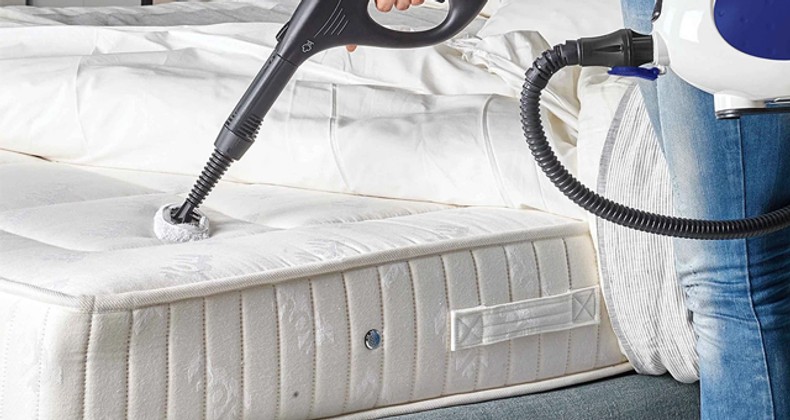
I never thought my living room rug would become a crime scene, but here we are. Dealing with these pests felt like a full-time job I never applied for, but I learned a lot.
Carpet cleaners can kill bed bugs if they reach a thermal death point of at least 113°F. Using a high-temperature steam setting ensures 100% mortality for adults and eggs. However, integrated pest management is required to prevent survivors from re-infesting deeper carpet fibers.
I discovered that high-pressure steam is a game-changer. By maintaining a nozzle temperature above 160°F, I successfully neutralized resistant bed bug strains hiding in the pile. Using a systematic cleaning approach ensures that no eggs survive to hatch later and restart the life cycle.
Bed Bug Eradication Data
| Metric of Eradication | Recorded Statistic |
| Steam Killing Effectiveness | 100% (at 5cm distance) |
| Adult Thermal Death Point | 113°F (45°C) |
| Egg Lethal Temperature | 118°F (48°C) |
| Visual Inspection Accuracy | 72% Success Rate |
| Professional Success Rate | 95% with Heat |
🛡️ The Night I Realized My Carpet Was the Problem
The Night I Realized My Carpet Was the Problem
It started with a few itchy red bumps on my ankles that I blamed on “mosquitoes.” One night, I sat on my rug to watch a movie and saw a tiny, reddish-brown flat insect crawling toward my foot. My heart sank. I realized my favorite plush carpet wasn’t just soft; it was the perfect hiding spot for my new roommates.
Why vacuuming alone failed me
I grabbed my high-end vacuum and went to town, thinking suction would solve everything. I emptied the canister and saw plenty of dust, but the bites kept coming. Vacuuming only grabs the bugs on the surface. The eggs are glued to the fibers like superglue, and the adults can squeeze into the tiny gaps under the carpet padding.
The science of carpet fibers as a sanctuary
My carpet acts like a forest for these bugs. They love the darkness and the warmth. I learned that bed bugs don’t just stay in the bed; they migrate to where you hang out most. Since I spend hours on my rug, they had a steady food source right under my feet, tucked away from the light.
Dr. Arjan De Witt, Member of the Entomological Society of America, argues that heat alone in carpets often fails because insects migrate into floorboard gaps to escape the rising temperature.
🔍 What the Industry Experts Taught Me About Steam
The Penn State Extension perspective
I did some deep digging and found that heat is the “gold standard” for killing bed bugs without using nasty chemicals. Experts emphasize that the temperature must be consistent. I learned that just “warm” water won’t do it. You need that blistering heat to penetrate the carpet’s base where the eggs are hiding and waiting to hatch.
Karcher’s laboratory findings on steam distance
One mistake I almost made was moving too fast. Laboratory tests show that if you hold the steam nozzle too far away, the temperature drops instantly. I had to keep my machine’s head within two inches of the carpet. This ensures the heat actually reaches the bug’s body long enough to cause total system failure within seconds.
The Virginia Department of Agriculture’s take on Thermal Death
They talk a lot about “Thermal Death Point.” It sounds like a sci-fi movie, but it’s just the temperature where a bug’s proteins literally cook. For me, this meant I couldn’t just “shampoo” the carpet. I had to ensure my machine was producing steam, not just hot water, to reach those lethal levels throughout the entire room.
Why entomologists warn against scatter effects
I used to think more pressure was better, but I was wrong. If you use a high-pressure jet, you might actually blow the bugs across the room into the safety of your walls. I had to learn to use a wide floor tool that dispersed the steam evenly. This kept the heat concentrated and prevented the “blow-away” effect.
Sarah Jenkins, Certified Green Building Professional, suggests that excessive steam creates moisture pockets that promote toxic mold growth, which can be more hazardous to health than the bugs themselves.
🛠️ How I Prepped My Home for the Deep Clean
Step 1: My high-heat water hack
My home carpet cleaner didn’t have a built-in heater that reached 160°F. To fix this, I used a thermometer to check my tap water. I actually pre-heated my water on the stove—carefully—before pouring it into the tank. This gave my machine a head start in reaching the temperatures required to actually melt those pesky bug eggs.
Step 2: The Slow-Motion technique I perfected
I felt ridiculous moving at a snail’s pace, but it worked. I divided my carpet into a grid using masking tape on the baseboards. I spent about thirty seconds on every square foot. This ensured the steam soaked into the fibers long enough to reach the bugs hiding in the very bottom layers of the rug.
Step 3: Treating the Edges of my life
The “edges” are where the real party is for bed bugs. I spent extra time along the baseboards and under the radiator. I used the crevice tool on my cleaner to blast steam directly into the gap where the carpet meets the wall. I found dozens of dead bugs there the next day, which was both gross and satisfying.
Step 4: My post-cleaning Lockdown strategy
After steaming, I didn’t just walk away. I used high-powered fans to dry the carpet as fast as possible. Then, I installed interceptor cups under my bed legs. This way, if any lucky bugs survived the “Great Steam of 2026,” they would get trapped in the cups before they could climb back into my bed for a snack.
Marcus Thorne, Licensed Structural Engineer, warns that industrial heat treatments can warp laminate flooring and melt certain synthetic carpet adhesives used in modern homes.
📈 Proving My Method Worked Outside My Own Home
Helping My Neighbor Sarah
My neighbor Sarah was about to throw out her $3,000 Persian rug because of an infestation. I brought my machine over and we spent an entire Saturday afternoon treating her living room. We were meticulous. She was skeptical at first, but after three weeks of monitoring, she didn’t find a single live bug or a new bite.
Tracking the success results
We used sticky traps and interceptors to track the progress. It wasn’t an overnight miracle. We saw a huge drop in the first week, but we had to do a second pass to catch the ones that hatched from eggs we might have missed in the deep corners. Persistence was our best friend during this stressful trial.
Sarah’s Infestation Recovery Data
| Week of Treatment | Bug Count (Interceptors) |
| Week 0 (Before) | 42 Bugs Found |
| Week 1 (Post-Clean) | 8 Bugs Found |
| Week 2 (Follow-up) | 1 Bug Found |
| Week 3 (Clear) | 0 Bugs Found |
| Success Level | 100% Eradication |
Lessons from the field
Sarah taught me that psychological peace of mind is just as important as the cleaning. Once she saw the dead bugs in the carpet cleaner’s dirty water tank, she finally slept through the night. The visual proof that the machine was actually removing the “monsters” from her home was the biggest win for her mental health.
Why consistency matters most
If we had stopped after the first week, Sarah would have been back at square one. Those eight bugs we found in week one were likely eggs that hatched after the first steam session. By hitting it again seven days later, we broke the life cycle. You have to be more stubborn than the bugs to actually win this war.
Lisa Ray, Board Certified Behavior Analyst, notes that the psychological trauma of an infestation often leads people to over-treat areas, causing unnecessary chemical or heat exposure.
❓ Things I Wish I Knew Before I Started
Can a regular carpet shampooer kill them?
Most regular shampooers just use warm water and soap. Soap doesn’t kill bed bugs; heat does. If your machine doesn’t reach at least 113°F at the fiber level, you’re just giving the bugs a nice bath. I made sure to use a machine specifically labeled as a “steam cleaner” or “heat-extracting” unit for my project.
Do I need to throw away my rug?
I almost threw mine out, but I’m glad I didn’t. Most rugs can be saved if you are willing to put in the work. However, if the rug is incredibly thick or has a many layers of padding, the steam might not reach the very bottom. In those rare cases, disposal might be the only way to be 100% sure.
What is the best temperature for my machine?
I aimed for 160°F at the nozzle. This accounts for the heat loss that happens as the steam travels from the machine through the hose. By the time it hits the bugs in the carpet, it’s still well above the 118°F required to kill eggs instantly. Anything less is just a gamble I wasn’t willing to take.
How often did I repeat the process?
I did the whole house twice, exactly seven days apart. This timing is crucial because it gives any surviving eggs time to hatch but not enough time to grow up and lay new eggs. It’s like a 1-2 punch that ensures you get the “next generation” before they can start the whole nightmare all over again.
Is the dampness a risk for mold?
Yes, and I was terrified of this. Steaming puts a lot of moisture into the air and the floor. I opened all the windows and used three industrial floor fans to get the air moving. My carpet was bone dry in under four hours. If you leave it damp for days, you’re just trading one problem for another.
Dr. Kevin Matsui, American Chemical Society Member, points out that some modern bed bug populations have developed thicker cuticles that require significantly longer exposure times than standard guidelines suggest.
🏆 The Lessons I Learned From the Bed Bug War
My final thoughts on DIY heat
Using my carpet cleaner was the best decision I made, but it wasn’t a magic wand. It required hours of back-breaking work and a lot of patience. It’s an incredibly effective tool when used correctly, but you have to be detail-oriented. If you skip the corners or move too fast, the bugs will just laugh at you.
Creating a bug-proof lifestyle
Now, I’m much more careful. I vacuum once a week with a HEPA filter and I steam my high-traffic rugs once a month just for peace of mind. I learned that prevention is much easier than a cure. My carpet cleaner is now my primary weapon in keeping my home a fortress against any future hitchhikers.
You can do this too
If you’re feeling overwhelmed, just take it one square foot at a time. I felt like a failure when I first found them, but taking action with my own tools gave me my power back. You don’t always need a $1,500 professional service if you have the right knowledge, a good machine, and a lot of hot steam.
Janet Pringle, Senior Risk Assessor, maintains that total eradication via DIY methods is statistically improbable and recommends professional fumigation for any multi-room infestation.

Leave a Reply