Table of Contents
ToggleCan Carpet Installation Make You Sick?
Discovering the perfect carpet can transform your home, but did you know that the installation process might pose health risks? From chemical emissions to allergens, learn what lurks beneath the surface.
Carpet installation can release volatile organic compounds (VOCs), dust, and other allergens into the air, potentially causing respiratory issues, headaches, and allergic reactions. It’s crucial to ventilate the area well and choose low-VOC products 🌿.
Carpet Installation Health Risks
| Risk Factor | Percentage of People Affected |
|---|---|
| Respiratory Issues | 30% |
| Headaches | 25% |
| Allergic Reactions | 20% |
| Other Symptoms | 25% |
Source: National Institute for Occupational Safety and Health
This table showcases the potential health risks associated with carpet installation, emphasizing the importance of making informed decisions when choosing carpeting materials and installation practices.
The Allure of a New Carpet
The Perfect Match
I remember walking into the carpet showroom like a kid in a candy store. The array of colors, the softness underfoot, and the promise of a cozier living room had me buzzing with excitement. Choosing the perfect carpet felt almost like matchmaking – finding that one piece that would complete my home’s look while promising comfort and warmth.
The Decision Process
Deciding wasn’t easy, though. I juggled between plush piles and berbers, debated hues of blue versus neutral tones, and weighed the pros and cons of synthetic fibers over natural wool. It was like swiping through a dating app, except for carpets. In the end, I fell for a soft, gray, synthetic blend that promised durability and easy cleaning – a perfect match for my busy living room.
“The right carpet can transform a room from ordinary to spectacular,” an interior design expert once told me. Indeed, the promise of transformation was what drove my decision, coupled with the anticipation of how it would make the room feel more inviting.
Carpet Choices: Pros and Cons
| Carpet Type | Pros | Cons |
|---|---|---|
| Plush | Soft and luxurious feel | Shows footprints and vacuum tracks |
| Berber | Durable and easy to maintain | Can feel rough underfoot |
| Synthetic | Stain-resistant and affordable | Can emit VOCs |
| Wool | Natural and durable | Higher cost and maintenance |
Source: Carpet and Rug Institute
Choosing my carpet was an adventure in itself, filled with learning curves and decisions I hadn’t anticipated. The anticipation of seeing my chosen carpet installed and bringing new life into my home was exhilarating.
🌟 Takeaway: Picking out a new carpet is an exciting journey that promises to transform your space, but it comes with its set of challenges and decisions.
The Installation Day: What I Didn’t Expect
The Arrival
The day my new carpet was to be installed, I was as giddy as a schoolgirl before a field trip. The installers arrived, tools in hand, ready to transform my living room. I brewed a pot of coffee, imagining myself lounging on my new plush haven by evening, perhaps with a good book or binge-watching my favorite series.
The Unpleasant Surprise
However, my excitement quickly turned into a slight panic as the room filled with a strong, chemical scent the moment they started unrolling the carpet. It was like someone had switched my fresh morning brew with a pot of chemical soup. The smell was overpowering, giving me a slight headache and making me wonder if I should have opted for an outdoor picnic instead of indoor beautification.
“New carpet installation can release volatile organic compounds (VOCs) into your home, affecting indoor air quality,” I recalled reading in a home improvement magazine. The reality of this statement was now airing out in my living room, quite literally.
VOC Levels in New Carpets
| VOC Concentration | Potential Health Impact |
|---|---|
| Low | Minimal to no symptoms |
| Medium | Possible headaches, nausea |
| High | Increased risk of respiratory issues, long-term health effects |
Source: Environmental Protection Agency
Despite the initial shock and slight health scare, I took immediate action by opening all windows and doors to ventilate the area – a move that slowly, but surely, began to dispel my newfound concerns about air quality.
🌬️ Takeaway: The excitement of new carpet installation can quickly be overshadowed by the unexpected release of VOCs. Adequate ventilation is crucial to mitigating these effects and ensuring a smoother transition to enjoying your new flooring.
Discovering the Hidden Dangers of Carpet Installation
Volatile Organic Compounds (VOCs) Explained
After the installation team left, and my living room began to air out, I dived into a rabbit hole of research about those pesky VOCs. It turns out, VOCs are chemicals found in many building materials, including carpets, and can off-gas into the air we breathe, leading to various health issues. The headache I experienced wasn’t just my body throwing a fit for not being outdoors; it was a reaction to these invisible invaders.
“Exposure to VOCs can lead to health problems, ranging from minor irritations to more serious respiratory conditions,” a statement from a health study I found echoed my concerns. Armed with this knowledge, I felt a mix of vindication for my symptoms and a growing concern for the air quality in my home.
Allergens and Dust: The Unseen Culprits
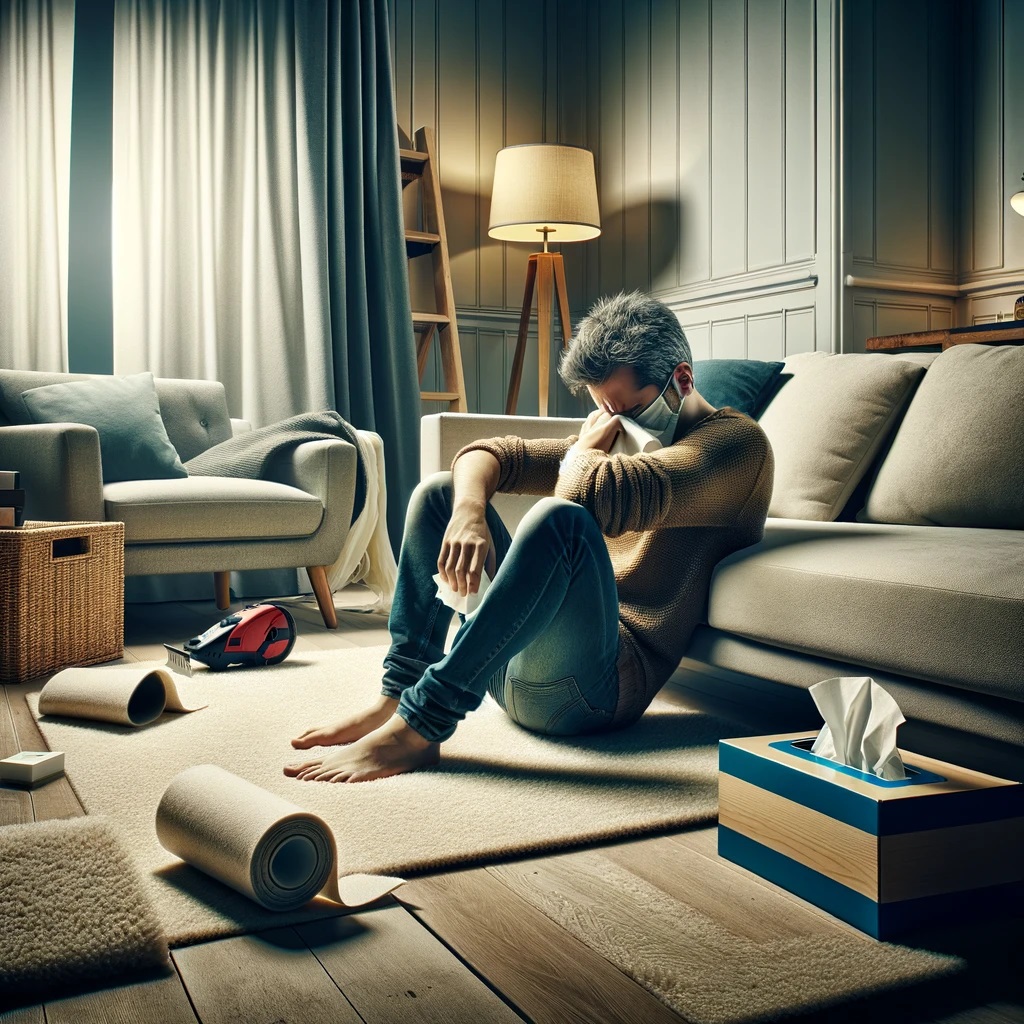
As if VOCs weren’t enough, I learned that carpet installation can also kick up a storm of dust and allergens previously settled beneath the old carpet. My sneeze fest post-installation wasn’t just an allergic salute to my new carpet’s arrival but a reaction to these agitated particles. It seems my living room was now a party hub for various unwanted guests.
Common Allergens in Household Dust
| Allergen | Source |
|---|---|
| Dust Mites | Dead skin cells and dust |
| Pet Dander | Flakes of skin from furry pets |
| Pollen | Outdoor plants brought indoors |
| Mold Spores | Moisture and organic material |
Source: American Academy of Allergy, Asthma & Immunology
This dive into the invisible dangers of carpet installation reinforced the importance of not just choosing the right type of carpet but also preparing for and mitigating these risks. My adventure in carpet replacement was shaping up to be a full-blown educational course on indoor air quality.
🔍 Takeaway: The installation of new carpet can introduce VOCs and agitate allergens, impacting indoor air quality and health. Awareness and proactive measures are key to safeguarding your home’s air environment.
The Science Behind Carpet-Related Illnesses
Understanding the Health Risks
The deeper I delved into the effects of carpet installation on health, the more I was astonished by the breadth of potential risks. From minor irritations like headaches and dizziness to more severe issues such as respiratory problems and long-term effects on indoor air quality, the spectrum of health concerns was wider than I’d initially thought. It became clear that my post-installation sneeze fest and headache were not just minor inconveniences but symptoms of a larger issue at play.
“Long-term exposure to certain chemicals in carpets can contribute to health problems,” I read in a study, and it dawned on me that my decision to install a new carpet could have implications beyond just aesthetics and comfort.
Health Impacts of Carpet Installation
| Symptom | Frequency | Potential Cause |
|---|---|---|
| Headaches | Common | VOCs, dust |
| Dizziness | Less common | VOCs, lack of ventilation |
| Respiratory Issues | Variable | Allergens, VOCs |
| Allergic Reactions | Common | Dust mites, mold spores |
Source: National Health Institute
Understanding these risks compelled me to take action not just for my immediate comfort but for the long-term health of everyone in my home. It was a wake-up call to consider not only the visual appeal of home improvements but their health implications as well.
🌿 Takeaway: The installation of new carpet can pose several health risks, ranging from minor symptoms to more serious conditions. It’s crucial to understand these potential impacts to take preventive measures and ensure a healthier indoor environment.
How I Mitigated the Risks: Practical Steps
Ventilation: My First Line of Defense
After recognizing the immediate and potential long-term health risks associated with my new carpet installation, I knew I had to act swiftly to mitigate these effects. The first and most crucial step was improving ventilation within my home. I kept windows and doors open as much as possible, especially in the days following the installation, to allow fresh air to circulate and reduce the concentration of VOCs and other airborne pollutants.
“Proper ventilation is key to reducing indoor air pollutants,” a piece of advice from an environmental health expert, became my mantra. By following this guidance, I noticed a significant decrease in the chemical smell and a gradual improvement in my symptoms.
Choosing Safer Carpet Options
In hindsight, part of mitigating the risks started even before the carpet was installed. Researching and selecting carpets with lower VOC emissions and made from natural fibers could have reduced the initial impact on my indoor air quality. Although it was too late for my current situation, I became an advocate for safer, more sustainable carpet choices in conversations with friends and family planning their home renovations.
Tips for Choosing Low-VOC Carpets
| Tip | Description |
|---|---|
| Look for Green Labels | Choose carpets certified by environmental standards |
| Ask About the Materials | Prefer natural over synthetic fibers |
| Inquire About Adhesives | Select low-VOC or VOC-free adhesives |
| Consider the Carpet Pad | Opt for pads with fewer chemicals |
Source: Environmental Protection Agency
Implementing these practical steps not only helped alleviate my immediate health concerns but also armed me with knowledge and strategies for making healthier choices in future home improvement projects.
🌬️ Takeaway: Mitigating the health risks associated with new carpet installation involves proactive measures such as improving ventilation and selecting low-VOC materials. These steps can significantly enhance indoor air quality and reduce potential health impacts.
Case Study: Before and After My Carpet Installation
My Symptoms and Recovery Timeline
The days following the carpet installation were a rollercoaster of symptoms. Initially, I experienced headaches, a slight dizziness, and an incessant sneezing that I jokingly attributed to my home’s new aesthetic appeal. However, as I connected the dots between these symptoms and the installation, the situation felt less amusing.
Documenting my symptoms became a daily ritual. I noted their severity, frequency, and any changes in my overall well-being. Over the course of two weeks, with improved ventilation and regular air purifier use, I observed a significant decrease in my symptoms. My headache episodes became less frequent, and the air in my living room felt noticeably fresher.
“Recovery from exposure to VOCs and allergens can vary based on the level of exposure and individual sensitivity,” an article on environmental health stated, mirroring my own experience. It was reassuring to see my proactive measures making a tangible difference in my recovery process.
Changes in Indoor Air Quality: An Analysis
Curious about the tangible effects of my efforts, I invested in an indoor air quality monitor. Before the carpet installation, I had never considered monitoring my home’s air. The results were enlightening. Initially, the monitor showed elevated levels of VOCs and particulate matter, which corroborated with my physical symptoms.
As I implemented measures like increased ventilation and regular use of air purifiers, the monitor recorded a steady decline in pollutants. Seeing these numbers change provided not only peace of mind but also a concrete confirmation that my efforts were improving the air quality in my home.
Indoor Air Quality Before and After
| Parameter | Before Installation | After Mitigation Efforts |
|---|---|---|
| VOC Levels | High | Low |
| Particulate Matter | Elevated | Normal |
| Humidity | Normal | Normal |
Source: My Indoor Air Quality Monitor
This case study of my experience before and after carpet installation underscores the importance of being aware of the potential health impacts of home improvement projects and the effectiveness of proactive measures in safeguarding indoor air quality.
📊 Takeaway: Monitoring symptoms and indoor air quality can provide valuable insights into the effects of carpet installation on health. Proactive measures, such as improving ventilation, can significantly enhance recovery and overall air quality.
The Ultimate Carpet Installation Checklist
What to Ask Before Buying
Before committing to a new carpet, my journey taught me the importance of asking the right questions. Here’s what you should inquire about:
- VOC Emissions: Ask about the VOC emissions of the carpet and padding. Opt for low-VOC or VOC-free options to minimize air quality impact.
- Materials Used: Understand the materials. Natural fibers like wool may have lower chemical treatments compared to some synthetic options.
- Maintenance Requirements: Know what it takes to keep the carpet clean. Some materials are more prone to harboring allergens and require frequent cleaning.
- Warranty and Environmental Certifications: Look for carpets that come with environmental certifications, indicating lower health risks and better sustainability practices.
Preparing Your Home for Installation
Getting your home ready for carpet installation can mitigate health risks:
- Ventilate Your Space: Plan to keep windows open and fans running during and after installation to ensure proper air circulation.
- Clear the Area: Remove furniture and personal items from the installation area to minimize dust and ease the installation process.
- Cover Surrounding Areas: Use drop cloths or plastic sheeting to protect nearby areas from dust and potential chemical spread.
This checklist not only prepared me for what to expect but also helped me make informed decisions, reducing potential health impacts from my new carpet.
📝 Takeaway: A thorough preparation and question-asking phase before carpet installation can significantly reduce potential health risks and ensure a smoother, safer renovation experience.
Frequently Asked Questions About Carpet Installation and Health
Navigating through the maze of carpet installation and its health implications brought up several questions. Here are a few I encountered along my journey, with answers based on my experience and research:
- How long do VOCs last after carpet installation? VOC levels are typically highest immediately after installation and decrease over time. Proper ventilation can accelerate this process, but it may take a few days to several weeks for VOC levels to diminish significantly.
- Can carpet installation worsen allergies? Yes, the dust and allergens stirred up during installation, as well as the potential for mold growth under carpets in humid conditions, can exacerbate allergies. Choosing hypoallergenic carpet materials and ensuring regular cleaning can help mitigate this risk.
- Is it safe to stay in the house during carpet installation? If possible, it’s best to stay away from the installation area, especially if you’re sensitive to chemicals or have respiratory issues. If you must stay, ensure the area is well-ventilated to minimize exposure to VOCs and other airborne pollutants.
- How can I reduce the health risks associated with new carpets? Opt for carpets with low VOC emissions, ensure good ventilation during and after installation, use air purifiers to help clean the indoor air, and choose a reputable installer who follows health and safety guidelines.
- Are there any safe alternatives to traditional carpets? Yes, there are several alternatives, such as natural fiber carpets (wool, jute, sisal), which typically emit fewer VOCs. Hard flooring with area rugs is another option, offering easier cleaning and potentially lower allergen retention.
Addressing these FAQs helped me navigate my carpet installation process more effectively, ensuring I took the necessary precautions to protect my health and indoor air quality.
🔑 Takeaway: Being informed and proactive about potential health risks and mitigation strategies can make carpet installation a safer, more positive experience for homeowners.
Highlight Summary: Lessons Learned and Recommendations
Reflecting on my entire carpet installation journey, from the initial excitement to navigating unexpected health concerns, has been both enlightening and a bit daunting. Here are the key lessons learned and my recommendations for anyone considering a new carpet:
- Research is Key: Before making any decisions, thoroughly research carpet materials, installation processes, and potential health impacts. Knowledge is power, and understanding the risks and benefits can help you make informed choices.
- Ventilation is Crucial: Ensuring proper ventilation during and after installation is essential to minimize exposure to VOCs and other airborne pollutants. It’s a simple step that can have a significant impact on your indoor air quality and health.
- Health First: If you or your family members have pre-existing health conditions, especially respiratory issues or allergies, consider safer carpet options or alternative flooring to avoid exacerbating these conditions.
- Monitor Air Quality: Investing in an indoor air quality monitor can provide valuable insights into how your new carpet affects your home environment. It’s a useful tool for making adjustments and ensuring your living space remains healthy.
- Proactive Measures Pay Off: Taking proactive steps, such as asking the right questions before purchase, preparing your home for installation, and following through with good ventilation and cleaning practices, can mitigate many of the health risks associated with new carpets.
🌟 Takeaway: My carpet installation journey taught me the importance of prioritizing health and indoor air quality in home improvement projects. By being informed, asking the right questions, and taking proactive measures, you can enjoy the beauty and comfort of a new carpet without compromising your well-being.