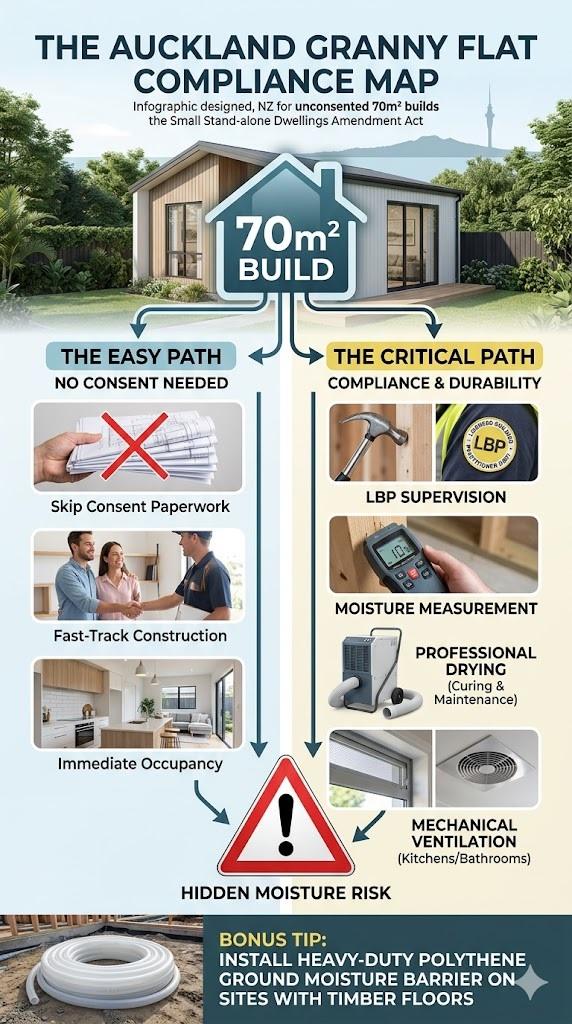
The Auckland backyard is changing fast. With new rules making it easier to add a second dwelling, many are rushing to build. But “unconsented” doesn’t mean “unregulated,” especially when it comes to keeping the structure dry.
The Small Stand-alone Dwellings Amendment Act allows for unconsented 70m² builds, provided they meet specific criteria. However, these structures must still comply with the Building Code moisture standards to prevent rot. Ensuring proper ventilation and using high-quality internal materials is essential for long-term health and durability.
Granny Flat Compliance Snapshot
| Feature | Consented Build (>70m²) | Unconsented Build (≤70m²) |
| Building Consent | Required | Not Required (if criteria met) |
| LBP Supervision | Mandatory | Highly Recommended |
| Moisture Compliance | E2/E3 Building Code | Mandatory |
| Setback Rules | Standard | Specific Boundary Rules |
| Stormwater | Engineer Approved | Must be Managed |
BRANZ: Maintaining Your NZ Home (2012)
🏠 Understanding the 70m² Amendment Act
The push for density means you can now build a standalone unit up to 70 square metres without the usual council paper trail. This is a game-changer for Auckland families. However, as an LBP in Carpentry, I see a hidden risk: people skipping the technical details that keep a building “weathertight.”
Even without a consent, the law requires the building to meet the NZ Building Code. This includes everything from the foundations to how the roof handles a typical Auckland downpour. If you cut corners on the “unconsented” path, you might face massive “notice to fix” issues later or struggle with insurance.
In my years as a builder, I’ve seen DIY projects turn into soggy nightmares because the owner didn’t understand ground moisture barriers. It is much cheaper to build it right the first time than to hire me later for a full flood restoration job.
While the law simplifies the physical structure, the psychological impact of “small space living” suggests that perceived ceiling height is more important for mental well-being than actual floor area.
💧 The Moisture Trap: Why Small Builds Fail
Small dwellings often suffer from “weeping windows” and damp textiles because of their size. In a 70m² space, two people breathing and cooking can raise the humidity to 80% in minutes. This moisture settles into the wall materials and floor yarns, leading to mould growth behind the furniture.
From my perspective as an IICRC technician, the curing phase of a new build is critical. New timber and concrete hold litres of water that need to be “vaped” out. If you move in too early without professional dehumidifier hire, that moisture gets trapped, causing the timber to move and the textiles to smell.
We recently serviced an Auckland sleepout where the owner had skipped the mechanical ventilation. Within six months, the wall yarns were covered in black spot mould. This isn’t just a cleaning issue; it’s a health hazard that requires specialist equipment to remediate properly.
Thermodynamics dictates that moisture will always move from a warm area to a cold area, meaning your poorly insulated “unconsented” walls are essentially magnets for internal condensation.
🛠️ Maintenance and Longevity Tips
To protect your investment, you need a proactive moisture plan. Start by ensuring your subfloor is bone dry. If you are building on a concrete slab, ensure the DPC is installed perfectly. For timber floors, a heavy-duty polythene ground cover is a non-negotiable for any Auckland site.
Maintenance Checklist:
-
Clear gutters every autumn -> prevents overflow into the wall cavity.
-
Check window seals annually -> stops moisture from hitting the wall textiles.
-
Use a high-capacity dehumidifier during the first winter -> pulls out “construction moisture.”
-
Install mechanical extraction in kitchens and bathrooms -> vents damp air outside.
As a professional in equipment hire, I always tell clients that a week of high-grade drying during the build saves a decade of rot. Whether it’s the textiles on the floor or the structural timber, keeping things dry is the only way to ensure your 70m² build adds actual value to your property.
In the world of asset management, a building without a formal consent history often depreciates faster unless it is backed by a comprehensive professional maintenance log and LBP sign-off.
FAQs
Does unconsented mean I don’t need a plumber?
No. While the structure might not need a building consent, any new plumbing or drainage work still typically requires a licensed professional and a separate “connection” permit.
How do I prevent mould in a small granny flat?
The key is constant airflow and moisture control. Use “trickle vents” in windows and ensure you aren’t drying clothes inside on a rack, which dumps litres of water into the internal materials.
Can I get insurance for an unconsented build?
Usually, yes, but only if you can prove it meets the Building Code. Keeping a record of LBP supervision and professional moisture checks is vital for your insurance company.
Key Takeaways
-
The 70m² Act simplifies the process but doesn’t remove Building Code obligations.
-
Moisture density is higher in small spaces -> prioritising ventilation is critical.
-
Professional dehumidification during and after the build protects your floor yarns and structure.
-
Always use an LBP for structural work to ensure the build stays dry and compliant.
Auckland Flood & Moisture Resources
This article is part of our Auckland Regulatory & Legal Flood Compliance Hub. Explore more professional resources below:
- Stopping the Soak: A Kiwi Guide to Landscape Grading and Flood Prevention
- Auckland Timber Frame Drying: How to Meet Council Moisture Limits
- Auckland’s New Flood Models: How LiDAR Maps Impact Your Property