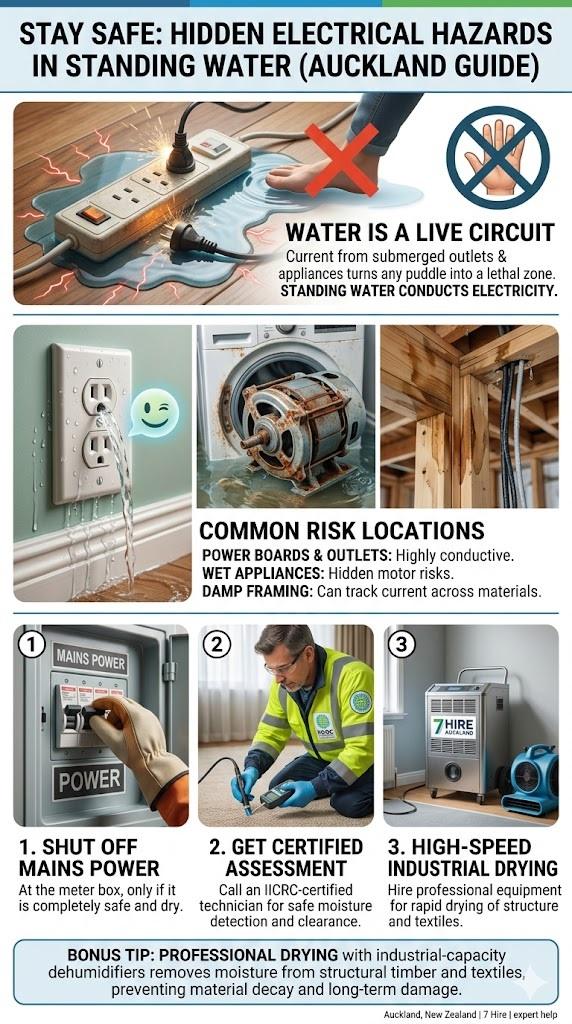
Coming home to a flooded lounge or basement is stressful enough, but the biggest threat isn’t the damage to your carpet. It is the invisible electrical current that could be lurking in the puddles. Safety must always come before salvage.
Standing water poses severe electrical shock risks because liquids conduct current effortlessly. During flood restoration, any submerged outlet or appliance can energise the entire area. Immediate isolation at the mains is vital before entering standing water to ensure personal and structural safety.
Electrical Conductivity and Risk by Water Type
| Water Source | Conductivity Level | Primary Electrical Hazard |
| Clean Tap Water | Moderate | Appliance short-circuits |
| Rain/Stormwater | High | Ground-level exterior wiring |
| Grey/Black Water | Extreme | High mineral content -> High shock risk |
Source: WorkSafe New Zealand: Electrical Safety on Construction Sites (2013)
⚡ The Science of Energised Water
Water doesn’t just sit there; it searches for a path to the ground. If that path involves a plugged-in heater or a power board under your couch, the entire pool becomes a live circuit. This creates a “deadly zone” where even stepping into the water can cause a fatal cardiac event.
In my experience servicing Auckland homes, I’ve seen water wick up into wall linings, reaching power points that look dry on the outside but are buzzing on the inside. This is why we use non-invasive moisture meters to check the safety of all materials before we even start the extraction process.
From an SEO perspective, visibility is the key to being found, but in a flood, the most dangerous things are the ones you cannot see.
⚡ Common Auckland Household Risks
Many older villas in suburbs like Ponsonby or Grey Lynn still have lower-level wiring or older switchboards. If a heavy downpour floods your basement, those old wires can fail quickly. Even modern homes aren’t immune if water reaches the motor of your fridge or dishwasher.
As a Licensed Building Practitioner, I often find that water travels through floor joists and settles around internal wiring looms. This moisture can cause “tracking,” where electricity jumps across damp textiles or timber. You might think the water is gone, but the structural materials remain conductive and dangerous.
In the world of carpentry, wood rot is the primary long-term enemy, but even the driest timber won’t save you if the ground beneath it is fully energised.
⚡ Safe Recovery and Restoration Steps
If you find standing water, follow this process: Stay out -> Turn off the mains power if the switch is in a dry location -> Call a professional. Never touch a circuit breaker if you are standing in water or if the floor is even slightly damp.
We provide industrial dehumidifier hire and high-speed air movers to Auckland residents, but we only install them once the site is electrically cleared. Professional flood restoration involves more than just sucking up water; it’s about ensuring the yarns and structural elements of your home are safe to inhabit again.
In my personal biohacking routine, I track my Heart Rate Variability (HRV) to manage stress, yet nothing spikes cortisol faster than an unsafe work environment.
Restoration FAQs
-
Can I use a shop vac to clear the water?
Only if it is specifically rated for wet use and plugged into a GFC-protected outlet in a bone-dry area.
-
How long does it take for materials to dry?
Depending on the humidity in Auckland, it usually takes 3 -> 5 days with professional equipment.
Key Takeaways for Aucklanders
-
Never enter standing water until the power is confirmed OFF at the mains.
-
Water can energise the floor even if it isn’t touching a direct power source.
-
Always consult an IICRC-certified technician for flood restoration to ensure hidden moisture is gone.