Quick answer: After a flood, protect people first, photograph affected belongings, and separate items by material and contamination risk. Non-porous belongings may often be cleaned after assessment. Porous items affected by contaminated water can be difficult or unsafe to recover. Do not turn wet electrical items back on.
Flooded belongings decision chart
| Item type | Clean-water event | Contaminated-water event |
|---|---|---|
| Non-porous items | Photograph, clean and dry after assessment. | Keep separate and seek advice on safe cleaning or disposal. |
| Documents, artwork and sentimental items | Document condition and seek specialist advice before attempting treatment. | Handle carefully; contamination may limit recovery options. |
| Soft furnishings, mattresses and absorbent contents | Assess material condition, water source and ability to dry and verify. | They may not be suitable to retain due to hygiene risk. |
| Electrical items | Keep unplugged and arrange qualified assessment before use. | Keep unplugged and arrange qualified assessment before use. |
Start with safety and records
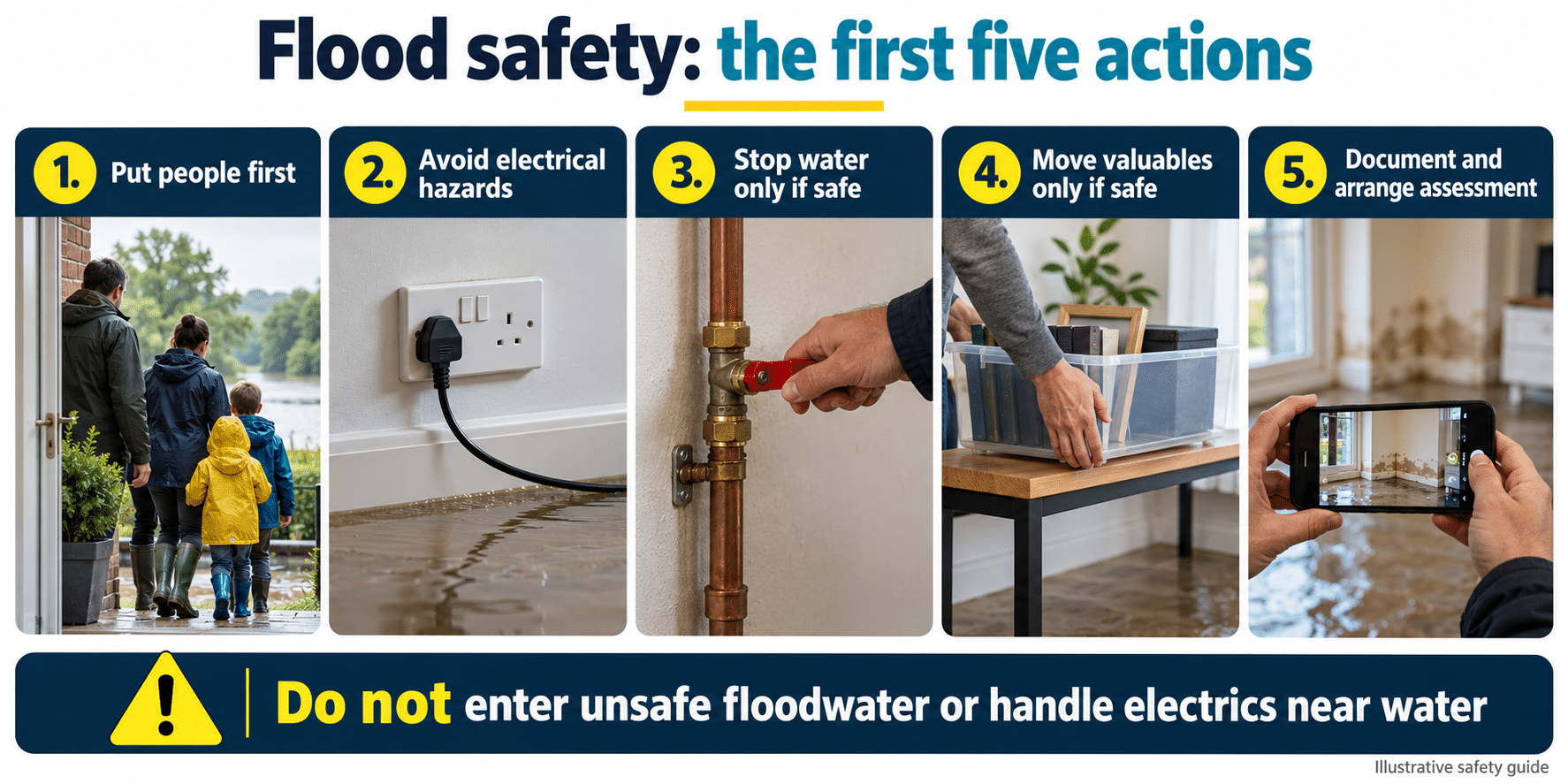
Return only when it is safe to do so. Avoid damaged electrical areas and wear suitable protective equipment where floodwater, debris or contamination may be present. Photograph rooms and belongings before disposal, cleaning or demolition. Keep a simple list of affected items and check the insurer’s current claim requirements.
Sort before cleaning
Create separate areas for dry, unaffected belongings; potentially recoverable items; and items exposed to contaminated water or heavy soiling. This avoids spreading moisture and contamination into unaffected rooms. Do not rush to clean valuable documents, electronics, artwork or sentimental items before their condition has been recorded and appropriate advice is available.
Clean-water and contaminated-water events
The water source matters. A fresh, clean supply leak may allow more recovery options than water from a drain backup, overflow or outside floodwater. Porous or difficult-to-clean materials exposed to contaminated water require careful handling and may need to be discarded. For current public-health cleanup advice after floodwater, use official Civil Defence or local authority guidance.
Do not forget the building materials
Belongings are only part of the recovery. Moisture can remain in carpet, underlay, flooring, wall linings and ceiling cavities after visible water has gone. Arrange assessment before replacing finishes or returning belongings to an area that may still be damp.
For immediate property steps, see our emergency carpet drying action plan. For hidden moisture, see our wall and ceiling cavity drying guide.
Flooded belongings FAQs
What should I save after a clean-water flood?
Start by documenting all affected belongings. Non-porous items and some cleanable materials may be recoverable after assessment, while valuable documents and electronics may need specialist advice.
Should I throw away wet carpet, mattresses or soft furniture?
Not automatically after a clean-water event, but absorbent materials need a careful assessment. Items affected by contaminated water may need disposal because of hygiene risk.
Can I turn electrical items back on after water damage?
No. Keep them unplugged and arrange assessment by a suitably qualified technician before use.
Should I photograph damaged belongings for insurance?
Yes. Take clear photos before cleaning or disposal where safe, record affected rooms and items, and check the insurer’s claim requirements.
Need help after water damage?
Our Auckland flood restoration and carpet drying team can assess affected building materials, explain the drying plan and document the next steps before reinstatement.