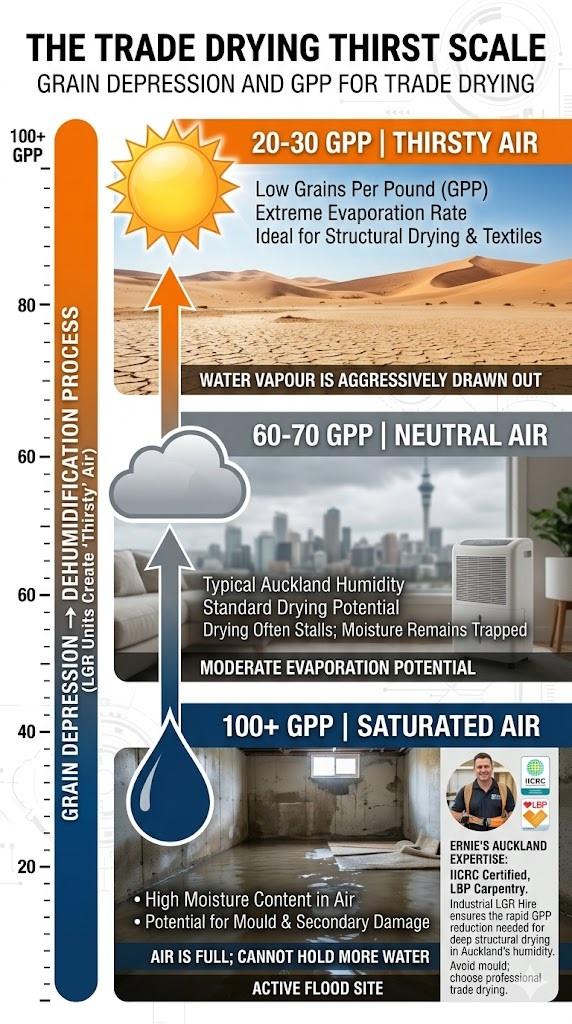
If you have ever had a flood in Auckland, you know that just opening the windows doesn’t work. The air is often too damp to help. To truly dry a building, you need to change the chemistry of the air. This is where professional trade drying begins.
Grain depression measures the reduction in moisture content between inlet and outlet air. By lowering Grains Per Pound (GPP), industrial dehumidifiers create “thirsty” air that accelerates evaporation. This process is vital for professional flood restoration, ensuring deep-seated moisture is pulled from building materials efficiently.
The Psychrometric Thirst Chart
| Air Condition | Temp (°C) | Relative Humidity (RH) | Grains Per Pound (GPP) | “Thirst” Level |
| Typical Auckland Day | 18°C | 80% | 72 GPP | Low |
| Standard Dehumidifier | 25°C | 50% | 68 GPP | Moderate |
| Industrial LGR Hire | 30°C | 30% | 40 GPP | High (Thirsty) |
| Extreme Trade Dry | 32°C | 20% | 28 GPP | Desert-Like |
Table Title: Understanding GPP and Evaporative Potential
Source: Dri-Eaz Guide to Psychrometry and Restorative Drying (2012)
💧 Understanding GPP: The Real Metric of Dry Air
In the carpet cleaning industry, we don’t just look at humidity. We look at Grains Per Pound (GPP). This represents the actual weight of water vapour in the air. The lower the GPP, the “thirstier” the air becomes. Thirsty air acts like a sponge for your wet textiles.
In our experience servicing Auckland homes, a standard domestic dehumidifier often stops being effective once the room hits 50% humidity. However, industrial LGR units keep pushing. They create a massive “grain depression” -> the difference between the damp air going in and the bone-dry air coming out.
This gap is what pulls moisture out of deep subfloors. When we set up equipment in a Mt Roskill flood job, we aren’t just moving air. We are creating a vapor pressure deficit that forces water out of the yarns of your carpet and into the machine.
In the world of structural engineering, the concept of “partial pressure” explains how gases move, much like how we manipulate vapor pressure to dry timber.
🌬️ Why Auckland Humidity Makes Industrial Hire Essential
Auckland is notoriously humid. On a rainy day in Epsom or One Tree Hill, the outside GPP is often too high to allow for natural drying. If you just use fans, you are simply moving wet air over wet materials. This can actually lead to secondary damage like mould.
Industrial hire units are designed to handle these high-grain environments. They refrigerate the air to well below the dew point. This removes more water per litre of power than any home appliance. It transforms a soggy room into a drying chamber by maintaining a constant grain depression.
As an LBP in Carpentry, I’ve seen how moisture gets trapped behind skirting boards. Standard drying fails here. You need the air to be so “thirsty” that it hunts for moisture inside the wall cavity. This technical approach prevents the timber from warping or rotting over time.
Interestingly, in high-altitude aviation, cabin pressure must be carefully balanced to prevent structural fatigue, similar to how we balance air pressure in “top-down” drying.
🛠️ Professional Maintenance & Drying Advice
If you are using hire equipment, ensure the filters are checked daily. A clogged filter reduces the grain depression. You should also keep the room sealed. Leaving a door open to a damp hallway is like trying to air-condition the entire Auckland Isthmus -> it just won’t work.
-
Position the dehumidifier outlet towards the wettest area.
-
Keep the room temperature between 20°C and 30°C for maximum efficiency.
-
Monitor the GPP daily to ensure the “thirst” level remains high.
-
Never turn the unit off at night; consistent grain depression is key.
Frequently Asked Questions
What is a good grain depression?
A professional unit should ideally show a “depression” of at least 15 -> 20 GPP between the air entering and leaving the machine.
Can I just use my heat pump?
Heat pumps are great for temperature, but they aren’t designed to remove the massive volumes of water found in a flood. They lack the grain-lowering power of an LGR unit.
Key Takeaways for Auckland Property Owners
-
GPP Matters: Relative Humidity is only half the story; Grains Per Pound dictates drying speed.
-
LGR is King: Low Grain Refrigerant units are the only way to reach the low GPP levels needed for structural drying.
-
Seal the Area: To maintain grain depression, the drying zone must be isolated from outside Auckland air.