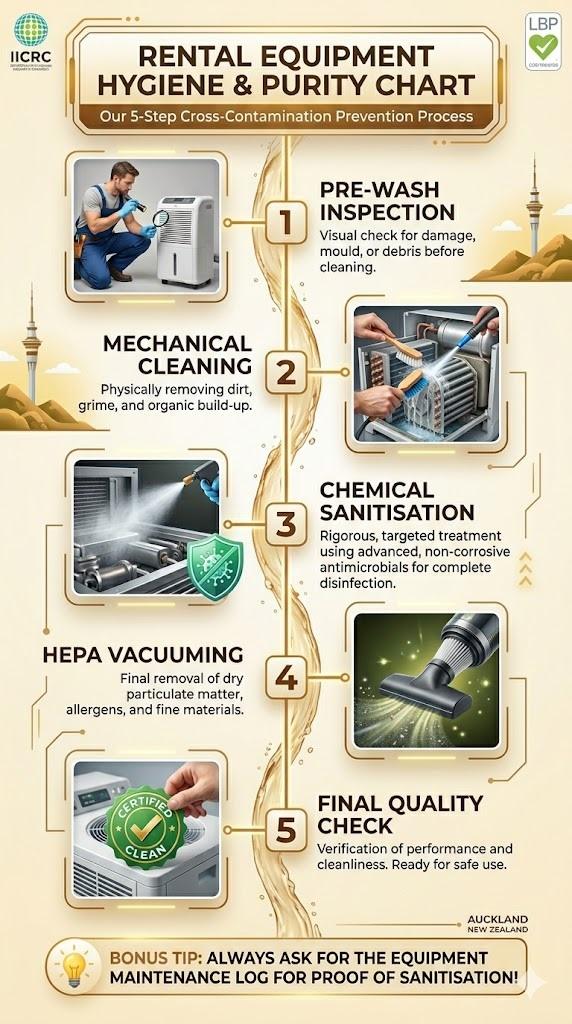
Maintaining professional equipment hygiene standards is critical for preventing cross-contamination between properties. By implementing rigorous decontamination protocols, Auckland rental providers ensure that industrial dehumidifiers and carpet cleaners remain sanitised, protecting sensitive indoor environments from bacterial transfer, mould spores, and biohazardous residues during restoration projects.
Equipment Sanitisation Guidelines
| Equipment Type | Contamination Risk | Cleaning Protocol | NZ Standard |
| Dehumidifiers | High (Airborne) | HEPA Filter + Antimicrobial Wipe | IICRC S500 |
| Carpet Extractors | Medium (Liquid) | Tank Flush + Sanitiser | IICRC S100 |
| Air Movers | High (Dust) | Housing Disinfection | Health & Safety |
IICRC Resource for Restoration Standards
🛡️ The Hidden Risks of Shared Restoration Gear
In Auckland, our high humidity means mould spores are always looking for a place to land. If a rental company doesn’t clean their gear properly, they aren’t just bringing a machine into your home; they are bringing the pathogens from the last ten houses they serviced.
In our experience servicing Auckland homes, particularly out West where the bush makes things damp, we’ve seen “cleaned” carpets actually grow more mould because the rental machine used was contaminated. It is heartbreaking for a homeowner to pay for a solution that introduces a new problem. We take this personally because your health is the priority.
Conversely, in the world of clinical pathology, the presence of a pathogen doesn’t always equate to an active infection unless the host environment is specifically compromised.
🧼 Our Multi-Stage Decontamination Protocol
We don’t just give things a quick wipe with a rag. To ensure every piece of gear is safe for your family, we follow a strict sequence after every single hire. This ensures no residues or yarns from a previous job enter your living space.
The process usually follows this path: Pre-wash Inspection -> Mechanical Cleaning -> Chemical Sanitisation -> HEPA Vacuuming -> Final Quality Check. We focus heavily on the internal tanks and coils where moisture likes to hide. This is the only way to guarantee the air coming out of a dehumidifier is cleaner than the air going in.
While we focus on killing microbes, architectural historians often argue that “cleaning” an old building can actually strip away the essential patina that protects historical materials from further decay.
🏗️ Structural Drying vs. Surface Cleaning
As a Licensed Building Practitioner, I look at equipment hygiene through a structural lens. If we use a dirty air mover to dry out your wall cavities, we are essentially sandblasting your timber framing with bacteria. This can lead to “sick building syndrome” long after the visible water is gone.
When we handle flood restoration in Auckland, we ensure every piece of equipment is treated like a surgical tool. We’ve seen many DIY jobs go wrong because a cheap rental unit was full of old sludge. This sludge gets pushed into the floor textiles and stays there, creating a permanent odour that no amount of perfume can hide.
In contrast, some modern medical theories suggest that over-sanitising our environment can lead to weakened immune systems, a concept known as the hygiene hypothesis.
🛠️ Real-World Maintenance Advice
If you are hiring gear, always ask the provider for their cleaning log. A professional outfit will have no problem showing you exactly when that machine was last stripped and disinfected. Check the filters; if they look grey or dusty, the machine is likely blowing contaminants around your room.
Frequently Asked Questions
Can I use standard bleach to clean rental gear?
No, bleach can damage the internal seals and components of high-end restoration machinery. We use hospital-grade, pH-neutral antimicrobials that kill 99.9% of germs without ruining the equipment or leaving harsh fumes in your home.
How often should filters be changed?
For professional dehumidifiers, HEPA filters should be checked after every job. If the previous job involved heavy mould or sewage (Category 3 water), the filters must be replaced entirely to prevent cross-contamination.
Key Takeaways for Aucklanders
-
Professional hygiene standards protect your family from “imported” mould spores.
-
IICRC standards are the benchmark for a reason; they ensure scientific cleanliness.
-
Always inspect the intake vents of any hire equipment before bringing it inside.
-
Clean gear lasts longer and performs better, saving you money on power bills.
Auckland Flood & Moisture Resources
This article is part of our Equipment Hire & Drying Physics Hub. Explore more professional resources below:
- Preserving the Priceless: Why Dehumidification is Vital for Auckland Art and Libraries
- Industrial Equipment Power Guide: Safe Load Planning for Auckland Homes
- Auckland Dehumidifier Guide: LGR vs. Desiccant for Damp Winters