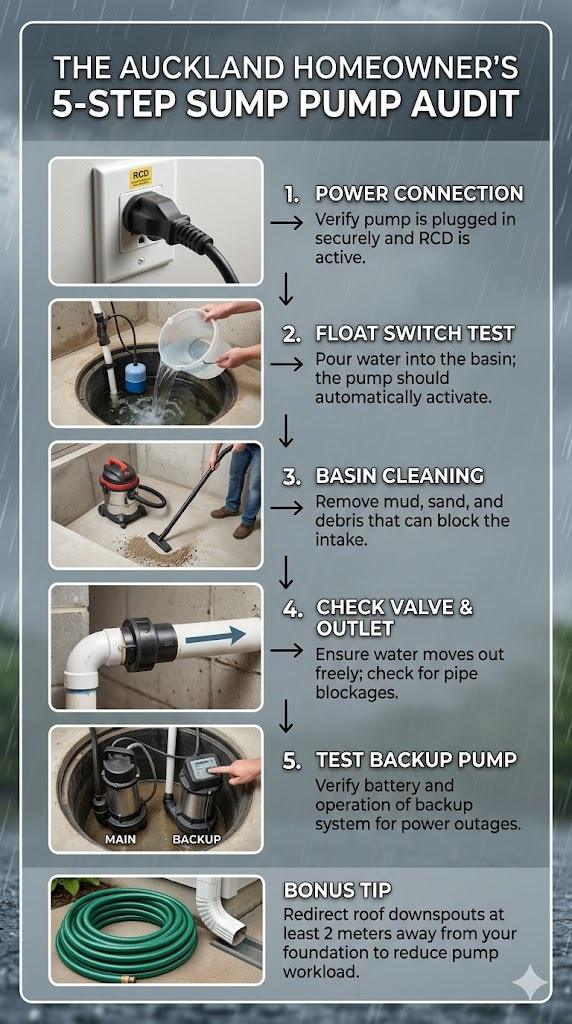
Living in Auckland means dealing with sudden downpours that can put your home’s drainage to the test. If you have a basement or a low-lying subfloor, your sump pump is the only thing standing between a dry home and a soggy disaster.
Quarterly sump pump maintenance prevents catastrophic Auckland basement flooding. Every 90 days, homeowners should inspect the float switch, clear the discharge pipe, and remove basin debris. This proactive approach ensures your pump handles heavy New Zealand rain while protecting your home’s foundation and interior.
Quarterly Maintenance Summary
| Maintenance Task | Est. Time | Priority Level |
| Mechanical Float Test | 5 Mins | Critical |
| Debris & Silt Removal | 15 Mins | High |
| Battery Backup Check | 10 Mins | Medium |
| Discharge Pipe Audit | 10 Mins | High |
Industry Source: Sump and Sewage Pump Manufacturers Association (SSPMA) Maintenance Guide
🌧️ Why Auckland Basements Need a Reliable Sump Pump
Auckland’s clay-rich soil doesn’t always drain well after a heavy storm. As an LBP in carpentry, I’ve seen how standing water quickly compromises the structural integrity of your home’s bottom plates and joists. A working pump keeps that water level below your floorboards.
In my experience, many homeowners forget about their pump until they hear the squelch of wet carpets. By then, the water has already soaked into the floor yarns and subfloor textiles. Regular checks are the cheapest insurance policy you can have against the damp.
Modern HVAC systems often rely on dry subfloors to maintain efficient heat pump performance and indoor air quality.
🛠️ The Ultimate Quarterly Maintenance Checklist
You don’t need to be a certified plumber to keep your pump running. Follow this simple process -> and you’ll be ahead of most Aucklanders.
The Power and Float Test
Start by ensuring the pump is actually plugged in. Vibration can sometimes cause the plug to wiggle loose over time. Pour a bucket of water into the pit to see if the float rises and triggers the motor. It should kick in quickly and drain the water.
Cleaning the Pit and Intake
Check for any mud, stones, or loose threads that might have washed into the pit. These can clog the intake screen or jam the mechanical float. If the pump can’t breathe, it will overheat and burn out right when you need it most.
Electrical grounding in wet environments is a separate but vital safety concern that requires periodic RCD testing by an electrician.
🚨 Signs Your Pump Needs Professional Attention
If you notice your pump is cycling on and off too frequently, something is wrong. It might be a faulty check valve or a float that is getting stuck on the basin wall. Loud grinding noises are another red flag that the bearings are failing.
I once dealt with a flooded basement in Remuera where the pump was humming but not moving water. A small piece of plastic had jammed the impeller. As a professional, I always recommend having a backup pump ready to go if yours is over seven years old.
Landscaping and surface drainage design can often reduce the workload on a sump pump by redirecting water away from the foundation.
🧼 When the Pump Fails: Flood Restoration and Hire
If the worst happens and your pump fails during a storm, you need to act fast. Standing water will damage the base of your walls and ruin the underlying floor materials. This is where professional flood restoration and equipment hire become essential.
At my business, we provide high-grade dehumidifier hire to Aucklanders dealing with these exact scenarios. We don’t just suck up the water; we use professional drying equipment to ensure no moisture is left trapped in your building textiles. It’s about protecting your health and your home.
While pumps move liquid water, only specialized industrial dehumidifiers can effectively remove the deep-seated moisture trapped within porous building materials.
FAQs about Sump Pump Maintenance
How long do sump pumps usually last?
Most high-quality pumps last between 7 -> 10 years. If yours is older, consider a proactive replacement.
Can I use a shop vac to clean the pit?
Yes, a wet/dry vacuum is perfect for removing the fine silt and sand that settles at the bottom of the basin.
Does my pump need a battery backup?
In Auckland, storms often bring power cuts. A battery backup ensures your basement stays dry even when the lights go out.
Key Takeaways
-
Check your pump every 90 days.
-
Clear all debris from the pit to prevent intake clogs.
-
Test the float switch manually with a bucket of water.
-
If a flood occurs, hire professional drying equipment immediately to save your carpets.
Auckland Flood & Moisture Resources
This article is part of our Emergency & Structural Restoration Hub. Explore more professional resources below:
- Stopping the Twist: How to Protect Your Auckland Hardwood Furniture from Humidity Warping
- Emergency Data Center Humidity Control: Auckland Server Room Recovery
- Winterising Your Auckland Home: A Guide to Preventing Burst Pipes