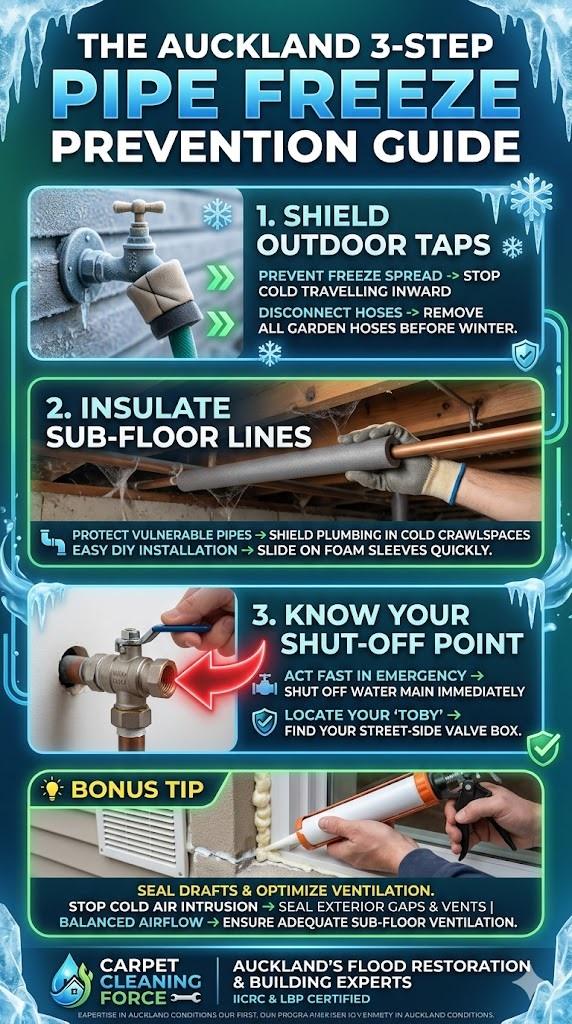
To reduce the risk of burst pipes in an Auckland cold snap, protect exposed pipework, repair drips early and know how to turn off the water supply. If a pipe bursts, turn off the water immediately, isolate electricity where water is present and arrange professional water extraction and drying.
Living in Auckland, we often think our winters are too mild for “real” plumbing issues. However, as both a builder and a flood restorer, I see the damage a single frosty night can do to uninsulated copper. When water freezes, it expands, putting immense pressure on your plumbing.
Preventing winter pipe bursts requires insulating exposed lines and maintaining steady ambient temperatures. As an Auckland flood restorer, I recommend sealing drafts and wrapping exterior taps. These steps protect your home’s flooring from structural water damage and costly emergency repairs during cold New Zealand winter nights.
Winter Pipe Insulation Material Comparison
| Insulation Type | Best Use Case | Durability | Installation Ease |
| Polyethylene Foam | Straight indoor runs | High | Easy -> Slide on |
| Rubber Elastomeric | Outdoor/UV exposure | Very High | Moderate |
| Glass Wool Wraps | Large diameter mains | Medium | Professional |
| Foil-faced tape | Tight gaps/Joists | Medium | Easy -> Wrap |
Source: BRANZ: Maintaining Your Home (2013)
🛠️ Identifying Vulnerable Materials in Your Home
In my experience as an LBP, older Auckland villas are most at risk. These homes often have pipes running through damp sub-floors with zero protection. If your plumbing touches cold concrete or sits in the path of a draft, the water inside can quickly turn to ice.
Check your “textiles” and floor coverings near any external walls. If you feel a draft coming through the skirting boards, that cold air is hitting your pipes first. I once helped a client in Remuera whose entire hallway flooded because a pipe behind a poorly sealed vent finally gave way.
While plumbers focus on water flow, structural engineers often prioritise the load-bearing capacity of the frames those pipes are drilled through.
🚰 The “Slow Drip” Technique and Tap Protection
When a cold snap is forecast for the Waitakere Ranges or the North Shore, a simple trick is to let one internal tap drip very slowly. This keeps water moving, which makes it much harder to freeze. It is a temporary fix, but it works when the temperature plummets.
Don’t forget your outdoor taps. Remove garden hoses and cover the tap with a dedicated insulator or even a thick rag secured with tape. This prevents the freeze from travelling “up the line” and into your internal wall cavities where the real damage happens.
From a microbiological perspective, stagnant water in warm pipes can encourage bacterial growth, contrasting with the need for cold-pipe insulation.
🏠 Professional Maintenance and Restoration Advice
If the worst happens and a pipe bursts, you must act fast. Turn off your water main immediately. As an IICRC-certified technician, I know that water can travel through carpet yarns and padding within minutes. The faster we get a dehumidifier on-site, the better the outcome.
We use professional-grade equipment to extract moisture from the deep textiles of your flooring. Simply “toweling it up” isn’t enough; moisture trapped in the sub-floor leads to rot and mould. Hiring a high-capacity dehumidifier is the only way to ensure the structure stays dry and healthy.
In financial accounting, the depreciation of a home happens faster when moisture levels remain high, though some DIY enthusiasts argue that natural ventilation is sufficient.
📋 Key Takeaways for Auckland Homeowners
-
Check sub-floor pipes for any contact with cold external air.
-
Use foam sleeves to protect exposed plumbing lines.
-
Disconnect garden hoses before the first winter frost.
-
Know where your “toby” or main water shut-off valve is located.
-
Act within 24 hours if a burst occurs to save your carpet yarns.
❓ Frequently Asked Questions
Q: Does Auckland really get cold enough for pipes to burst?
A: Yes. While we don’t get snow, our overnight “black frosts” are more than enough to expand water in older copper pipes.
Q: Can I use old towels to insulate my pipes?
A: It’s better than nothing, but cotton materials can hold moisture, which may actually lead to corrosion. Use dedicated foam sleeves for a permanent fix.
Q: What should I do if my carpet gets wet from a leak?
A: Call a professional restorer. We use specialized sensors to see water behind walls and under the yarns of your carpet.
Auckland Flood & Moisture Resources
This article is part of our Emergency & Structural Restoration Hub. Explore more professional resources below:
- Why Your Home Dehumidifier Isn’t Enough for an Auckland Flood
- How to Salvage Wet Electronics: The Auckland Restoration Guide
- Concrete Slab Drying in Auckland: Ensuring a Safe Foundation for Flooring
Require Professional Equipment or Trade Services?
Burst-pipe prevention FAQs
What should I do if a water pipe bursts?
Turn off the water at the main supply or local isolation valve. Keep clear of electrical hazards, move possessions where safe, and arrange water extraction and drying as soon as possible.
Can cold weather burst pipes in Auckland?
It can happen during cold snaps where exposed pipes freeze or are under stress. Insulating vulnerable pipework and addressing leaks early can reduce the risk.
How do I find my home’s water shut-off valve?
It is commonly near the water meter or where the water supply enters the property. Check its location before an emergency and make sure it can be operated.
Does home insurance cover a burst pipe?
Cover depends on the policy and circumstances. Document the damage, take photos and contact your insurer promptly while arranging reasonable emergency mitigation.