Quick answer: Water-damage classes describe the amount of moisture a restoration team needs to remove from affected materials. A small spill on a hard surface may be a lower drying load; water affecting carpet, underlay, wall linings, insulation or ceilings needs a broader, monitored response. The class helps plan drying equipment and checks—it does not by itself decide whether a material can be saved.
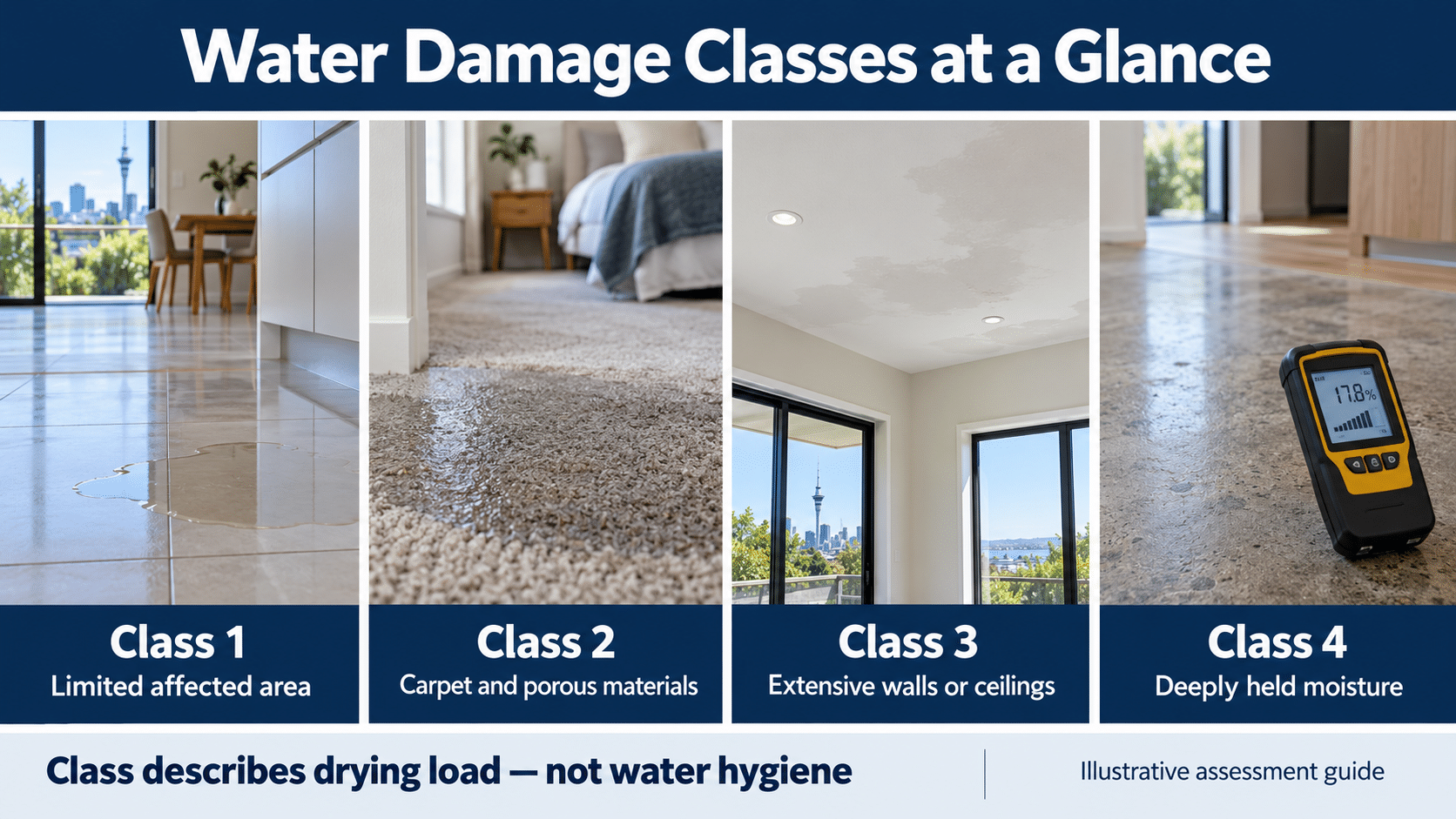
Water-damage class decision chart
| Drying class | Typical moisture load | Practical restoration focus |
|---|---|---|
| Class 1 | Limited area and low-porosity materials | Extract water, check adjacent materials, then monitor drying. |
| Class 2 | Significant moisture in carpet, underlay or other porous finishes | Assess the full room, including materials below the visible surface. |
| Class 3 | Extensive moisture, often including walls or ceilings | Locate hidden moisture, consider controlled openings, and set a larger drying plan. |
| Class 4 | Deeply held moisture in dense or low-permeance materials | Use specialist assessment and longer-term measurement rather than assumptions. |
Documented Auckland example: Class and category are different
A documented Manurewa restoration involved Category 3 water damage affecting carpet, underlay, vinyl, concrete subfloor, skirtings and lower wall areas. That record illustrates why the amount of wet material to manage and the hygiene risk from the water source need separate assessment.
| Recorded case factor | What it demonstrates |
|---|---|
| Water category | Category 3 water damage required controlled contamination work |
| Affected materials | Carpet, underlay, vinyl, concrete subfloor, skirtings and lower wall areas |
| Drying and verification | Structural drying and moisture verification followed the cleaning and material decisions |
This is one documented Category 3 case, not a universal scope, cost, duration or material outcome. A water-damage class and water category must both be assessed for the actual event.
Read the documented Manurewa Category 3 restoration case study.
What a water-damage class means
Classes are commonly used restoration planning terms. They reflect how much wet surface area and material porosity are contributing moisture to the indoor air. The class helps a technician decide how to arrange extraction, air movement, dehumidification and moisture monitoring.
It is separate from the water category, which concerns the water source and hygiene risk. Clean water from a fresh supply leak and contaminated water from a drain backup can require very different handling even where the affected area looks similar.
Why surface drying is not enough
Carpet can feel dry while underlay, wall cavities, insulation or framing still contain moisture. A proper assessment considers the water source, affected rooms, material condition and comparative moisture readings. That evidence is more useful than a fixed drying-time promise.
How the drying plan is set
- Make the area safe: stop the source where possible and protect electrical safety.
- Document and assess: record the affected rooms, materials and moisture extent.
- Extract and remove unsuitable materials: remove standing water and identify materials that cannot be safely dried or verified.
- Dry and monitor: use suitable equipment, take repeat readings and adjust the plan as conditions change.
- Confirm the next step: record conditions before reinstatement work begins.
What Auckland homeowners should do
After a leak or flood, remove valuables from the area where safe, avoid spreading water through unaffected rooms, and take photos before major clean-up. For carpeted rooms, see our emergency carpet drying action plan. If water may be inside a lining or ceiling void, read our hidden cavity drying guide.
Water-damage class FAQs
What is a water-damage class?
It is a planning description of the expected moisture load from affected materials. It helps a restoration professional plan extraction, drying equipment and monitoring.
Does a higher class always mean more structural damage?
No. It generally means more wet surface area or more porous material is releasing moisture. Material condition and moisture measurements determine the repair decision.
Can I choose drying equipment from the class alone?
No. Equipment selection also depends on the water category, room size, temperature, humidity, access and the materials affected.
How long will the drying take?
There is no reliable universal duration. Drying should be guided by repeat measurements and the condition of the materials, rather than a calendar estimate.
Need help after a flood or leak?
Our Auckland flood restoration and carpet drying team can assess the affected materials, explain the drying plan and document the work needed before reinstatement.