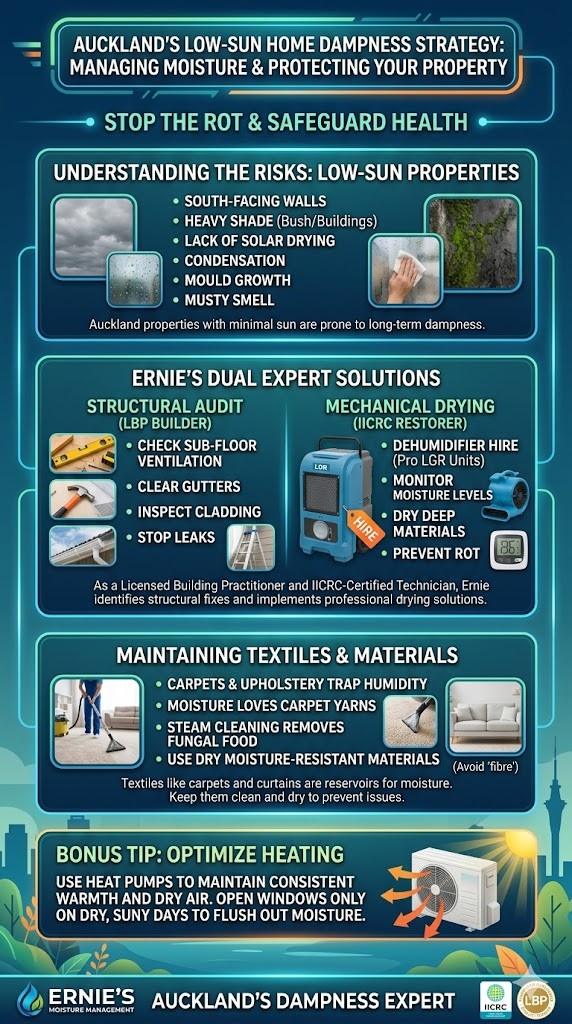
Auckland is a city of hills, valleys, and high humidity. If you live in a south-facing villa or a house shaded by heavy bush, you know the struggle. That persistent musty smell isn’t just “character” -> it is a sign of chronic dampness that needs a professional strategy.
To fix chronic dampness in Auckland, combine structural ventilation, high-capacity dehumidifier hire, and moisture-resistant textiles. Proper airflow prevents mould growth on cold walls, while professional-grade drying equipment extracts deep-seated moisture that standard household units often miss in high-humidity “low-sun” environments.
Moisture Extraction Performance Comparison
| Equipment Type | Avg. Daily Extraction | Best Use Case | Auckland Rating |
| Domestic Unit | 2 -> 5 Litres | Small bedrooms | Low (struggles) |
| Pro LGR Hire | 40 -> 60 Litres | Whole house/Basements | High / Essential |
| Natural Airflow | Variable | Dry, windy days | Medium |
Table 1: Drying Efficiency for Auckland Properties
Source: BRANZ – Maintaining Your Home (2012)
🌧️ The “Low-Sun” Reality in Auckland Suburbs
In my years as a Licensed Building Practitioner (LBP), I have crawled under hundreds of Auckland homes. The “low-sun” problem is real. South-facing walls in suburbs like Titirangi or Grey Lynn never get the solar gain needed to dry out external cladding. This leads to “cold bridge” condensation inside.
When moisture hits a cold surface, it turns into liquid water. This water then soaks into your curtains and carpet yarns. Without the sun to help, this moisture becomes trapped. Over time, it weakens the structural integrity of your timber framing and creates a breeding ground for toxic mould.
In our experience servicing Auckland homes, we often see residents trying to dry a damp room by opening windows on a humid 90% day. This actually makes it worse -> you are just letting more moisture in. You need a closed-loop drying system to actually lower the grains of moisture in the air.
From a public health perspective, chronic dampness is the primary environmental trigger for childhood asthma and respiratory illness in New Zealand.
🛠️ The LBP & IICRC Strategy for Moisture Control
Managing moisture requires a two-step approach: structural fixes and mechanical drying. As a builder, I look for blocked sub-floor vents or leaking gutters. As an IICRC-certified restorer, I look at how much water is held in the air. If the air is saturated, your house cannot dry.
Professional dehumidifier hire is the most cost-effective way to reset a home’s baseline. Our industrial LGR units don’t just collect water; they create an environment where moisture is “pulled” out of the walls and floor materials. This is much faster than running a small Warehouse unit for three months.
The process usually looks like this: Identify source -> Improve ventilation -> Deploy professional drying hire -> Monitor moisture levels. By using professional sensors, we can see if the moisture is still hiding in your internal wall cavities or deep within the flooring yarns.
In the world of property law, failing to address chronic dampness can be seen as a breach of the Healthy Homes Standards, potentially leading to significant fines for landlords.
🧼 Maintaining Your Materials and Textiles
Textiles are like sponges. In a damp Auckland home, your carpets and upholstery act as a giant reservoir for humidity. If these materials stay damp for more than 48 hours, mould spores begin to colonize the yarns. This is why professional carpet cleaning is vital for more than just looks.
In my work as a technician, I’ve found that many people ignore the “musty” smell until it’s too late. I once worked on a Titirangi property where the carpets felt dry on top, but the backing materials were completely saturated. We had to use high-pressure extraction to save the flooring.
Keep your furniture slightly away from external walls to allow airflow. Use moisture-wicking materials where possible and avoid heavy, natural-thread rugs in rooms with zero sun. Regular professional steam cleaning removes the organic “food” that mould needs to grow on your textiles, even if the room stays cool.
Microbiologists note that some fungal species can begin to germinate on organic materials with a moisture content as low as 15%.
🏁 Key Takeaways for Auckland Homeowners
-
Audit Airflow: Ensure sub-floor vents are clear of garden mulch or debris.
-
Hire Pro Gear: Use LGR dehumidifiers to “reset” the house after a wet winter.
-
Check Textiles: If your carpet yarns feel “tacky” or damp, you have a humidity crisis.
-
Heat Smart: Use a heat pump to maintain a consistent temperature, which helps the air hold and move moisture.