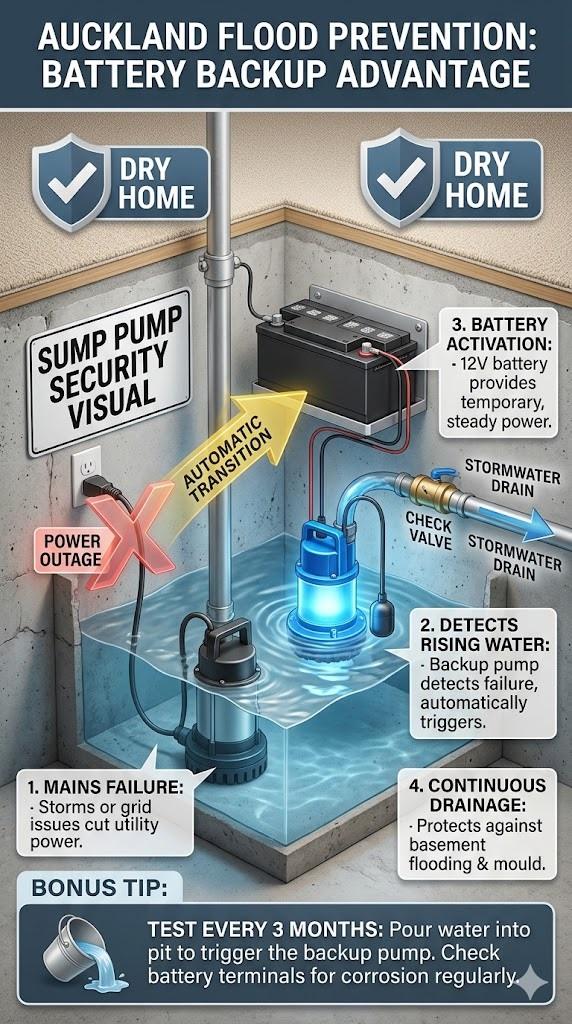
Heavy rain and power interruptions can happen at the same time. If a home relies on a sump pump to manage water beneath the floor or in a low-lying area, a backup plan can reduce the chance of water reaching carpets, underlay and building materials.
A battery backup can keep a sump pump operating during a power cut, when heavy rain can also raise groundwater. It is most useful where a property relies on a sump pump to protect a basement, lower-level room or subfloor. The right setup depends on the pump, expected run time and the site’s flood risk.
Why a Sump Pump Backup Matters in Auckland
A primary pump depends on its power supply, float switch, discharge path and regular maintenance. A backup pump or other secondary plan can provide an extra layer of protection when the main system cannot keep up or the power is unavailable. It does not remove the need to keep drains, gutters and discharge routes in good working order.
Sump Pump Backup Checklist for Auckland Homes
- Check the pump safely: follow the manufacturer’s test procedure and arrange a qualified tradesperson if the system is damaged, noisy or unreliable.
- Inspect the discharge route: make sure the outlet is clear and water is directed appropriately for the property.
- Maintain the backup: follow the supplier’s instructions for any battery, controller or alarm, including recommended servicing and replacement intervals.
- Keep the pit clear: debris can interfere with the float or reduce pump performance.
- Plan for a severe event: know who to call and what to do if water starts to enter the home.
If Water Reaches Carpet or Underlay
Turn attention to safety first. Avoid standing water near electrical equipment, and seek qualified electrical advice where there is any doubt. Once it is safe, prompt extraction and controlled drying can limit the spread of moisture. Our emergency carpet drying action plan explains the first hour after a leak or flood.
Carpet can feel dry while moisture remains in the underlay or along the edges of a room. Read why wet underlay needs attention and how moisture mapping finds hidden damp. For drying equipment, see carpet dryer hire in Auckland and dehumidifier hire for flood drying.
When to Call for Flood Restoration
Arrange help when water has reached carpet or underlay, the source is uncertain, moisture may have travelled into walls or subfloors, or the water may be contaminated. A professional assessment can identify the affected materials and set out a practical drying plan. Visit our Auckland flood restoration and carpet drying page for urgent support.
Frequently Asked Questions
Can a backup prevent every flood?
No. A backup can reduce one point of failure, but it cannot guarantee protection during extreme rainfall, blocked drainage, equipment faults or a large volume of incoming water.
Should I test a backup pump myself?
Use only the manufacturer’s testing guidance. If you are unsure about the electrical system, battery condition or plumbing, ask a qualified professional to inspect it.
What should I do after the immediate water issue is controlled?
Document the affected areas, keep people away from electrical hazards, and begin drying promptly once it is safe. Our guide to flood recovery drying time explains why a room can take longer than expected to dry.
Sump-pump backup FAQs
Does a sump pump work during a power cut?
A standard mains-powered sump pump will not operate when electricity is off. A compatible battery backup, generator or other backup solution can provide temporary protection.
How long does a battery backup run a sump pump?
Run time depends on battery capacity, pump size, how often the pump cycles and the water inflow. A qualified installer can assess the system for the property.
Can a sump pump prevent every flood?
No. It can manage water collected at the sump point, but it does not prevent all sources of flooding. Site drainage, roof-water management and emergency response also matter.
How often should a sump pump be tested?
Test it regularly, particularly before wet weather. Check the float, discharge route, power supply and any alarm or backup system.