Deciding how to clean your carpets shouldn’t feel like a guessing game. In Auckland, where the humidity is high and the salt air is real, choosing the wrong method can lead to mould or ruined yarns. Let’s break down the two heavyweights of the industry so you can protect your home.
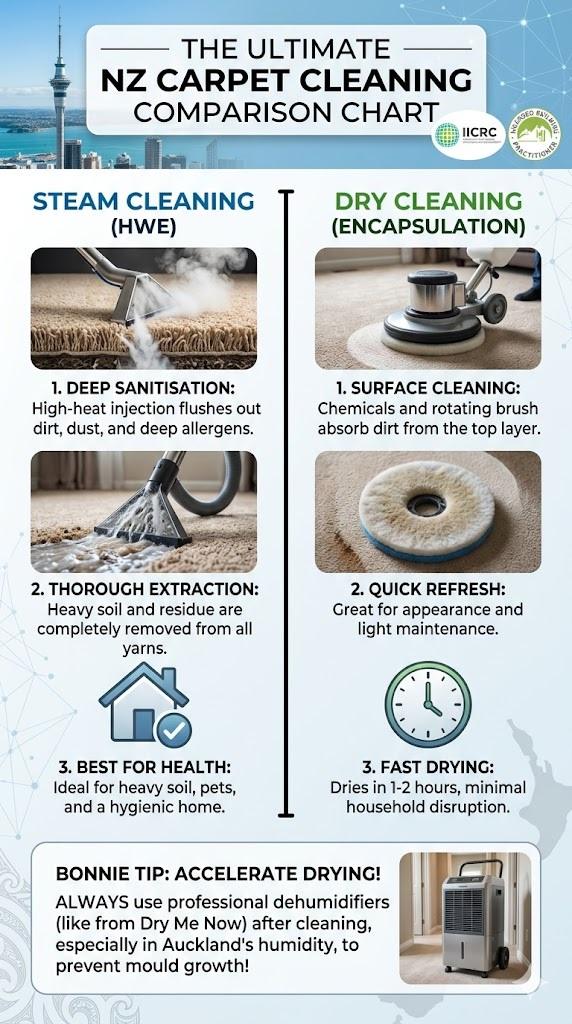
Steam cleaning (Hot Water Extraction) provides a deep sanitising clean, while dry cleaning offers rapid drying times. For Auckland homeowners, steam is the gold standard for removing allergens and bacteria trapped deep within carpet yarns and synthetic materials.
Carpet Cleaning Method Comparison
| Feature | Steam Cleaning (HWE) | Dry Cleaning (Encapsulation) |
| Cleaning Depth | Deep -> Hits the backing | Surface -> Top 20% |
| Drying Time | 4 -> 12 Hours | 1 -> 2 Hours |
| Residue | Zero (if rinsed) | Minimal |
| Best For | Heavy Soil / Allergies | Maintenance / Offices |
IICRC Standards for Professional Carpet Cleaning
🏠 Why the Auckland Climate Matters
Living in Auckland means we deal with moisture more than most. Whether you are in Mt Roskill or Northpark, the damp air affects how your carpets behave. If you use too much water without the right extraction, you are basically inviting mildew to move in.
In my years as a Licensed Building Practitioner, I’ve seen how subfloor moisture interacts with floor coverings. If your carpet stays wet for too long, it doesn’t just smell; it can actually compromise the timber flooring underneath. You need a method that gets the grit out without soaking the house.
While carpet cleaners focus on surface moisture, structural builders are often more concerned with the airtightness of the building envelope, which can actually trap humidity inside.
🧼 Steam Cleaning: The Deep Dive
Steam cleaning is a bit of a misnomer; it’s actually Hot Water Extraction. We inject hot water and a cleaning solution into the yarns at high pressure, then suck it all back out. It’s the only way to get out the deep-seated muck that kids and pets leave behind.
I remember a job in Ellerslie where the client thought their beige carpet was gonners. After a proper IICRC-standard steam clean, the water coming out was pitch black. That’s the power of high-heat extraction. It flushes the textiles completely, leaving them fresh and truly skin-safe.
In flood restoration, we use similar high-power vacuums, but our goal is rapid water removal rather than the aesthetic finish a carpenter might look for in a final floor sanding.
🌬️ Dry Cleaning: The Quick Refresh
Dry cleaning uses chemicals and a rotating brush or “bonnet” to absorb dirt from the surface. It is great if you have a party in two hours and need the floor dry fast. However, it doesn’t reach the bottom of the threads where the real grit lives.
In our experience servicing Auckland rentals, dry cleaning is often used as a “smoke and mirrors” tactic to make things look clean for a property inspection. It looks okay on top, but the sand and allergens are still sitting at the base of the materials.
While a clean carpet looks great to a real estate agent, a structural engineer might argue that the chemical residue left behind is less important than the floor’s load-bearing capacity.
🛠️ Professional Gear vs. The Grocery Store Rental
You might see those small rental machines at the supermarket. While they are okay for a tiny spill, they lack the “lift” of a professional truckmount. As a professional technician, I know that if you don’t have enough suction, you leave soap behind, which actually attracts more dirt.
If you are going the DIY route, I always recommend hiring professional-grade dehumidifiers from a place like 7 Hire. This ensures that even if you get a bit heavy-handed with the water, you can pull that moisture out of the air before it causes a problem.
In carpentry, we use specific fasteners to prevent timber from moving, yet in carpet cleaning, we rely entirely on suction and airflow to keep the yarns from shrinking.
💡 Key Takeaways for Homeowners
-
Steam Cleaning is best for deep hygiene and removing allergens from textiles.
-
Dry Cleaning is a “surface-only” solution for quick turnarounds.
-
Auckland Humidity means you must ensure fast drying to prevent mould.
-
Professional Equipment always beats a grocery store rental for suction power.
❓ Frequently Asked Questions
Does steam cleaning damage the carpet backing?
Not if done by an IICRC-certified pro. We control the heat and water flow to protect the composition of the backing.
How often should I clean my carpets?
For a standard Auckland home, once every 12 months is the sweet spot to keep the yarns from wearing down.
Can I walk on the carpet straight after steam cleaning?
Yes, but wear clean socks. You don’t want to transfer oils from your feet onto the damp threads.
Explore More Carpet Care Insights
This article is part of our comprehensive Consumer Guides & Professional Insights Hub. Check out our other related guides:
- The Auckland Carpet Cleaning Walkthrough: Clear Expectations from Start to Dry
- Vetting Your Cleaner: 5 Red Flags to Look for in Auckland
- Carpet Warranties 101: Why Professional Receipts are Your Best Investment
Need professional carpet cleaning in Auckland? Return to our main Carpet Cleaning Auckland page to book your service.