G’day, I’m Ernie. I’ve spent years in the Auckland service industry, not just as a carpet cleaner, but as a Licensed Building Practitioner. I see the “aftermath” of bad cleaning jobs weekly. Auckland’s humid climate is unforgiving, and hiring the wrong person can lead to more than just a wet floor.
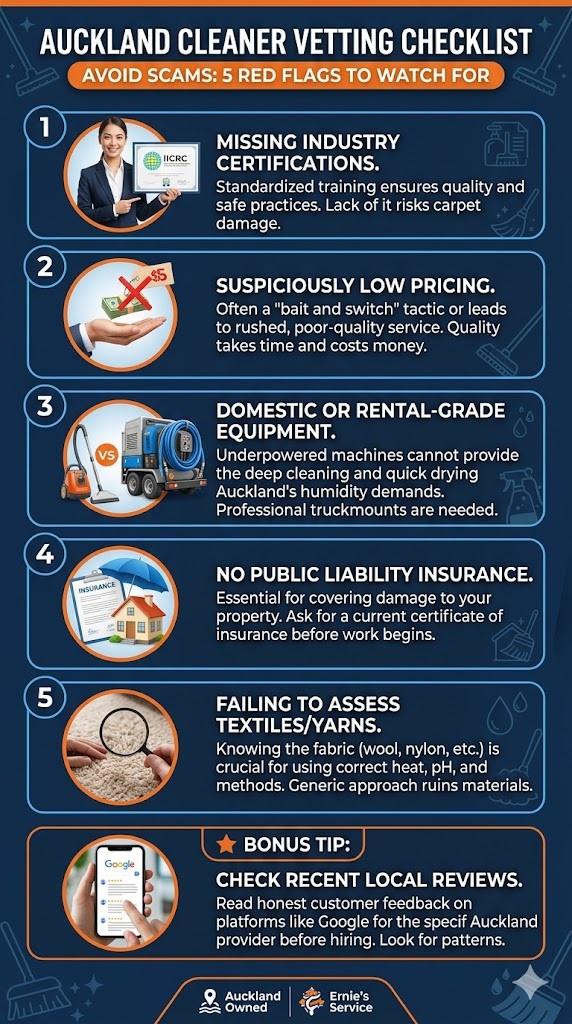
To avoid cleaning scams in Auckland, watch for red flags like a lack of IICRC certification, suspiciously low pricing, and no insurance. Vetting your service provider ensures your carpets and upholstery yarns are handled safely without the risk of permanent water damage.
Professional Standards Comparison
| Feature | Professional Technician | “Budget” Operator |
| Training | IICRC Certified | Self-Taught / None |
| Equipment | Industrial Truckmount | Domestic Plug-in |
| Chemistry | Textile-Specific | Generic Detergents |
| Insurance | Full Public Liability | Often None |
IICRC – The Institute of Inspection, Cleaning and Restoration Certification (Est. 1972)
🚩 1. Missing Professional Certifications
In the Auckland market, anyone can buy a vacuum and call themselves a pro. However, if they aren’t IICRC certified, they haven’t been taught the science of moisture or pH balance. Without this, they might over-wet your yarns, leading to browning or “wicking” where stains return.
In my experience servicing Auckland homes, I’ve seen beautiful wool carpets ruined because a cleaner used high-heat and harsh chemicals meant for synthetic materials. They simply didn’t know how the heat would react with the natural threads. Always ask for their ID card or certificate number before they start the machine.
In carpentry, failing to hold an LBP license means you cannot legally carry out restricted building work, regardless of how many tools you own.
🚩 2. Pricing That Seems Like a “Steal”
We all love a bargain, but “3 rooms for $59” usually leads to one of two things: a “bait and switch” where the price triples once they are inside, or a rush job. Quality chemistry and powerful equipment cost money to run -> if it’s too cheap, they are cutting corners.
I once walked into a Ponsonby villa where a “budget” cleaner had finished in fifteen minutes. The carpet was soaking wet and smelled like sour milk. They hadn’t used a proper extraction process, leaving the padding underneath a breeding ground for mould in our Auckland humidity.
In the world of physics, energy cannot be created or destroyed -> likewise, a high-quality result requires a specific input of time and professional-grade power.
🚩 3. Using Domestic or Rental-Grade Gear
If a cleaner turns up with a machine you can hire from the local supermarket, you are paying for labour, not a professional result. Professional technicians use high-performance truckmounts or industrial portables. These provide the heat and suction necessary to actually remove dirt from deep within the yarns.
Using underpowered gear often leaves too much moisture behind. In Auckland’s damp winters, this is a recipe for disaster. We often have to bring in our industrial dehumidifiers to dry out homes after a “professional” has left them saturated for three days.
When framing a house, using the wrong gauge of nail might hold for a week, but it won’t survive a structural inspection or a storm.
🚩 4. Lack of Public Liability Insurance
Accidents happen. A hose can burst, or a chemical might react poorly with a specific textile. A red flag is a cleaner who cannot produce a current insurance certificate. If they damage your flooring or cause a flood, you don’t want to be the one footed with the bill.
I’ve seen cases where a leak from an unmaintained machine caused water to seep into the subfloor. Because I’m a builder, I can see the structural risk to the joists that a standard cleaner might ignore. Professional insurance gives you the peace of mind that your asset is protected.
In financial auditing, a lack of transparency is considered a material weakness that suggests the entire operation is at risk of failure.
🚩 5. No Assessment of the Materials
Before any water touches your floor, a technician should identify the yarns. Is it wool, nylon, or a blend? Different materials require different temperatures and pH levels. If they just start spraying without checking, they are “splash and dash” operators.
I always perform a “burn test” or a moisture check if I suspect a tricky textile. In many North Shore homes with high-end wool blends, using the wrong alkaline cleaner can permanently strip the natural oils from the threads, leaving them brittle and prone to rapid re-soiling.
In horticultural science, applying a general fertiliser to a sensitive orchid without testing the soil acidity will likely kill the plant rather than help it grow.
🏠 Real-World Maintenance Advice
Auckland’s salt air and humidity mean we deal with more grit and moisture than other regions. To keep your home healthy:
-
Vacuum high-traffic areas twice a week -> this prevents grit from cutting into the yarns.
-
Blot spills immediately with a white towel; never scrub.
-
If you experience a leak, hire a professional dehumidifier early to prevent mould growth in your subfloor.
Frequently Asked Questions
How long should my carpet take to dry?
With professional gear, it should be dry to the touch in 4 -> 6 hours. If it takes longer than 24 hours, your cleaner has failed the extraction process.
Can I hire my own gear instead?
You can, but rental machines lack the suction power to remove the deep-seated grit. You often end up leaving more detergent residue behind, which actually attracts more dirt over time.
What is the IICRC?
It is the global standard-setting body for the cleaning and restoration industry. It ensures technicians follow a strict code of ethics and scientific processes.
Key Takeaways
-
Verify Credentials: Always look for IICRC and local Auckland trade history.
-
Avoid the Cheap Hook: Quality results require industrial-grade power and time.
-
Equipment Matters: Truckmounts outperform supermarket rentals every time.
-
Identify the Fabric: Ensure the cleaner knows exactly what yarns they are treating.
-
Dry Fast: Auckland’s climate requires rapid drying to prevent mould and structural rot.