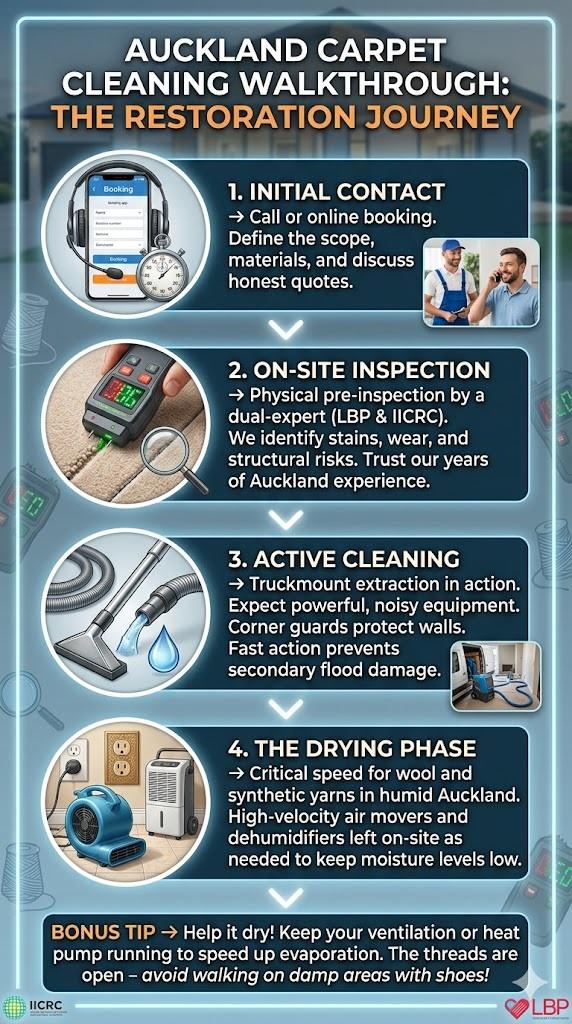
Getting your carpets or flood damage sorted shouldn’t be a guessing game. In my years servicing Auckland homes, I’ve found that the best results come from a shared understanding of the process. Managing the transition from a wet textile to a bone-dry floor requires a clear roadmap and professional oversight.
Managing customer expectations starts at booking and continues through the carpet cleaning walkthrough until the final result. By understanding drying times and pre-existing textile conditions, Auckland homeowners ensure a seamless restoration process while protecting their property’s long-term value and indoor air quality.
The Professional Service Timeline
| Phase | Estimated Duration | Primary Goal |
| Booking | 5 -> 10 Minutes | Accurate Scope |
| Inspection | 15 -> 20 Minutes | Risk Assessment |
| Cleaning | 1 -> 4 Hours | Soil Extraction |
| Drying | 4 -> 24 Hours | Moisture Removal |
Source: IICRC S100 Standard for Professional Carpet Cleaning
📞 The Initial Contact: Setting the Foundation
The walkthrough actually begins on the phone. I need to know the age of your floor coverings and the type of synthetic yarns used in their construction. Being upfront about specific stains or heavy traffic areas allows me to bring the right chemistry and equipment to the site.
In my experience running Carpet Cleaning Force, the most successful jobs start with honest conversations. If I know you have a wool-blend material, I adjust my heat settings immediately. This prevents permanent damage and ensures the quote I give you over the phone matches the reality of the work required.
In carpentry, structural integrity depends on moisture levels, but in textiles, the focus is often on surface tension and chemical reactivity.
🔍 The On-Site Pre-Inspection: Spotting Potential Hazards
Once I arrive at your Auckland property, we do a physical lap of the rooms. This isn’t just a formality; it’s where my IICRC training and LBP background merge. I’m looking for loose seams, bubbling in the backing, or permanent wear patterns that cleaning won’t fix.
I’ll often point out “shading” or “pooling” in certain textiles. These aren’t stains, but physical changes in how the yarns reflect light. Explaining this before I start the truckmount prevents any surprises once the floor is clean. It’s about being a technician, not just a “cleaner.”
While a builder looks for load-bearing stability, a cleaner prioritizes the molecular bond between stains and synthetic yarns.
🧼 The Active Cleaning Phase: What to Expect While We Work
Expect some noise and hoses. My truckmount machine is powerful, and we need a clear path from the van to the furthest room. I’ll set up corner guards to protect your walls -> this is a standard professional courtesy that prevents scuffs on your paintwork.
If we are tackling a flood restoration, the process is more intense. We may need to move furniture or lift edges to inspect the underlay. My goal is to get the liquid out as fast as possible to prevent secondary damage to your baseboards or subfloor.
High-pressure extraction mimics hydraulic forces in plumbing, yet the objective here is delicate soil suspension rather than structural drainage.
💨 The Drying Phase: The Critical Final Step
Drying is where the magic happens, but it requires your help. In Auckland’s humid climate, especially around Mt Roskill or the coast, natural evaporation can be slow. I’ll often set up high-velocity air movers to kickstart the process. You should keep your heat pump or ventilation system running.
Avoid walking on the damp materials with street shoes. The yarns are “open” and will grab new dirt easily. If we’ve done a full restoration, I might leave a commercial dehumidifier on-site. This ensures the relative humidity stays low enough to prevent any mould or mildew from taking hold.
Concrete takes 28 days to cure fully, whereas carpet textiles require rapid evaporation within 24 hours to prevent microbial growth.
Real-World Maintenance Advice
-
Vacuum Regularly: 80% of soil is dry particulate that can be removed before it hits the wash.
-
Blot, Don’t Rub: If you spill something, use a white towel to soak it up -> rubbing damages the twist of the threads.
-
Professional Clean: Aim for a deep steam clean every 12 -> 18 months to maintain your warranty.
Frequently Asked Questions
-
How long until I can walk on it? Usually 4 -> 6 hours with light socks, but 24 hours is best for a full dry.
-
Will all stains come out? Not always. Some substances permanently dye the synthetic yarns, especially if they are acidic.
-
Do I need to move furniture? Small items and breakables should be cleared; I can help with larger pieces during the walkthrough.
Key Takeaways
-
Communication at the booking stage ensures the right tools for the job.
-
The pre-inspection identifies permanent damage versus cleanable soil.
-
Professional drying is essential to prevent structural moisture issues in Auckland homes.
-
Always trust an IICRC-certified technician for high-value textile care.
Explore More Carpet Care Insights
This article is part of our comprehensive Consumer Guides & Professional Insights Hub. Check out our other related guides:
- Vetting Your Cleaner: 5 Red Flags to Look for in Auckland
- Carpet Warranties 101: Why Professional Receipts are Your Best Investment
- Professional Carpet Cleaning vs. DIY Rentals in Auckland: Which Wins?
Need professional carpet cleaning in Auckland? Return to our main Carpet Cleaning Auckland page to book your service.