A sewage backup in your Auckland home isn’t just a messy inconvenience; it is a serious biological emergency. When wastewater flows back through your drains, it carries a cocktail of bacteria, viruses, and parasites that require immediate, professional intervention to keep your family safe.
If you face a sewage backup, prioritize safety by evacuating vulnerable people and avoiding direct contact. Immediate health precautions include wearing PPE and shutting off the main water line. Professional flood restoration is vital to eliminate pathogens and prevent long-term structural damage to your property.
Sewage Contaminant Risks & Response
| Hazard Type | Common Pathogens | Required Action |
| Bacteria | E. coli, Salmonella | Full antimicrobial treatment |
| Viruses | Hepatitis A, Norovirus | Immediate evacuation of area |
| Parasites | Giardia, Cryptosporidium | Disposal of porous textiles |
| Gases | Methane, Hydrogen Sulfide | Ventilation and air scrubbing |
IICRC S500 Standard for Professional Water Damage Restoration
🚨 Why Sewage is a “Category 3” Biohazard
In the restoration industry, we classify sewage as “black water” or Category 3. This means the water is grossly unsanitary and can cause severe illness or death if ingested. It doesn’t matter if it looks clear; if it came from the sewer line, it’s dangerous.
In my years of restoring homes across Auckland, from Greenhithe to the CBD, I’ve seen how quickly these pathogens multiply. Within hours, a small backup can turn into a breeding ground for mould and bacteria that settle deep into your building materials.
As a Licensed Building Practitioner, I often remind clients that while a doctor treats the body, we treat the building’s skeleton to ensure it doesn’t rot from the inside out.
🛠️ The First 30 Minutes: Your Emergency Action Plan
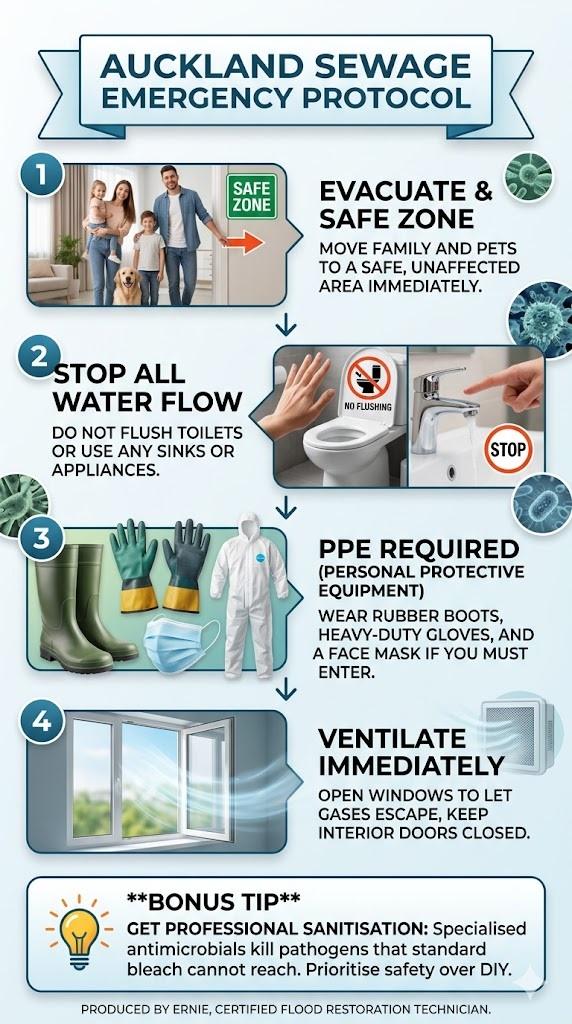
Your priority is containment and personal safety. Follow this sequence to minimize risk ->
-
Evacuate: Keep children, seniors, and pets away from the affected zone.
-
Don’t Flush: Stop using any water in the house to avoid adding pressure to the blockage.
-
PPE First: If you must enter the area, wear rubber boots, gloves, and a mask.
-
Ventilate: Open windows to let gases escape, but keep internal doors shut to stop cross-contamination.
In the world of SEO, we worry about toxic backlinks, but in restoration, we worry about toxic backflows that compromise the integrity of your home’s yarns and structural textiles.
🧼 Professional Sanitisation vs. DIY Cleaning
Many homeowners try to tackle sewage with a bucket of bleach. Unfortunately, bleach cannot penetrate deep into porous materials like carpet underlay or the timber framing behind your walls. As an IICRC-certified technician, I use specialized antimicrobials that kill pathogens at the source.
When we handled a major flood restoration project on Nelson Street, the sewage had wicked up the plasterboard. Because I am an LBP in Carpentry, I could identify exactly where the structural integrity was compromised, ensuring we didn’t just “clean” the surface but actually made the home safe again.
We often use industrial dehumidifier hire to pull moisture out of the air. While a gardener might want high humidity for tropical plants, we want the “Relative Humidity” below 40% to stop bacteria from throwing a party in your floorboards.
FAQs
Can I save my carpet after a sewage backup?
Generally, no. Because carpets are porous textiles, they trap pathogens deep within the threads. IICRC standards usually require the disposal of carpet and underlay in Category 3 losses to ensure the health of the occupants.
How long do I need to run a dehumidifier?
Usually 3 -> 5 days. It isn’t just about the surface feeling dry; we use moisture meters to ensure the subfloor and wall studs are back to “dry goals” before any new materials are installed.
Is the smell dangerous?
Yes. Sewage “off-gassing” can contain hydrogen sulfide. If you have a headache or feel nauseous, leave the property immediately and call a professional.
Key Takeaways
-
Treat all sewage as toxic -> Never touch it without full PPE.
-
Stop the source -> Don’t use any plumbing until a plumber clears the line.
-
Porous materials are risky -> Most sewage-soaked items must be disposed of.
-
Call the pros -> Professional restoration ensures the “invisible” bacteria are gone.
Auckland Flood & Moisture Resources
This article is part of our Health, Biohazard & Safety Hub. Explore more professional resources below:
- Auckland Flood Safety: When Is It Time to Evacuate?
- How to Sanitise Your Belongings After an Auckland Flood: A Professional Guide
- Black Water Hazards: Why Auckland Homeowners Can’t Ignore Category 3 Flooding