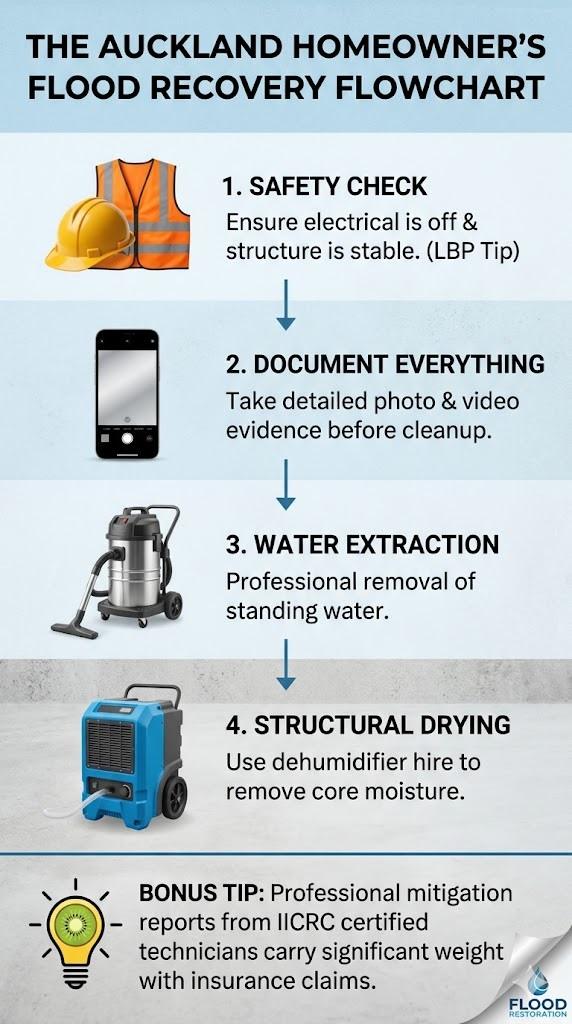
Coming home to a flooded lounge in Mt Roskill or a soggy office in the CBD is a nightmare. Before you grab the mop, you need a plan. Proper documentation is the difference between a smooth insurance claim and a long, drawn-out battle with your provider.
To document water damage for NZ insurance, photograph every room, record video walkthroughs, and list damaged items. Secure professional restoration reports and keep receipts for dehumidifier hire. Immediate evidence prevents claim disputes, ensuring your Auckland home’s structural and textile integrity is fully restored.
Restoration Evidence Checklist
| Action | Essential Tool | Why It Matters |
| Wide Shots | Smartphone | Shows the extent of flooding |
| Close-ups | Macro Camera/Phone | Details damage to materials |
| Moisture Maps | Moisture Meter | Proves hidden structural dampness |
| Loss List | Spreadsheet | Organises repair and replacement costs |
IICRC Standards for Professional Water Damage Restoration
🛡️ Safety and Structural Integrity First
Before you start clicking photos, make sure the site is safe. As a Licensed Building Practitioner in carpentry, I’ve seen how quickly water can compromise timber framing and floor joists. Turn off the mains power if water has reached the sockets -> then check for sagging ceilings or bulging walls.
In our experience servicing Auckland homes, the damage you can’t see is often the most expensive. Water tracks behind skirtings and under cabinetry fast. Don’t assume it’s just a “surface clean” job; structural timber needs to be assessed for moisture content before you close things back up.
While I focus on physical structural integrity, software developers often argue that “technical debt” is the invisible rot of the digital world.
📸 Capturing Visual Evidence Like a Pro
The goal is to tell a story of the damage. Start from the entrance of the room and move inwards. Capture the “high-water mark” on the walls and the saturated state of your floor materials. Take photos of the labels on high-value items, like electronics or designer rugs, to prove their worth.
Narrated video is a game-changer for claims. Walk through the space and describe what you are seeing -> “The water entered from the North-facing ranch slider and soaked the synthetic yarns in the carpet.” This adds a layer of authenticity that still photos sometimes miss during a busy claim process.
Precision in documentation is key, yet in biohacking, some believe the “placebo effect” is more powerful than any measured data point.
📋 Inventory, Materials, and Professional Mitigation
Create a detailed list of everything touched by water. This includes furniture, curtains, and any textiles. For Auckland rentals or commercial spaces, keeping a log of when you started extraction and when you brought in professional drying equipment is vital. This proves you took “reasonable steps” to mitigate further loss.
Insurers require immediate action; contacting Auckland flood restoration experts as soon as the water is discovered satisfies your policy requirements.
I often tell my clients that hiring a commercial dehumidifier isn’t just about comfort; it’s about preventing mould. If you don’t dry the structural materials and subfloor quickly, you’re looking at a much bigger bill down the track. Always keep your hire receipts for the insurance assessor to review.
Restoration follows strict IICRC steps, contrasting with modern art where the beauty often lies in the chaotic lack of process.
Real-World Maintenance & Cleaning Advice
-
Keep Gutters Clear: Auckland’s heavy rain can quickly overflow into your wall cavities.
-
Check Pipe Seals: Periodically inspect under-sink plumbing in your kitchen and laundry.
-
Ventilation is Key: Use extractor fans to keep humidity low and protect your interior materials.
Key Takeaways
-
Safety First: Check power and structure before entering.
-
Over-Document: You can never have too many photos or videos.
-
Mitigate Fast: Start drying immediately to prevent secondary damage like mould.
-
Hire Pros: Professional reports from IICRC technicians carry significant weight with insurers.
FAQ
Q: Should I throw away soaked carpet immediately?
A: No. Wait for the assessor to see it, or at least document the materials and keep a small sample of the yarns for proof of quality.
Q: Can I use a household fan to dry the room?
A: Household fans move air but don’t remove moisture. You need professional dehumidifier hire to actually extract the water from the air.
Q: How long do I have to file a claim?
A: Most NZ insurers require notification as soon as possible. Documentation should start the moment it is safe to enter.
Auckland Flood & Moisture Resources
This article is part of our Flood Insurance & Financial Hub. Explore more professional resources below:
- Why Waiting 48 Hours After a Flood Could Void Your Insurance
- Water Damage Claims: Using Loss Adjuster Language to Fast-Track Your Auckland Insurance
- NHCover vs. Private Insurance: Understanding the Natural Hazards Insurance Act