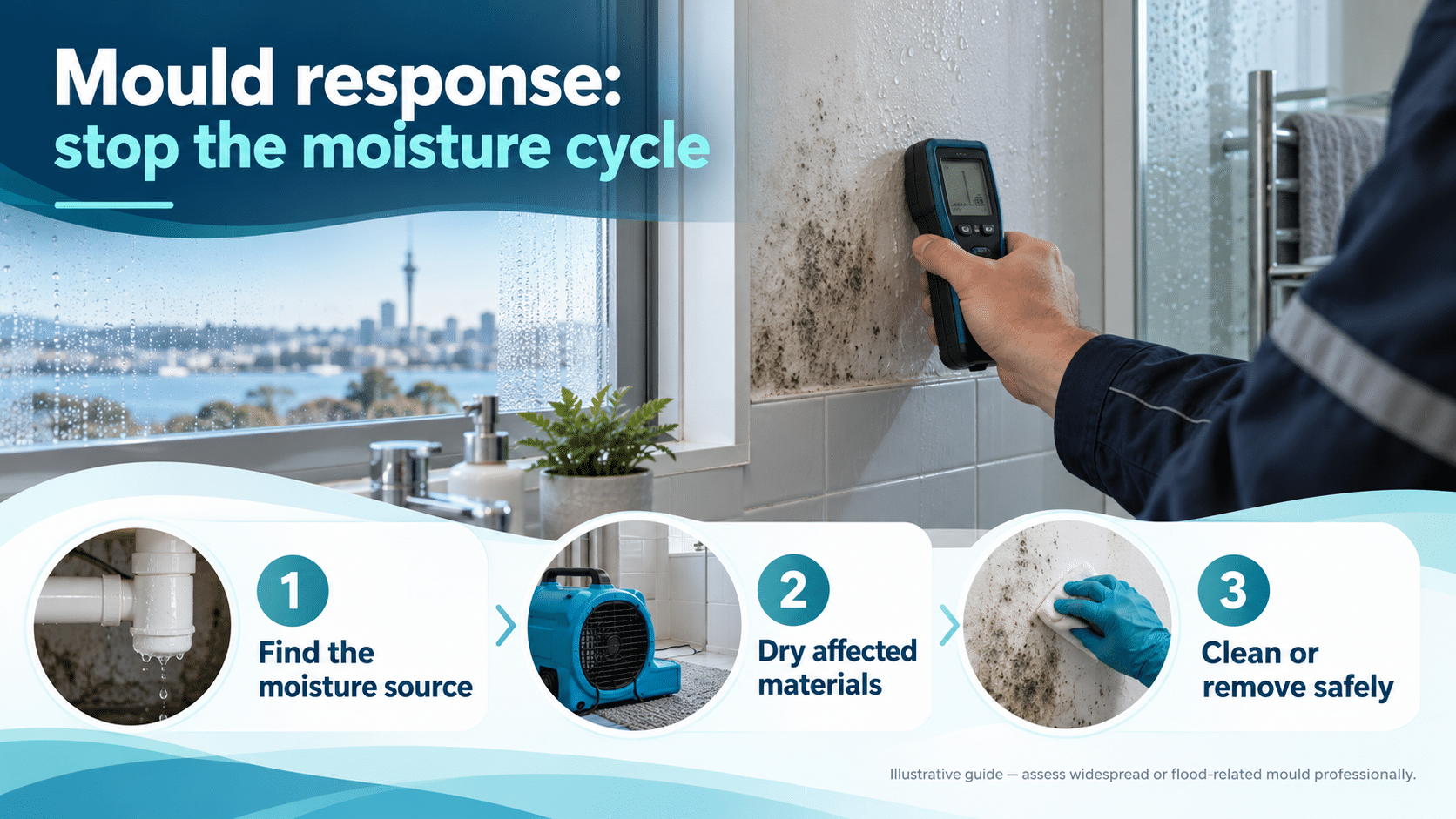
Mould follows moisture. The long-term response is to find and stop the moisture source, dry affected materials, then clean or remove materials safely. For widespread mould, flood-related contamination, damaged linings or health concerns, arrange professional assessment rather than relying on DIY cleanup.
When is DIY mould cleanup not appropriate?
Do not start DIY cleanup where mould is widespread, moisture is still entering the building, wall or ceiling linings are soft or damaged, floodwater was involved, or occupants have health concerns. If asbestos may be present in older materials, do not disturb the area—seek specialist advice first.
Mould response decision chart
| What you find | Priority action | Why it matters |
|---|---|---|
| Small, localised surface mould with no active leak | Identify moisture causes and use an appropriate cleanup method. | Cleaning without correcting humidity or condensation may not last. |
| Recurring mould or a musty odour | Investigate hidden moisture, ventilation and water entry. | Visible mould may not show the full affected area. |
| Wet, soft or damaged wall and ceiling materials | Arrange assessment before disturbing or covering materials. | Moisture can be present in cavities and framing. |
| Floodwater, sewerage or suspected asbestos | Restrict access and seek specialist guidance. | These situations need controls beyond routine surface cleaning. |
Safe steps before any mould cleanup
- Find and address the leak, condensation, drainage or ventilation issue feeding the moisture.
- Keep people and pets away from the affected area while it is assessed or cleaned.
- Do not dry-brush, water-blast or use methods that spread material into other rooms.
- Consider the age and type of building materials before sanding, drilling, cutting or removing linings.
- Keep a record of the issue, especially after a leak or flood.
When to check for hidden moisture
Recurring mould, peeling finishes, staining, a persistent odour or a recent leak can indicate moisture beyond the visible surface. Moisture mapping can help identify dampness in wall bases, flooring edges and concealed areas before repairs begin.
Asbestos and older building materials
WorkSafe New Zealand advises checking for asbestos before starting work and not disturbing material that may contain it. If you suspect asbestos, stop work, keep people away and contact a reputable asbestos contractor for advice.
Frequently asked questions
Will a dehumidifier remove mould?
A dehumidifier can help manage humidity and drying conditions, but it does not remove existing mould or fix a leak. The moisture source and affected materials still need attention.
Why does mould return after cleaning?
It can return when moisture remains in the room or within building materials. Finding the cause and drying thoroughly are essential.
Should I paint over mould?
No. Painting over an active moisture or mould problem does not resolve the cause. Assess and address the moisture source first.
When should I arrange a professional mould assessment?
Arrange assessment for widespread or recurring mould, water-damaged materials, flood-related contamination, suspected asbestos or uncertainty about the moisture source.
Need mould, leak or flood-damage assessment in Auckland? Carpet Drying Force can inspect moisture conditions and provide a practical drying and restoration scope.