Do not enter a wet subfloor or basement until you have ruled out electrical danger, deep or contaminated water, unstable materials and unsafe confined access. Personal protective equipment is only one part of a safe response; if conditions are uncertain, stay out and arrange a professional assessment.
Can you enter a flooded subfloor or basement?
Do not enter where there is standing water, suspected sewerage or floodwater, damaged electrical wiring or equipment, a gas smell, unstable linings, poor access or uncertainty about air quality. WorkSafe advises that water-affected electrical systems should be checked by an electrician. If a space presents confined-space hazards, entry needs specialist planning and controls.
Subfloor safety decision chart
| What you find | Safe response | Do not rely on |
|---|---|---|
| Standing water or wet electrical items | Keep out; isolate power only if safe and arrange electrical assessment. | Boots, gloves or a household extension lead. |
| Floodwater, sewage or a drain overflow | Restrict access and arrange appropriate contaminated-water cleanup. | A quick rinse or ordinary household cleaning. |
| Restricted, dark or poorly ventilated access | Assess whether work can be done without entry; use trained specialists where necessary. | A mask as a substitute for safe-entry controls. |
| Dry, clear, low-risk access for a visual check | Use suitable PPE and good lighting, and avoid disturbing materials. | Assuming hidden cavities are dry because surfaces look dry. |
Essential first actions after water enters below a floor
- Keep people and pets out. Prevent slips, contamination transfer and accidental contact with electrical hazards.
- Identify the source from a safe location. A plumber, drainage contractor or building manager may need to control an active leak.
- Document the condition. Photograph the safe access point, water path and visible damage without entering an unsafe space.
- Arrange assessment and extraction. Restoration work may include water removal, cleaning, controlled drying and moisture monitoring.
When PPE may be appropriate
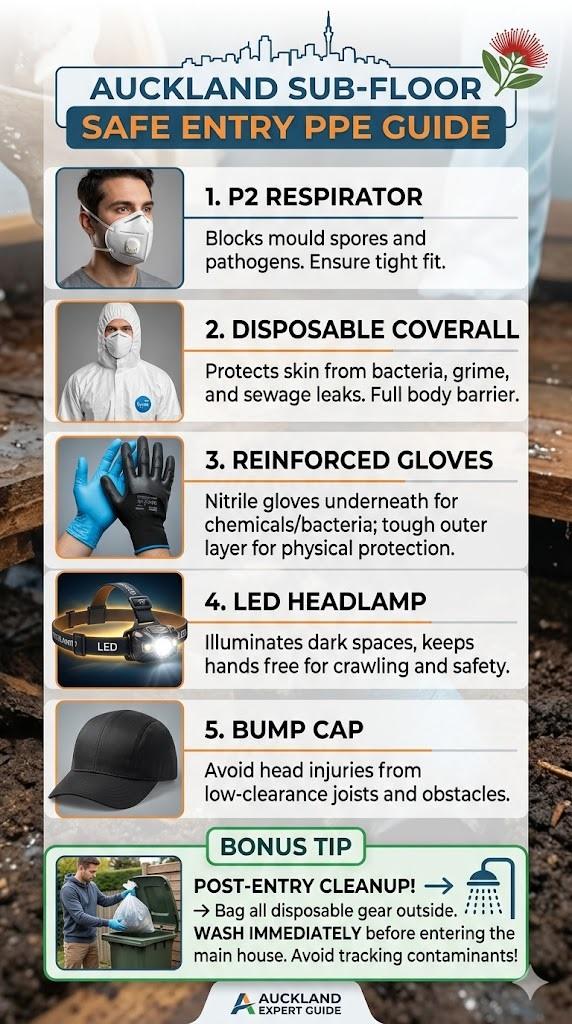
For a brief visual inspection of a dry, safe and accessible area, suitable PPE can help reduce contact with dust, insulation and sharp surfaces. Depending on the task, this may include gloves, enclosed footwear, eye protection, protective clothing and a properly fitted particulate respirator. PPE should be selected for the identified risks and used as part of a safe work plan. It is not a solution for contaminated water, electrical hazards or a space that may require confined-space controls.
Floodwater and contamination
New Zealand Civil Defence advises treating floodwater as contaminated because it can contain sewage, chemicals and runoff. Avoid contact and do not spread affected items into clean living areas. Read our contaminated-water cleanup guide for a practical response after a sewage backup or drain overflow.
Why a moisture inspection still matters
Even after extraction, moisture may remain in timber, insulation, flooring edges and wall cavities. A drying plan should be guided by measured conditions, access and the materials affected. For a related homeowner guide, see what to do before repairing a flooded subfloor or basement.
Frequently asked questions
Do I need PPE to inspect a damp subfloor?
PPE may be appropriate for a low-risk, dry and accessible visual inspection, but it does not make an unsafe area safe. Do not enter around standing water, electrical hazards, contamination or uncertain air quality.
Is floodwater safe to clean up without professional help?
Floodwater should be treated as contaminated. Keep people and pets away, avoid spreading it through the home and seek appropriate advice where sewage, drain overflow or extensive contamination may be involved.
Can I use a dehumidifier in a wet subfloor?
Only after the space has been assessed for electrical safety, access and water conditions. Equipment placement and operation should suit the site and the drying plan.
When should I call a restoration professional?
Call when water is standing, the source is not controlled, materials are concealed or affected, contamination may be present, or you cannot safely access the area.
Need safe subfloor, basement or flood restoration in Auckland? Carpet Drying Force can assess the affected space, document conditions and provide a clear drying and restoration scope.