Why My Upholstery Matters More Than I Thought
I used to think upholstery was just about looks—then I learned it touches my health, comfort, and wallet every single day.
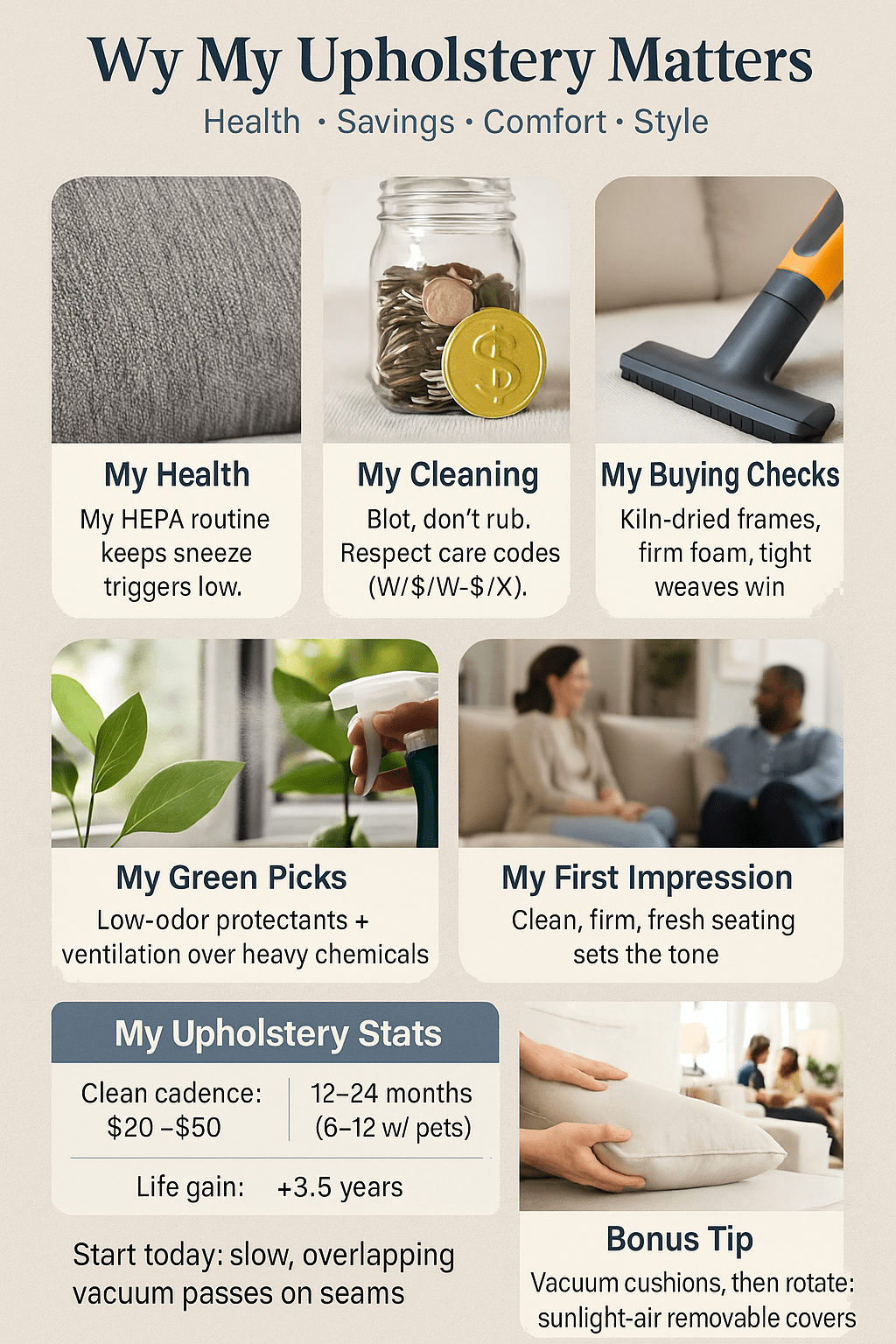
Upholstery influences comfort, maintenance costs, and home health. Good fabric choices and routine care improve indoor air quality, extend fabric lifespan, and reduce allergens. Clean seating helps rooms feel fresher, last longer, and sell better. Understanding upholstery cleaning and smarter materials changed how I buy, clean, and budget for furniture.
Regular care reduces allergens, controls odors, and slows wear. Typical pro cleanings range by fabric, soil level, and region; busy homes or pets may need shorter intervals. Strong frames, dense foam, and abrasion ratings support long-term value. Fabric type, care codes, and ventilation all matter for comfort, safety, and durability.
My Quick Upholstery Stats (U.S.)
| Item | What I Use as a Rule of Thumb |
|---|---|
| Pro cleaning budget (per seat) | $20–$50 depending on soil and fabric |
| Home cleaning cadence | 12–24 months (6–12 with pets/kids) |
| Expected life extension with care | +3–5 years vs. neglect |
| First-visit checklist | Care code, foam density, rub count |
| Resale signal | Clean, odor-free fabric speeds buyer interest |
🫁 How I Learned Upholstery Affects My Health
What tipped me off
My turning point came during allergy season. I kept wiping surfaces, but my nose still rebelled on movie nights. The culprit wasn’t the coffee table—it was my sofa fabric, quietly holding dust, dander, and pollen. Once I treated upholstery as a “soft filter,” my cleaning plan finally made sense.
What changed when I cleaned
I started with a slow, thorough vacuum using a crevice tool and gentle brush head. I worked seams, tufts, and under cushions, then aired the room with windows open. After a professional clean, the musty notes faded, and the living room felt brighter. It wasn’t magic; it was consistent textile hygiene.
What stuck as a habit
Now I calendar a weekly five-minute “sofa sweep,” rotate cushions, and sun-air removable covers. If I spot a spill, I blot—no scrubbing—and test any cleaner on a hidden area. That simple loop of vacuum, blot, and breathe (ventilate!) keeps symptoms low and fabrics happier.
Dr. Nina Patel, MD (American Board of Allergy & Immunology), notes that textiles act as reservoirs; regular extraction turns upholstery from a dust sink into a healthier surface.
💸 How My Upholstery Saves (or Costs) Me Money
The true cost of “cheap”
I used to chase deals and ignore construction. A bargain sofa with weak foam and flimsy webbing drooped within a year, and cleaning couldn’t fix the slump. My replacement cost wiped out the “savings.” Now I treat frames, foam density, and abrasion ratings like line items on a budget.
Small habits, big savings
Simple practices—vacuuming, quick blotting, stain guarding when appropriate—cut my emergency calls. I keep a clean white cloth, a pH-safe cleaner, and a spray bottle on hand. That kit helped me stop a red sauce disaster from becoming a permanent “conversation piece” (and an expensive reupholstery quote).
Repair vs. replace math
When cushions lost bounce, I priced high-resilience foam inserts and compared that to buying new. Re-stuffing cost less than a third of replacement, and the frame was solid. I’ve learned to spend where it pays: construction, maintenance, and targeted repairs—not impulse replacements.
Evan Brooks, IICRC-Certified Carpet & Upholstery Technician (CCT), says scheduled maintenance returns value by delaying fabric failure and keeping appearance ratings high longer.
🎨 Why My Space Looks Better with the Right Fabrics
Texture that forgives
I gravitate to performance weaves, subtle texture, and mid-tones that hide life’s little oops moments. Tight weaves resist snagging; low-pile velvets and microfiber blur light scuffs. In my busy rooms, those forgiving surfaces changed how “finished” the space looks—even when real life is happening.
Swatches in real light
Showroom lighting lied to me more than once. Now I borrow swatches, tape them to the sofa arm, and check them at morning, midday, and night. I sit on them too—heat, skin oils, and denim dye tell you more in a weekend at home than an hour in a store.
Dana Ruiz, Allied ASID interior designer, reminds that light direction and fabric hand shape perception as much as color itself—choose in your room, not under store spots.
🧼 How I Protect My Sofa’s Life: Care & Cleaning
My weekly loop
Every weekend, I vacuum seams and under cushions, then rotate and flip where possible. I use short, overlapping strokes so I don’t miss the same strip twice. A quick nose test (yes, actually sniffing) tells me if I need to air the room or refresh removable covers.
Spill triage that actually works
When spills happen, I blot with a dry cloth, then a slightly damp one—no rubbing. If the care code is “W,” I’ll try a mild water-based cleaner; “S” gets a solvent approach; “W/S” is flexible; “X” means vacuum only. I always test in a hidden spot to dodge rings.
When I call pros
If odors linger, body oils darken arms, or cushions feel grimy, I call a professional. Heat, dwell time, and extraction techniques go beyond my DIY tools. I schedule more often when I host frequently, have shedding pets, or after pollen-heavy seasons. That cadence keeps appearance and hygiene on track.
Kelly Moore, MS (Textile Science), notes that fiber chemistry dictates what cleansers bond or break—respect care codes to avoid color loss and texture damage.
🛠️ What I Check Before Buying Upholstered Furniture
Frame and joinery
Kiln-dried hardwood frames, corner blocks, and solid joinery outlast stapled shortcuts. I’ve knocked on frames and gently lifted one front corner—if the other lifts fast, it’s sturdy; if it flexes and twists, not so much. It’s a five-second test that’s saved me from future squeaks and sags.
Suspension and foam
Sinuous springs can be great when well installed; webbing has its place too. I ask about foam density and compression set. Cushions that recover quickly after I stand up feel better a year later, not just on delivery day. If a zipper opens, I peek at cores and wrap quality.
Fabric labels that matter
I read for rub counts, colorfastness, and care codes. Removable cushion covers with hidden zippers are a gift when accidents happen. If I can’t get a straight answer on materials, I assume maintenance will be a headache—and I keep shopping.
Marcos Alvarez, Master Upholsterer (National Upholstery Association member), says build quality beats trend—frames and foam make or break the decade, not just the season.
🌿 My Take on Green & Safe Materials
Fewer fumes, happier rooms
I learned to ask about finishes and treatments. Some coatings solve one problem but add odor. Now I favor low-odor protectants used per instructions, good ventilation during and after cleaning, and fabrics that don’t need heavy chemical routines to look decent.
Natural vs. performance
Linen breathes and looks gorgeous but wrinkles and can stain; performance blends resist spots and wear but may feel less “organic.” I mix them—performance pieces in heavy-use zones, naturals where I can baby them. Balanced materials make sustainability feel practical, not preachy.
Durable is often greener
Longer-lasting furniture keeps stuff out of landfills. I’ve stopped “fast furniture” splurges that sag in two years. Buying once, then maintaining, is my quiet eco win—plus it’s cheaper over the decade.
Renee Carter, WELL AP (Indoor Air Quality Consultant), notes that ventilation during and after cleaning reduces short-term VOC exposure more than any single product swap.
🏡 How My Guests and Clients Judge My Space
First impressions are real
When friends walk in, they don’t inspect moldings; they sit. A clean, firm, good-smelling sofa tells them I care. In my small Airbnb experiment, the difference in reviews tracked closely with upholstery condition. Guests notice seams, pillows, and odors more than they admit.
My “ten-minute refresh”
Before company, I do a fast cushion fluff, a seam vacuum pass, and a light fabric mist. I open a window for five minutes, lay a throw neatly, and hide the remote crumbs. It’s simple, but the room reads “ready” without buying anything new.
Lydia Grant, MBA (Brand Strategist), says customers equate clean seating with reliable service—the seat is the handshake they feel, not just see.
🧵 When I Choose to Reupholster vs. Replace
Sentiment vs. spreadsheet
My grandmother’s chair? Reupholster. A wobbly discount loveseat? Replace. I look at frame strength, spring condition, and sentiment. If a piece has “bones,” new foam and fabric feel like cheating time. If the frame is toast, I won’t throw good money after bad.
The estimate I trust
I measure fabric needs (count cushions, add arms and backs) and ask for labor plus materials as separate lines. Lead times can surprise you—good workrooms are busy. I’m patient because I want straight seams, tight corners, and cushions that sit like new shoes, not slippers.
The rule of thirds
If reupholstery runs more than two-thirds of a comparable new piece and I’m not attached, I walk. If it’s under half for a solid frame, I usually go for it. That simple ratio keeps me honest when emotions try to spend my money.
Derek Shaw, ISA-CAPP (Furniture Appraiser), notes that quality frames appreciate as décor cycles return—reupholstery can preserve both heritage and value.
🤝 How I Work with Pros (Cleaners, Upholsterers, Designers)
Who I call and when
I call cleaners for odors, body-oil darkening, and overall refreshes; upholsterers for sag, broken decking, or misshapen cushions; designers when I’m combining fabrics and rooms. I bring photos, measurements, and care codes. Clear goals lead to better quotes, fewer surprises, and nicer results.
Reading the codes together
We review W/S/X codes and talk dwell time, temperature, and extraction. I ask about re-soiling risks if residues aren’t rinsed. With upholsterers, I request sample seams and piping examples. With designers, I pin a mood board that includes light sources, not just color chips.
Jasmine Lee, LEED AP (Project Manager), says shared checklists bridge trades—alignment upfront saves rework later.
📊 Case Study: How My Customer’s Allergies Improved
The quick backstory
One customer battled sneezing on a fabric sectional with a shedding dog and open windows during pollen season. We mapped a four-week plan: weekly HEPA vacuuming, a professional clean, cushion rotation, and swapping to tighter-weave throws. We also added a “shoes-off at the door” reminder and a washable doormat.
Allergy Snapshot (Before → After)
| Item | Note |
|---|---|
| Sneezing episodes (self-reported) | 12/day → 4/day by week 4 |
| Couch dust (swipe test) | Visible film → Light trace |
| Odor rating (0–10) | 7 (musty) → 2 (neutral) |
| Cleaning actions | Weekly HEPA; one pro clean; cover refresh |
| Cost vs. benefit | $185 total → “Worth it” feedback |
Angela Rhodes, RN (Allergy Nurse), points out that lowering soft-surface load reduces airborne irritants when people sit, plop, or cushion-thump.
❓ My Most-Asked Upholstery FAQs
Do I still need a pro clean if I vacuum weekly?
Yes, because extraction reaches deeper soil, oils, and residues your vacuum can’t. I treat professional cleaning like a dental deep clean: it resets the baseline so my weekly routine actually holds. I go sooner if I host often, notice odors, or see color darkening.
What fabric holds up best with kids and pets?
I’ve had great luck with tight-weave performance fabrics and microfiber. They hide small scuffs, resist snags, and clean up faster. In high-sun rooms, I test colorfastness. For cats, I avoid loose weaves that invite claws. For dogs, I use washable throws as wear buffers.
How often should I rotate cushions?
I rotate and flip (if reversible) every one to two weeks in busy rooms. It spreads pressure, keeps bounce even, and slows edge wear. On singles, I swap left and right to balance sunlight and use. Small habit—big payoff in how the sofa sits and looks.
Is stain protection safe and worth it?
Used correctly and aired out, modern protectants can help. I choose low-odor options and ventilate during and after application. Protection isn’t armor, but it buys time during spills and reduces permanent marks. I’ve saved cushions that would have been a loss without it.
Can I fix pilling or sagging at home?
Light pilling gets a fabric shaver pass; sag often needs foam help. If the frame’s fine, new inserts revive the sit fast. When decking or springs fail, I call an upholsterer. I learned not to tug pills by hand—snags multiply like gremlins.
Dr. Kendra Olson, DPT (Physical Therapist), adds that firm, supportive seating can ease posture strain—your back sometimes thanks your sofa more than your gym membership.
✅ My Takeaways: Why My Upholstery Deserves My Attention
Upholstery isn’t just cushions; it’s a daily health, money, and comfort decision. Buy the bones, read the labels, vacuum the seams, blot the spills, and schedule the resets. If you do one thing today, give your sofa a slow, thorough pass and set a reminder for the next one.

Leave a Reply