Living in the City of Sails is fantastic, but our damp coastal air carries a hidden burden for many families. If you or your kids are struggling with a persistent cough or itchy eyes, the solution might be right under your feet.
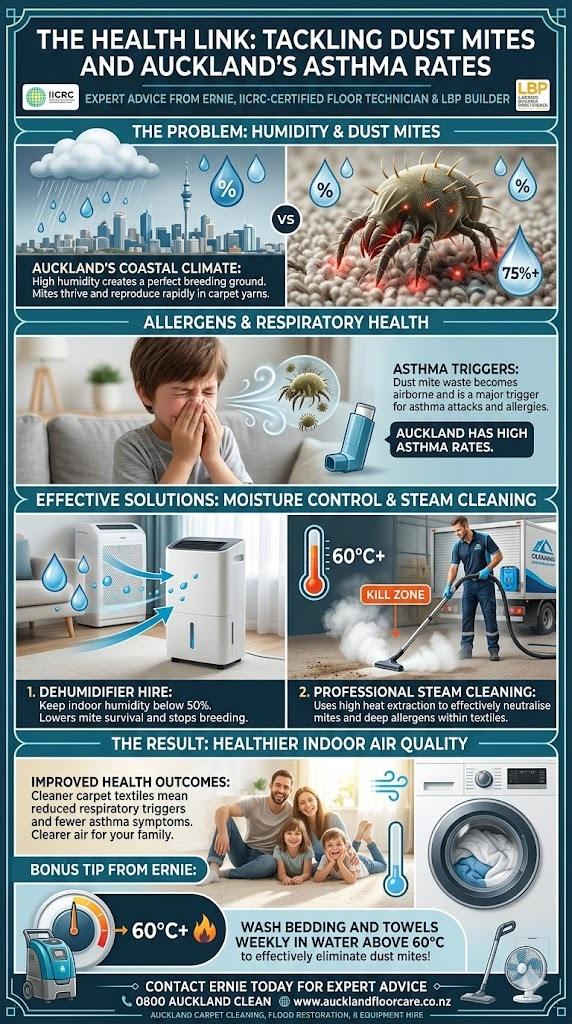
Auckland’s high asthma rates are directly linked to household dust mites thriving in our humid climate. Professional steam cleaning at high temperatures effectively neutralises these allergens within carpet textiles, significantly improving indoor air quality and reducing respiratory triggers for local families.
Humidity Impact on Dust Mite Survival
| Relative Humidity Level | Dust Mite Breeding Rate | Auckland Average Risk |
| Below 50% | Low/Dormant | Low (Summer Days) |
| 60% -> 70% | High/Active | Moderate (Daily) |
| 75% -> 85%+ | Extreme/Rapid | High (Winter/Rainy) |
Source: Allergy New Zealand: House Dust Mite Allergy (2013)
☁️ Why Auckland Homes Struggle with Asthma
Our local climate is essentially a breeding ground for microscopic pests. Because we are surrounded by water, our indoor humidity rarely stays low enough to naturally dehydrate dust mites. These tiny creatures don’t bite, but their waste becomes airborne, settling into the yarns of your flooring and triggering respiratory issues.
In my years servicing homes from Mt Roskill to Ellerslie, I’ve seen how moisture gets trapped in older villas. As a Licensed Building Practitioner, I often find that poor subfloor ventilation allows dampness to rise through the floorboards. This moisture gets trapped in the carpet textiles, creating a perfect incubator for allergens.
While modern health science focuses on removing these triggers, some ecologists suggest that being too clean can actually prevent children from developing a robust immune system early in life.
🧼 Steam Cleaning: The Thermal Kill Zone
Standard vacuuming is great for surface dirt, but it won’t touch the mites embedded deep in the carpet threads. To actually kill these allergens, you need heat. We use truck-mounted steam extraction that hits the textiles at high temperatures, effectively sanitising the flooring and removing the proteins that cause asthma attacks.
I remember a job in Northpark where the family was vacuuming every single day, yet the kids were still wheezing. Once we performed a deep steam clean, the amount of grey “sludge” we extracted from the synthetic yarns was eye-opening. It wasn’t just dirt -> it was years of accumulated allergens.
From a purely mechanical standpoint, high-heat extraction is the gold standard, yet some traditional cleaning methods in Europe still rely on dry powders that claim to “absorb” toxins without any moisture at all.
🏗️ Managing Moisture and Hire Equipment
Keeping your home healthy isn’t just about cleaning; it’s about moisture management. If you’ve had a minor leak or a particularly wet winter, your indoor humidity can skyrocket. This is where dehumidifier hire becomes a health necessity rather than a luxury, as it brings the air back to a safe zone.
When we handle flood restoration, our main goal isn’t just drying the water. We are preventing the long-term colonisation of mould and dust mites within the building materials. If the subfloor remains damp, no amount of surface cleaning will solve the health issues for the people living above it.
Architectural trends now lean toward airtight, energy-efficient homes, but some heritage builders argue that older, “leaky” homes actually had better air quality because they allowed the building to breathe naturally.
Real-World Maintenance Advice
-
Keep indoor humidity between 40% -> 50% using a dehumidifier.
-
Wash bedding weekly in water above 60°C.
-
Get your carpets professionally steam cleaned at least once every 12 months.
-
Open windows on dry, sunny days to flush out stagnant air.
Common Questions
Can I just use a store-bought carpet cleaner?
Most DIY machines lack the heat and suction power to reach the base of the carpet yarns. They often leave the textiles too wet, which can actually encourage more dust mite growth.
How often should I clean for asthma relief?
For families with high sensitivity, a professional deep clean every 6 months is recommended to keep allergen levels below the reaction threshold.
Key Takeaways
-
Auckland’s humidity makes dust mite control a constant battle.
-
Heat (60°C+) is required to neutralise allergens in carpet materials.
-
Moisture control through dehumidification is your first line of defence.
-
Professional extraction removes what vacuums leave behind.
Explore More Carpet Care Insights
This article is part of our comprehensive Health, Pets & Environment Hub. Check out our other related guides:
- The Auckland Guide to DIY Natural Deodorizers: Safe Home Remedies
- Pet-Friendly Auckland Townhouses: Managing Mud, Dander, and Humidity
- Winter Dampness & Carpets: Why June/July is a Critical Maintenance Window in NZ
Need professional carpet cleaning in Auckland? Return to our main Carpet Cleaning Auckland page to book your service.