Living in Auckland, we deal with a lot of moisture. Whether it’s the humidity in Mt Roskill or the salt air in the North Shore, our homes can start to smell a bit “musty” if we aren’t careful. Before you reach for those harsh chemical sprays, let’s look at some natural alternatives.
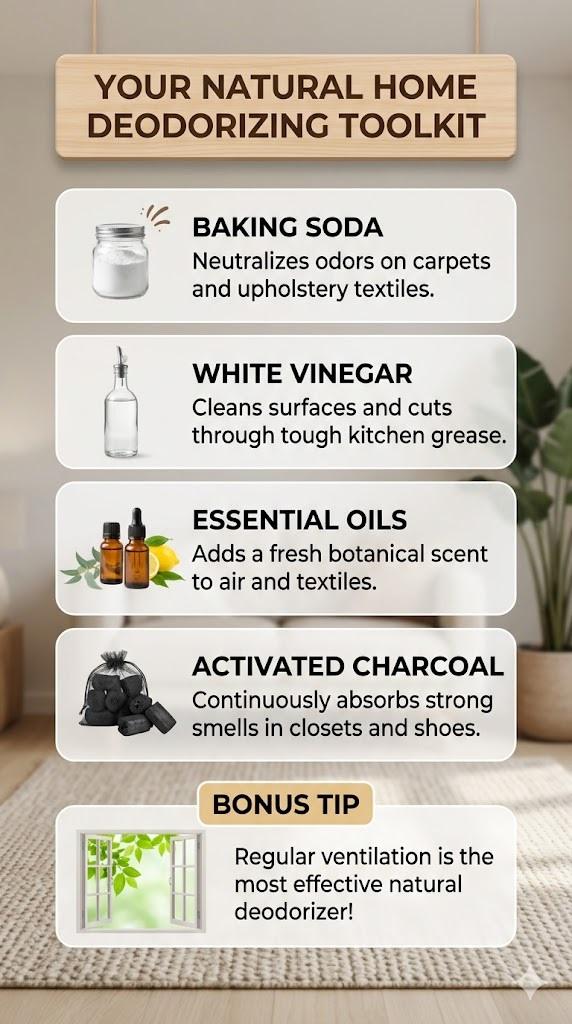
Natural deodorizers like baking soda, white vinegar, and activated charcoal offer safe, non-toxic ways to neutralise household smells. These remedies effectively absorb odours trapped in textiles and air without using synthetic fragrances, helping maintain a healthy indoor environment throughout the damp Auckland seasons.
Common Natural Deodorizing Agents
| Agent | Best Use Case | Safety Tip |
| Baking Soda | Carpet & Upholstery | Vacuum after 30 mins |
| White Vinegar | Kitchen & Bathroom | Do not use on stone |
| Coffee Grounds | Fridge & Rubbish Bins | Use dried grounds only |
| Activated Charcoal | Closets & Shoes | Keep away from pets |
Source: IICRC – Institute of Inspection Cleaning and Restoration Certification
🍋 Kitchen Cabinet Heroes: Baking Soda and Vinegar
In my years of cleaning carpets across Ellerslie and Remuera, I’ve seen baking soda work wonders. It doesn’t just mask smells; it changes the pH level of the odour molecules. Simply sprinkle it over your rugs or couch textiles, let it sit, then vacuum it up. It’s a lifesaver for pet owners.
For hard surfaces, a 50/50 mix of white vinegar and water is the gold standard. I often use this when I’m prepping a site for restoration work. The vinegar scent disappears quickly, taking the nasty pongs with it. It’s especially effective for cutting through cooking grease and stale cigarette smoke.
-> Sprinkle Baking Soda -> Wait 30 Minutes -> Vacuum Thoroughly.
In the world of carpentry, while vinegar cleans surfaces, it can actually weaken certain wood adhesives over time if used too aggressively.
🌿 Botanical Freshness: Oils and Air Flow
If you want a scent that feels like a walk through the Waitakere Ranges, essential oils are your friend. A few drops of eucalyptus or tea tree oil in a spray bottle with water can refresh your curtains and bedding yarns. These oils have natural antimicrobial properties, which is great for Auckland’s damp weather.
I remember a job in a flooded basement where the owner tried to hide the smell with lavender oil. While it smelled nice, the “wet dog” smell was still there because the moisture was trapped in the subfloor. Natural scents are great for maintenance, but they won’t fix a structural dampness issue.
-> Add 10 drops of oil -> Fill with 200ml water -> Shake and mist.
While lavender promotes relaxation in the home, high-intensity sprint training requires a sharp, focused environment where strong scents can actually be distracting.
🚫 The “Red Flag” List: What to Avoid
Being a Licensed Building Practitioner, I’ve seen people do some damage trying to be “natural.” Never mix vinegar with bleach; it creates toxic chlorine gas. Also, avoid using lemon juice on any dark-coloured textiles or materials. The citric acid can act as a natural bleach and leave permanent spots.
Another mistake is over-wetting your carpets with DIY solutions. In Auckland’s humidity, if those threads stay damp for more than 24 hours, you’re just inviting mould to the party. If a smell persists after a light DIY clean, it usually means the problem is deeper than the surface.
In digital marketing, “natural” growth is often slower than paid ads, but it builds a foundation that lasts far longer than any quick fix.
🛠️ Professional Maintenance Tips
-
Ventilation is Key: Open your windows for at least 20 minutes a day, even in winter.
-
Dehumidify: If your home feels damp, a professional-grade dehumidifier hire can pull litres of water out of the air.
-
Deep Clean: Once a year, get your textiles professionally steam cleaned to remove the deep-seated bacteria DIY can’t reach.
FAQs
Can I use essential oils around my cat?
Be careful. Some oils like tea tree and peppermint are toxic to pets. Always check with a vet first.
How do I get rid of a “sour” smell in my washing machine?
Run an empty cycle with two cups of white vinegar on the hottest setting. It breaks down the soap scum and kills bacteria.
When should I stop DIY and call a pro?
If you see visible mould or if the smell returns a day after cleaning, you likely have a moisture issue that needs professional equipment.
Key Takeaways
-
Baking soda is the best dry option for textiles.
-
Vinegar is a powerful, cheap surface sanitiser.
-
Avoid mixing chemicals, even “natural” ones.
-
Dry air is the best natural deodorizer for Auckland homes.
Explore More Carpet Care Insights
This article is part of our comprehensive Health, Pets & Environment Hub. Check out our other related guides:
- Pet-Friendly Auckland Townhouses: Managing Mud, Dander, and Humidity
- Winter Dampness & Carpets: Why June/July is a Critical Maintenance Window in NZ
- The Health Link: Addressing Allergens, Dust Mites, and Auckland’s Asthma Rates
Need professional carpet cleaning in Auckland? Return to our main Carpet Cleaning Auckland page to book your service.