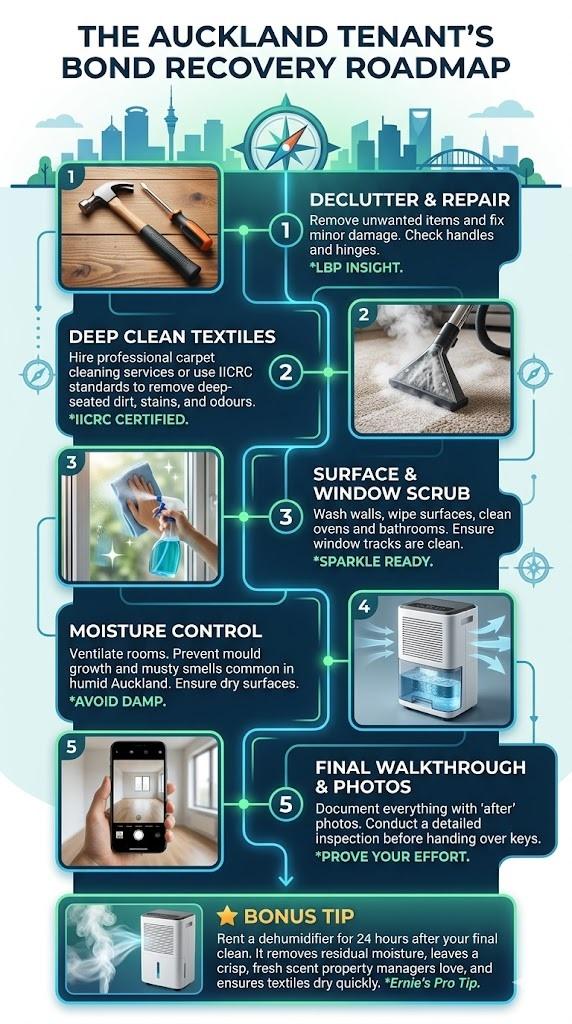
Moving house in Auckland is stressful enough without worrying about your deposit. As a qualified builder and carpet technician, I’ve seen many tenants lose money over small mistakes. This guide helps you navigate the “reasonably clean” standard so you can hand back those keys with total confidence.
To secure your full bond refund, Auckland tenants must return the property in a reasonably clean condition. Following a strict move-out checklist ensures you meet Residential Tenancies Act standards, avoiding disputes over carpet stains, wall marks, or neglected outdoor areas before the final inspection.
Common Bond Deduction Risks
| Category | Tenant Responsibility | Typical Fair Wear & Tear |
| Carpets | Recent stains -> Pet odours | Fading from North Shore sun |
| Walls | Unapproved hooks -> Scuffs | Minor paint thinning |
| Windows | Mould removal -> Track cleaning | Old, perished rubber seals |
| Kitchen | Oven grease -> Rangehood yarns | Dull benchtop finish |
Source: Tenancy Services New Zealand (Established 1986)
🏠 Understanding Your Obligations in Auckland
Under NZ law, you don’t need to leave the house “pristine,” but it must be “reasonably clean.” In my experience servicing Auckland homes, landlords often have higher expectations than the law requires. It is important to document everything with photos before you leave to prove you have met your legal obligations.
As an LBP in Carpentry, I look at the bones of a house. While a cleaner focuses on the surface dust, a builder notices if the moisture levels in the timber framing have spiked due to poor ventilation during your stay.
🧶 Reviving Your Carpets and Textiles
Carpets are the most common cause of bond disputes. IICRC standards suggest that professional steam cleaning is the best way to remove deeply embedded dirt from carpet yarns. If you have pets, a professional receipt is often your best “insurance policy” against claims of lingering odours or allergens.
In our experience, many “grocery store” rental machines leave the floor too wet. This is a nightmare in Auckland’s humidity. I often suggest a dehumidifier hire alongside a deep clean to ensure the internal yarns dry quickly, preventing that musty “wet dog” smell from ruining your inspection.
While a carpet technician prioritizes the cleanliness of the floor materials, an electrician would be more concerned with whether the heat pump filters are blocking airflow and causing the unit to overwork.
🔨 Walls, Windows, and Woodwork
Minor scuffs on the walls can usually be wiped away with a damp cloth. However, if you have used adhesive hooks that ripped the GIB paper, you might need a professional touch. As a builder, I recommend checking that all cupboard hinges and door handles are tight and functioning correctly before the landlord arrives.
Don’t forget the window tracks. Auckland’s coastal salt air and dust create a gritty paste in the sliders. Cleaning these out makes the windows glide easily, giving the impression of a well-maintained home. A little bit of silicone spray on the tracks can make old joinery feel brand new again.
A structural engineer might argue that minor wall cracks are just natural settling, whereas a professional painter sees them as a surface defect requiring immediate filling and sanding.
🧹 The Room-by-Room Final Countdown Checklist
Follow this simple flow to ensure nothing is missed:
-
Kitchen: Oven degreased -> Rangehood filters soaked -> Cupboards wiped inside and out.
-
Bathroom: Grout scrubbed -> Vents cleared of dust -> Mirror polished.
-
Bedrooms: Wardrobe tracks vacuumed -> Light switches wiped -> Cobwebs removed.
-
Exterior: Cobwebs under eaves -> Lawn mown -> Driveway swept.
One trick I’ve learned is to turn on all the lights and open every curtain. Natural light reveals the dust you might have missed in the shadows. If the house feels bright and smells fresh, the property manager is much more likely to breeze through their checklist.
In the world of high-end landscaping, a mown lawn is just the baseline, while a horticulturalist would focus on whether the specific plant species have been pruned at the correct seasonal interval.
Professional Secrets for a Stress-Free Inspection
If you have had a leak or a minor flood during your tenancy, don’t just hope it dried out. Professional flood restoration equipment, like air movers and industrial dehumidifiers, ensures there is no hidden moisture behind the skirting boards. This prevents mould from appearing two weeks after you have moved out.
Always keep your cleaning receipts. Whether it is for a professional carpet textile wash or a general house scrub, showing a paper trail proves you took your responsibilities seriously. It shifts the burden of proof back onto the landlord if they try to claim the place isn’t up to standard.
FAQs & Key Takeaways
-
Do I have to professionally clean the carpets? Only if you’ve caused damage beyond fair wear and tear, but it’s highly recommended for pet owners.
-
What is “Fair Wear and Tear”? Think of it as the natural aging of the house yarns and materials through normal use.
-
Key Takeaway: Take “after” photos of every single room, including the inside of the oven and the window tracks.
-
Ernie’s Pro Tip: Rent a dehumidifier for 24 hours after your final clean to get that “crisp” air feeling that property managers love.
Explore More Carpet Care Insights
This article is part of our comprehensive Specialized Auckland Environments Hub. Check out our other related guides:
- High-Rise Logistics: Mastering Apartment Carpet Cleaning in the Auckland CBD
- The North Shore Beach Guide: Pro Care for Sand and Salt-Affected Carpets
- High-Rise Office Carpet Cleaning: Expert Auckland CBD Maintenance
Need professional carpet cleaning in Auckland? Return to our main Carpet Cleaning Auckland page to book your service.