Nothing beats the feel of freshly cleaned carpets, but waiting for them to dry can be a hassle. In Auckland’s often humid climate, moisture can linger longer than we’d like. Following a strict post-clean routine ensures your home stays fresh and your textiles remain in peak condition.
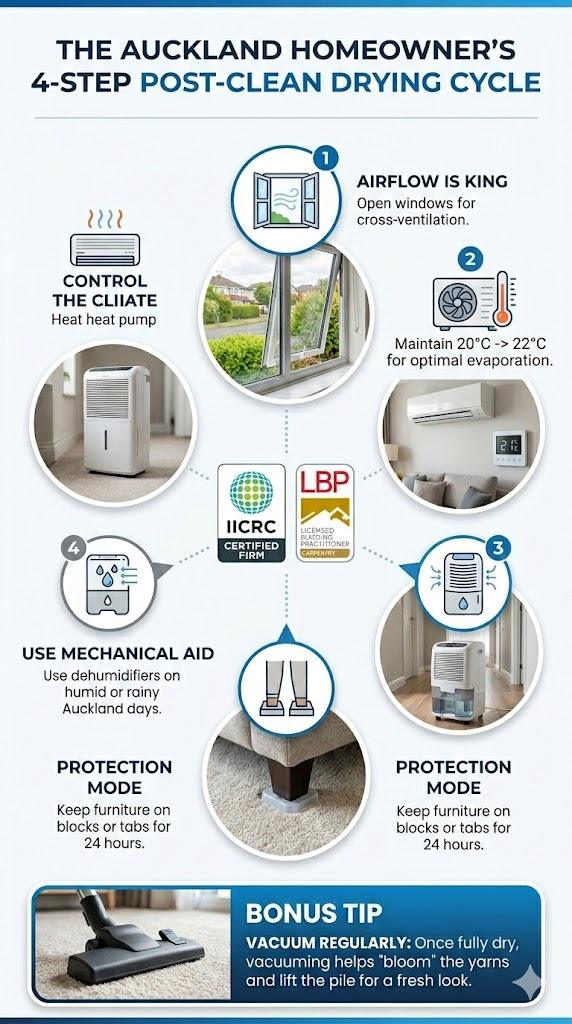
To speed up drying effectively, you must increase airflow and control humidity levels. Utilizing professional dehumidifier hire ensures moisture is pulled from the carpet yarns rather than settling. Keep windows open for cross-ventilation and avoid placing heavy furniture back until the floor is completely dry.
Estimated Drying Times by Method
| Method Used | Drying Time Range | Ideal Scenario |
| Open Windows | 6 -> 12 Hours | Low humidity/Breezy |
| Ceiling Fans | 4 -> 8 Hours | Mild temperatures |
| Air Movers (Blowers) | 2 -> 4 Hours | Heavy-duty cleaning |
| LGR Dehumidifier | 3 -> 6 Hours | Rainy Auckland days |
Source: IICRC S100 Standard for Professional Carpet Cleaning
🌬️ Creating the Ideal Drying Environment
Airflow is the most critical factor in moisture evaporation. In our experience servicing Auckland homes, simply cracking a window isn’t always enough when the Tasman Sea sends a humid front our way. You need to create a “wind tunnel” effect by opening windows on opposite sides of the house.
If the air outside is damp or it’s raining, close the windows and use internal fans. Positioning floor fans to blow across the surface helps lift moisture from the base of the yarns. This prevents that “wet dog” smell from developing in the backing material.
In carpentry, excess moisture in timber framing can lead to structural rot, which is why we always check subfloor dampness before installing new flooring.
🔥 The Role of Temperature and Heat
Warm air holds more moisture than cold air, making your heat pump a secret weapon for drying. Setting your climate control to a steady 20°C -> 22°C creates an environment where water evaporates quickly. However, don’t turn your home into a sauna, as excessive heat can sometimes stress certain synthetic materials.
As a Licensed Building Practitioner, I’ve seen how Auckland’s “four seasons in one day” affects indoor humidity. If the room is too cold, the water stays trapped in the threads. Keeping a consistent temperature ensures the transition from damp to bone-dry happens as fast as possible.
While heat aids evaporation in textiles, high-strength concrete actually requires a slow, moist curing process to reach its maximum structural integrity.
🛡️ Protecting Your Freshly Cleaned Surfaces
The hours following a deep clean are when your carpets are most vulnerable. Walking on damp yarns with outdoor shoes can transfer oils and dirt deep into the material. If you must walk on it, wear clean white socks or use plastic over-shoes to maintain the finish.
We always recommend keeping furniture off the carpet for at least 24 hours. If we’ve used protective tabs or foam blocks under your sofa legs, leave them there! These prevent rust stains from metal glides or wood stain bleeds from ruining your newly cleaned floor.
In the world of professional painting, “dry to the touch” is very different from “fully cured,” much like how carpet can feel dry on top while the backing remains damp.
🏠 Real-World Maintenance Advice
-
Vacuum Regularly: Once dry, vacuuming helps “bloom” the yarns and lift the pile.
-
Blot, Don’t Rub: If a new spill occurs, blot it immediately with a white towel.
-
Manage Humidity: Use your extraction fans in bathrooms to keep house-wide moisture low.
Frequently Asked Questions
How long should I wait before walking on the carpet?
Ideally, wait 4 -> 6 hours for light foot traffic with clean socks, and 24 hours before wearing shoes or moving heavy furniture.
Can I use my fireplace to speed up drying?
Yes, but be cautious. An open fire can introduce soot or ash into the air, which might settle on your damp, “sticky” carpet. A heat pump is a much cleaner option.
Why does my carpet feel “crunchy” after drying?
This usually happens if there is a tiny bit of residue left or if the yarns were disturbed. A quick vacuum usually softens them right up.
Key Takeaways for Auckland Homeowners
-
Ventilation is King: Use cross-breezes or air movers to push moisture out.
-
Control the Climate: Use heat pumps and dehumidifiers on humid days.
-
Stay Off the Floor: Protect the finish by avoiding traffic for the first few hours.
-
Trust the Pros: If you’re dealing with a flood, DIY drying isn’t enough; you need IICRC-certified extraction.
Explore More Carpet Care Insights
This article is part of our comprehensive Routine Maintenance & Care Hub. Check out our other related guides:
- The Ultimate Auckland Guide to Hallway and Entranceway Maintenance
- How to Fix Carpet Dents: Reviving Squashed Yarns in Your Auckland Home
- Vacuuming 101: The Auckland Guide to Cleaner Carpets and Healthier Homes
Need professional carpet cleaning in Auckland? Return to our main Carpet Cleaning Auckland page to book your service.