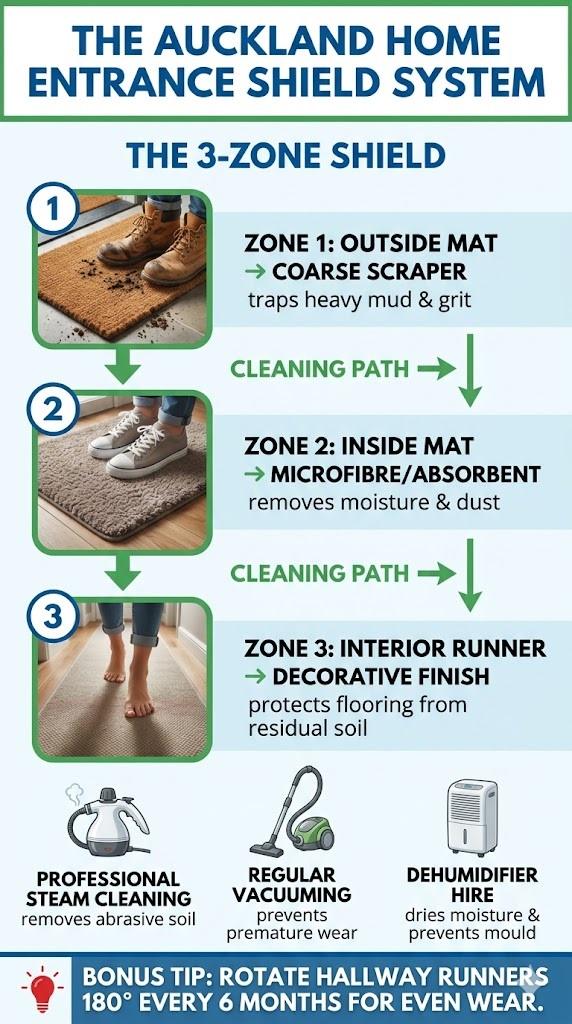
In Auckland, our hallways aren’t just walkways; they are the front lines in the battle against North Shore sand and West Auckland clay. Between the constant foot traffic and our unpredictable weather, these “high-traffic zones” require more than just a quick sweep to stay looking sharp.
To protect high-traffic zones, implement a dual-mat system to trap Auckland grit. Regular professional steam cleaning removes abrasive soil from deep within synthetic textiles, while consistent vacuuming prevents premature wear. These proactive steps extend the lifespan of your flooring and ensure a healthy indoor environment.
Textile Durability and Maintenance Comparison
| Material Type | Traffic Resistance | Cleaning Frequency | Best Use Case |
| Nylon Yarns | Very High | 6-12 Months | Busy Family Hallways |
| Wool Materials | Medium-High | 12-18 Months | Low-Moisture Areas |
| Polypropylene | High | 6-12 Months | Rental Properties |
| Cut-Pile Threads | Medium | 6 Months | Decorative Entries |
Bolded Title: Industry Standards for Textile Longevity
The Carpet and Rug Institute: Maintenance Guidelines (2014)
🚪 Establishing the Three-Zone Entrance Strategy
As a Licensed Building Practitioner, I’ve seen how moisture tracked into entranceways can eventually compromise subfloor integrity. The best defense is a “Three-Zone” approach. Zone 1 is a heavy-duty scraper mat outside. Zone 2 is an absorbent mat just inside the door. Zone 3 is the primary hallway textile.
This system ensures that most grit and moisture never reach your main floor. In my experience servicing Auckland homes, particularly in older villas, skipping these zones leads to the “grinding effect.” This is where sand acts like sandpaper, physically wearing down the yarns until the floor looks permanently dull.
From an electrical perspective, proper grounding of building structures can also reduce the static charge that attracts dust to these entrance textiles.
🧹 Vacuuming Techniques for High-Movement Areas
Not all vacuuming is equal when dealing with entranceways. For these zones, you need a slow, deliberate pace. Fast passes only pick up surface dust. To remove the heavy Auckland clay that settles deep into the threads, you must allow the vacuum’s brush roll enough time to agitate the materials.
I often tell my clients in Mt Roskill that they should vacuum entranceways at least three times a week. Use a cross-hatch pattern -> vacuum North-to-South, then East-to-West. This ensures you lift the pile from all angles and extract the hidden grit that cuts into the textile base.
In the world of acoustics, the density of your hallway floor coverings plays a secondary role in dampening noise reverberation throughout the rest of the house.
🛠️ When to Call for Professional Restoration
There comes a point where DIY cleaning just doesn’t cut it anymore. If you notice “traffic lanes”—those dark, matted paths in the centre of the hall—the soil has likely bonded to the synthetic materials. This is where IICRC-certified steam cleaning becomes essential to “reset” the pile and remove deep-seated contaminants.
Sometimes, the issue isn’t just dirt; it’s moisture. After a heavy Auckland storm, entranceways can become damp. As a professional, I often suggest dehumidifier hire to quickly dry out these transition zones. This prevents mould from taking hold in the backing yarns or the underlay, which is a common problem I see during building inspections.
From a botanical standpoint, certain indoor plants can naturally filter the airborne particulates that regular vacuuming might miss in these high-movement areas.
Real-World Maintenance Advice
-
Rotate Your Rugs: Every six months, flip your hallway runners 180 degrees -> this ensures even wear.
-
Spot Clean Early: Use a clean, white cloth to blot spills immediately. Never scrub, as this distorts the yarns.
-
Check the Weather: On rainy Auckland days, place an extra temporary towel over Zone 2 to handle the excess runoff.
Frequently Asked Questions
How often should I professionally clean my hallway?
In high-traffic Auckland homes, every 6 to 12 months is ideal to prevent permanent “graying” of the textiles.
Can I use a steam mop on my hallway carpet?
I strongly advise against it. Steam mops can “cook” stains into the materials and leave the backing too wet, leading to delamination.
What is the best material for a hallway?
Solution-dyed nylon is usually the winner for Auckland families. It’s incredibly durable and resists fading from the harsh NZ sun.
Key Takeaways
-
Use a dual-mat system to stop dirt at the door.
-
Vacuum slowly and in multiple directions to lift deep grit.
-
Address moisture immediately with airflow or equipment hire to protect the subfloor.
-
Professional cleaning is a maintenance requirement, not just a luxury.