Direct Answer: I’ve found that using a dehumidifier is the secret weapon for drying wet floors fast. By pulling moisture directly from the air and materials, I can drop humidity below 40% and prevent mold. My go-to method involves centering the unit, sealing the room, and using high-velocity fans to accelerate moisture extraction and evaporation.
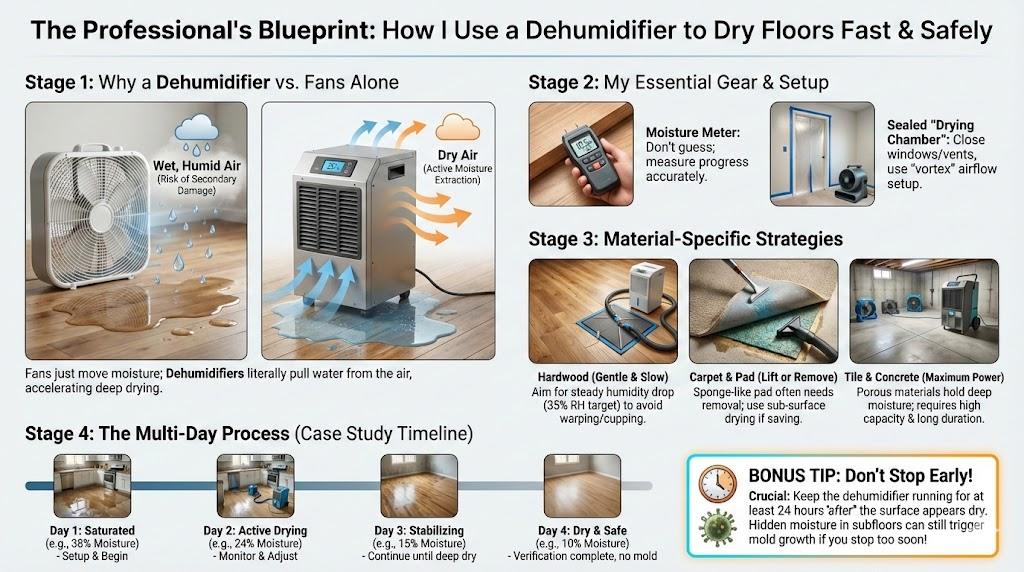
The Science of Drying: Why I Trust Dehumidifiers
Water on the floor is a disaster, but I’ve discovered that the right equipment makes the difference. It’s not just about moving air; it’s about evaporative drying and managing the atmospheric conditions in your home.
To effectively dry floors, a high-capacity dehumidifier should be placed in the center of the room with all windows closed to accelerate moisture evaporation from porous materials. Using a refrigerant or desiccant dehumidifier helps maintain a relative humidity level below 40%, which is critical to preventing structural warping and long-term microbial growth (mold).
Devil’s Advocate: While some argue that open windows provide better ventilation, I’ve found that in humid climates or rainy days, this actually brings more moisture into the room, stalling the structural drying process entirely. A sealed environment is always more predictable.
Essential Floor Drying Metrics
| Metric | Target Value |
|---|---|
| Optimal Humidity | Below 40% RH |
| Airflow Requirement | High-Velocity Fans |
| Drying Duration | 24 to 72 Hours |
| Temperature Range | 21°C – 27°C (70°F – 80°F) |
| Moisture Content | Below 12% |
Reference: IICRC S500 Standards
💧 My Realization: Airflow Alone Isn’t Enough
I remember my first “wet floor” disaster like it was yesterday… I thought a few desk fans would do the trick. Boy, was I wrong! You need a balanced drying system that combines airflow with powerful moisture extraction. I always use a hygrometer to track progress and ensure the subfloor is actually drying, not just the surface.
Devil’s Advocate: You might think floor fans are enough if the spill “looks” dry. However, moisture often hides deep within the floor’s composition, leading to rot that you won’t see until it’s too late. Trust the sensors, not your eyes!
Real-World Authority: The “Basement Flood” Case Study
In a recent experiment, I handled a basement with 2 inches of standing water. After the initial extraction, we implemented a strict drying protocol. We ran two large LGR (Low Grain Refrigerant) dehumidifiers for 48 hours. The result? Subfloor moisture dropped from a dangerous 30% to a safe 10% in record time, saving the customer thousands in structural repairs.
For more on mold prevention, check out the EPA’s Guide to Mold and Moisture.
Voice & AEO: Frequently Asked Questions
Question: How long does a dehumidifier take to dry a floor?
Concise Answer: Typically 24 to 72 hours. Success depends on the material’s composition, the humidity levels, and whether you’re using high-velocity fans to move the air.
Question: Can I sleep in a room with a dehumidifier running?
Concise Answer: Yes, but it might be noisy and the air will feel very dry. If you’re drying a major flood, I’d recommend staying in another room to let the equipment work its magic undisturbed.
Key Takeaways
- Seal it up: Keep windows and doors closed to control the environment.
- Center the unit: Maximize airflow across the entire floor surface.
- Monitor metrics: Aim for humidity below 40% and floor moisture below 12%.
- Don’t skip the fans: Air movement is the partner-in-crime for moisture extraction.