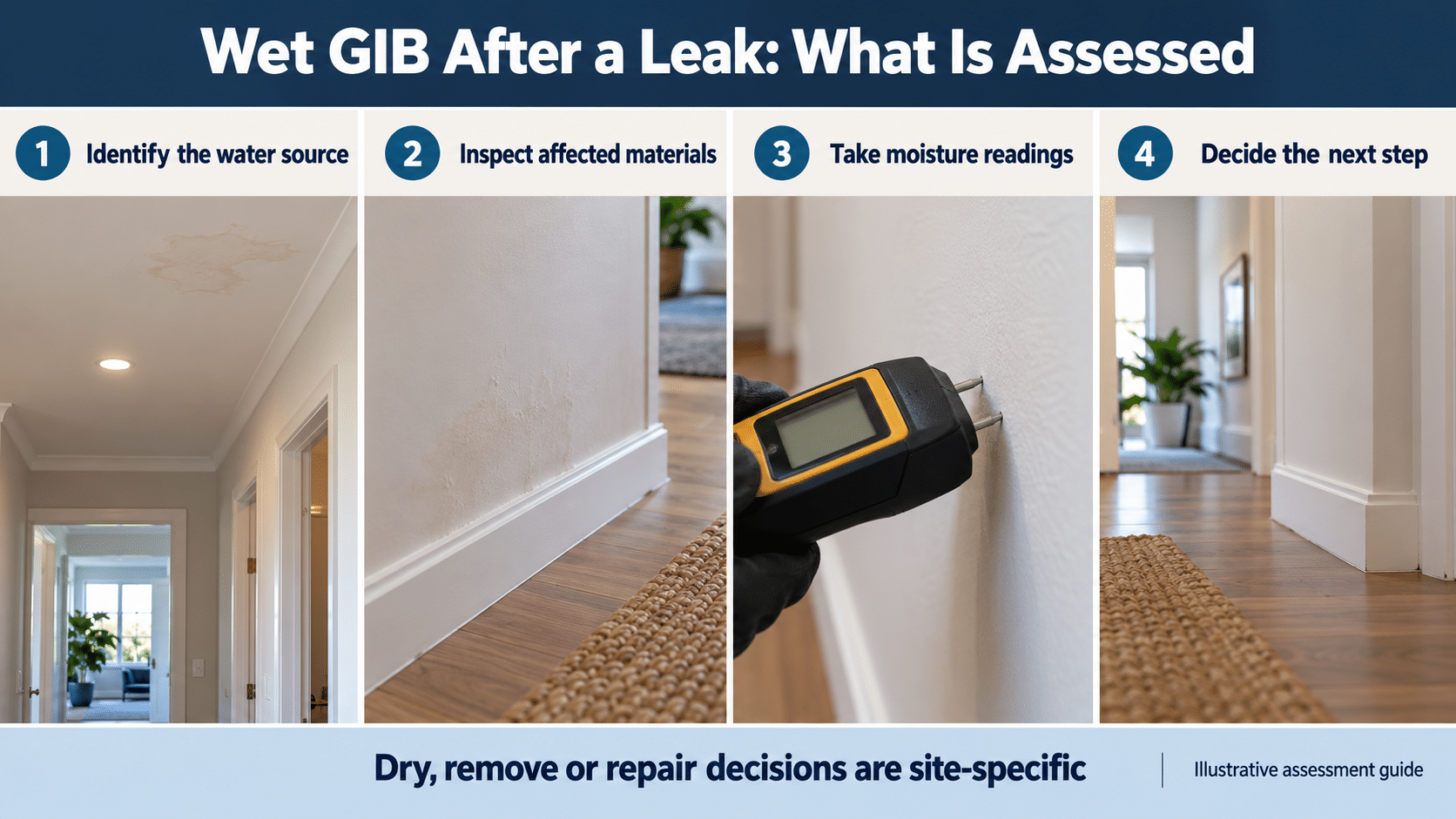
Quick answer: Wet drywall or GIB can sometimes be dried after a recent clean-water leak when it remains firm and moisture assessment confirms the wall system can be dried. Removal is often safer when the lining is soft, swollen, contaminated, or wet behind the surface.
Documented Auckland example: why wet linings need an assessment
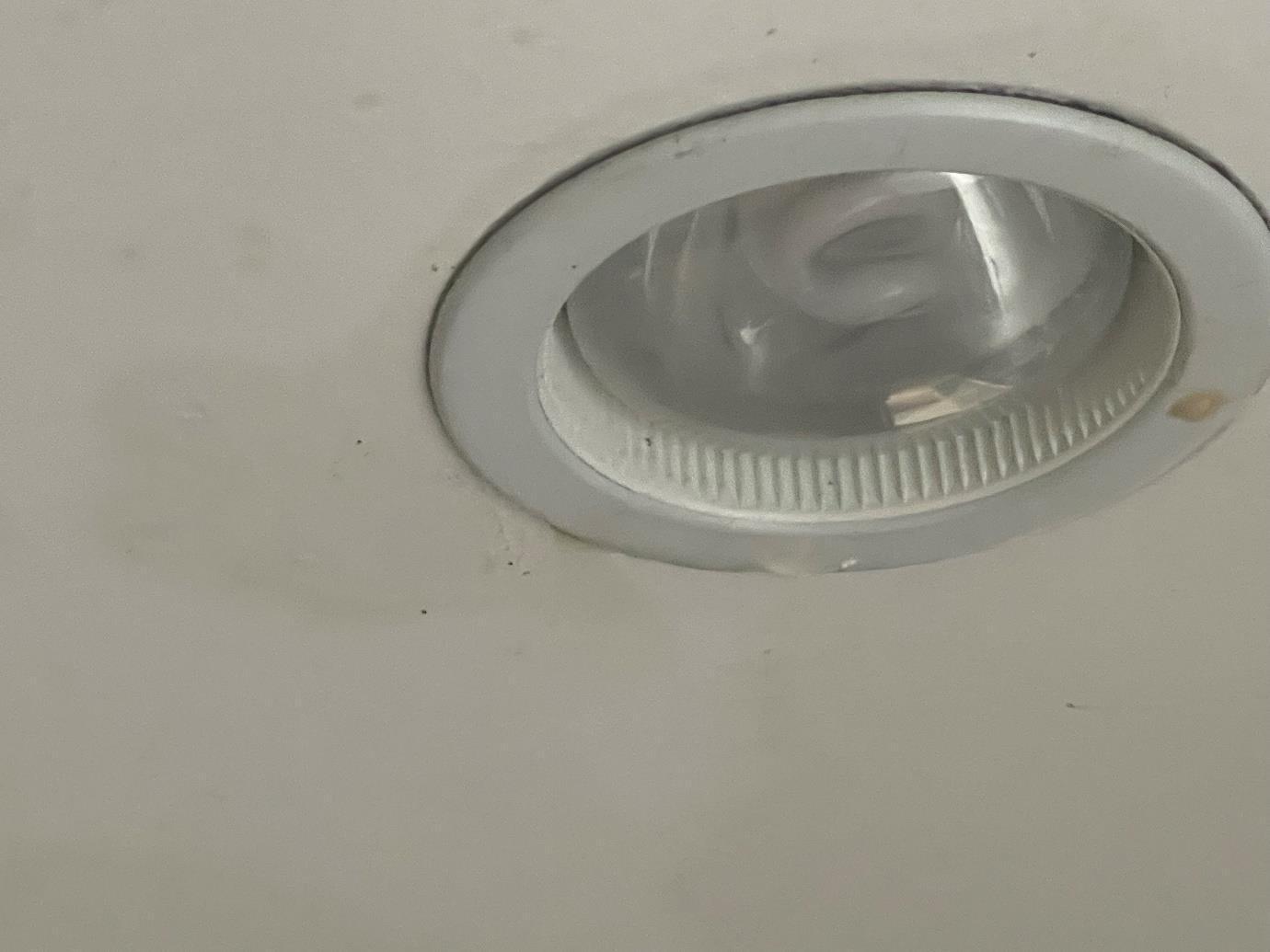
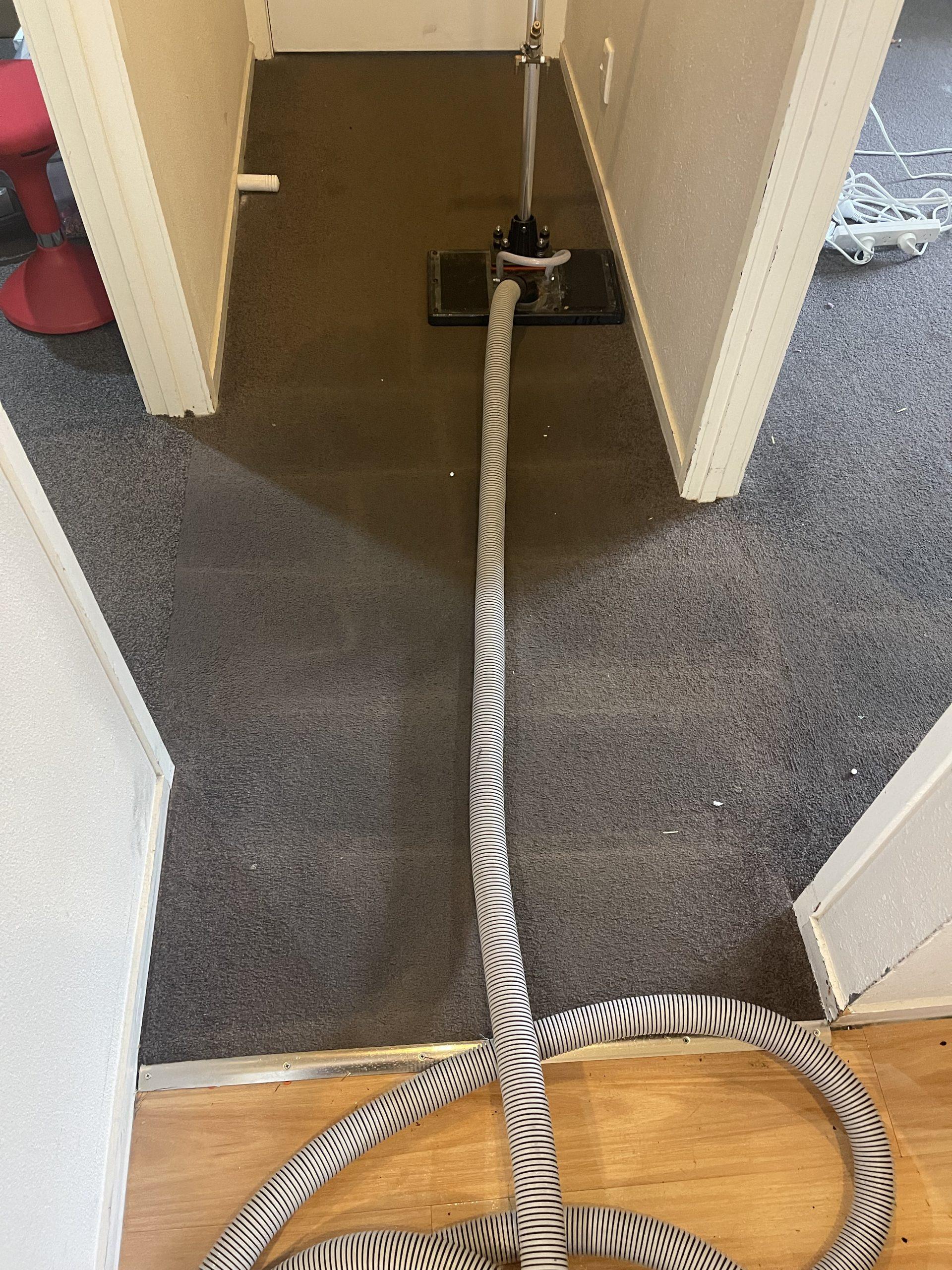
A documented ceiling pipe leak affected ceiling and wall materials as well as carpeted areas. The job shows why an assessment needs to consider the water path and concealed materials before deciding whether any GIB can remain in place. It does not establish a dry-or-remove rule for another property.
| Documented condition | Assessment implication | Recorded response |
|---|---|---|
| Water entered through a ceiling light fitting | Water may have moved beyond visible staining or the immediate entry point | Two hallways and a bedroom were included in the drying assessment |
| Ceiling and wall materials were affected | Concealed materials can need access or further checking | Wall access and structural checks were completed as work progressed |
| Carpeted areas were wet | Visible surface conditions alone cannot decide the full repair scope | Extraction and controlled airflow were used; carpeted areas dried over three days |
Water category, material condition, contamination, access and measured moisture determine whether a lining can be dried or needs removal. Read the full ceiling pipe-leak case study for the documented context.
Wet drywall: dry or remove?
Yes, sometimes. Drywall or GIB is more likely to be salvageable after a small, recent clean-water leak when the board has retained its strength and a moisture check confirms the wall cavity can be dried. If water was contaminated, the board is soft or swollen, or moisture has travelled into insulation or framing, targeted removal is often the safer option.
Wet drywall assessment chart
| What we check | Why it matters | What it can indicate |
|---|---|---|
| Water source | Clean, grey or contaminated water creates different hygiene risks. | Contaminated porous linings may require removal. |
| Board condition | Softening, swelling, delamination or crumbling means the lining has lost strength. | Replacement is commonly needed. |
| Moisture behind the surface | Visible staining does not show all moisture in a wall cavity. | Drying equipment, inspection openings or further assessment may be needed. |
| Insulation and framing | Wet insulation can hold moisture against timber or steel components. | Targeted removal and monitored drying may protect the structure. |
| Time and access | Earlier assessment and good access generally make drying more practical. | Delays increase the chance of secondary damage and mould growth. |
When wet GIB may be dried
Drying may be considered where a clean-water event is contained quickly, the plasterboard remains firm, and monitoring shows moisture is reducing. The affected room needs controlled airflow and dehumidification rather than simply opening windows. Drying is measured against suitable dry standards for the material, not guessed from the wall feeling dry to the touch.
When removal is usually safer
- The water came from sewage, stormwater or another potentially contaminated source.
- The board is soft, bowed, swollen, crumbling or has lost its paper face.
- Moisture has reached insulation, framing or concealed areas that cannot be dried and verified properly.
- The leak was prolonged or the wall remained wet long enough for secondary microbial growth to become a concern.
How professionals dry a wet wall
- Make the area safe: address the water source and electrical risks first.
- Map the moisture: identify the extent of wet materials, including adjacent flooring and wall cavities.
- Open access only where needed: remove skirtings or create controlled inspection openings if concealed moisture needs verification.
- Set drying equipment: use air movement and dehumidification to control the drying environment.
- Monitor and document: record moisture progress and confirm materials have reached an acceptable dry condition before reinstatement.
Why painting over a water stain is not a fix
Paint can hide staining but cannot prove the board, insulation or framing is dry. Repainting before the moisture issue is resolved can trap the problem behind a finished surface and make future inspection harder. Confirm the leak is repaired and the affected materials are dry before cosmetic repairs begin.
What to do while you arrange assessment
- Stop the water source if it is safe to do so.
- Keep clear of wet electrical outlets, appliances and switchboards.
- Photograph the affected area and any visible water path before clean-up, where safe.
- Move furnishings away from damp walls if this can be done safely.
- Do not seal, paint or close up the wall before moisture has been checked.
Drywall and GIB water-damage FAQs
How long does wet drywall take to dry?
The time varies with the water source, how much moisture entered the wall, Auckland humidity, material access and the equipment used. Monitoring is more reliable than a fixed time estimate; drying should continue until measurements show the materials have returned to an acceptable dry condition.
Can wet insulation be dried in place?
Sometimes, but only after the insulation type, contamination risk and moisture extent are assessed. Wet insulation can retain water against framing, so removal is often considered where it cannot be dried and verified effectively.
Does insurance cover wet drywall from a leak?
Cover depends on the policy and the cause of the damage. Insurers commonly need clear documentation of the event, affected rooms and mitigation work. Keep photos, moisture records and invoices, then check the policy or speak with the insurer before reinstatement.
Get the right next step for a wet wall
For an Auckland water event, our flood restoration and carpet drying team can assess the affected materials and set out a drying or removal plan. If flooring is also affected, see our emergency carpet drying action plan; for concealed moisture, read our guide to drying hidden wall cavities and ceiling voids.