Flooding in a rental home can create urgent safety, drying and tenancy questions. This guide gives general information for Auckland tenants and landlords after water damage. It is not a substitute for advice on an individual tenancy or insurance claim.
Quick answer: can you stay in a flooded rental?
Whether an Auckland rental is safe to stay in after a flood depends on the water source, electrical safety, contamination, usable rooms, essential services and the extent of the damage. Notify the landlord or property manager promptly, document the condition and do not enter areas that may be unsafe. For tenancy rights and obligations, use the linked Tenancy Services guidance or seek advice for the individual circumstances.
First-day flood recovery checklist for rentals
| Priority | Tenant | Landlord or manager |
|---|---|---|
| Safety | Leave unsafe areas and report hazards. | Arrange urgent assessment and make hazards safe. |
| Evidence | Photograph damage and retain written communications. | Document the loss and contact the insurer where relevant. |
| Drying | Allow safe access for approved drying work. | Arrange a suitable drying plan and communicate timing. |
| Living arrangements | Record any agreement about access or rent in writing. | Discuss impact on the use of the home and obtain tenancy advice when needed. |
Is a Flood-Damaged Rental Safe to Live In?
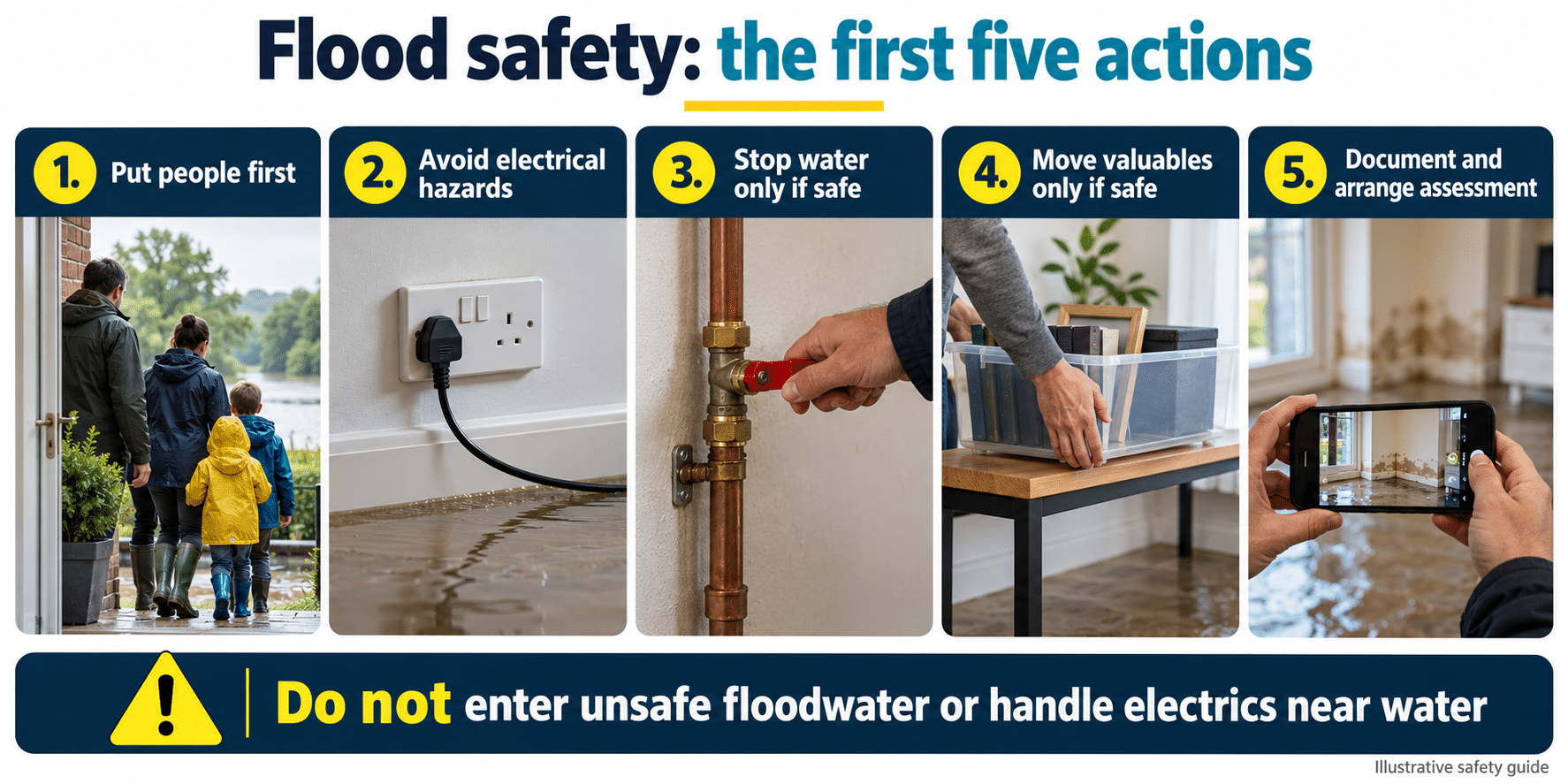
Safety comes first. Avoid standing water near electrical equipment, report the damage promptly and follow emergency-service instructions. The condition of a property depends on the extent of the damage, contamination, utilities and whether essential areas can be used safely.
Tenancy Services explains that a tenant does not need to wait for confirmation from emergency services or the Tenancy Tribunal before leaving a rental that is not safe or habitable. Its natural-disaster guidance also explains the options where a rental is damaged, partially unusable or cannot be lived in.
What Tenants Should Do
- Tell the landlord or property manager about the damage as soon as possible.
- Take clear photos and keep written records of communications and any agreed arrangements.
- Do only safe, practical steps to prevent further damage; do not take risks around electrical hazards or contaminated water.
- Keep copies of any rent-reduction, temporary accommodation or repair agreements in writing.
What Landlords Should Do
- Check that people are safe and arrange a prompt assessment of the property.
- Document the damage and speak with the insurer where relevant.
- Arrange drying and repairs appropriate to the water damage.
- Communicate clearly with tenants about access, timing and any impact on use of the home.
Tenancy Services states that landlords are responsible for drying a flooded rental property and may need to cover tenants’ reasonable electricity charges incurred for drying equipment. Specific responsibilities can depend on the circumstances, so seek advice where needed.
Drying a Flooded Rental
Water can travel under carpet, into wall linings and below flooring. The 60-minute emergency carpet drying action plan explains the first steps, while the guide to wet carpet underlay explains why a surface can feel dry before the area is fully dry.
For help after a leak or flood, visit our Auckland flood restoration and carpet drying service. Where hire equipment is suitable, see dehumidifier hire and carpet dryer hire.
Frequently Asked Questions
Does flood damage automatically end a tenancy?
No. The available options depend on the damage and circumstances. Tenancy Services explains the processes for property that is partly damaged, seriously damaged or destroyed.
Should tenants start drying work themselves?
Only take safe, practical steps. Report the damage promptly and discuss the drying plan with the landlord or property manager.
Who pays for drying equipment electricity in a flooded rental?
Tenancy Services says landlords are responsible for drying a flooded rental property and may need to cover tenants’ reasonable electricity charges for drying equipment. The exact outcome depends on the circumstances, so check the current Tenancy Services guidance.
Can a tenant leave a rental after flooding?
Tenancy Services states that a tenant does not need to wait for emergency services or the Tenancy Tribunal before leaving a rental that is not safe or habitable. Damage level and tenancy circumstances matter, so retain records and obtain advice where needed.