Flood damage can affect a single room in an Auckland home or several areas of a commercial property. Understanding the restoration process helps homeowners and businesses prepare for water removal, moisture assessment and controlled drying.
Flood restoration for Auckland homes and businesses involves dealing with both visible water damage and moisture that has travelled into building materials. The process covers initial safety, damage documentation, water removal and a drying plan based on the affected areas. Moisture checks before and after equipment hire help assess drying progress.
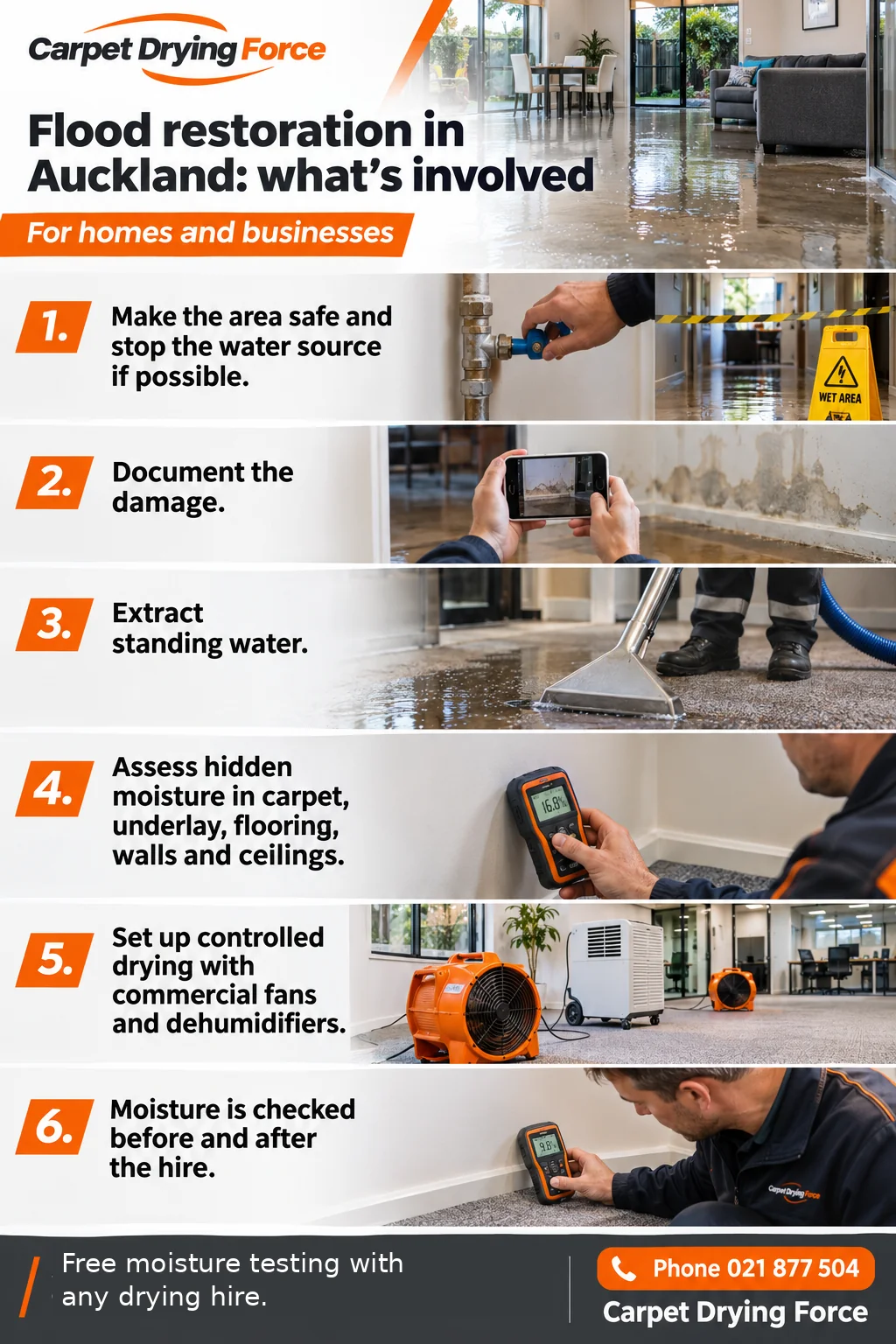
The six stages of flood damage restoration in Auckland
The scope of a flood restoration job depends on the water source, the affected materials and the conditions at the property. The following stages explain how the process works and what needs to be considered along the way.
1. Make the property safe and address the water source
Before restoration begins, make the affected area safe and stop the water source if possible. The first priority is to address immediate safety concerns before dealing with wet carpet, flooring or other affected materials.
Our emergency water damage action plan explains the initial steps to take following a leak or flood.
If sewage or contaminated water is involved, refer to our separate sewage and contaminated-water guide.
2. Document the affected areas
Take photos of the visible water damage and affected areas. Documentation helps establish which parts of the property have been affected before water removal and drying begin.
Photos and moisture readings can also support your own records. Further insurance-related information is available on our Auckland flood restoration service page.
3. Remove standing water
Standing water needs to be extracted from the affected areas. Removing visible water is an important part of the process, but moisture can remain within carpet, underlay and other building materials after extraction.
The affected materials need to be assessed before deciding on the drying setup.
4. Assess the extent of moisture damage
The visible water boundary does not necessarily show the full extent of the affected area. Moisture assessment considers where water has travelled and which materials need drying.
Depending on the property, the assessment may include:
- Carpet and underlay.
- Flooring.
- Walls.
- Ceilings.
Leak detection and moisture testing help establish the areas that require attention.
5. Establish a controlled drying setup
Commercial drying fans provide airflow across affected materials, while dehumidifiers remove moisture from the air. The drying setup depends on the affected areas, materials, airflow and humidity at the property.
A house, shop or office may require a different equipment arrangement depending on the site assessment.
6. Check moisture before and after the hire
Moisture readings taken before and after the hire help assess drying progress. The condition of the affected materials is important when determining whether further drying is needed.
Drying time depends on the water source, affected materials, airflow and humidity. Read our Auckland flood recovery and drying-time guide for further information.
Flood restoration for Auckland homes
Residential flood restoration may involve a house, unit or other residential property. The affected area could include carpet, underlay, flooring, walls or ceilings, depending on the source of the water and where it has travelled.
Assessing the affected rooms and materials
A home drying plan needs to consider the materials in each affected area. Moisture assessment helps establish whether the damage is limited to the visible wet area or has reached other building materials.
Setting up drying equipment in a residential property
The placement of commercial fans and dehumidifiers depends on the layout of the affected rooms and the materials requiring drying. Access around household living areas also needs to be considered when planning the equipment setup.
Moisture checks before and after the hire help assess how drying has progressed.
Flood restoration for Auckland businesses and commercial premises
Flood damage restoration in a shop, office or other workplace involves the same general restoration stages as a residential job. However, the arrangement of the premises, the materials affected and access around staff or trading areas can influence the drying plan.
Planning around workplace access
A commercial site assessment needs to consider the affected areas and how staff or customers use the premises. The drying equipment arrangement should take account of access around workspaces and trading areas.
Assessing commercial flooring and building materials
Different parts of a commercial property may contain different flooring and building materials. Moisture assessment helps establish which areas need controlled drying and how commercial fans and dehumidifiers can be arranged.
For further information, read our commercial water damage restoration guide for Auckland businesses.
How residential and commercial flood restoration jobs can differ
The main restoration stages remain the same, but the practical requirements of each property can differ.
| Consideration | Residential property | Commercial premises |
|---|---|---|
| Affected areas | Bedrooms, living areas and other household spaces. | Offices, shops, staff areas and other workplace spaces. |
| Access | Access around household living areas. | Access around staff, workspaces and trading areas. |
| Materials | Assessment of affected carpet, underlay, flooring, walls and ceilings. | Assessment of the different flooring and building materials within the premises. |
| Drying setup | Equipment arranged according to the affected rooms and materials. | Equipment arranged according to the affected workspaces, materials and access requirements. |
| Moisture checks | Before and after the drying hire. | Before and after the drying hire. |
A site assessment is needed to establish the appropriate drying setup for either type of property.
Moisture checks and leak detection during the restoration process
Carpet Drying Force provides free leak detection and moisture testing with any drying equipment hire, including fan-only hire. Thermal imaging is free with the Drying Combo only.
Moisture is checked before and after the hire.
Drying equipment hire options
The drying equipment required depends on the affected materials and site assessment. Carpet Drying Force offers the following hire options:
- Drying Combo: One 90 L dehumidifier and two drying fans for $75 + GST a day, with a three-day minimum, or $400 + GST for seven days.
- Drying fans: $35 + GST a day, with a three-day minimum.
Auckland delivery and pick-up are free. Hire periods are pricing arrangements, not guarantees of how long a property will take to dry.
For market restoration budgets and further pricing information, see our Auckland flood restoration cost guide.
Flood damage restoration across Auckland
Carpet Drying Force provides drying equipment hire with free delivery and pick-up across Auckland. The restoration and drying requirements depend on the affected property rather than its location alone.
For local information, see our carpet drying pages for the North Shore, West Auckland, South Auckland and East Auckland.
Frequently asked questions about the flood restoration process
What is involved in a flood restoration job for an Auckland home?
A residential flood restoration job considers the rooms and building materials affected by water. After safety concerns and the water source have been addressed, damage is documented, standing water is extracted and affected materials are assessed. Commercial drying equipment and moisture checks form part of the drying process.
How does flood restoration work for an Auckland business or commercial premises?
Commercial flood restoration involves assessing the affected workspaces, flooring and other building materials before establishing a drying plan. Access around staff areas or trading spaces also needs to be considered. A site assessment helps determine how drying fans and dehumidifiers should be arranged within the premises.
How can a home job and a commercial job differ?
A residential job may involve drying individual living areas, while a commercial job may involve several workspaces or trading areas. Differences in property layout, affected materials and access requirements influence the equipment arrangement. Both types of property require an assessment of moisture damage and the appropriate drying setup.
What is checked before and after the drying hire?
Moisture readings are taken before and after the drying hire to help assess progress in the affected materials. Depending on where the water has travelled, these materials may include carpet, underlay, flooring, walls or ceilings. The readings help determine whether further drying needs to be considered.
What should an Auckland homeowner or business do first if they need flood restoration?
Make the affected area safe and stop the water source if possible. Follow our 60-minute emergency water damage guide for immediate safety steps and initial actions. Contact Carpet Drying Force on 021 877 504 to discuss the affected property and its flood restoration or drying equipment requirements.
Contact Carpet Drying Force
For flood restoration and drying equipment hire for your Auckland home or business, contact Carpet Drying Force to discuss the affected areas and drying requirements.
Phone: 021 877 504