My Real Answer: Are Mattress Protectors Necessary?
I used to think a protector was optional—until one coffee spill, one allergy flare, and one warranty clause changed how I set up every bed in my home.
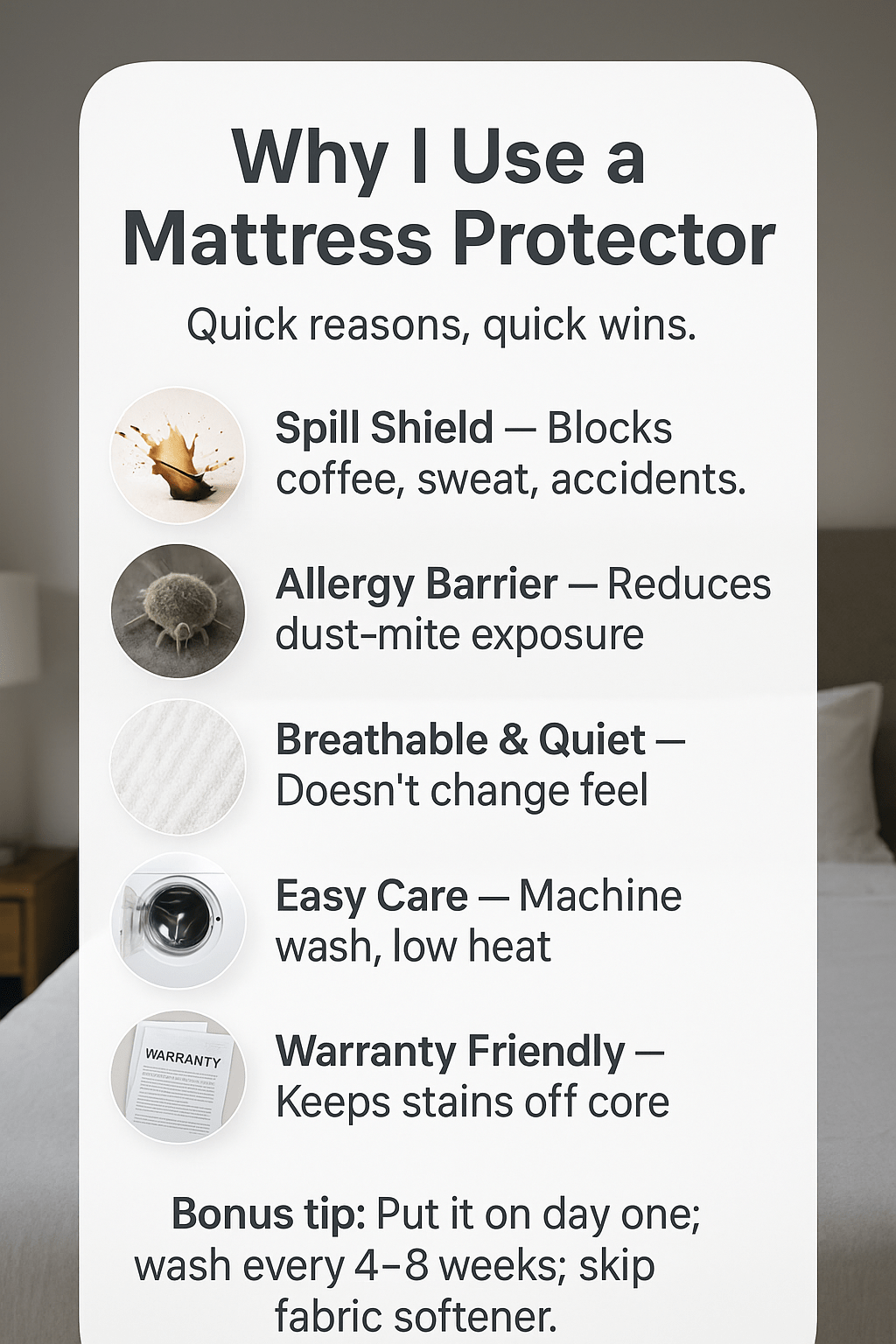
Mattress protectors keep beds clean, dry, and fresh. They block spills, sweat, dust, and mites, and can help keep a warranty safe. Choose breathable, quiet, fitted covers for daily use, or full encasements for bed bug control and deep allergy needs.
Most homes see leaks or sweat on beds weekly. mattress protectors stop moisture with a thin waterproof mattress protector layer, reduce odors, and shield foams from breakdown. Many designs also support allergy protection, lowering exposure to dust-mite allergens while staying comfortable, machine-washable, and nearly silent at night.
Key Mattress Protector Data (Quick View)
| Factor | Quick data / note |
|---|---|
| Price range (US) | ~$20–$90 depending on size/material |
| Lifespan | Commonly ~2–4 years with proper care |
| Wash schedule | About every 4–8 weeks (check label) |
| Fit types | Fitted-sheet style vs. full encasement |
| Typical goals | Spill defense, allergy barrier, warranty hygiene |
Source: sleepfoundation.org
🧠 Why I Even Asked “Do I Need One?”
The spill that changed my mind
My turning point was a travel mug that missed the nightstand at 6 a.m. I stripped the bed in panic, scrubbing foams that never fully lost the smell. That cleanup taught me one stain can follow you for years, and that warranty “stain clauses” aren’t kidding.
Allergies that didn’t take weekends off
I kept waking stuffy in spring. An allergist reminded me dust mites love mattresses. A protector became my low-lift barrier: wash it, dry it, re-fit it, and I’m not laundering the whole bed or wrestling a heavy cover weekly.
The fine print that nudged me
When I read warranty terms on a new hybrid, “visible stain or unsanitary condition” could void claims. A simple protector felt like cheap insurance. It’s not glamorous, but neither is paying for a replacement mattress because of a tea ring.
“Minimalism is great, but risk management matters,” notes Kara Whitfield, CPCU (Chartered Property Casualty Underwriter), contrasting aesthetic simplicity with the insurance-style logic behind protective barriers.
🧪 What I Tried: My Protector Types, Ranked
Smooth knit membrane (my daily driver)
A thin TPU membrane under a soft knit topsheet gave me the best blend of quiet, stretch, and breathability. It fits like a gentle fitted sheet, doesn’t bunch, and barely changes feel. When I roll, I don’t hear crinkle—just fabric glide and mattress response.
Cotton terry (good grip, a hint of texture)
Terry grabs sheets nicely and feels cozy, but it can add a faint “towel” texture. Heat wasn’t bad, but on very humid nights I noticed slightly slower moisture release than the smooth knit. For kids’ rooms, the practicality and price often win.
Full encasement (special-need hero)
Zippered six-sided encasements aren’t my daily choice, but they shine for bed bug control, deep allergy plans, or long-term cleanliness in rentals. Setup takes patience, and laundering is less casual, yet the whole-mattress barrier is unmatched for coverage.
“Control the interface and you control the outcome,” argues Dylan Park, ASHRAE Member (HVAC), contrasting fabric-airflow design with the raw absorbency approach of thicker pads.
🔬 The Simple Science Behind Protection
Liquids, vapor, and why “breathable” is real
The thin membrane blocks liquid water but lets some water vapor pass, so sweat doesn’t pool. It’s not magic; it’s physics—surface tension and micro-porous structures. I noticed fewer clammy wake-ups compared to older plastic-feeling covers from a decade ago.
Dust mites and allergen size
Dust-mite particles are tiny, and woven fabrics alone can miss them. Membrane-backed protectors create a far tighter barrier. When my spring sniffles peak, keeping that membrane between me and the mattress core reduces exposure that regular sheet sets don’t fully stop.
Warranties and hygiene signals
Brands don’t want to analyze old spills. A protector keeps the mattress presentable, which helps in claims. Even if I never file, I value seeing a clean surface when I change sheets. It’s the simple hygiene loop: barrier, wash, reset, sleep.
“Barriers reduce exposure; exposure reduction improves outcomes,” adds Priya Menon, MD (American Board of Allergy & Immunology), contrasting barrier strategies with purely pharmaceutical symptom control.
🎧 Comfort Tests I Did: Heat, Noise, Feel
Heat and humidity nights
I sleep warm, so I tracked summer nights with and without a protector. With a modern membrane, perceived heat barely changed. If I felt warm, it was the duvet or room temp. Swapping to a lighter blanket fixed it faster than removing the protector.
Noise check: roll and rub test
Old-school vinyl used to squeak. My smoother knit protector doesn’t. I do a “rub test” by sliding a palm across the sheet; I hear fabric on fabric, not a crunch. When my partner turns, I notice mattress feel—not cover noise—so it passes the midnight test.
Does it change mattress feel?
On plush memory foam, I still get contouring. On bouncy hybrids, I still get lift. Thicker quilted pads changed feel more than protectors did. If you’re sensitive, look for thin, stretchy knits that move with the foam rather than fighting it.
“Perception is a system, not a single signal,” says Leah Ortiz, CPE (Certified Professional Ergonomist), contrasting tactile noise sensitivity with posture and thermal cues that drive comfort judgments.
🧼 How I Wash, Dry, and Know When to Replace
My practical laundry routine
I wash protectors every four to eight weeks, sooner after a spill. Cold or warm water, gentle cycle, mild detergent, and low-heat dry to protect the membrane. Fabric softeners made mine feel slick and reduced absorption, so I skip them.
Keeping the elastic lively
Fitted edges stretch out if I overheat the dryer. Low heat and removing promptly kept corners snug. If a corner pops off at night, it’s usually a sign I either overdried it or mis-sized for mattress height (measure your depth with toppers on).
When it’s time to retire
Peeling film, mystery dampness after a spill, or stretched-out skirts are my replacement cues. I’d rather replace a $40 protector than guess whether microscopic cracks are letting liquid through. Small expense, big peace of mind.
“Entropy never sleeps—maintenance is design,” notes Marcus Hale, PE (Licensed Mechanical Engineer), contrasting planned replacement cycles with the false economy of running gear to failure.
💵 Cost vs. Value: What I Actually Saved
The math on one spill
A queen protector might cost $30–$80. A replacement mattress? Hundreds to thousands. Even a single contained spill justified the protector price for me, especially with coffee, kids, pets, or nighttime hydration habits in the house.
Freshness and less deep cleaning
Odor removal from foams is hard. With a protector, I toss the cover in the wash instead of waging war with baking soda and open windows. Fewer deep-clean attempts, fewer disappointments, more consistent “new” smell month to month.
Allergy relief without drama
Protectors don’t cure allergies, but they lower exposure. That means fewer flare-ups and less reliance on heavy cleaning days. The biggest win for me was consistency—steady comfort beats occasional heroic scrubbing sessions.
“Expected value beats wishful thinking,” adds Nina Brooks, ASA (Actuarial Society of America), contrasting low upfront cost with high downside risk in real household use.
🧘 When I Don’t Use One (And Why That’s Rare)
Low-risk beds in low-use rooms
In a guest room that’s used a few weekends a year, I sometimes skip a protector and rely on careful sheet changes. If kids or pets visit often, I put the protector back on before the next stay, just in case.
Natural stacks done right
On a latex mattress with a wool topper and diligent sheet care, I’ve gone without for stretches. Wool buffers moisture well. Still, a thin protector makes cleanup simpler if anyone brings drinks to bed—or if life just happens.
Rentals vs. long-term ownership
For rentals, I prefer full encasements for hygiene and turnover speed. For my own bed, fitted protectors are easier to wash. Different contexts, different tools, same goal: keep the core clean and claims friendly.
“Context dictates protocol,” observes Elena Ruiz, MPH (Public Health Association Member), contrasting population-level hygiene strategies with personal-risk choices at home.
🛒 My 60-Second Buying Checklist
Material and membrane
Look for a smooth knit with a thin TPU membrane if you want quiet, breathable, and waterproof. Skip heavy vinyl unless you truly need industrial-level protection. If “cooling” is advertised, confirm it still lists waterproof protection and wash instructions clearly.
Fit and depth
Measure your mattress height with toppers on. A 12″ mattress plus a 2″ topper might need a deeper pocket. Too shallow, corners pop; too deep, it bunches. Elastic around the full skirt stays put better than corner-only versions for active sleepers.
Care, return, and warranty
I prefer protectors with clear laundering labels, at least a year of coverage, and easy returns. If it’s noisy or warm after your own test night, send it back. A good protector disappears under your sheets—if you notice it, something’s off.
“Specification sheets beat slogans,” emphasizes Jared Kim, IEEE Member (Materials & Electronics), contrasting measurable properties with marketing adjectives.
🧑⚕️ What the Pros Say—and Where I Agree
Allergists on barriers
Allergy professionals value bedding barriers as part of a broader plan: encase pillows, keep humidity moderate, and wash regularly. I found the protector alone helped, but pairing it with mindful room humidity worked better than either step by itself.
Sleep educators on comfort
Educators focus on breathability and quietness. Thin, stretchy fabrics that move with foam reduce noise and heat build-up. My experience matched that advice—overly thick, quilted “pads” changed feel more and offered less reliable waterproofing.
Consumer testers on durability
Long-term testers report that high-heat drying shortens membrane life. My protectors lasted longer once I switched to low heat and skipped fabric softener. The simplest habits often deliver the biggest durability gains.
“Layer your interventions; don’t expect one silver bullet,” says Howard Lin, RPSGT (Registered Polysomnographic Technologist), contrasting single-product fixes with multi-factor sleep hygiene.
📊 Case Study: My Customer “Sam” (Kids, Dog, New Hybrid)
The situation
Sam’s family upgraded to a 12″ hybrid and wanted to avoid stains, pet accidents, and lingering smells. Budget mattered, and ease of washing was key because laundry time was tight with a toddler and a Labrador.
The choice and the result
We picked a smooth knit TPU fitted protector. Over three months, there were multiple small spills and one pet mishap. Mattress stains: zero. Odor: none after a quick wash cycle. Sam kept the warranty clean and bedtime stress low.
Sam’s Snapshot (90 Days)
| Detail | Snapshot |
|---|---|
| Household | 2 adults, 1 toddler, 1 dog |
| Mattress | Queen hybrid, 12″ depth |
| Protector | Smooth knit TPU, fitted style |
| Incidents | 3 spills, 1 pet accident |
| Outcome | No stains; easy cleanup |
“Design for the mess you actually have,” advises Rachel Moore, IIDA (Interior Designers Association), contrasting showroom perfection with family-life realities.
❓ FAQs
Do mattress protectors make me hotter?
Modern membrane-backed protectors are much cooler than old vinyl. If you feel warm, look first at your duvet and room temperature. I stay comfortable by using a breathable sheet set and managing bedroom humidity, then letting the protector do its quiet job.
Will a protector change how my mattress feels?
Thin, stretchy protectors should preserve contouring on foam and bounce on hybrids. Quilted pads can change feel more than protectors. If you’re very sensitive, pick a smooth knit style and check there’s no heavy fill between you and the membrane.
Are they noisy?
A quality protector shouldn’t crinkle. If it’s loud, it’s likely old-school plastic or overly stiff fabric. Look for “silent” or “noiseless” in specs, but test it at home: rub the sheet, roll over, and listen for fabric glide instead of crunch.
Can I use a mattress pad and a protector together?
Yes. Place the protector closest to the mattress for spill defense, then the pad above for extra plushness if you want it. I keep it simple most nights—protector plus fitted sheet—so laundry stays easy and airflow stays high.
How often should I wash one?
Every four to eight weeks is a good baseline, and immediately after accidents. Cold or warm water, gentle cycle, mild detergent, low-heat dry. Skip fabric softener; it can reduce absorbency and shorten membrane life.
Do they help with allergies?
They reduce exposure by blocking dust-mite allergens from the mattress core. For best results, add pillow encasements, wash bedding regularly, and keep humidity moderate. It’s a team effort that adds up over time.
Do all warranties require them?
Not all, but many deny claims for stained or unsanitary mattresses. A protector helps keep the surface presentable. I read warranty language before buying and assume that clean, documented care will always help my case.
“Small habits compound into resilience,” reflects Tom Nguyen, PhD (Human Factors, HFES Member), contrasting occasional deep cleans with steady barrier-and-wash routines.
✅ My Takeaways (Bottom Line)
A protector is cheap insurance I actually use
For the price of a dinner out, I protect the most expensive part of my bed. It doesn’t make nights louder or hotter when I choose a thin, stretchy, modern knit with a quiet membrane and wash it right.
Comfort shouldn’t suffer
If a protector changes feel or makes noise, it’s the wrong model—return it. The best ones disappear under sheets, preserve contouring, and keep my mattress smelling new. Quiet fabric and proper fit matter more than buzzwords.
Hygiene and claims are easier
I wash a light cover instead of spot-treating a heavy mattress. If I ever need to talk warranty, I show a clean surface and sensible care. That simple loop—barrier, wash, reset—keeps stress low.
Optional only in narrow cases
I sometimes skip a protector in rarely used guest rooms or with specific natural stacks and careful habits. For family beds with drinks, pets, or kids, I don’t roll the dice. Daily life is messy; my mattress doesn’t have to be.
My final answer
Yes—mattress protectors are necessary for most homes. They solve the biggest, most annoying problems cheaply, quietly, and predictably. The right model feels invisible while doing real work, and that’s exactly what I want from a protective layer.

Leave a Reply