Stepping into a flooded room is one thing, but knowing when that water is a chemical and biological cocktail is what keeps you safe.
Identifying Category 3 water is vital for safety because black water hazards include sewage and toxic runoff. When carpets absorb these pathogens, they become biohazards rather than cleaning tasks. Always seek professional flood extraction to ensure your Auckland property is sanitised and safe.
Category 3 Flood Risk & Safety Data
| Risk Factor | Detail |
| Contamination Source | Sewage, Silt, or Stormwater |
| Health Risk Level | High / Infectious Biohazard |
| Porous Material Rule | Immediate Disposal Required |
| Pathogen Survival | Weeks in Damp Carpet Fibres |
| Recommended PPE | Full Hazmat & N95 Respirator |
☣️ Defining Category 3: What Makes Water “Black”?
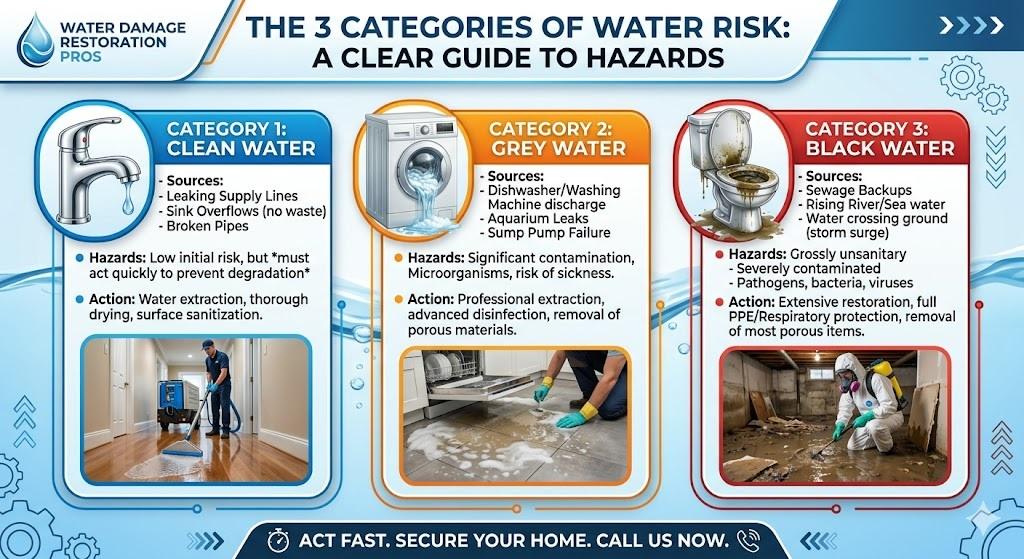
Don’t let the name fool you. Black water doesn’t have to look like ink. In the restoration world, “Black” refers to the danger level, not the shade. This is grossly unsanitary water. It contains pathogens that will make you very sick if you touch or breathe them in. It’s basically a “no-go” zone without gear.
The Sewage Factor
The most common source is a sanitary sewer backup. This is exactly what you think it is. When Auckland’s pipes get overwhelmed during a storm, that cocktail of human waste can end up in your basement or garage. It’s packed with bacteria, viruses, and parasites that don’t belong in your living room.
Environmental Runoff
Rising floodwater from rivers, streams, or street gutters is also Category 3. Think about what’s on our Auckland roads: oil, petrol, animal waste, and garden fertilisers. Once that water crosses your threshold, it brings every chemical and biological nasty from the outside world into your carpet fibres.
The “Grey to Black” Transition
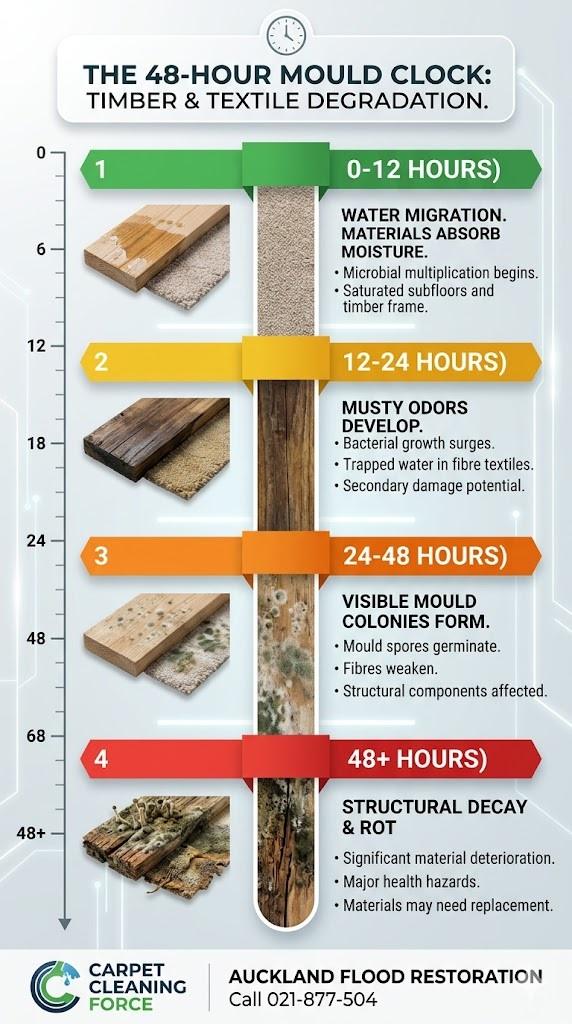
Even “clean” water from a burst pipe can turn nasty. If Grey Water (Category 2) sits for more than 48 hours, it often “degrades” into Category 3. The bacteria start multiplying so fast that the water becomes a biohazard anyway. Time is never on your side when things are soggy.
I once walked into a flood that looked crystal clear, only to find out it had bubbled up through a sewer line; the smell hit me like a physical wall. A DIYer tried to mop up “stormwater” with a beach towel, not realising the local dog park had just drained into his lounge.
A geotechnical engineer would remind us that Category 3 water often carries fine silts that can settle and compromise sub-floor drainage systems permanently. — Tom Richards, CMEngNZ.
🧫 The Porous Trap: Why Carpet Fibres Are Biohazard Hotels
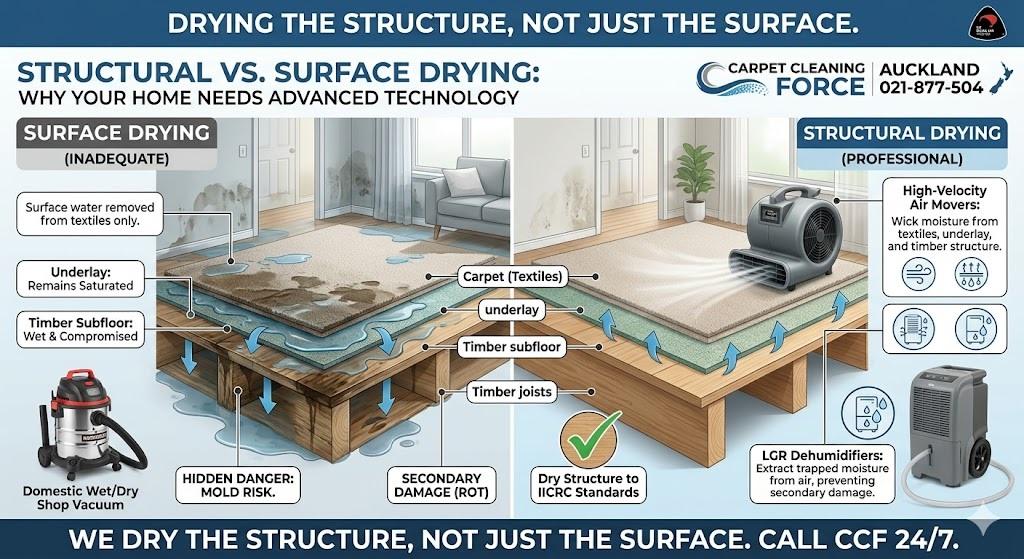
Your carpet is basically a giant, woven sponge. When black water hits it, the “wicking effect” pulls that contaminated liquid deep into the pile. It doesn’t just sit on top. It dives down into the backing and the underlay, creating a multi-layered sandwich of filth that is impossible to reach.
Microscopic Shelter
Bacteria love the nooks and crannies of carpet fibres. Even if you use a high-powered steam cleaner, you’re likely only cleaning the top 20% of the material. The pathogens stay tucked away in the base of the rug, waiting for the right temperature to start a new colony.
The Underlay Problem
The foam underlay is the real villain here. It acts like a massive reservoir for bacteria. You can’t “wash” a sponge that’s been soaked in sewage and expect it to be safe for your kids to crawl on. This is why we almost always insist on ripping it out immediately.
Pathogen Longevity
Pathogens like E. coli or Hepatitis can survive for a surprisingly long time in damp, organic environments. Auckland’s humidity acts like a life-support system for these microbes. If the material stays damp, the biohazard stays active, posing a long-term health risk to everyone in the building.
We tried to “spot clean” a small patch of contaminated carpet once, but the moisture probe showed the bacteria had already spread two metres in every direction. A homeowner insisted on keeping an expensive Persian rug after a sewer leak; three weeks later, the whole family had unexplained stomach bugs.
An insurance loss adjuster might focus on the policy definition of ‘resultant damage’ to determine if full replacement is strictly necessary under the contract. — Karen Smith, ANZIIF.
🗑️ The Salvage List: What Stays and What Goes?
When dealing with Category 3 water, you have to be a bit ruthless. It’s a battle between sentiment and safety. Most of the time, safety has to win. If an item is porous—meaning it has tiny holes that can trap liquid—it’s usually destined for the skip bin.
The Non-Porous Rule
Materials like glass, metal, and hard plastics are the “survivors.” Because they don’t absorb water, we can usually scrub them down with hospital-grade disinfectants and call them safe. Your metal bed frame is fine; your mattress, however, is almost certainly a goner.
The Porous Mandate
Drywall (plasterboard), insulation, and soft furnishings are “sponges.” If black water touches the bottom of your walls, we usually perform a “flood cut.” This means removing the bottom 30cm to 60cm of the wall to ensure no bacteria is trapped behind the skirting boards or in the wall cavity.
Hard Surfaces vs. Soft Surfaces
Concrete floors and tiles can be saved, but they need serious decontamination. We use industrial-strength antimicrobials to “flood” the surface, ensuring the chemicals reach into every crack. If it’s soft—like a sofa, a cushion, or a teddy bear—the risk of trapped pathogens is just too high to ignore.
I watched a man try to “sun-dry” his soaked sofa after a sewage leak; the flies found it before the sun did. A client was heartbroken to lose her book collection, but once we showed her the silt and waste trapped between the pages, she understood why they had to go.
A forensic toxicologist would argue that chemical contaminants like heavy metals in street runoff are more persistent than biological ones. — Dr. Marcus Vane, NZFRSS.
🤒 Health Risks: The Hidden Dangers in the Damp
The danger of black water isn’t just about what you can see. It’s about what you can breathe. As the water begins to evaporate, some of those bacteria and mould spores can become airborne. This is why we often see “flood fever” or respiratory issues in people who try to do their own cleanup.
Dermal Contact and Ingestion
Even a tiny cut on your hand can provide an entry point for nasty infections like Leptospirosis. And don’t forget the “hand-to-mouth” risk. If you touch a contaminated surface and then grab a sandwich, you’ve just invited the biohazard to dinner. PPE isn’t just for show; it’s a literal lifesaver.
The Vulnerable List
Children and pets are at the highest risk. They spend more time on the floor and have developing immune systems. What might be a mild “tummy bug” for an adult can be a serious hospital visit for a toddler. If you have kids in the house, there is zero room for error with Category 3 water.
One guy did a DIY cleanup in jandals and ended up with an infection that put him on antibiotics for a month. A puppy got sick after licking a “cleaned” floor that hadn’t been properly sanitised with professional-grade antimicrobials.
An epidemiologist would highlight that the psychological stress of property loss can suppress the immune system, making residents even more susceptible to waterborne pathogens. — Dr. Helen Zhou, NZIPH.
🛡️ Professional Decontamination: Safety Above All
This is where the pros come in with the big guns. We don’t just “clean” things; we decontaminate them. We use personal protective equipment (PPE) that makes us look like we’re heading to Mars—Tyvek suits, gloves, boots, and N95 respirators. It might look dramatic, but it’s the standard for a reason.
Industrial Disinfectants
Supermarket bleach just doesn’t cut it. We use hospital-grade antimicrobials designed to kill a broad spectrum of bacteria and viruses on contact. These chemicals are designed to penetrate surfaces and neutralise the biohazard at a molecular level, something a standard mop and bucket simply can’t do.
Documenting for Insurance
If you want your insurance company to pay for a new carpet, you need proof that the old one was a hazard. We provide the documentation and “Category 3” verification that loss adjusters need to see. We make it clear that the material isn’t just “dirty”—it’s dangerous and legally requires replacement.
I once saw a landlord try to hide a sewage smell with scented candles; the adjuster walked in, took one sniff, and ordered a full strip-out. A business owner was grateful we had the paperwork ready, as it turned a “cleaning” dispute into a full “replacement” payout in 24 hours.
A legal consultant would note that failing to properly disclose a history of Category 3 flooding during a property sale could lead to significant liability under the Fair Trading Act. — Robert Moss, LLB.
🏠 Case Study: A North Shore Sewage Backflow
A family in the North Shore woke up to 5cm of murky water in their converted basement. It had come up through the floor waste during a heavy downpour. They initially thought it was just “rainwater” until the smell developed. We arrived and immediately categorised it as Category 3.
We removed all the carpet, cut the drywall up 30cm, and disposed of the lower insulation. After a heavy-duty sanitisation of the concrete slab, we set up air scrubbers to clean the atmosphere. The family was back in a safe, healthy environment within a week, with all costs covered by their insurer.
Restoration vs. Biohazard Disposal Results
| Material Impacted | Action Taken | Final Safety Status |
| Wool Blend Carpet | Cut & Disposed | Hazard Removed |
| Concrete Sub-floor | Sanitised & Sealed | Safe for New Flooring |
| Lower Plasterboard | Removed (Flood Cut) | Wall Cavity Sanitised |
| Solid Timber Table | Cleaned & Disinfected | Salvaged & Safe |
| Soft Sofa / Couch | Disposed | Risk Eliminated |
❓ Frequently Asked Questions
Can’t I just steam clean the carpet twice?
No. Steam cleaning doesn’t reach the underlay or the sub-floor where the pathogens are hiding. It also doesn’t provide the “kill time” needed for disinfectants to work. You’re just making a warm, wet environment that bacteria love.
How do I know if it’s Category 3?
Look for clues like silt, a foul odour, or water coming from a floor drain or the street. If the water has been standing for more than 48 hours, assume it’s Category 3 to be safe.
🔑 Key Takeaways
-
Category 3 is a Biohazard: Treat it with the same respect you would give to medical waste -> stay back!
-
Carpets are Sponges: If they get wet with black water, they must go. There is no middle ground.
-
Protect Yourself: Never enter Category 3 water without full protective gear, including a mask and gloves.
-
Professional Sign-off: Only a certified pro can verify that a biohazard is truly gone and the air is safe to breathe.