Quick answer: Plasterboard and plaster dry best under controlled conditions: suitable dehumidification, measured airflow and temperatures within the product manufacturer’s guidance. Do not rely on surface feel alone before painting or installing finishes. Confirm the substrate is ready for the next trade using the relevant product and project requirements.
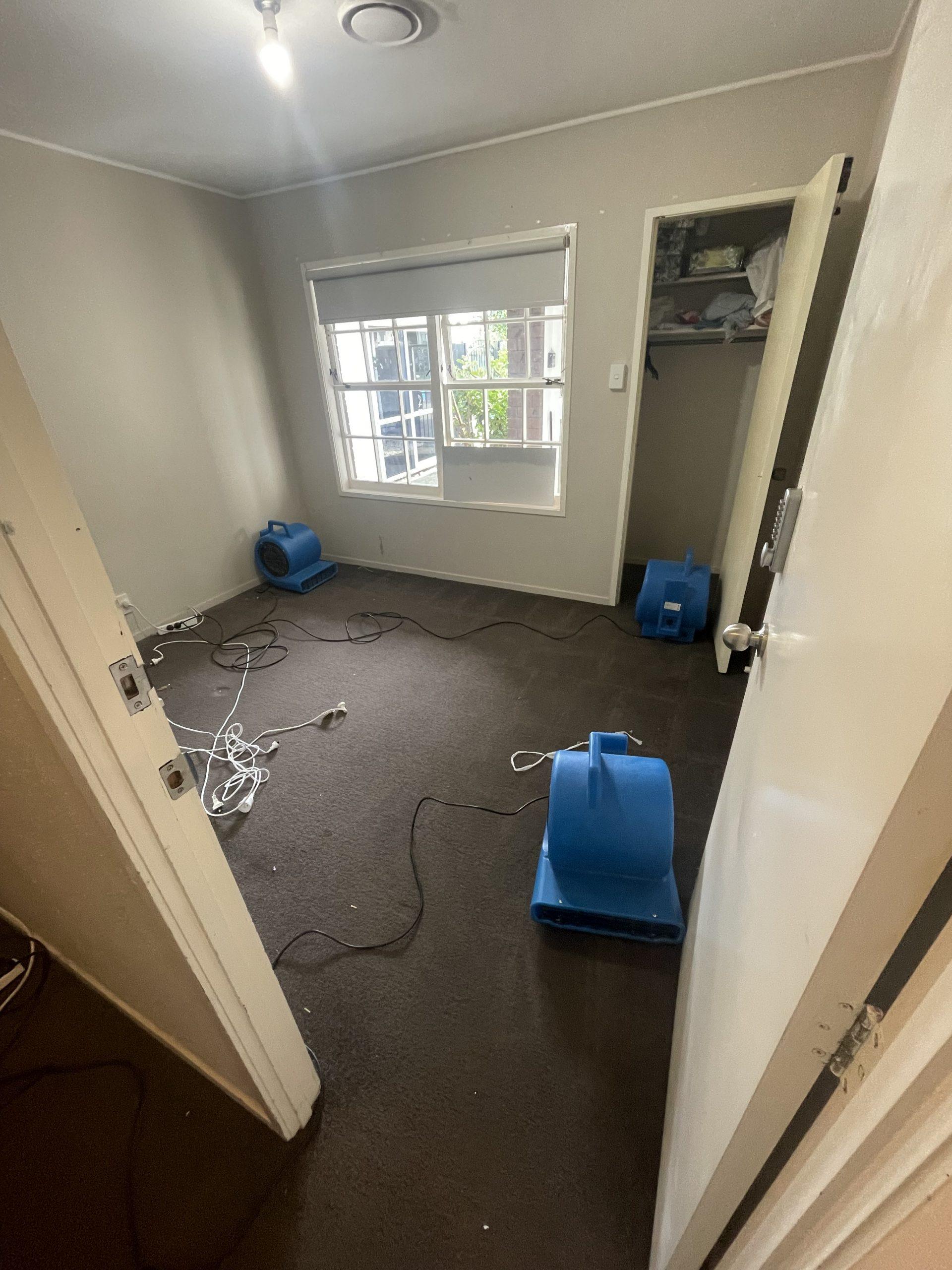
Documented Auckland example: controlled drying after a ceiling leak
| Assessment point | What the documented job showed |
|---|---|
| Materials needing assessment | Water entered through a ceiling light fitting; ceiling and wall materials were assessed alongside two hallways and one bedroom. |
| Drying method | Extraction and controlled airflow were used while wall access and structural checks continued. |
| Recorded progress | Carpeted areas dried over three days; this did not determine whether every lining or finish could be retained without further assessment. |
Why this matters for plasterboard: after a water event, finishing should wait for the water source, materials, safe access and moisture findings to be assessed. A dry surface alone does not show whether a cavity or lining is ready for reinstatement.
Read the full documented ceiling pipe-leak case study.
This was one indoor pipe-leak job, not a general renovation-drying timeframe or a promise that any plasterboard can be retained. Product requirements and site conditions still govern the next trade.
Plaster drying decision chart
| Condition | What it may mean | Practical response |
|---|---|---|
| High humidity or limited ventilation | Moisture leaves the plaster slowly. | Consider controlled dehumidification and suitable air movement. |
| Plaster feels dry on the surface | The material may still hold moisture below the surface. | Follow product and finishing requirements before painting or covering. |
| Several wet trades overlap | The room has a higher moisture load. | Plan drying capacity and check conditions between stages. |
| Existing linings were wet from a leak | This may be restoration work rather than ordinary renovation drying. | Assess hidden cavities and adjacent materials before reinstatement. |
What affects plaster drying
Drying time varies with the plaster product, coat thickness, room temperature, humidity, ventilation, air movement and the moisture produced by other work on site. Auckland weather can change those conditions quickly. The safest approach is to follow the manufacturer’s instructions and project requirements, then use readings and inspection to confirm the next stage can proceed.
How dehumidification can help
A dehumidifier removes moisture from the room air, helping maintain conditions that support evaporation. It works best as part of a controlled plan with appropriate airflow. Excessive or poorly directed heat can create uneven conditions, so it should not be treated as a shortcut.
When renovation drying becomes restoration
If a burst pipe, roof leak or flood has wet existing linings, the work may need broader assessment. Water can travel behind wall linings, into insulation or along flooring. In those cases, see our guide to drying hidden wall and ceiling cavities and arrange assessment before closing or repainting affected areas.
Plaster drying FAQs
Can I paint plaster that feels dry to the touch?
Not necessarily. A dry surface can still hold moisture below it. Follow the coating manufacturer’s requirements and confirm the substrate is suitably dry before painting or installing finishes.
Will heaters dry plaster faster?
Heat changes drying conditions, but uncontrolled heating can create uneven drying or other finishing problems. Balanced airflow and moisture removal are usually more reliable than heat alone.
When should I hire a dehumidifier for renovation drying?
It can be useful where natural ventilation is limited, humidity is high, several wet trades overlap or the project needs controlled drying conditions.
Can a dehumidifier replace weather protection?
No. Preventing further water entry and following the project weather-protection plan remain essential.
Need controlled drying equipment?
For Auckland hire options, see commercial dehumidifier hire. Our drying team can also help assess water-damaged building materials after a leak or flood.