If sewage backs up through a drain or contaminated water enters your Auckland property, keep people and pets away, avoid contact with affected materials, document the damage from a safe distance and arrange professional assessment promptly. Contaminated water can affect carpet, underlay, plasterboard, timber, contents and indoor air quality. The safe response depends on the source, how far the water travelled and which materials were affected.
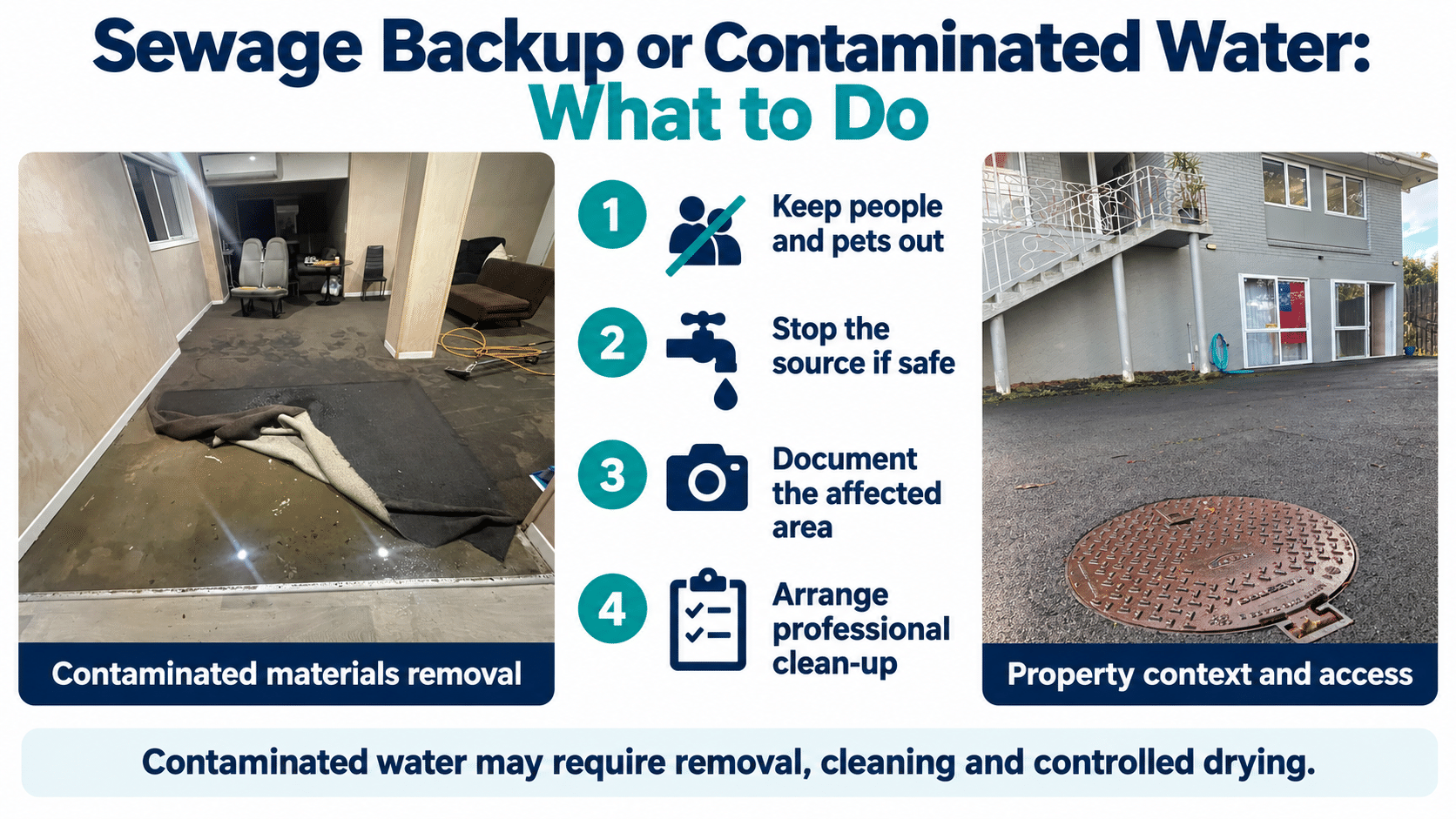
Documented Auckland example: contaminated porous materials required controlled removal
| Recorded conditions | Recorded response | What this does—and does not—show |
|---|---|---|
| Category 3 water affected carpet, underlay, vinyl, concrete subfloor, skirtings and lower wall areas. | Contaminated carpet and underlay were removed for controlled disposal; exposed structural surfaces were cleaned, decontaminated and dried. The documented programme included seven days of monitored drying and final moisture verification. | It shows why contaminated absorbent materials cannot be treated like an ordinary clean-water spill. It does not determine which materials must be removed, cleaned or retained after another sewage backup; that depends on the source, contamination, materials, access and assessment. |
Read the complete documented Manurewa Category 3 case record.
This is one documented restoration, not a promise of the same scope, cost, duration or health outcome at another property. A suitably scoped assessment is needed before cleanup, removal or reinstatement decisions are made.
What should you do after a sewage backup?
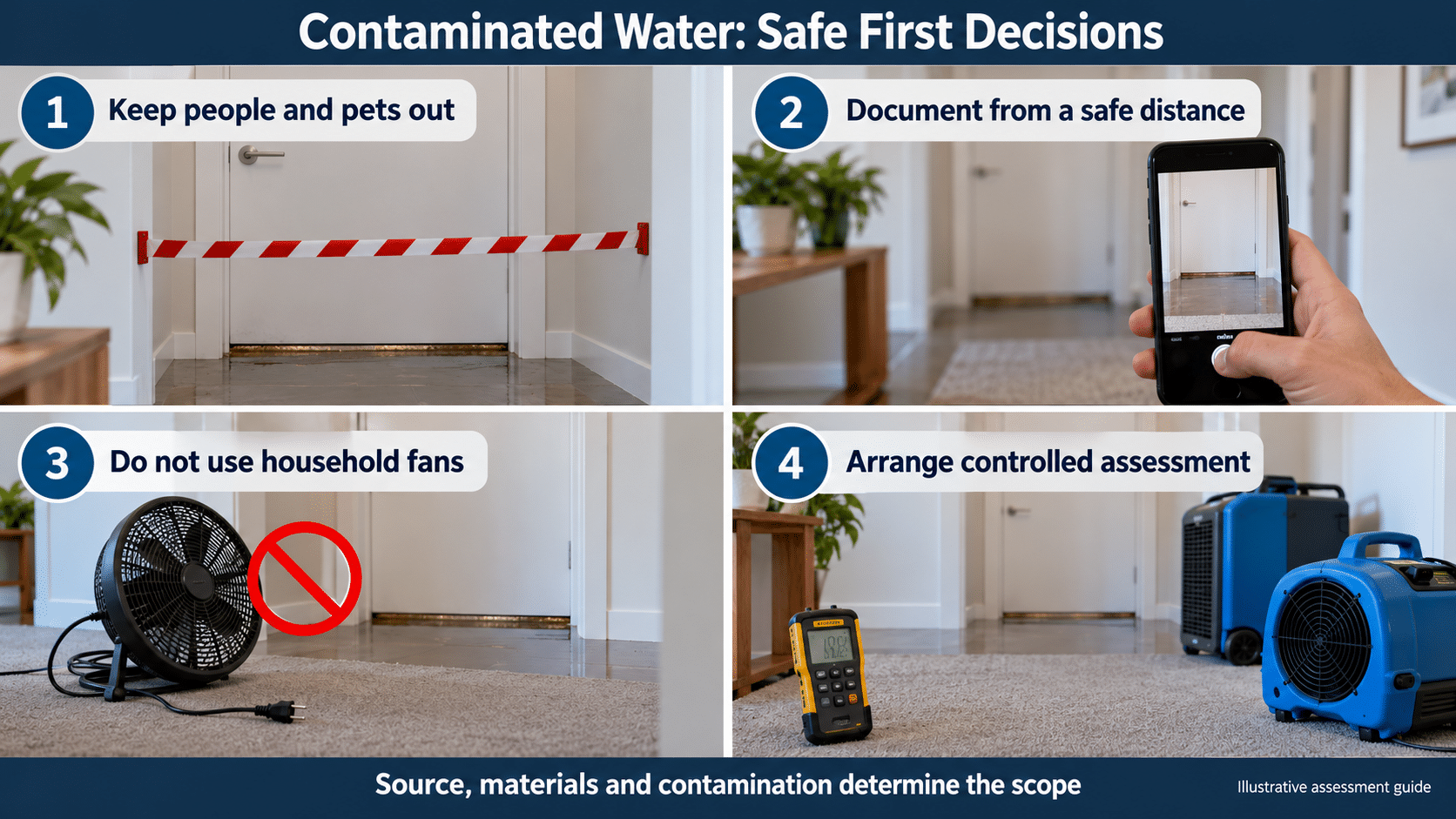
Do not walk through the affected area unnecessarily or try to save contaminated absorbent materials by rinsing them at home. Keep children and pets out, ventilate only where this can be done without spreading contamination, and contact a suitably equipped restoration contractor. If the source is still active, contact a plumber or the relevant utility provider; only attempt to stop it if it is safe to do so.
- Isolate the affected area. Close doors where practical and keep people and pets away.
- Photograph the source, water path and affected items. Take photos from a safe distance before materials are moved.
- Record the time and source. Note whether the water came from a toilet, sewer drain, stormwater entry or another source.
- Arrange assessment, removal and controlled drying. A restoration team can determine what can be cleaned and what should be removed.
Contaminated-water response chart
| What is affected | Why it matters | Typical professional response |
|---|---|---|
| Carpet and underlay | Absorbent layers can retain contamination and moisture. | Assess for removal, then clean and dry the exposed structure where appropriate. |
| Skirting, plasterboard and cabinetry | Water can travel behind finishes and into wall cavities. | Moisture inspection, selective removal where required, cleaning and structural drying. |
| Timber framing and subfloor | Hidden moisture can remain after surface water is gone. | Targeted moisture checks and controlled drying before repairs are closed in. |
| Hard floors and non-porous contents | They may be recoverable when properly cleaned and disinfected. | Source-specific cleaning, sanitation and verification before return to use. |
Can contaminated carpet be cleaned?
That depends on the water source, the degree of contamination, the time affected and whether the contamination has penetrated the carpet, underlay or subfloor. In a sewage-related event, carpet and underlay often require removal so the floor structure can be accessed, cleaned and dried. A site assessment is the right way to determine the scope.
Why controlled drying still matters
Removing visible water is only one part of contaminated-water cleanup. Moisture can remain in wall linings, framing, flooring edges and cavities. Restoration work may include measured drying, moisture monitoring and confirmation that the affected structure is ready for reinstatement. For a real local example of Category 3 water damage, see our Manurewa contaminated-water restoration case study.
What not to do
- Do not use a household fan to blow across a contaminated area.
- Do not lift, wash or relocate affected carpet and soft furnishings without suitable protection and a disposal plan.
- Do not assume a surface that looks dry is clean or dry behind finishes.
- Do not begin reinstatement until contaminated materials have been addressed and remaining structure has been assessed.
Insurance documentation after a sewage backup
Take clear photos of the source, water path, affected rooms, damaged finishes and any removed materials. Keep invoices, plumber reports, moisture records and communication with your insurer or property manager. Our water-damage insurance documentation guide explains the practical records that support a claim. Coverage and responsibility depend on the policy and the cause of the event.
When a stormwater event may be involved
Where flooding followed heavy rain or overland flow, the source can affect the cleaning and removal plan. Read our Auckland storm-flood cleanup guide for the first steps after floodwater enters a property. If a musty odour develops after the immediate response, our mould after water damage guide explains why follow-up assessment matters.
Frequently asked questions
What should I do if sewage comes up through a drain?
Keep people and pets away, avoid direct contact, record the damage from a safe distance and arrange a plumber or restoration contractor as appropriate. Do not treat it as ordinary clean water.
Can contaminated carpet be cleaned?
It depends on the source and the material layers affected. In a sewage-related event, carpet and underlay may need removal so the underlying structure can be cleaned and dried.
Should I use a household fan after a sewage backup?
No. Blowing air across contaminated materials may spread contaminants. The area should be assessed and dried with a controlled plan after cleaning and removal work.
What information is useful for an insurance claim?
Photos of the source and affected areas, the date and time, plumber findings, itemised restoration records and moisture documentation are useful. Your insurer decides claim cover.
Need contaminated-water cleanup in Auckland? Contact Carpet Drying Force for an on-site assessment and a clear restoration scope.