An anonymised South Auckland restoration case study. This Manurewa job involved Category 3 water damage affecting carpeted and hard-floor areas. The work was documented from initial assessment through extraction, decontamination, structural drying and final moisture clearance. Client, property and billing details are intentionally withheld.
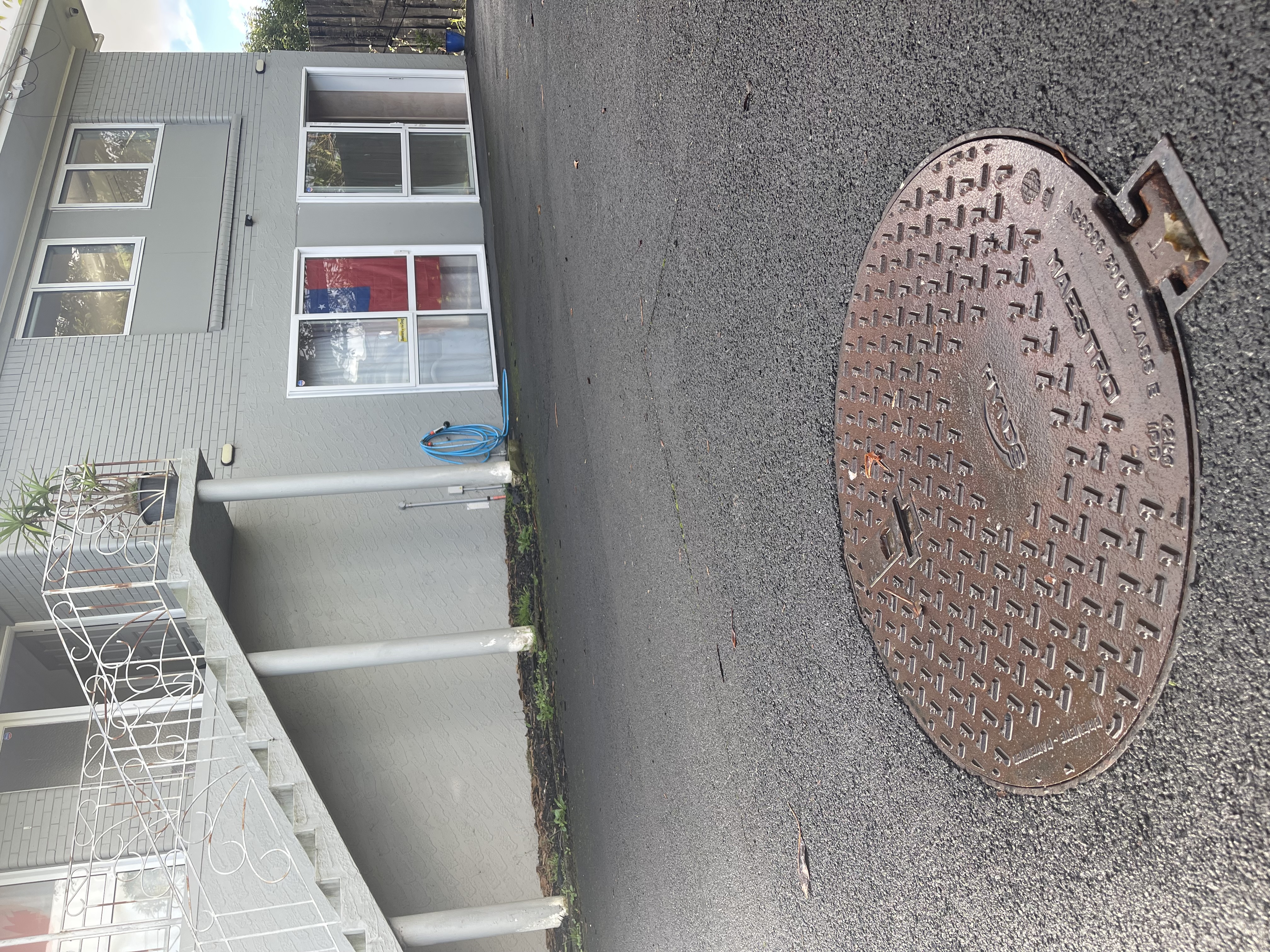
At a glance
| Service area | Manurewa, South Auckland |
|---|---|
| Incident type | Category 3 water damage |
| Affected materials | Carpet, underlay, vinyl, concrete subfloor, skirtings and lower wall areas |
| Core work | Extraction, contaminated-material removal, structural flush, decontamination, drying and moisture verification |
| Drying period | Seven days, with equipment repositioned to suit electrical-load limits |
| Final documented condition | Wall and floor readings recorded in the acceptable range before equipment removal |
Quick answer: how Category 3 water damage is restored
Category 3 water damage restoration typically involves professional assessment, extraction, removal or treatment of contaminated materials, structural cleaning, controlled drying and moisture verification. The right scope depends on the water source, affected materials, contamination and access.
Related Auckland resources: Learn more about emergency flood restoration and water extraction, water damage restoration cost factors, commercial dehumidifier hire, and carpet dryer and air-mover hire.
What happened
Standing contaminated water affected internal floor areas, including carpet and vinyl finishes, with moisture exposure at lower wall and skirting level. Because this was a Category 3 water event, the response required more than surface drying: contaminated materials had to be removed or treated, and the concrete subfloor had to be cleaned before controlled drying could begin.
Documented remediation evidence
The following photographs and captions are drawn from the remediation report. They record the emergency response, decontamination, drying and verification work while excluding client names, exact address and invoice information.
Emergency extraction and contaminated-material removal
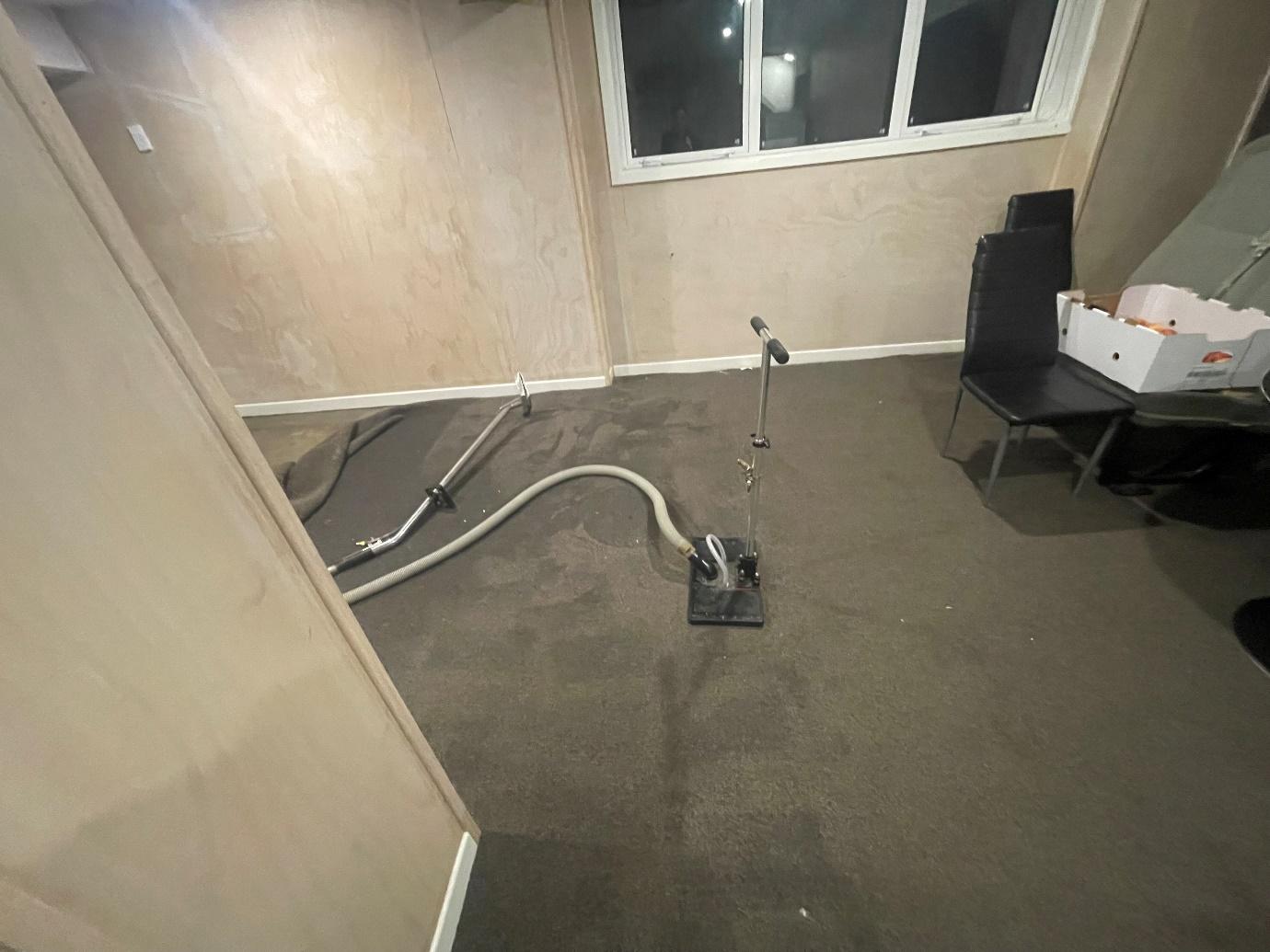
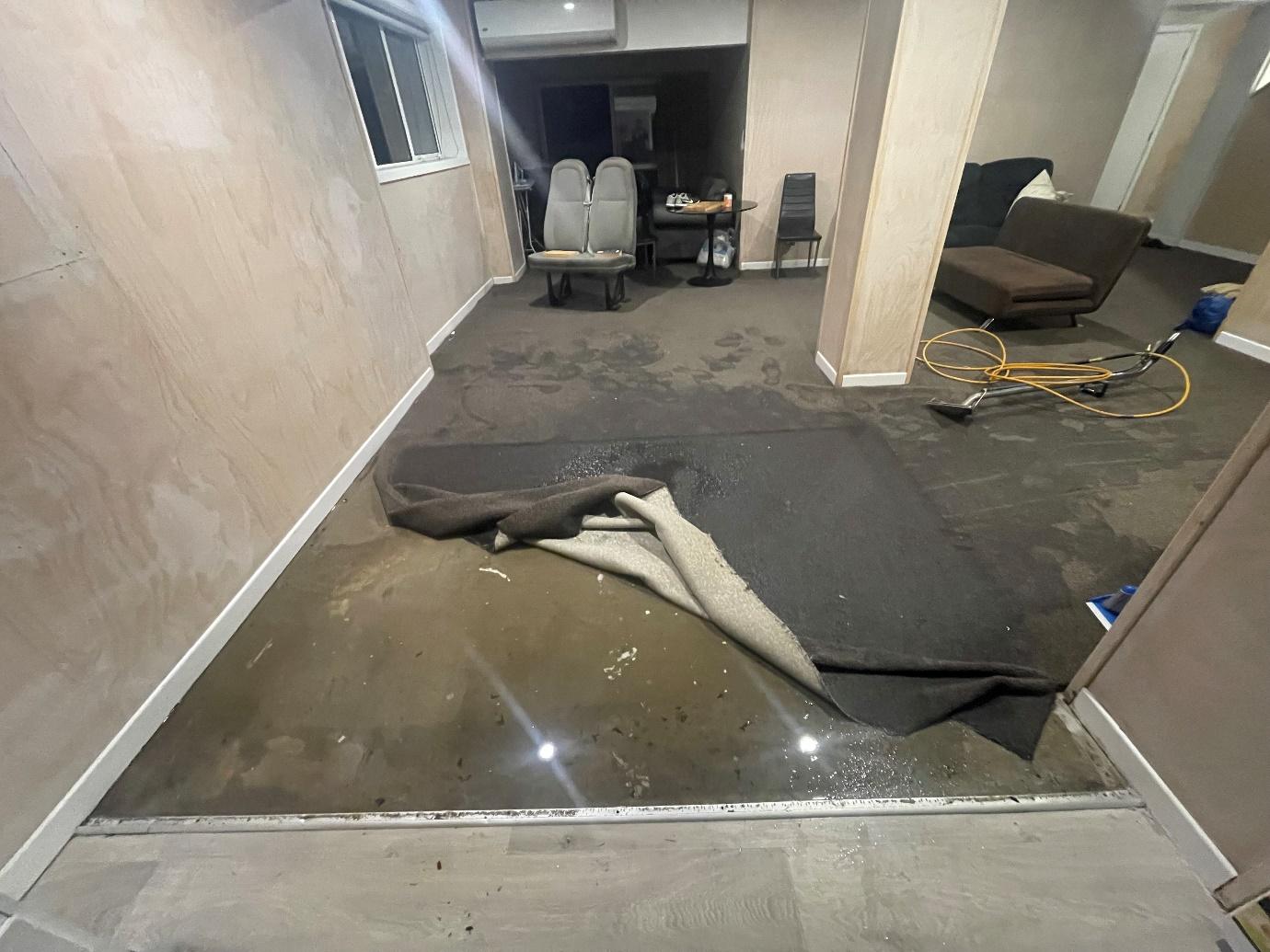
Standing contaminated water and biological waste were extracted from affected areas. Contaminated carpet and underlay were removed for safe disposal, exposing structural surfaces for cleaning and drying.
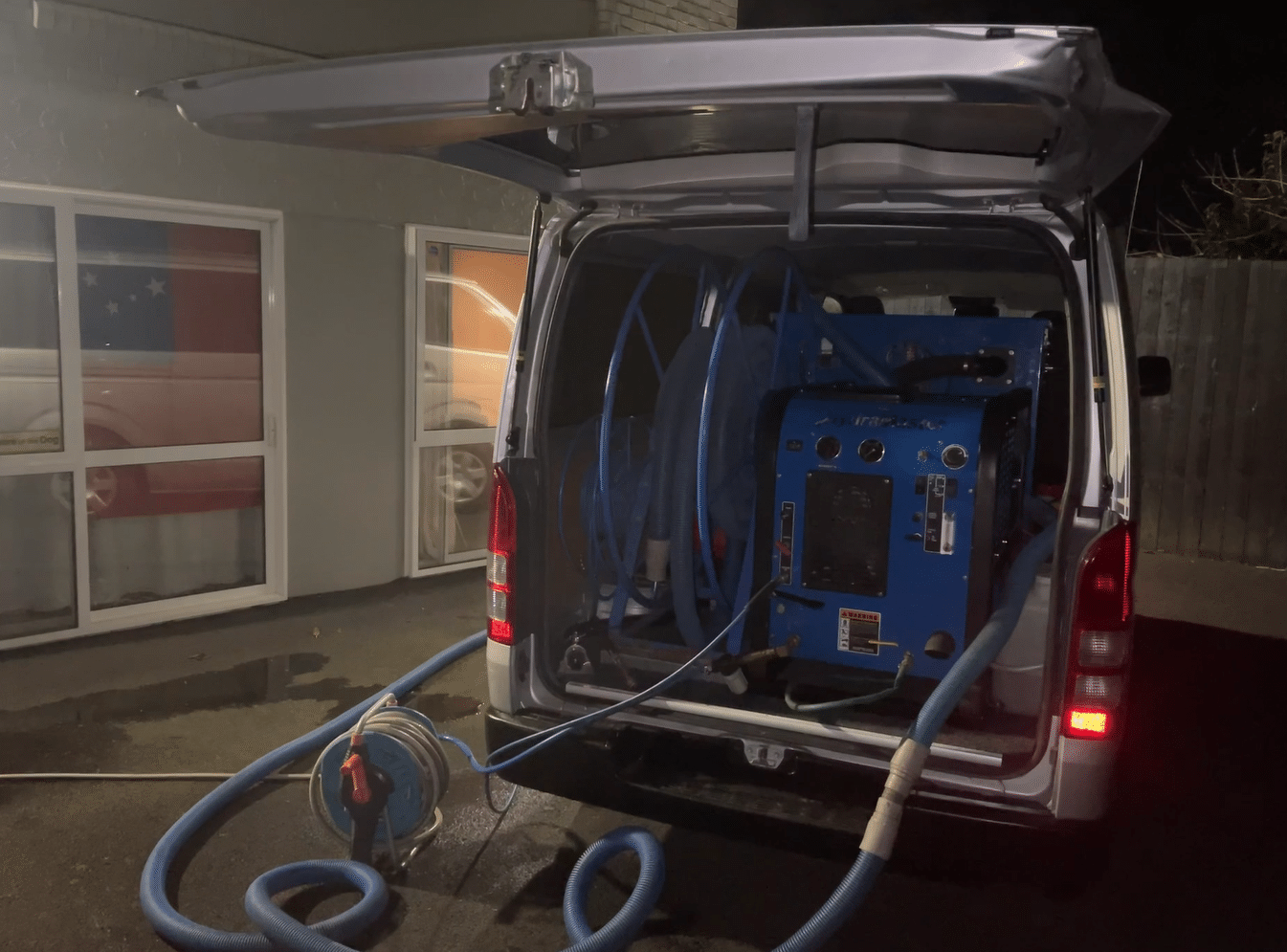
Truck-mounted extraction equipment on site
The restoration team used the truck-mounted system parked outside the building to support specialist extraction and structural-cleaning work.
Structural flush and decontamination
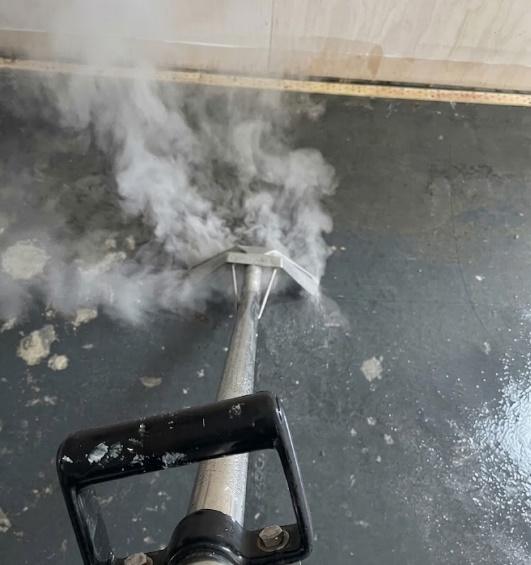
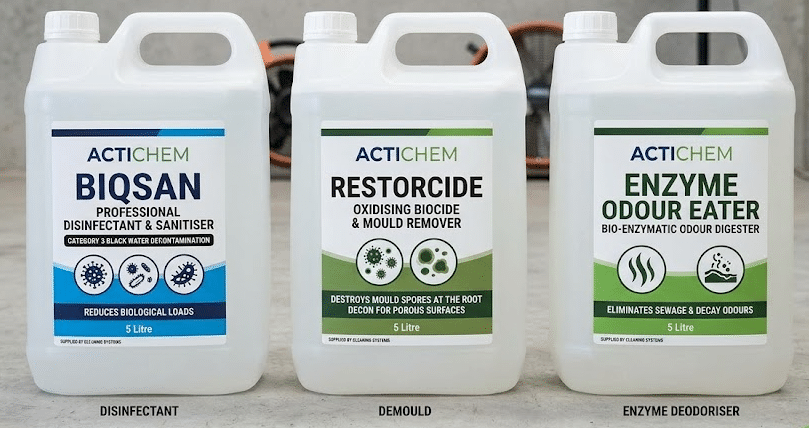
The exposed concrete subfloor was hot-water extracted and structurally flushed to remove contamination. A three-step professional treatment was then used to disinfect, address mould risk on porous surfaces and deodorise the affected area.
Structural drying and monitoring
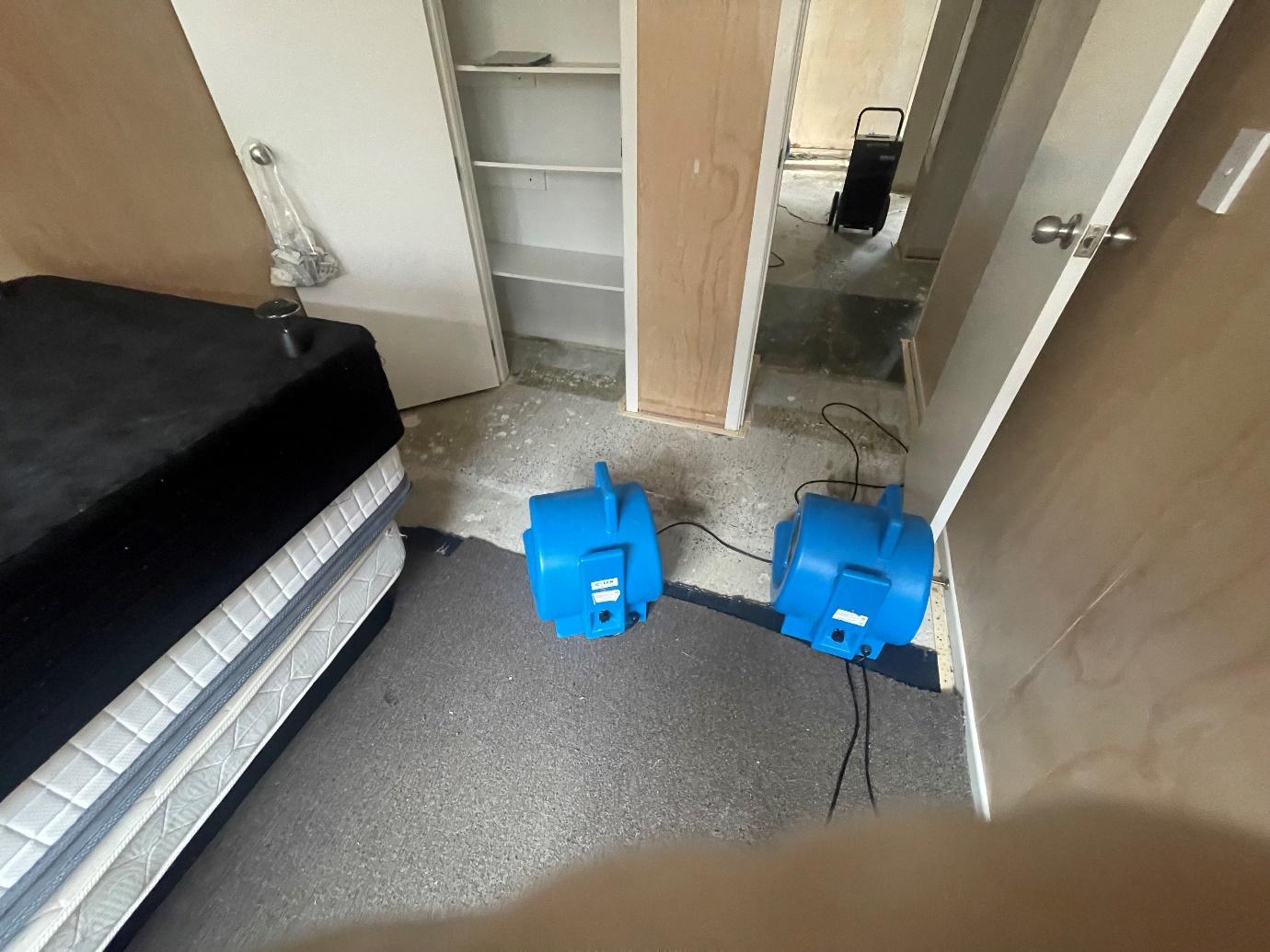
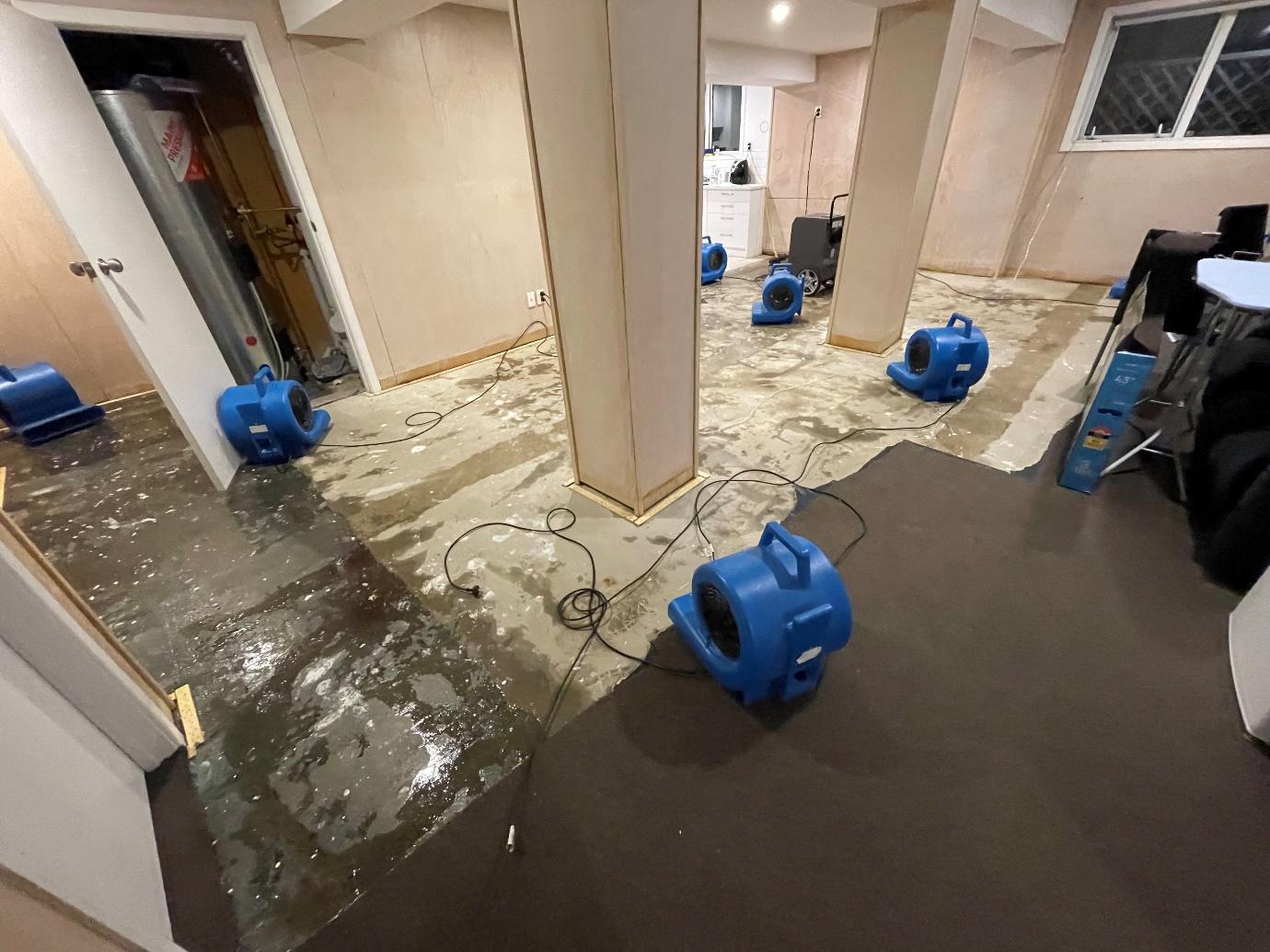
Commercial dehumidifiers and air movers were deployed across the affected spaces. Electrical load limits meant equipment could not operate on every wall at once, so the team repositioned drying equipment through the seven-day programme and monitored progress.
Moisture verification
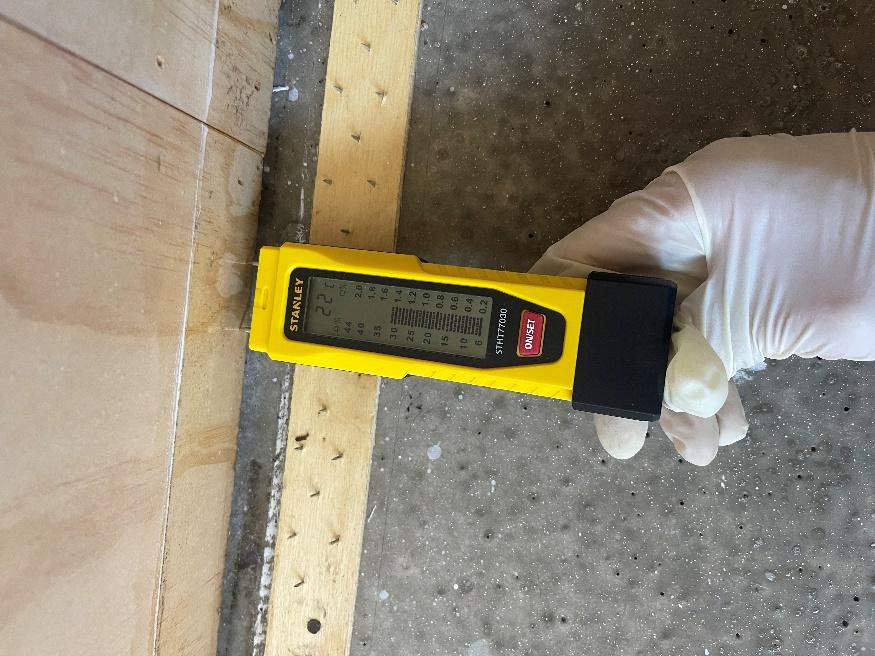
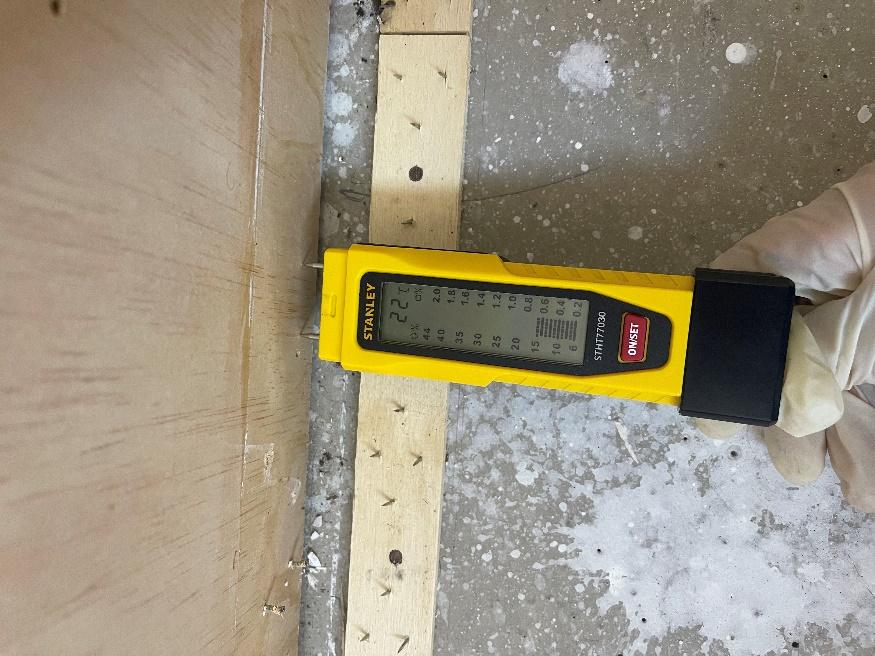
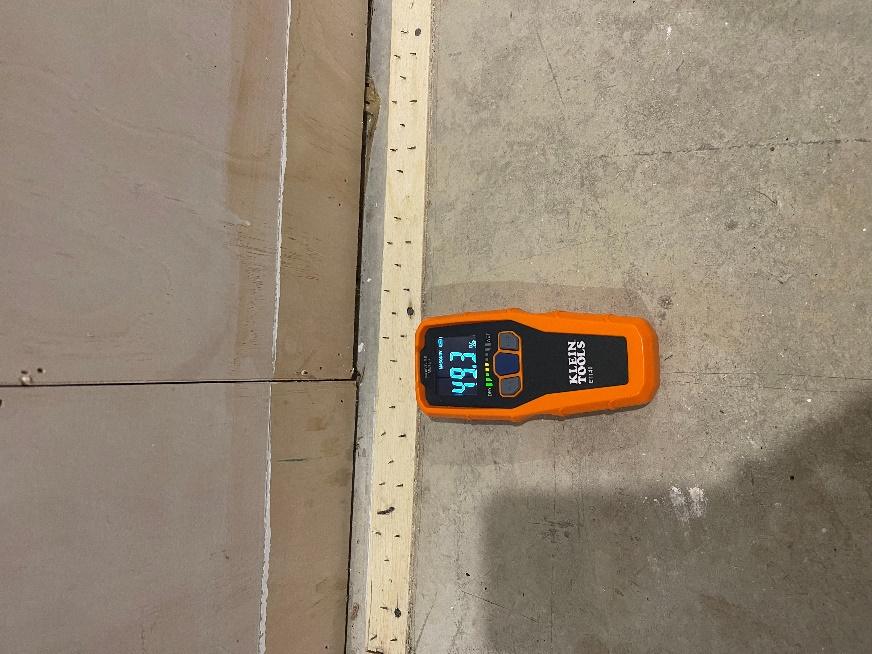
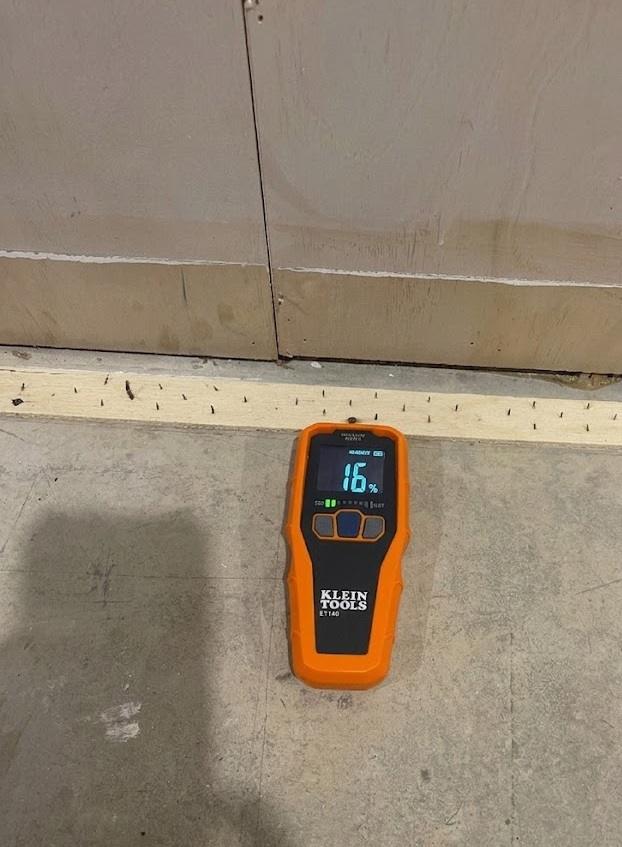
Moisture readings were taken during the drying programme and at final clearance. The documented readings reduced from saturated initial conditions to the acceptable range before equipment removal.
Indicative restoration cost breakdown
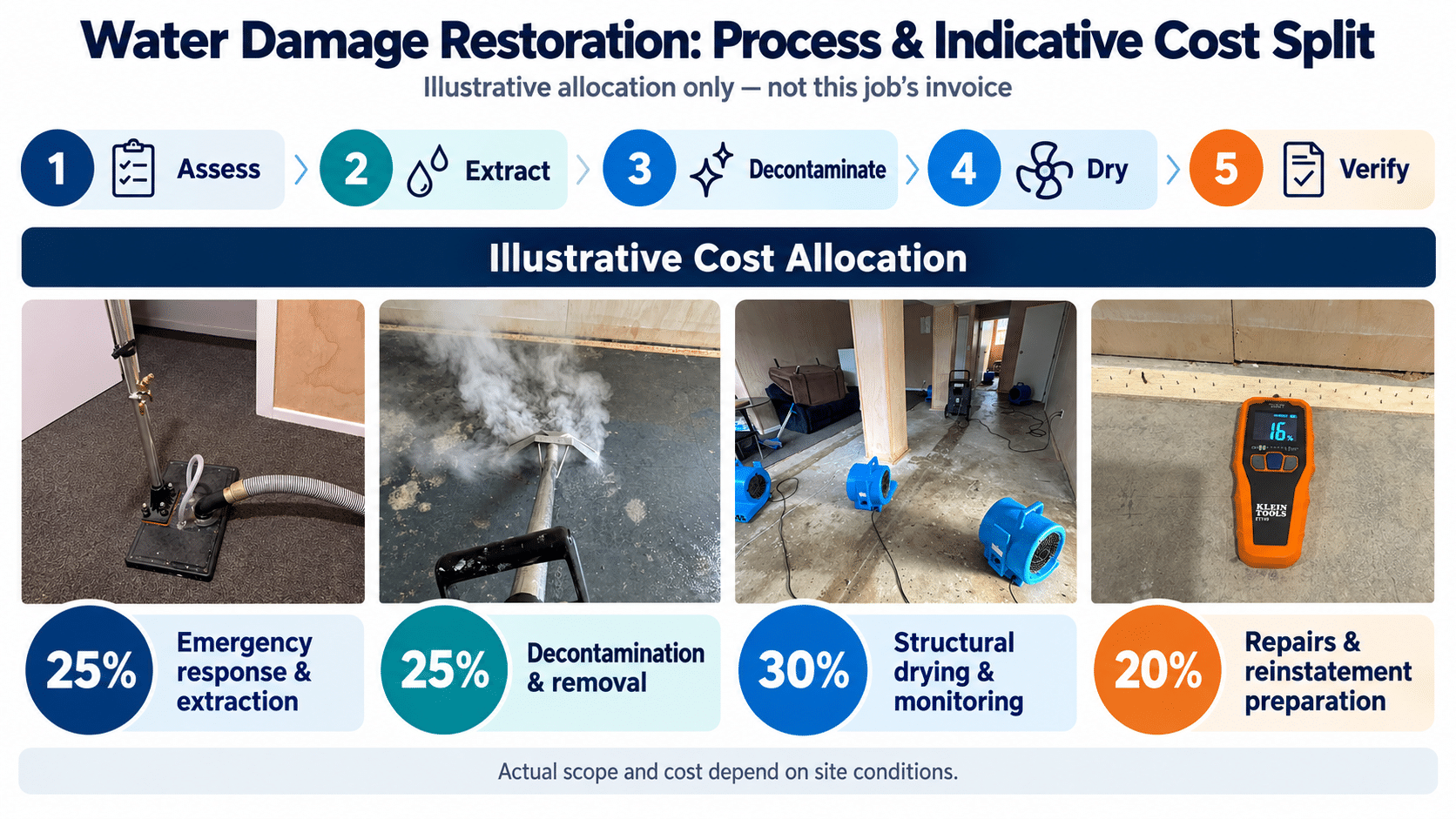
The charts below are public, illustrative guides only. They do not show this client’s invoice or reimbursement claim. Actual scope and cost depend on contamination category, affected materials, access, drying duration and reinstatement needs.
Illustrative allocation by workstream
Indicative New Zealand cost ranges
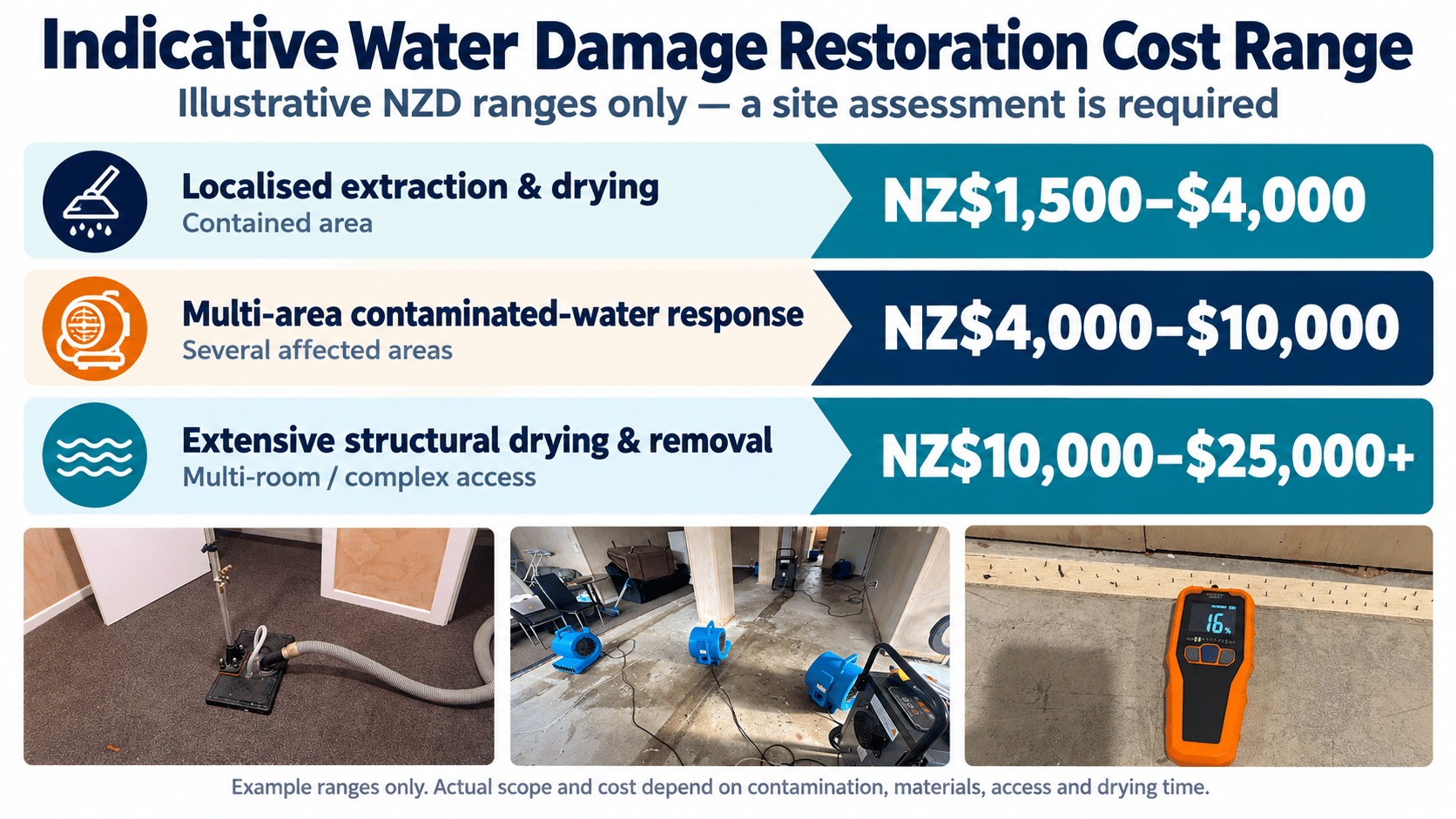
Indicative cost-range summary
The following accessible table repeats the chart in text. These are examples only, not this case study’s invoice.
| Typical restoration scope | Indicative NZD range | Common cost drivers |
|---|---|---|
| Localised extraction and drying | NZ$1,500-$4,000 | Contained area, extraction and a short drying period |
| Multi-area contaminated-water response | NZ$4,000-$10,000 | Several affected areas, contamination treatment and material removal |
| Extensive structural drying and removal | NZ$10,000-$25,000+ | Multi-room or difficult access, extended drying and greater removal or reinstatement preparation |
These are broad illustrative ranges, not a quote. A site assessment determines the actual scope and cost.
Outcome and repair considerations
At the end of the seven-day drying programme, final wall and floor readings were documented in the acceptable range and the drying equipment was removed. The assessment also identified degraded lower wall materials and mould-affected plywood that required replacement. Because contaminated water can penetrate porous concrete, sealing or applying a suitable epoxy coating to the affected slab was recommended to help encapsulate residual contamination and reduce the chance of future odour release.
What homeowners should do after contaminated water enters a property
- Keep people and pets away from the affected area.
- Do not attempt to dry or clean contaminated carpet and wall materials with household equipment.
- Arrange a professional assessment promptly so affected materials, structural moisture and contamination can be addressed together.
- Keep records of the event, affected rooms and professional findings for your insurer or property manager.
About this documented restoration case
This case study is based on photographs, moisture readings and remediation records captured during the project. It is published as an anonymised description of a completed Category 3 water damage response in Manurewa.
Frequently asked questions
What is Category 3 water damage?
Category 3 water is grossly contaminated water that can contain harmful microorganisms or other unsanitary material. It requires controlled extraction, removal of unsuitable porous materials, appropriate decontamination and verification before the area is returned to service.
How much does water damage restoration cost in Auckland?
Cost varies with the affected area, contamination category, materials removed, drying duration and access. The indicative cost-range chart on this page provides broad New Zealand dollar examples only; an on-site assessment is needed for a job-specific quote.
Why is moisture testing needed after extraction?
Water can remain in concrete, lower walls, skirting zones and other building materials after visible surface water has been removed. Moisture testing helps guide drying equipment placement and confirms whether conditions have returned to an acceptable range before equipment is removed.
Why might skirting boards and wall linings need to be removed?
Removing selected skirtings can improve access for cleaning and airflow at the wall base. If materials have been contaminated or have degraded, replacement may be needed as part of the repair scope.
Can a concrete floor retain odour after contaminated water damage?
Yes. Concrete is porous, so residues can penetrate beyond the surface. Professional cleaning and treatment reduce the risk, and a suitable non-porous sealer or epoxy coating can be considered where residual odour protection is required.
How long did drying take in this Manurewa case study?
The documented drying programme ran for seven days. Commercial dehumidifiers and air movers were repositioned during that period to work within the available electrical load while drying progress was monitored.
Was truck-mounted extraction equipment used on this job?
Yes. The documented response used a truck-mounted system parked outside the building to support specialist extraction and structural-cleaning work.
Need water damage restoration in South Auckland?
Carpet Cleaning Force provides assessment, extraction, structural drying and restoration support for water-damaged properties across Auckland. Contact our team promptly after a leak, flood or contaminated-water event so the response can be matched to the materials and conditions on site.
Privacy note: this case study uses a suburb-level location only. Client names, exact address, company names and client financial information have been excluded.