A flooded room brings an immediate question: how much will it cost to put things right?
In Auckland, flood restoration is usually priced in stages. Water extraction is one charge. Drying equipment, repeat inspections, delivery and repairs can be separate. That means a low advertised extraction price is not necessarily the total cost of restoring the affected area.
This guide explains published local price benchmarks, shows how they translate into a budget and highlights the costs homeowners commonly overlook.
These are general market references, not Carpet Drying Force’s prices. Published charges were reviewed in September 2026. Budget scenarios are calculations based on stated assumptions, not a statistical Auckland average or a quote for your property.
How Much Should You Budget for Flood Restoration in Auckland?
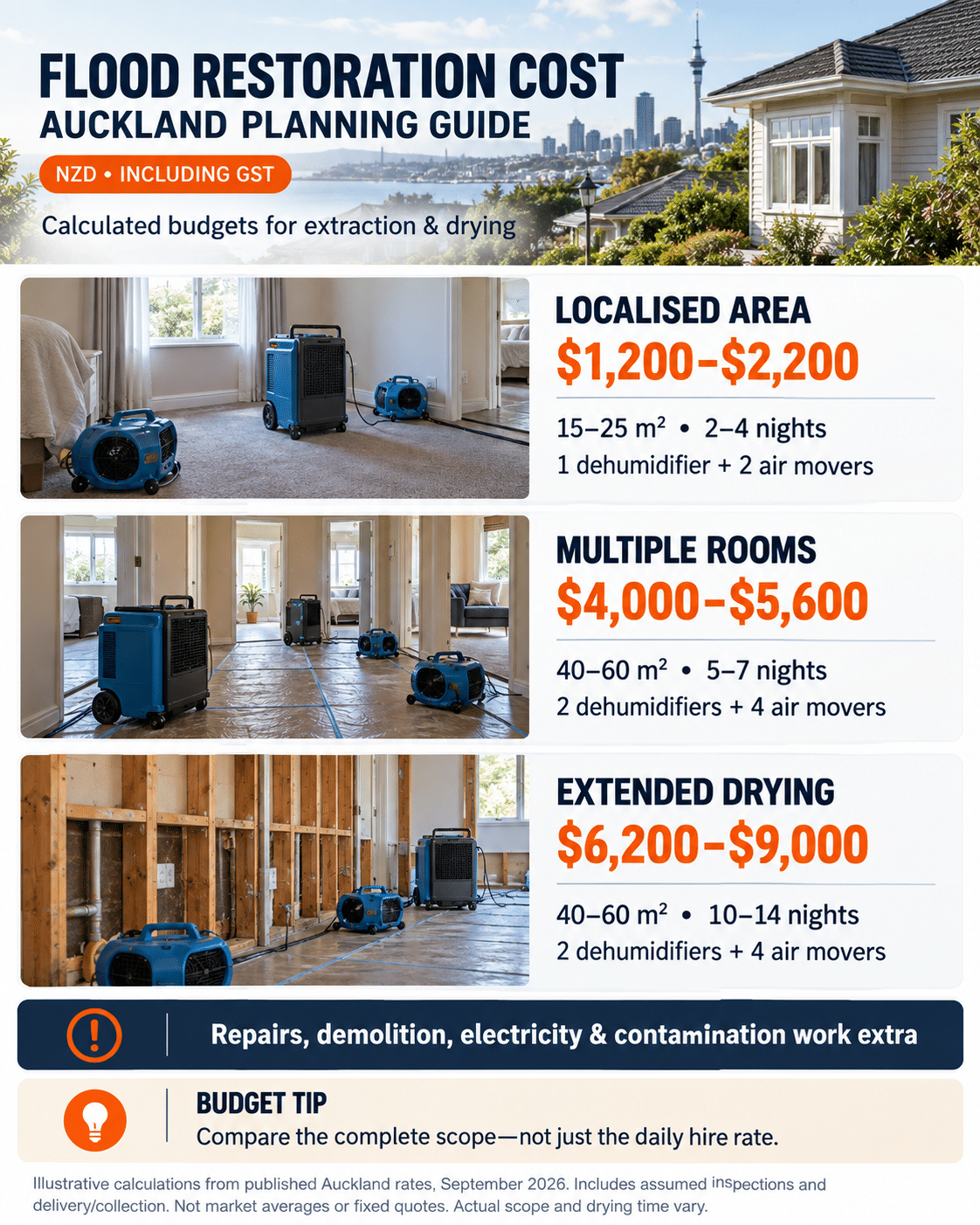
For a limited extraction-and-drying job, a budget in the low thousands can be reasonable. Several affected rooms, more equipment or an extended drying period can bring the mitigation bill into several thousand dollars before building repairs.
The following scenarios show the scale of spending using one published Auckland rate card as a consistent calculation basis. They exclude demolition, replacement materials, building repairs, electricity and special contamination work.
| Budget scenario | Assumed scope | Calculated planning budget, including GST |
|---|---|---|
| Localised carpet extraction and drying | 15–25 m²; one dehumidifier and two fans; 2–4 nights; 2–4 inspection visits | Approximately $1,200–$2,200 |
| Larger multi-room extraction and drying | 40–60 m²; two dehumidifiers and four fans; 5–7 nights; 5–7 inspection visits | Approximately $4,000–$5,600 |
| Extended drying using the same larger setup | 40–60 m²; two dehumidifiers and four fans; 10–14 nights; 5–10 inspection visits | Approximately $6,200–$9,000 |
| Contaminated flooding or substantial reconstruction | Removal, specialist cleaning, drying and replacement work | Requires an assessed scope; the figures above are not a complete budget |
Documented restoration stages that affect cost
These job-stage photographs illustrate the workstreams that can form part of a restoration scope. The work required varies by water category, materials, access and moisture conditions.
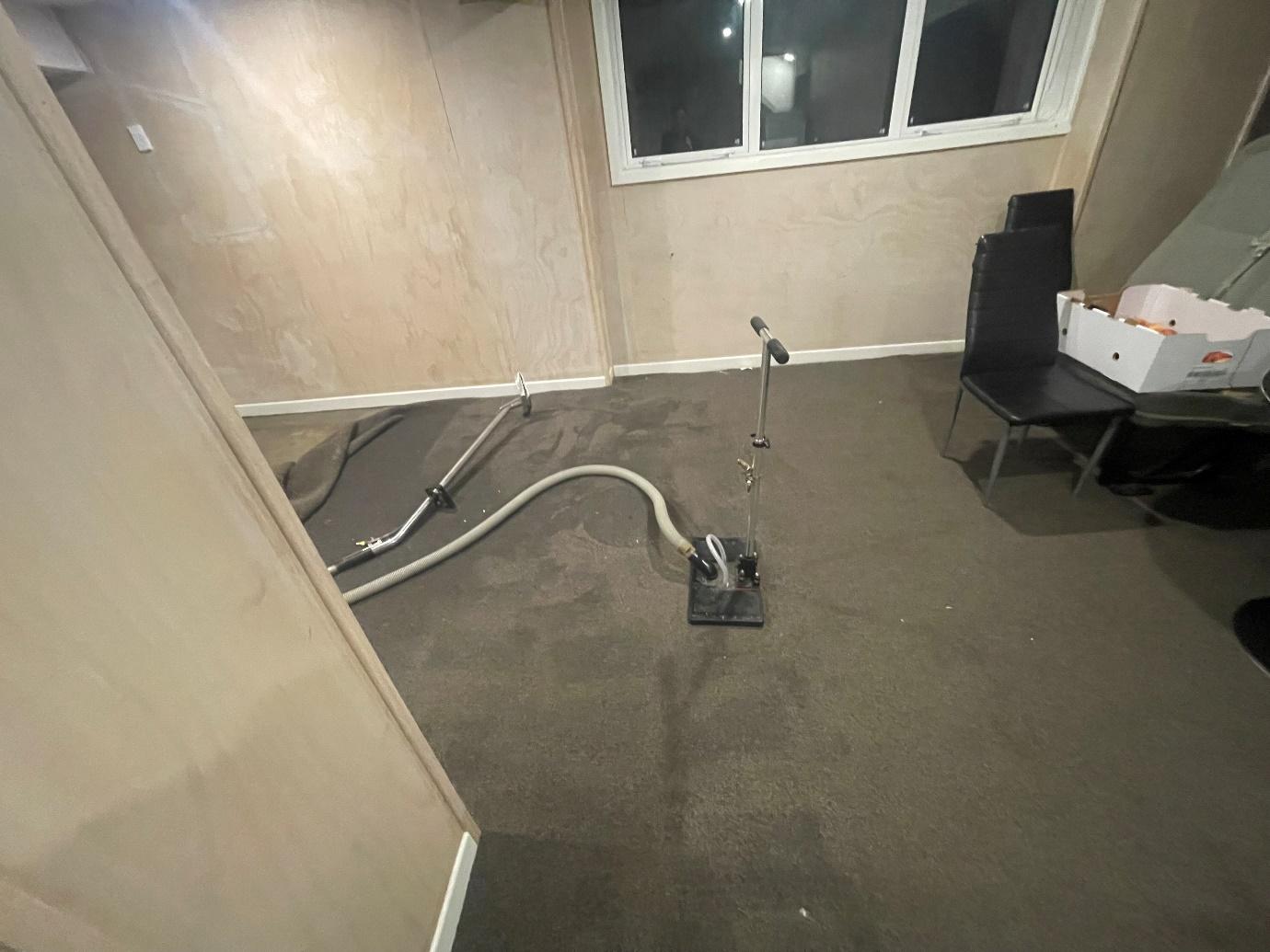
Remove standing water and map the affected area.
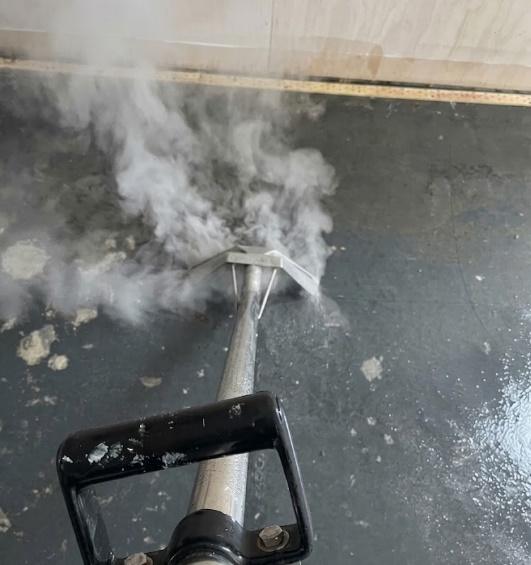
Treat exposed materials where the assessment requires it.
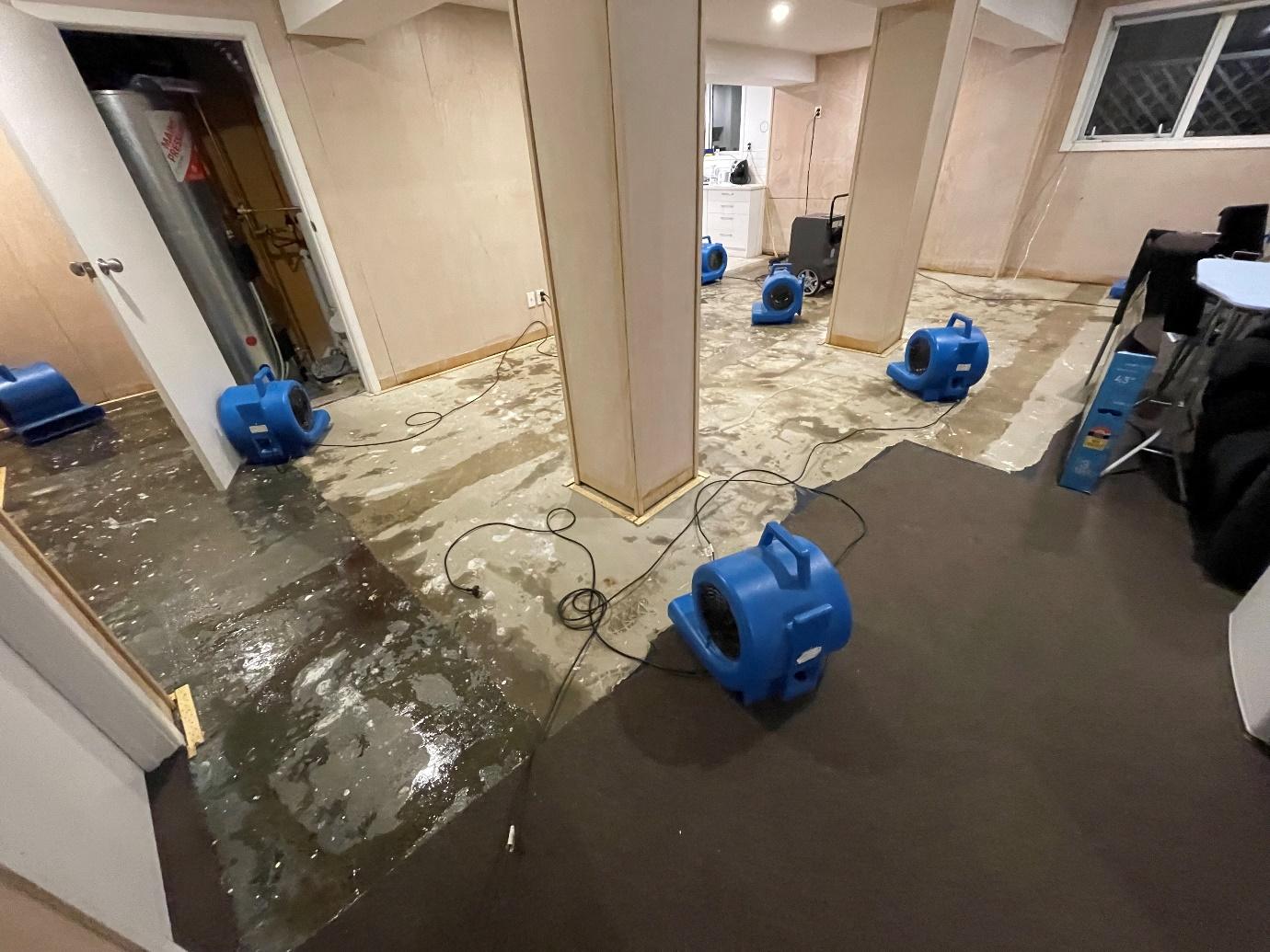
Use equipment and repeat moisture checks.
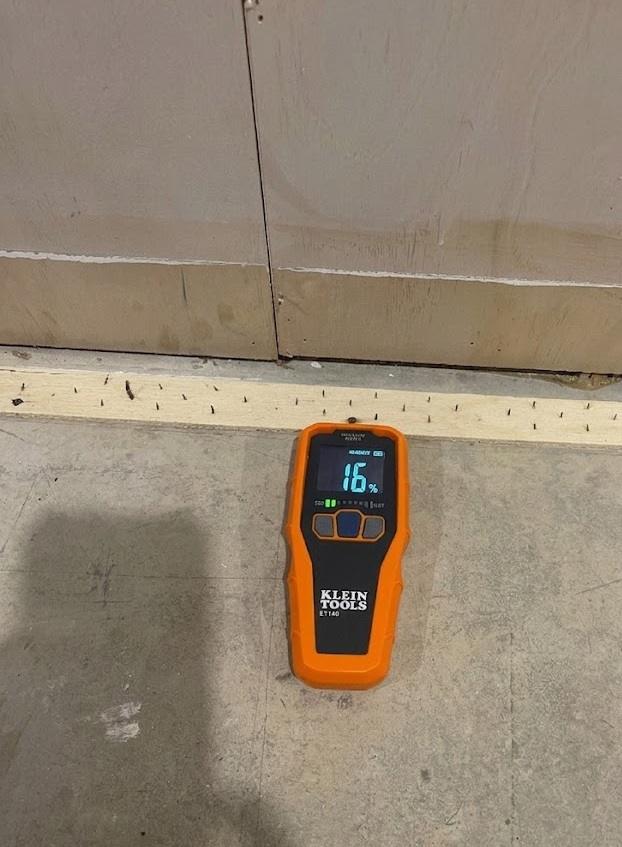
Confirm dry-condition progress before repairs.
Illustrative guide only — these are documented restoration stages, not a fixed scope or quote.
These are scoped budgeting examples, not minimum or maximum market prices. Equipment selection and duration must follow assessment. Packages, fewer machines, earlier equipment removal or included visits can lower the cost; additional work can raise it.
The key distinction is between water removal and drying and rebuilding what the water damaged. Ask for both scopes if your property needs both.
Published Auckland Market Prices: The Main Components
Local providers publish both individual charges and package offers. Compare the inclusions before comparing the numbers.
| Service | Published price examples reviewed | What the charge means |
|---|---|---|
| Water extraction and sanitising/cleaning | $20–$22 per m² | A treatment-stage price, not the complete restoration bill |
| Minimum extraction charge | $300–$330 per property | Small areas may still attract a minimum |
| Commercial dehumidifier | $99–$109 per machine per night | Multiply by quantity and billable duration |
| Air mover or carpet dryer | $39–$43 per machine per night | Several machines may be required |
| Site inspection | $80–$88 per visit | Check what is included and visit duration |
| Equipment transport | $80–$88 per trip/visit | Delivery and collection may be separate |
| After-hours extraction | Published additions of $10–$11 per m² | Applies to the extraction component, subject to terms |
GST note: these are advertised figures as published, not a tax-normalised market range. Published providers present GST differently, so confirm whether GST is included before comparing quotes. See the sources and methodology below.
The table is a snapshot of published Auckland rate-card examples, not a survey of every Auckland company. Prices outside these examples may reflect different inclusions, equipment, minimums or service arrangements.
Why an Extraction Price Is Not the Full Flood Restoration Cost
Removing standing water is an important first stage. It does not establish that carpet, underlay or building materials have finished drying.
A complete budget can include:
Assessment -> water extraction -> cleaning or material removal where needed -> drying -> moisture checks -> reinstatement
A per-square-metre price may cover only one or two of those stages. An equipment price may exclude transport and repeat visits. A restoration estimate may exclude the plumber who fixes the original leak.
Ask the company to identify what each charge covers. This is more useful than comparing two headline prices.
A Worked Market-Price Example: One Affected Room
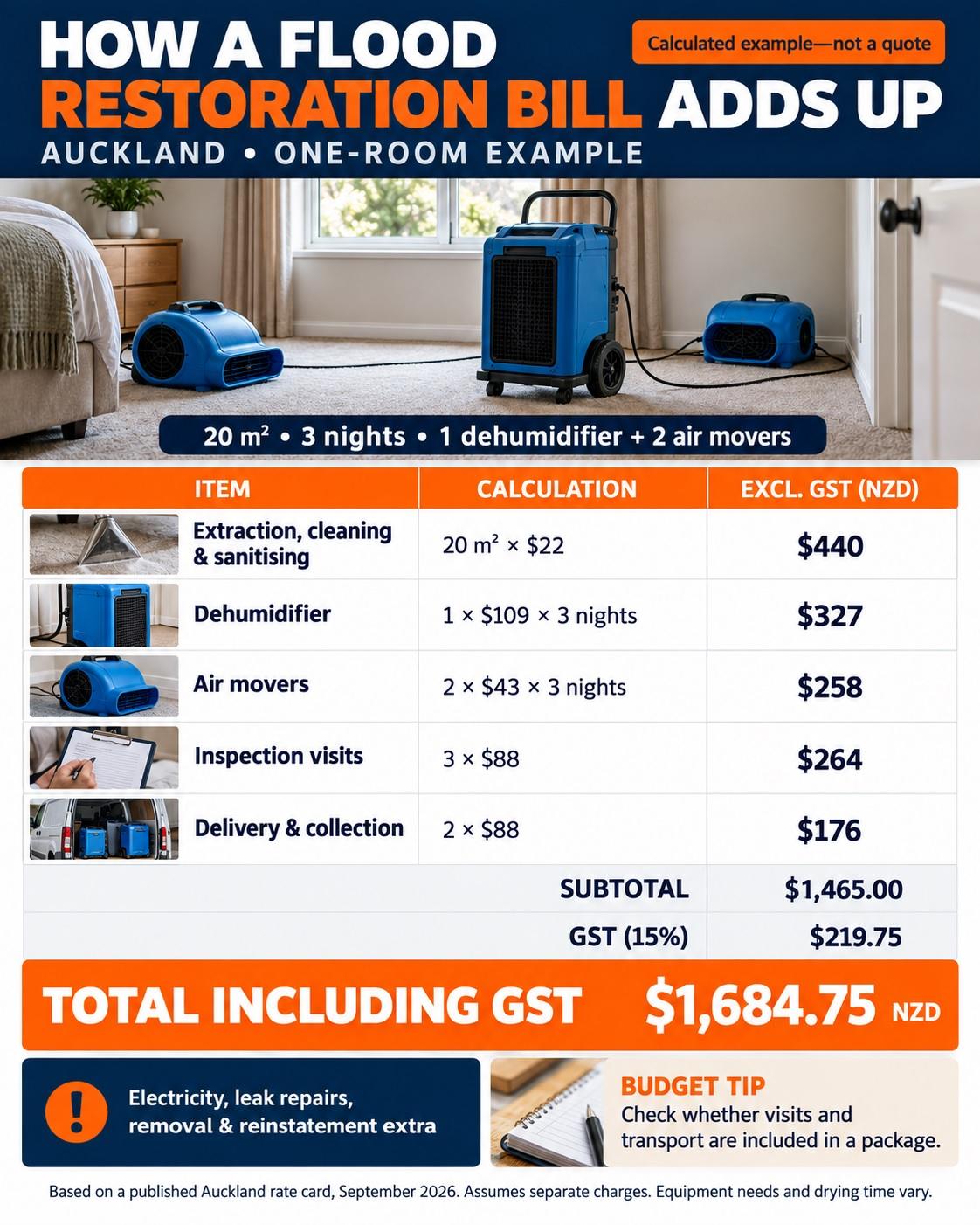
Consider 20 m² of affected carpet, one dehumidifier, two air movers, three nights of hire and three separate inspection visits. Assume delivery and collection are billed separately.
Using one published Auckland rate card gives this calculation:
| Item | Calculation | Excluding GST |
|---|---|---|
| Extraction, cleaning and sanitising | 20 m² × $22 | $440 |
| Dehumidifier | 1 × $109 × 3 nights | $327 |
| Air movers | 2 × $43 × 3 nights | $258 |
| Inspection visits | 3 × $88 | $264 |
| Delivery and collection | 2 × $88 | $176 |
| Subtotal | $1,465 | |
| GST | 15% | $219.75 |
| Calculated total | $1,684.75 |
This is a calculation using published rates, not an actual customer invoice or a recommended equipment prescription. It assumes the listed charges are billed separately. Any package inclusions or combined visits should be accounted for rather than double-charged. [1]
Electricity, leak repairs, removal, replacement flooring and building repairs are excluded. Those exclusions explain why two apparently similar room-drying quotes can differ.
What Makes Some Flood Restoration Jobs More Expensive?
More rooms and hidden water migration
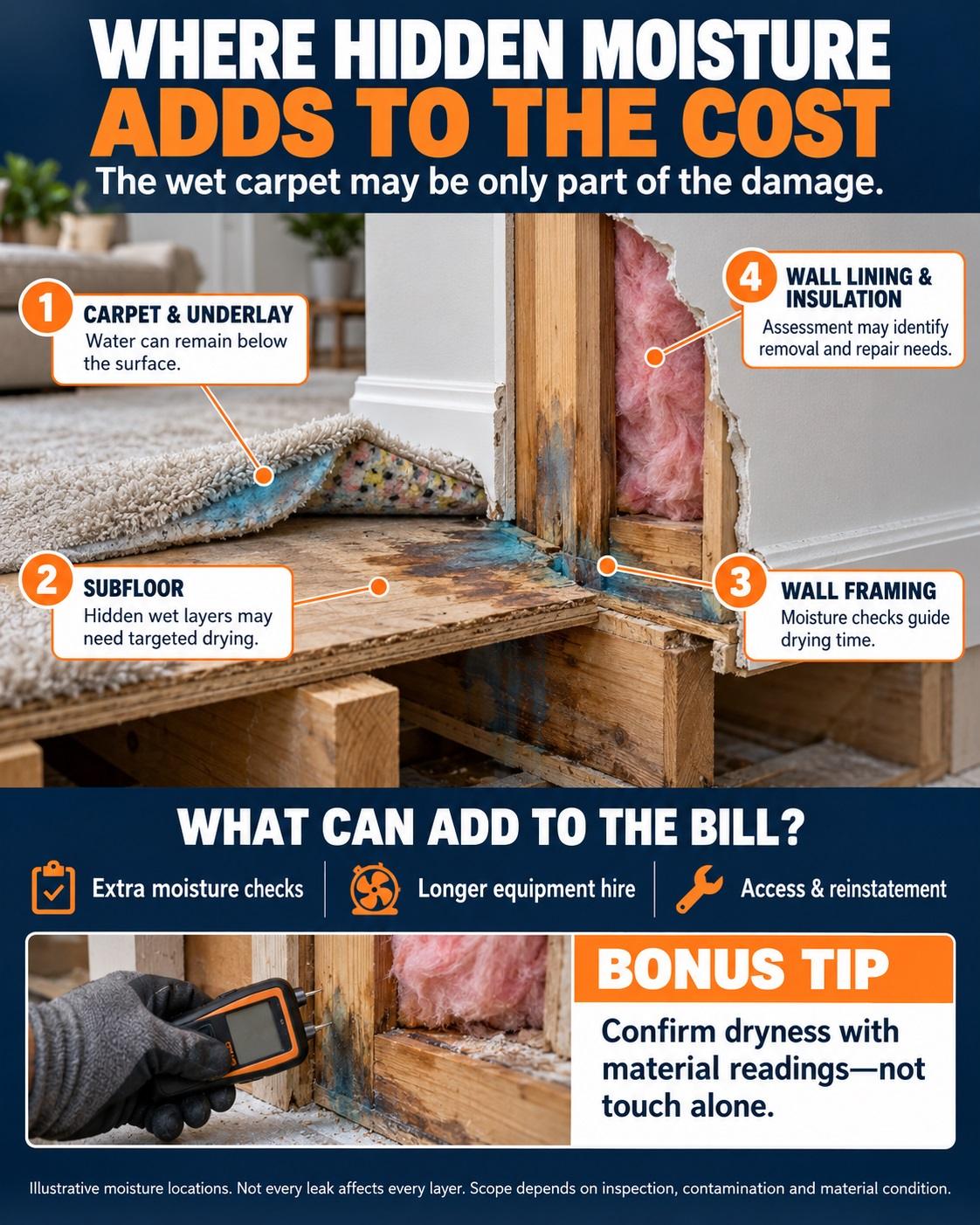
The visible wet patch may not show the full affected area. Water can reach adjoining rooms, under flooring or into wall assemblies.
A larger drying scope can mean more equipment, more labour and additional checks. The estimate should be based on inspection rather than the room where the leak first appeared.
Contamination and material removal
A recent supply-pipe leak and sewage flooding require different assessments. Water source, what the water contacted and site conditions influence cleaning, salvage and disposal decisions.
Some public price lists show higher contaminated-water charges, but their wording differs: a price may be a replacement rate or an additional surcharge. Ask which applies. Do not assume a square-metre contamination charge includes all removal and reinstatement.
Wet walls, framing and flooring layers
Carpet drying can become part of a wider structural drying job when building materials are affected. Access to those materials can add labour and subsequent repair costs.
MBIE identifies the need to remove water-damaged items that hold moisture or obstruct drying. Wall linings also require consideration of their building function and appropriate reinstatement. [3][4]
Restricted access and attendance
Apartments, stairs, lifts, parking restrictions, commercial operating hours and difficult subfloor access can affect labour and transport.
After-hours extraction may carry a surcharge. Ask whether that surcharge applies to a specific service or the entire attendance.
Longer drying and ongoing leaks
An unresolved leak, restricted access to wet materials or interrupted operation may extend the work. The original estimate should explain what happens if additional equipment days or visits are needed.
How Much Does Each Extra Drying Day Cost?
At the individual published equipment prices above, one dehumidifier and two fans total $177–$195 per night as advertised, before separate services. The GST caveat in the market table still applies.
Using the rate card explicitly stated as excluding GST, that setup costs $224.25 including GST per additional night. Two dehumidifiers and four fans would be $448.50 including GST per night.
Those figures explain why duration matters. They do not mean every machine should remain for the full project.
The drying plan should be reviewed:
Moisture readings -> equipment adjustment -> revised remaining duration -> updated estimate
Ask whether equipment can be reduced as individual areas meet their drying targets and how off-hire is recorded.
How Much Electricity Will the Equipment Use?
Electricity is commonly an additional household expense. A useful estimate needs the actual machine power draw and operating schedule.
Average kW × operating hours × electricity price per kWh = estimated cost
For illustration, a combined average draw of 1.5 kW running for 96 hours uses 144 kWh. At an assumed tariff of $0.30 per kWh including GST, that costs $43.20 including GST.
This is a mathematical illustration, not an electricity-market average or a specification for a particular drying setup. Larger machines, more equipment or longer operation increase consumption.
Ask whether energy use can be estimated or recorded for your insurer. Reimbursement depends on the claim and policy.
Carpet Drying Costs vs the Cost of Rebuilding
A drying quote and a repair quote answer different questions.
| Drying and mitigation | Repair and reinstatement |
|---|---|
| Assessing affected materials | Replacing unsalvageable flooring |
| Extracting water | Installing new underlay |
| Setting up drying equipment | Replacing wall linings and insulation |
| Monitoring moisture | Plastering and painting |
| Necessary scoped cleaning | Repairing cabinetry or joinery |
| Recording completion | Completing other building or trade work |
Some contractors can arrange both, but the price should still identify the scope.
For extensive damage, a generic per-room figure is not a reliable reconstruction budget. Obtain an assessed repair estimate covering material quantities, finishes, access and any relevant building requirements.
Why a Dry Carpet Surface Does Not Mean the Work Is Finished
A carpet may feel dry while moisture remains beneath it or in adjoining materials. That can explain an extended drying period, but the contractor should be able to show what remains affected.
Useful records include the locations tested, readings over time, changes to equipment and the basis for completion.
A thermal image can help guide investigation, but it does not by itself provide material moisture content. Ask how the findings were checked.
An Auckland Example of a Longer Restoration Timeline
Our documented washing machine leak project affected a garage and adjoining rooms. It illustrates why the visible source of a leak may not reveal the full scope.
The restoration timeline spanned 17 days, with equipment reduced and targeted work carried out as conditions changed. The initial setup did not run unchanged for all 17 days.
The cost lesson is straightforward: elapsed project time and chargeable equipment time are not necessarily the same. A clear equipment log helps explain the difference.
See the washing machine leak restoration case study for the sequence and photographs. It is not a benchmark duration or a market-price example. [5]
For a documented Category 3 response involving contaminated materials, structural cleaning, equipment monitoring and moisture verification, see our Manurewa Category 3 water damage restoration case study. It shows the sequence from extraction and decontamination through the seven-day drying programme and final moisture checks. It is a case study, not a price benchmark.
Extra Costs to Ask About Before Work Starts
Check whether your estimate includes:
- Emergency or after-hours attendance.
- Repeat inspections and written reports.
- Delivery, collection and parking.
- Contents moving or storage.
- Carpet, underlay or wall-lining removal.
- Waste disposal and specialist contamination work.
- Necessary assessment before intrusive work.
- Plumbing, roofing or electrical repairs.
- Flooring, wall linings, insulation and painting.
- Equipment extensions and electricity.
Not every job needs every item. The aim is to know which costs are included, excluded or provisional.
A provisional allowance is not necessarily a fixed price. Ask what information is needed to confirm it.
Will Insurance Cover Flood Restoration?
Insurance depends on the event, policy terms and claim decision. Do not assume that all leaks or all restoration expenses are covered.
Contact the insurer promptly and ask what emergency work can proceed, what authorisation is needed and what evidence to retain. ICNZ recommends recording damage and contacting the insurer early while prioritising safety. [6]
Ask about the excess, restoration scope, electricity, temporary accommodation and payment arrangements. Photographs, readings and itemised invoices can support the claim; they do not guarantee reimbursement.
Direct billing also needs agreement. A claim number alone does not establish who is responsible for paying the contractor.
Is Equipment Hire a Cheaper Option?
Equipment-only hire can have a lower upfront price than managed restoration. The comparison depends on what work is needed and who takes responsibility for assessment and monitoring.
Before choosing hire, establish whether the source has stopped, whether contamination or removal work is involved and how concealed moisture will be checked.
Compare the full expected cost and scope, rather than the daily machine price alone. Packages may include delivery or checks, while other arrangements charge them separately.
See our dehumidifier hire options and carpet dryer hire options if you want to discuss suitability for your property.
How to Compare Auckland Flood Restoration Quotes
Use the same questions for each provider:
- Which rooms and materials are included?
- What does the extraction charge cover?
- How many machines are allowed for, and for how long?
- Are monitoring, delivery and collection included?
- Is GST included in the total?
- Which removal, disposal and repair costs are excluded?
- How are extra days and newly discovered damage authorised?
- What measurements determine completion?
A higher estimate may cover work missing from a cheaper one. Equally, more equipment or more days should have a reason tied to the assessed damage.

Frequently Asked Questions
Can flood restoration cost only a few hundred dollars?
An extraction-only service or limited hire arrangement may be advertised in that range. A complete job involving extraction, several days of equipment and return visits can cost considerably more. Check what the headline price includes.
Is there a standard price per flooded room?
No single room price accounts for area, materials, contamination or hidden migration. A scoped estimate is more useful than a room count.
Does a seven-day hire period mean the property will be dry in seven days?
No. A booking period is a charging arrangement. Completion should follow assessment and suitable measurements.
Should I turn the equipment off at night to save money?
Discuss this with the contractor. Interruptions can affect the drying plan and potentially extend hire. Ask about alternatives if noise or heat is a problem.
Is replacing wet carpet always necessary?
The decision depends on contamination, physical condition and whether appropriate restoration is feasible. Ask for the reason behind the recommendation and any associated underlay or subfloor work.
Why might the estimate change after work begins?
Opening an affected assembly can reveal damage that was not initially accessible. The contractor should explain the finding, revised scope and additional cost, with the applicable approval process followed.
Get a Clear Estimate for Your Property
Market prices help you understand the likely scale of the bill. An assessment establishes which parts apply to your home or business.
For flood restoration in Auckland, contact Carpet Drying Force on 021-877-504. Have your suburb, water source, affected rooms and photographs ready so we can discuss the next step.
Sources and methodology
Prepared by: Ernie at Carpet Drying Force, an Auckland team providing flood-restoration and structural-drying support.
Last reviewed: 8 October 2026.
The budget scenarios on this page are planning examples, not Carpet Drying Force prices or a quote. They use published Auckland rate-card examples, including the CleaningPro flood-restoration price guide, reviewed at the time of writing. Provider pricing, GST treatment, inclusions, availability and site conditions can change. Confirm the current scope and total directly with the provider before authorising work.