Quick answer: treat storm floodwater and water from an unknown outdoor source differently from a clean-water plumbing leak. Keep people and pets away, photograph the damage, contact your insurer and arrange assessment before returning contaminated carpet, underlay or contents to use.
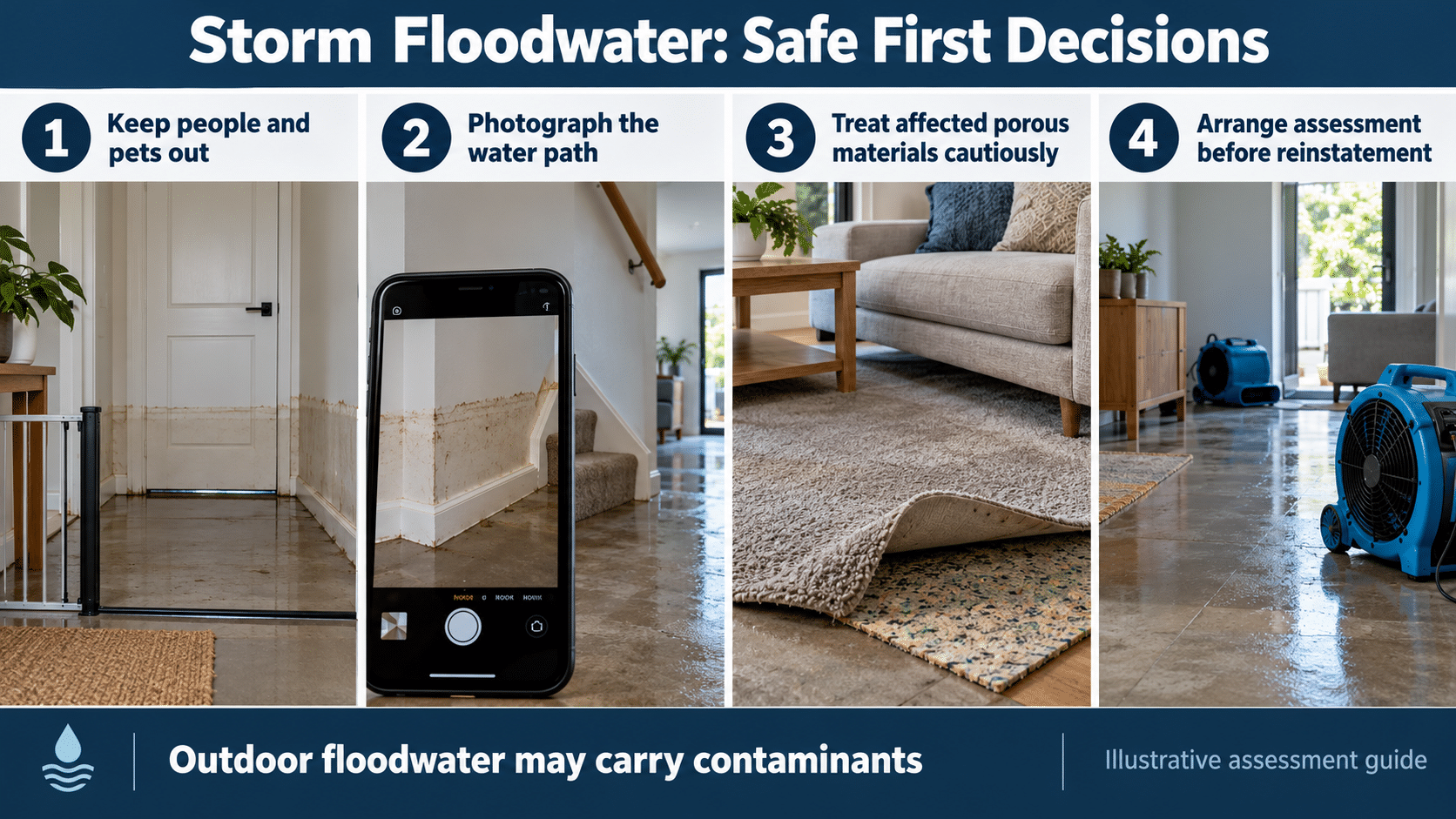
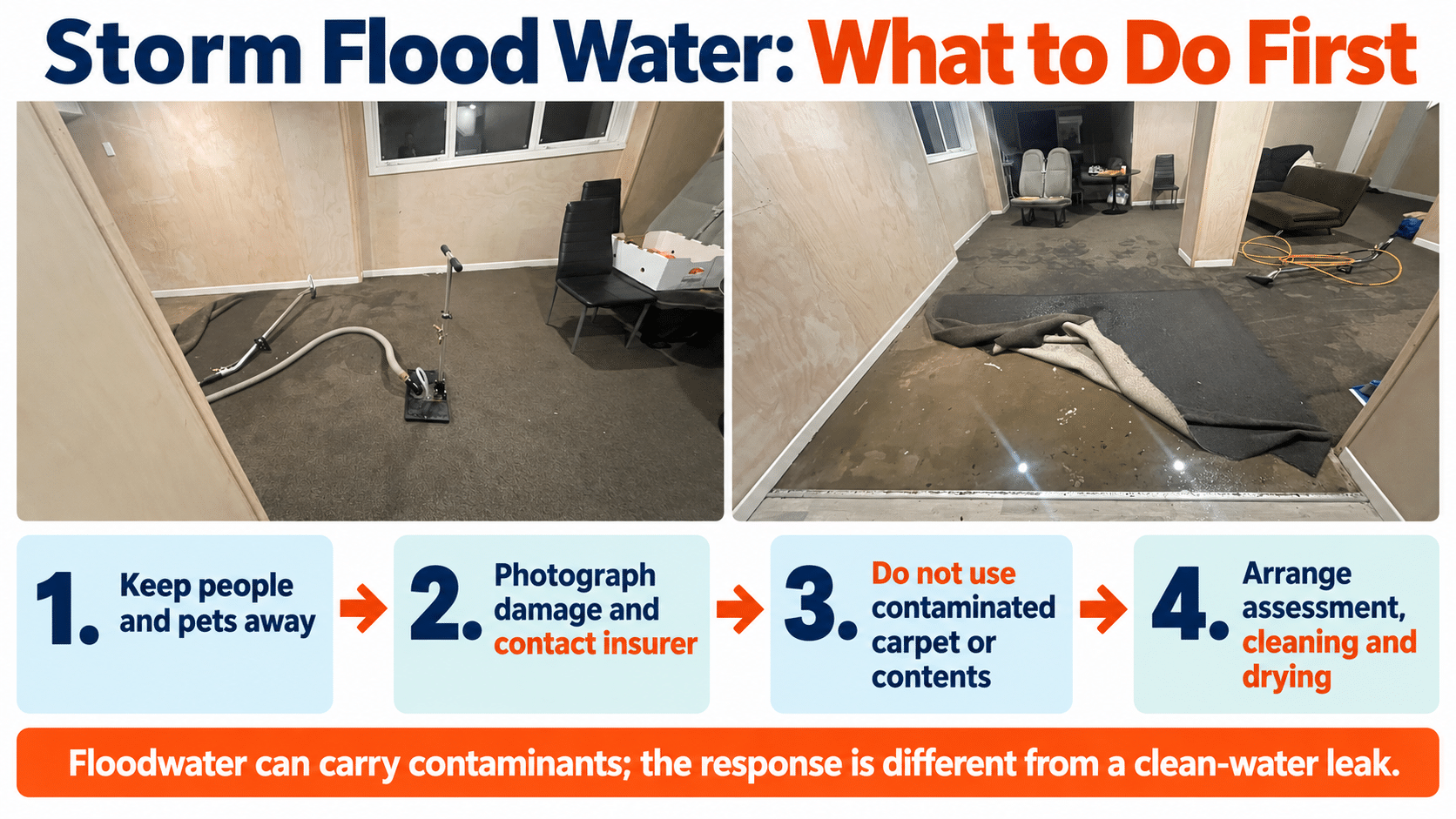
What should you do first after storm floodwater enters a property?
- Keep people and pets away. Avoid unnecessary contact with floodwater and affected porous materials.
- Make the area safe. Do not use electrical equipment in wet areas. Keep clear of unstable ceilings, floors or walls.
- Photograph and document. Record the water line, source, affected rooms, flooring, wall linings and contents before clean-up.
- Contact insurer and relevant parties. Owners should notify their insurer. Tenants should notify their landlord or property manager. Check council guidance where a wider flood event affects the area.
- Arrange assessment. Floodwater can migrate below carpet, wall linings and flooring. Contaminated porous materials may need a different approach from a clean-water leak.
Why floodwater is different from a clean-water leak
Outdoor floodwater can carry soil, debris and contaminants. The appropriate response depends on the source, materials affected, the extent of migration and whether materials can be cleaned and dried to a suitable condition. Do not assume that a carpet can be returned to use because it has stopped feeling wet.
Our Manurewa Category 3 restoration case study shows documented extraction, controlled removal, cleaning and structural drying after contaminated water affected internal areas.
What needs assessment after a flood?
| Material or area | Why it should be checked |
|---|---|
| Carpet and underlay | Water can remain below the surface and contamination may affect whether materials can be retained. |
| Wall linings and skirtings | Water can wick upward and enter concealed cavities. |
| Flooring and subfloor | Water may travel under coverings or into timber and concrete assemblies. |
| Ceiling areas below upper-level water | Water can travel through service penetrations and hidden cavities. |
| Contents | Items need to be separated, documented and assessed according to material and contamination. |
Cleaning, drying and reinstatement are separate stages
Emergency mitigation may involve extraction, removal of affected materials, cleaning or decontamination, controlled drying and documented moisture checks. Building repairs and reinstatement are separate decisions. The final scope depends on access, material condition, water category and the insurer’s approved claim process.
Records that help the claim process
- Photos and video before materials are moved.
- The water source and approximate timing of the event.
- Affected rooms, building materials and contents.
- Moisture readings, cleaning records, equipment placement and completion notes where restoration work is undertaken.
For broader homeowner guidance after a flood, see Building Performance’s flood-damaged-buildings information.
Frequently asked questions
Can I keep carpet after storm flooding?
It depends on the water source, contamination, time wet, material condition and whether appropriate cleaning and drying are feasible. An assessment is needed before a recommendation is made.
Should I photograph flood damage before cleaning?
Yes. Record the source, water line, affected areas and contents before clean-up where it is safe to do so.
How long does flood drying take?
Timing depends on materials, water migration, humidity, access and the drying plan. Completion should follow suitable condition and moisture checks rather than a fixed number of days.
Does insurance cover flood cleanup?
Cover depends on the policy, cause, claim decision and approved scope. Contact the insurer promptly and keep the incident records.
Need flood cleanup help in Auckland?
Carpet Drying Force provides water extraction, structural drying and documented moisture checks. Call 021 877 504 to discuss the water source, affected rooms and next safe step.
To understand mapped flood hazards and overland-flow paths for a specific address, use Auckland Council’s Flood Viewer.