Quick answer: after a leak or flood, resolve the water source, keep people away from unsafe areas, photograph the damage and arrange a moisture assessment if building materials stayed wet. Visible mould is only one sign: moisture can remain in carpet underlay, wall cavities, ceiling spaces and subfloors after the surface looks dry.
Documented Auckland example: assess the water path before assuming a surface is dry
| Recorded finding | Recorded response | Relevant lesson |
|---|---|---|
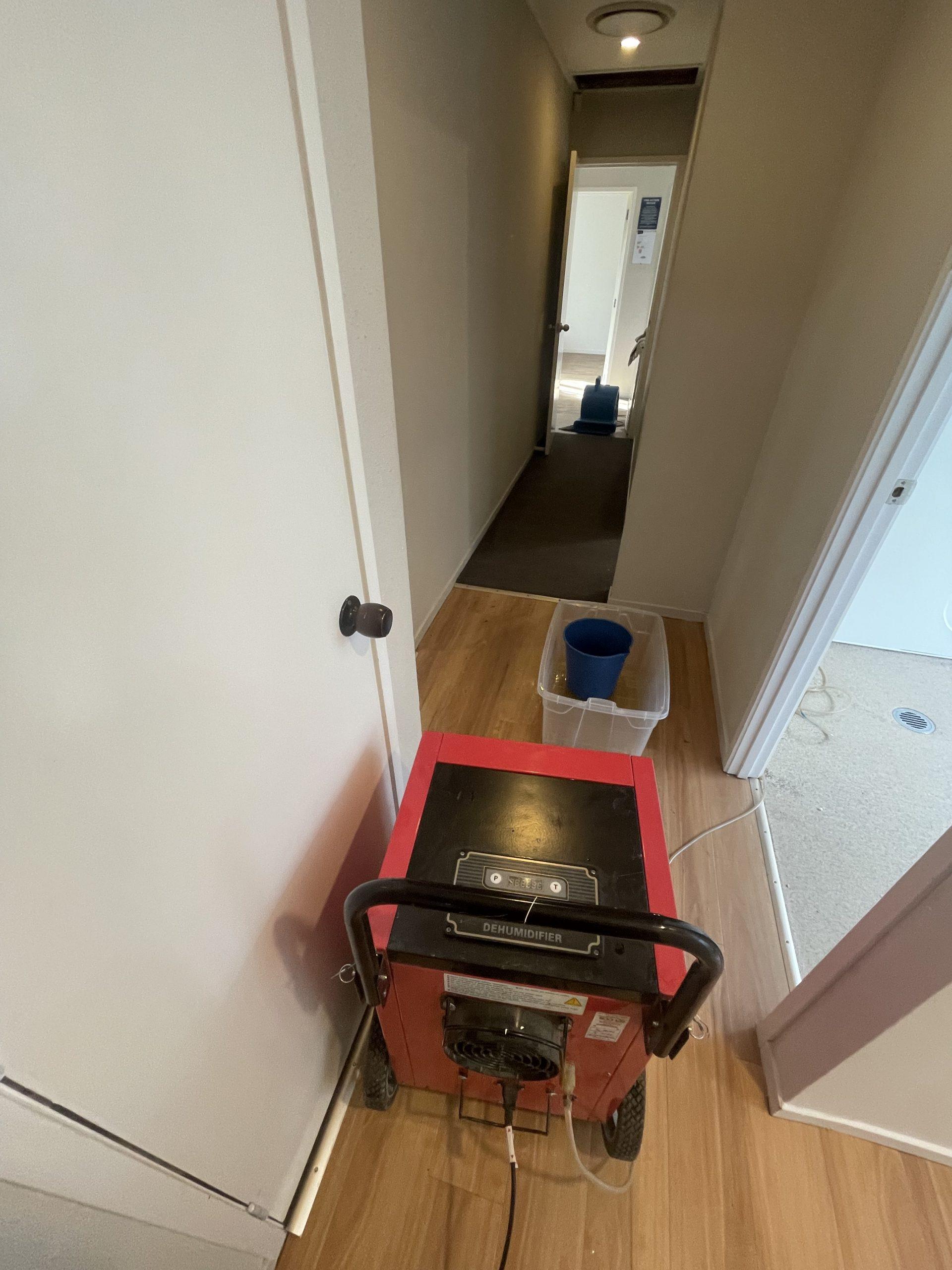
| Water was visible at a ceiling light fitting after an indoor pipe leak. Two hallways, one bedroom, and ceiling and wall materials required assessment. | Extraction and controlled airflow were used. Carpeted areas dried over three days while wall access and structural checks continued. | Visible staining or dampness may not define every affected material. Assessment should consider water path, material condition and safe access. |
This case records water-damage assessment and drying work; it does not establish whether mould was present or predict the appropriate response for another property. Read the complete ceiling-pipe-leak case record.
This is one project, not a promise of the same scope, drying duration, cost, health outcome or insurance result elsewhere. Water source, contamination, materials, access and measured moisture conditions determine the appropriate response.
What should you do when water damage may lead to mould?
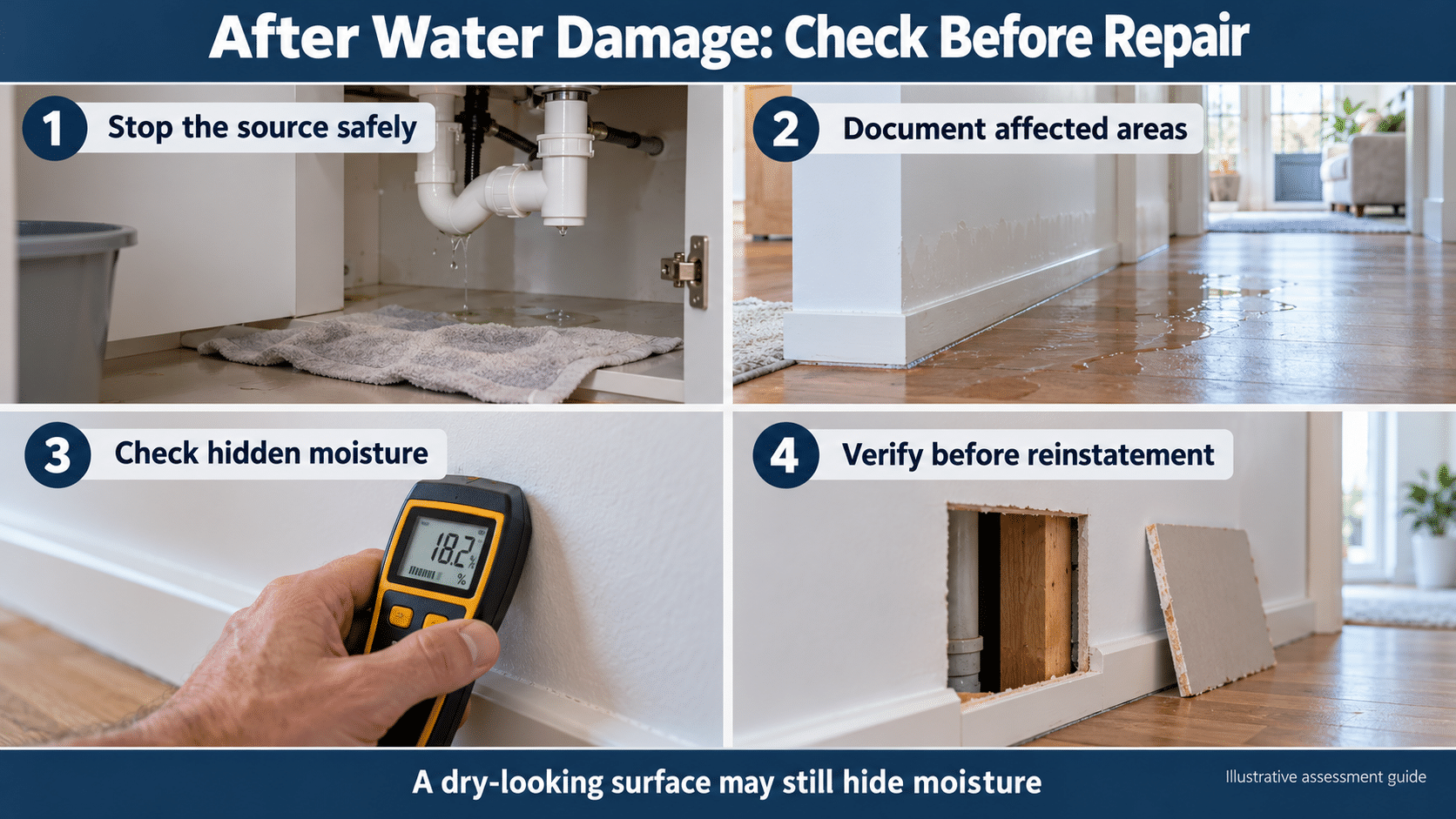
- Make the area safe. Do not enter areas where water may have affected electrical equipment or where ceilings, flooring or linings may be unstable. Stop the water source only if it is safe to do so.
- Document before clean-up. Take photos and video of the water source, affected rooms, belongings and visible damage. Building Performance recommends recording damage and checking requirements with the insurer and council before repair work begins.
- Notify the right people. Tenants should contact the landlord or property manager; owners should notify their insurer. In apartments, the body corporate or building manager may also coordinate access and source repairs.
- Remove water and assess moisture. Carpet, underlay, wall linings, ceiling cavities and subfloors can hold water after the surface appears dry.
- Dry and verify. Extraction, controlled air movement and dehumidification may form part of the plan. Equipment should be removed after suitable moisture checks, not a fixed timetable.
When is a professional water-damage assessment sensible?
Arrange an assessment when water has entered carpet and underlay, travelled beneath flooring, affected a ceiling or wall, come from an unknown or contaminated source, or remained present long enough for materials to become saturated. A musty odour, bubbling paint, swelling flooring, staining or recurring visible mould can indicate that moisture has not been resolved.
For clean-water incidents caught early, some materials may be restorable. The answer depends on the source, contamination category, material condition, access and whether the affected structure can be cleaned and dried to a suitable condition. See our guide to whether wet carpet can be saved after a leak.
Why visible mould is not the whole picture
Water can migrate through gaps around pipes, behind skirtings, into ceiling spaces and below floor coverings. A room can therefore look dry while materials below the surface remain damp. A drying assessment maps the affected materials, sets a controlled plan and records moisture results at suitable points.
Do not treat a surface wipe as evidence that a water-damage issue is resolved. Address the moisture source and any affected building materials. For concealed dampness, read our guide to hidden moisture below dry surfaces.
What tenants, landlords and property managers should record
| Record | Why it helps |
|---|---|
| Photos and video of the source and affected areas | Creates a time-stamped record before materials are moved or repaired. |
| Date found and reported | Helps coordinate access, mitigation and insurance communication. |
| Affected rooms and materials | Supports a clear scope: carpet, underlay, wall linings, ceiling, contents or flooring. |
| Moisture readings and drying records | Shows how drying decisions were made and when materials reached a suitable condition. |
Insurance and rental-property steps
Insurance cover, excess and approval requirements depend on the policy and claim decision. Keep mitigation records and ask the insurer how it wants urgent work documented. Building Performance’s flood-damaged-buildings guidance advises homeowners and occupiers to contact their insurer and local council; tenants should also contact their landlord. Tenancy Services guidance on mould and dampness explains the rental-property context.
Frequently asked questions
How quickly should I act after a water leak?
Act as soon as it is safe: stop or contain the source, document the damage and arrange assessment where water has entered building materials. Completion should be based on condition and moisture checks.
Can mould appear after the carpet feels dry?
Yes. Carpet backing, underlay, subfloor materials, wall bases and cavities may retain moisture after the carpet surface feels dry.
Should I clean visible mould myself after water damage?
The appropriate response depends on the scale, material, water source and whether the moisture cause has been resolved. Where there is a large area, contaminated water, hidden moisture or a continuing leak, arrange suitable professional advice rather than relying on surface cleaning alone.
Will insurance pay for drying and mould-related work?
It depends on the policy, water source, claim acceptance and approved scope. Record the event and check the claim process with the insurer before non-urgent repair work.
Need help after water damage?
Carpet Drying Force provides Auckland water extraction, carpet drying, structural drying and documented moisture checks. Call 021 877 504 to discuss the affected rooms, water source and next safe step.