Loss type: Burst ceiling pipe leak
Affected areas: Two hallways and one bedroom
Flooring: Carpet and underlay, with adjacent wall cavities
Initial action: Water Claw extraction, antimicrobial treatment and moisture assessment
Drying setup: One commercial dehumidifier and six commercial drying fans
Outcome: Carpet dried, structural materials checked and equipment removed after clearance
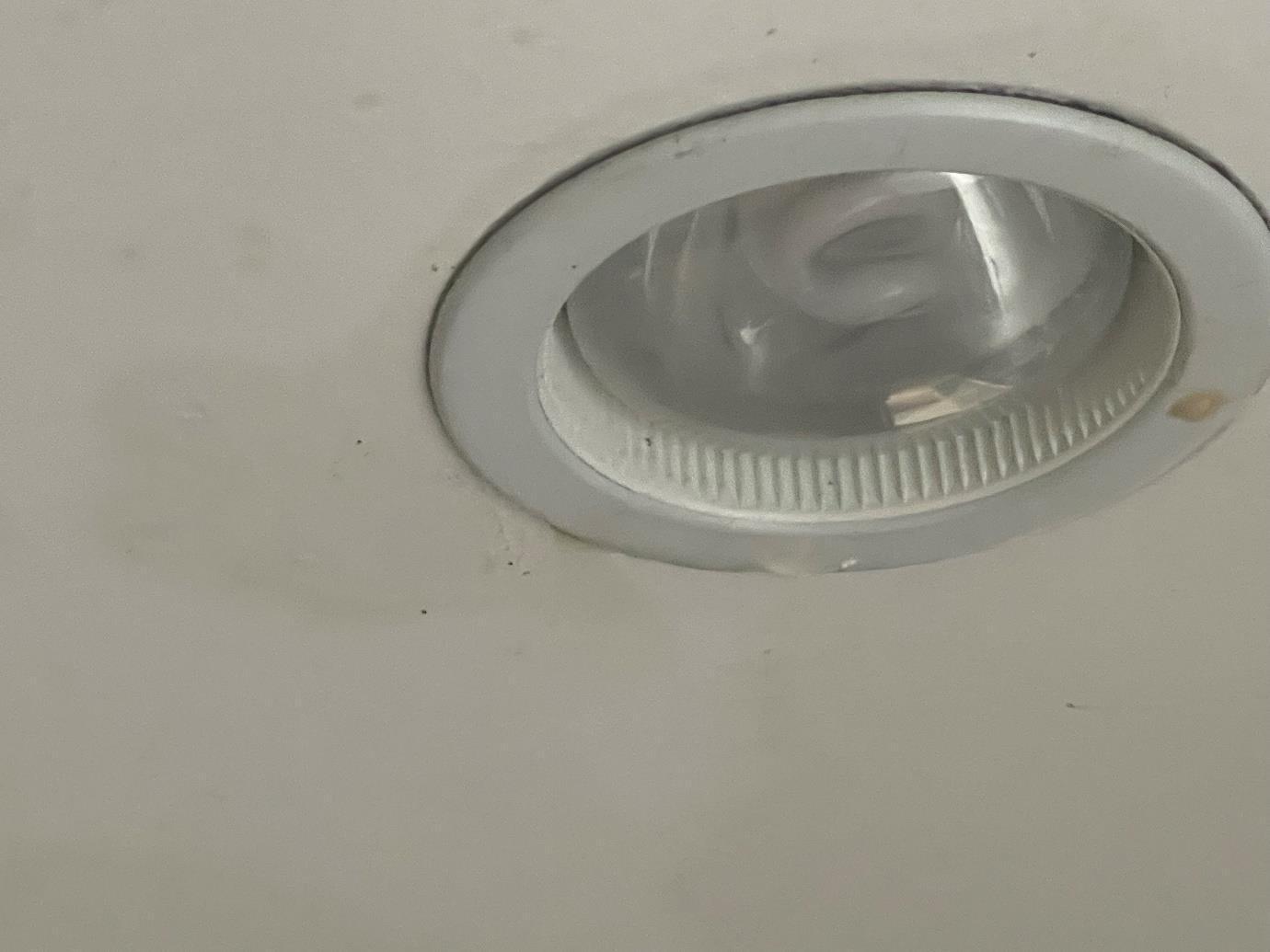
What should you do if water comes through a ceiling light?
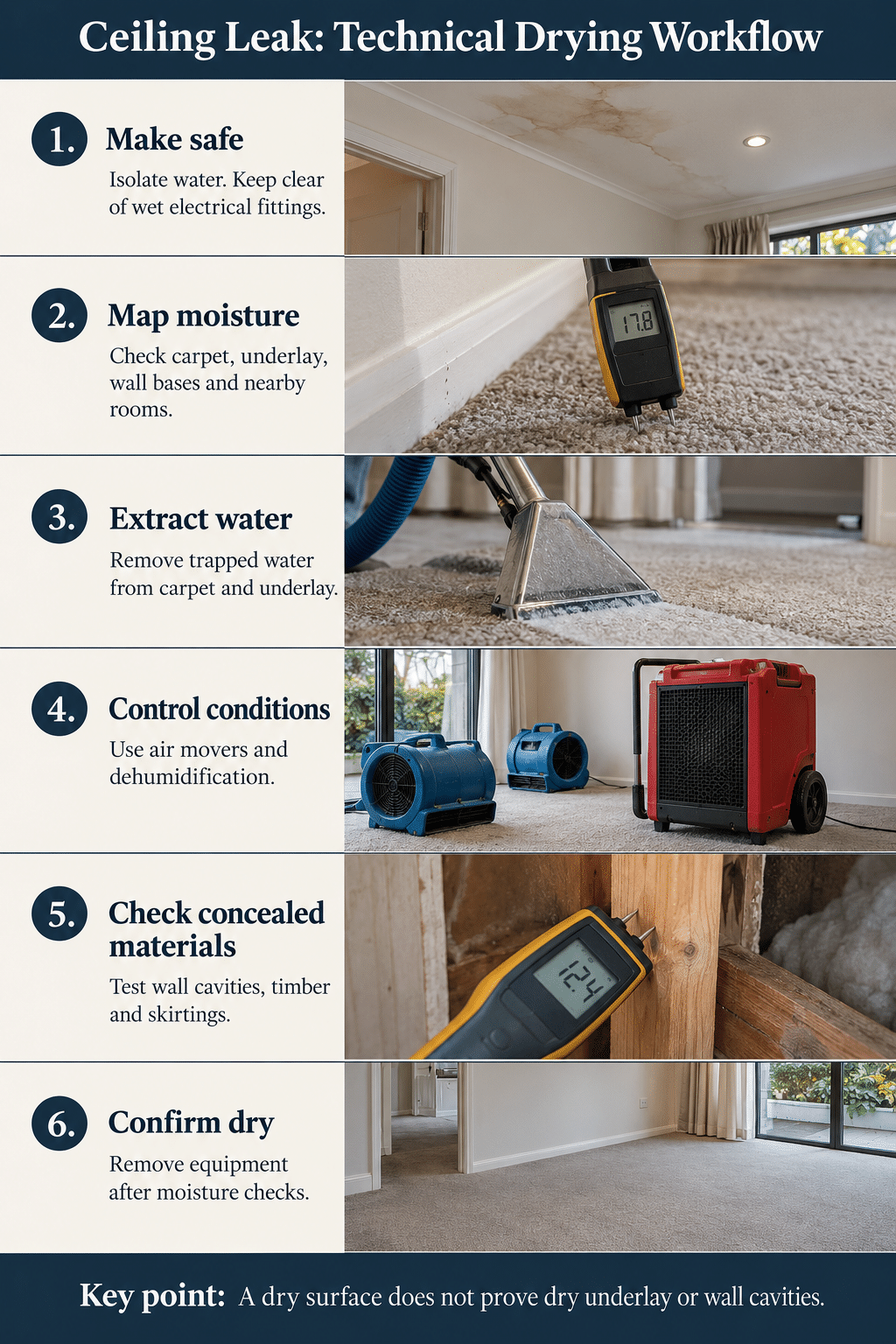
Keep clear of the affected area and electrical fittings. If it is safe, stop the water source and arrange qualified electrical help where water may be near wiring or light fittings. A moisture assessment can then identify whether water has travelled into carpet, underlay, walls or ceiling cavities.
Can wet carpet be saved after a burst pipe?
Often, yes. Fast extraction and controlled drying can reduce the moisture held in the carpet and underlay. The outcome depends on the water source, how long materials remained wet, and whether moisture has travelled into adjoining building materials.
How long does carpet drying take after a ceiling leak?
Carpet drying after a ceiling leak can take several days. In this case, the carpeted areas dried over three days after extraction and controlled airflow. The timeline varies with how much water entered, humidity, airflow and whether the underlay or wall cavities are wet.
Do wet walls need to be opened after a ceiling leak?
Not always. If moisture testing shows water has reached a wall cavity or bottom plate, access may be needed to check and dry concealed materials. The decision should follow the moisture assessment, not surface appearance alone.
What information helps an insurance claim after water damage?
Keep photos of the source and affected areas, a timeline, records of mitigation steps, and drying or moisture documentation. Your insurer can confirm the documents it requires before repairs proceed.
Insurance checklist after water damage
- Photograph the source, affected rooms and any visible water migration before items are moved.
- Record when the leak was discovered, when the water source was stopped and what immediate mitigation was completed.
- Keep assessment notes, drying-equipment records, moisture-monitoring notes and completion documentation.
- Confirm the insurer’s approval and documentation requirements before demolition or reinstatement begins.
Can household fans or a home dehumidifier dry a flooded carpet?
They may help lower surface moisture, but they do not confirm that carpet underlay, wall bases or framing are dry. After a ceiling leak, extraction, controlled airflow and moisture checks are used to guide the drying plan and prevent hidden moisture from being overlooked.
When is a ceiling leak an urgent restoration issue?
Act promptly when water is near a light fitting, reaches carpet or wall cavities, spreads beyond the visible area, or causes a musty smell. Stopping the source, making the area electrically safe and recording the affected areas early can reduce further damage.
Can a ceiling leak cause mould?
Yes. Mould risk can increase when water remains in absorbent materials such as carpet underlay, wall bases, ceiling cavities or framing. Stopping the source, extracting water, controlling humidity and checking concealed materials helps reduce that risk. Visible mould, sewage-contaminated water or prolonged wetting may require a different remediation plan.
What does a professional flood restoration assessment include?
A professional assessment starts with safety and source control, then identifies the water source, maps affected materials and checks how far moisture has travelled. The restoration plan should explain the extraction work, drying equipment, monitoring visits, any concealed-area access required and what is excluded from repairs or reinstatement.
Project overview
This Auckland restoration followed a burst water pipe in a ceiling cavity. Water entered through a ceiling light fitting and affected two hallways and a bedroom. Moisture moved through carpet and underlay and into adjacent wall areas, so the visible wet area was not treated as the full extent of the loss.
What affects flood restoration charges?
Flood restoration charges depend on the water source, the area affected, how far moisture has travelled, equipment time, monitoring visits and whether concealed materials need access. This project required extraction, controlled drying and structural moisture checks; the individual job charges remain private.
What the documented invoice covered
The job record documents emergency attendance, extraction, antimicrobial treatment, a three-day carpet-drying stage, then equipment and monitoring support while wall access, plaster and paint work were coordinated. It also records repeat moisture checks, final reporting and equipment collection. Exact client charges are not published; the scope and cost of a different property depend on access, materials, drying days and reinstatement needs.
Documented timeline: initial attendance and extraction occurred on 1 August; carpet drying was completed over the first three days; final clearance and equipment removal followed on 11 August after the affected and exposed materials reached an acceptable dry condition.
Indicative Auckland flood restoration cost guide
Published Auckland market estimates can help set an initial budget, but they are not this customer’s charges and are not a substitute for an on-site quote. The ranges below relate to the drying and mitigation stage; plumbing repair, replacement flooring, GIB, painting and other reinstatement work may be additional.
| Indicative market range | Typical loss scope | Common restoration work |
|---|---|---|
| NZ$1,500–$4,000 | Single room, clean-water incident, source stopped promptly | Assessment, water extraction, carpet or underlay drying, antimicrobial treatment, equipment and moisture checks |
| NZ$5,000–$15,000 | Multiple rooms, extended drying, or water reaching additional materials | Extraction, several air movers and dehumidifiers, monitoring visits, selective removal of wet linings or underlay, and content protection |
| Scope-based quote | Concealed moisture in wall cavities or framing, contaminated water, or extensive material removal | Detailed assessment, structural access, decontamination where required, extended drying and coordination before repairs |
Important: Confirm whether GST, after-hours attendance, delivery, monitoring visits and repairs are included before comparing quotes. Water category, access, equipment time and concealed moisture can change the final scope. For a worked explanation of local rate components, see our Auckland flood restoration cost guide.
Initial assessment and extraction
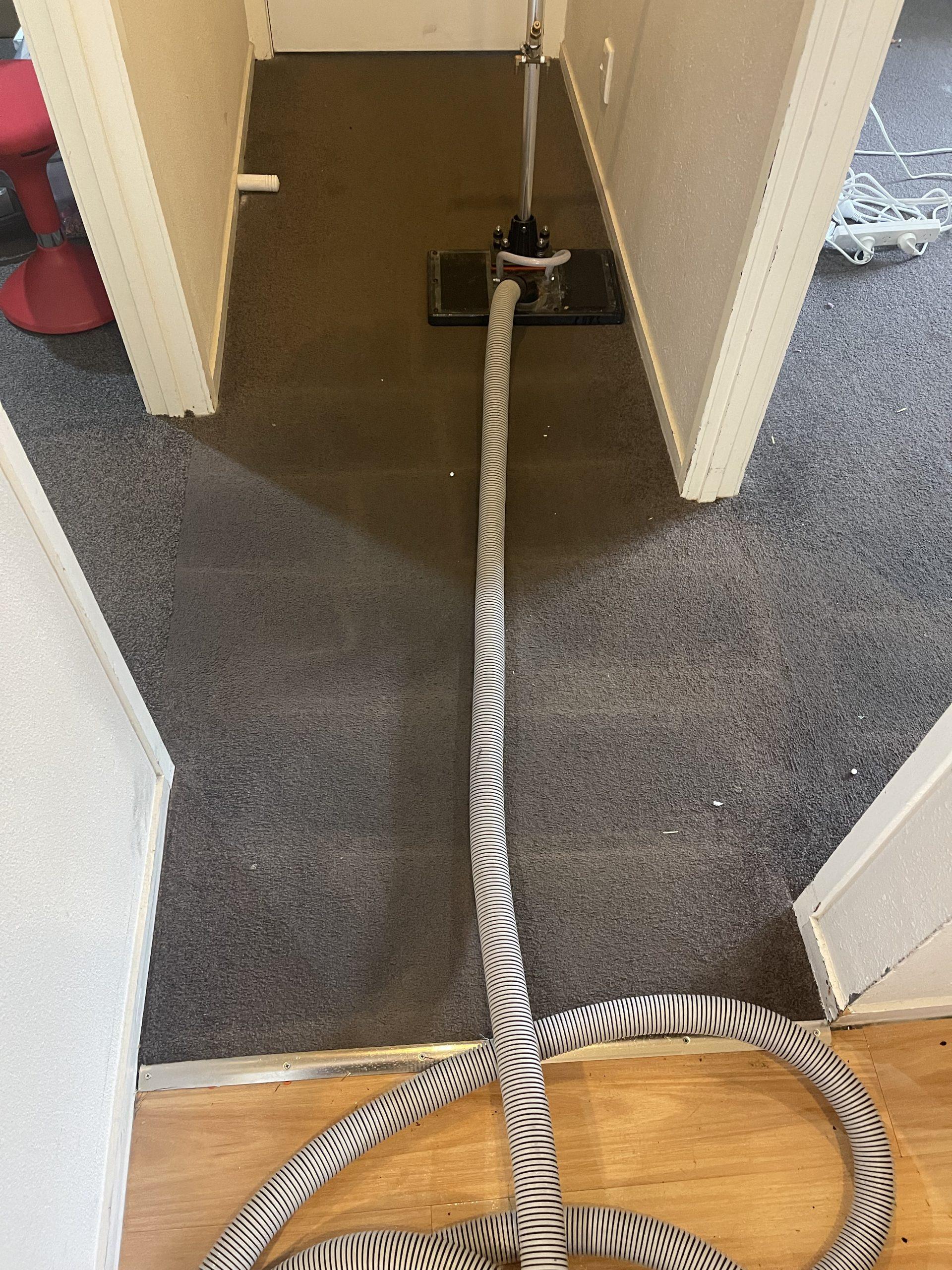
We assessed the affected rooms and extracted water from the carpet and underlay using a Water Claw. This sub-surface extraction tool applies suction through the carpet to remove water held below the pile. Antimicrobial treatment was then applied to the affected carpeted areas as part of the initial remediation work.
Why structural access mattered
Water had travelled into wall cavities and affected areas beside the bathroom and laundry. Skirting removal and access to damaged linings were required before those concealed areas could be checked and dried properly. The carpet could be dried first, while structural drying depended on access being available.
Drying plan
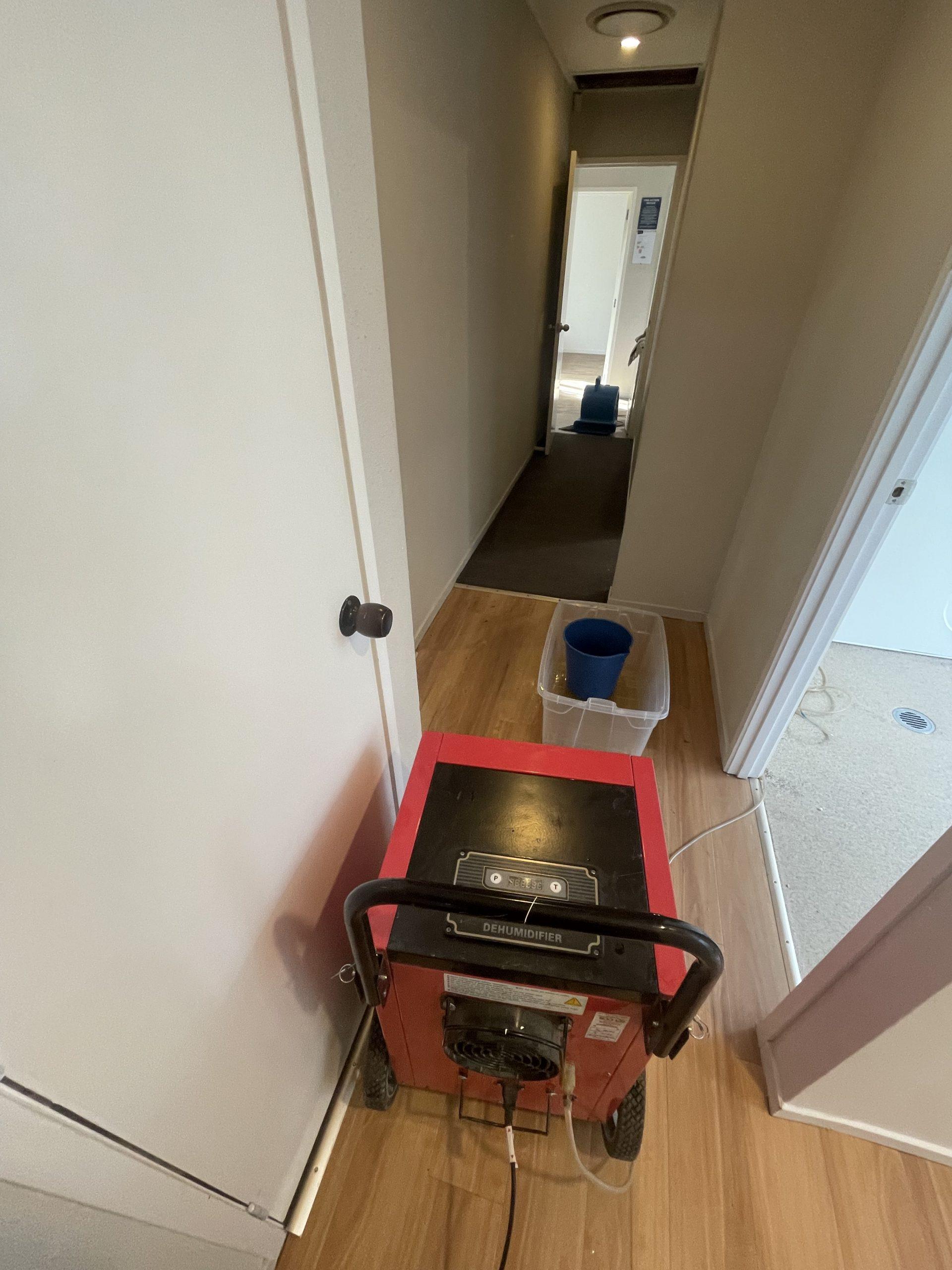
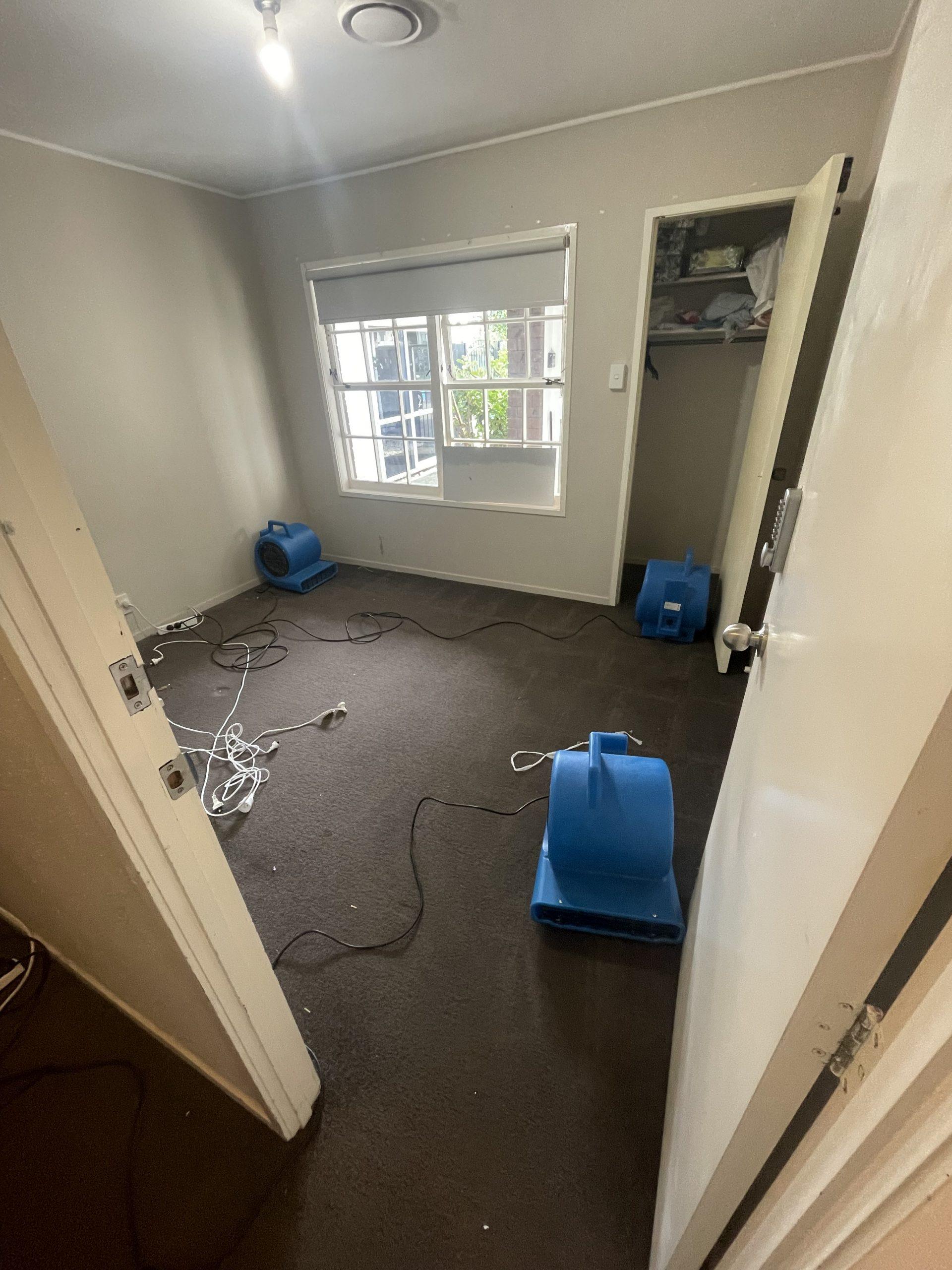
A commercial dehumidifier and six commercial drying fans were installed to control humidity and maintain airflow. The carpeted areas were dried over three days. Once damaged linings and skirtings had been removed, the exposed framing was checked and found dry. The equipment was then used to support drying of the repaired plaster and paint before occupants returned.
Documented drying outcome
| Carpet drying | Completed over three days after extraction and controlled airflow. |
|---|---|
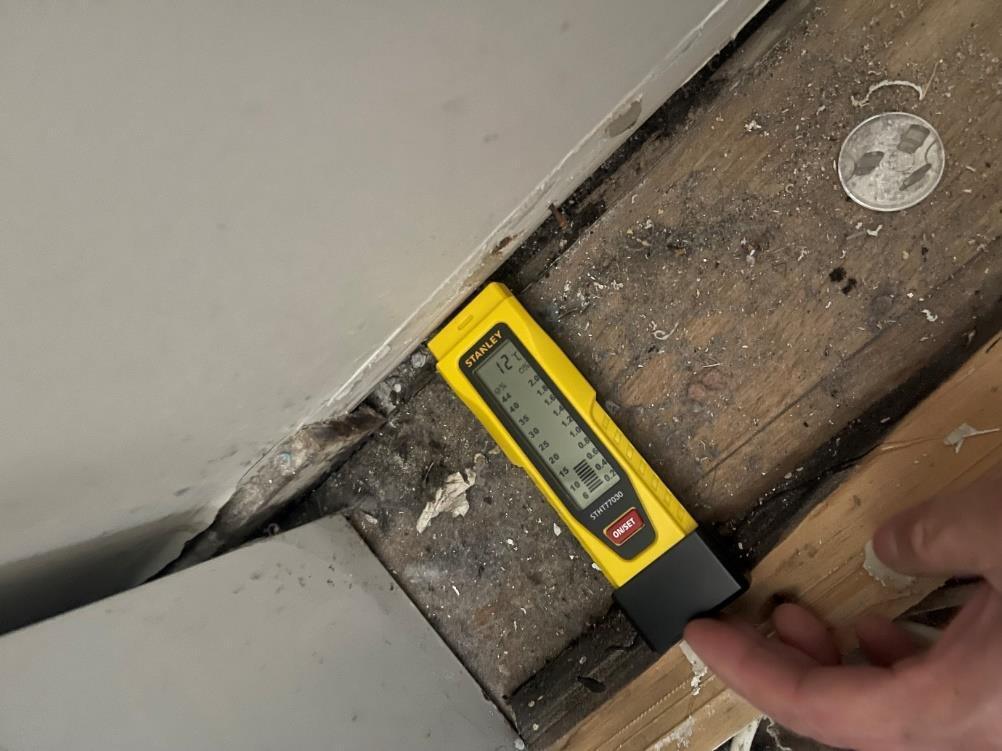
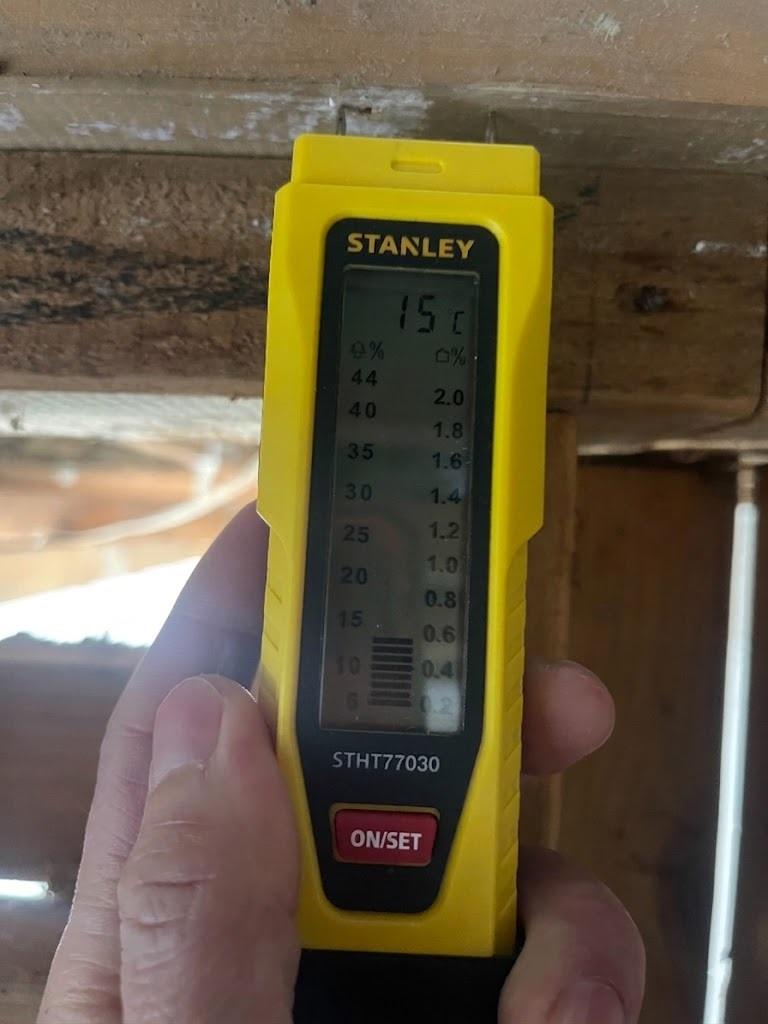
| Structural checks | Exposed framing was checked once access was available and found dry. |
| Close-out | Equipment was removed after the affected and exposed materials reached an acceptable dry condition. |
This summary uses the job’s restoration record. Customer, address and invoice details are intentionally omitted.
Ceiling leak drying process
Drying is a measured sequence: remove water, manage humidity and airflow, test materials that may be wet out of sight, then remove equipment only after moisture checks support that decision.
How was moisture checked?
Moisture readings were taken during the restoration to check materials rather than relying on surface appearance alone. A carpet can feel dry while moisture remains in underlay, wall bases or framing, so monitoring guides when equipment can be adjusted or removed.
Outcome
After drying and monitoring, the affected and exposed materials reached an acceptable dry condition. The drying equipment was removed once clearance checks were complete. This case shows why prompt extraction, access to concealed areas and ongoing moisture monitoring matter after a ceiling leak.
Key lessons after a ceiling leak
- Treat water near lights, wiring and ceiling cavities as an electrical-safety issue.
- Extract water quickly from carpet and underlay where appropriate.
- Check adjoining rooms and wall cavities because water can migrate beyond the visible wet patch.
- Use moisture monitoring to decide when drying is complete.
Need flood restoration or carpet drying in Auckland?
For help after a burst pipe, ceiling leak or flooded carpet, contact Carpet Drying Force for an assessment and drying plan. You can also read our 60-minute emergency carpet drying action plan, our guide to hidden moisture in wet underlay, and our timber-frame drying guide. See another real-world example in our emergency washing-machine leak restoration case study.