Finding a room full of water is enough to make any Auckland homeowner’s heart sink. Whether it’s a burst pipe in the kitchen or a flash flood hitting your West Auckland basement, the clock is ticking. Acting promptly can help limit how far water spreads and reduce secondary damage.
To save your home, act fast. Stop the water source, move furniture, and start extraction immediately. Dehumidifier hire is essential for preventing structural rot. Professional flood restoration ensures that moisture trapped under structural materials is removed before mold takes hold within 24-48 hours.
What should I do in the first hour after a burst hot-water cylinder?
Only if it is safe, stop the water source. Keep clear of standing water near power points or appliances, move valuables from dry areas, take photos and call your insurer. Arrange extraction and assessment promptly; water can spread below carpet and into wall linings even when the surface starts to look dry.
Is it safe to stay in a house with water-damaged carpet?
Keep clear of standing water near electrical outlets, appliances, damaged wiring, sewage or stormwater. If those hazards are present, leave the area and arrange professional or emergency help. Clean-water damage in a small, isolated area may be manageable while drying is arranged, but hidden moisture still needs assessment.
Should I lift wet carpet and underlay myself?
Only if it is safe and you know the carpet can be re-stretched afterwards. Photograph the damage first and avoid dragging wet materials through dry rooms. Underlay can hold significant water and may need professional assessment before it is dried or removed.
Can carpet be dried without lifting it?
Sometimes. With clean water and prompt extraction, carpet may be dried in place when the underlay and nearby materials can be assessed and controlled drying is suitable. Water source, contamination, saturation and hidden moisture determine whether lifting or removal is needed.
Flood Recovery Timeline by Material
| Carpet Material Type | DIY Drying Time | Professional Drying Time | Risk Level |
| Synthetic Yarns | 48 -> 72 Hours | 12 -> 24 Hours | Moderate |
| Wool Textiles | 72+ Hours | 24 -> 36 Hours | High |
| Loop Pile Threads | 60+ Hours | 18 -> 24 Hours | Medium |
Bold Title: IICRC – S500 Standard for Professional Water Damage Restoration
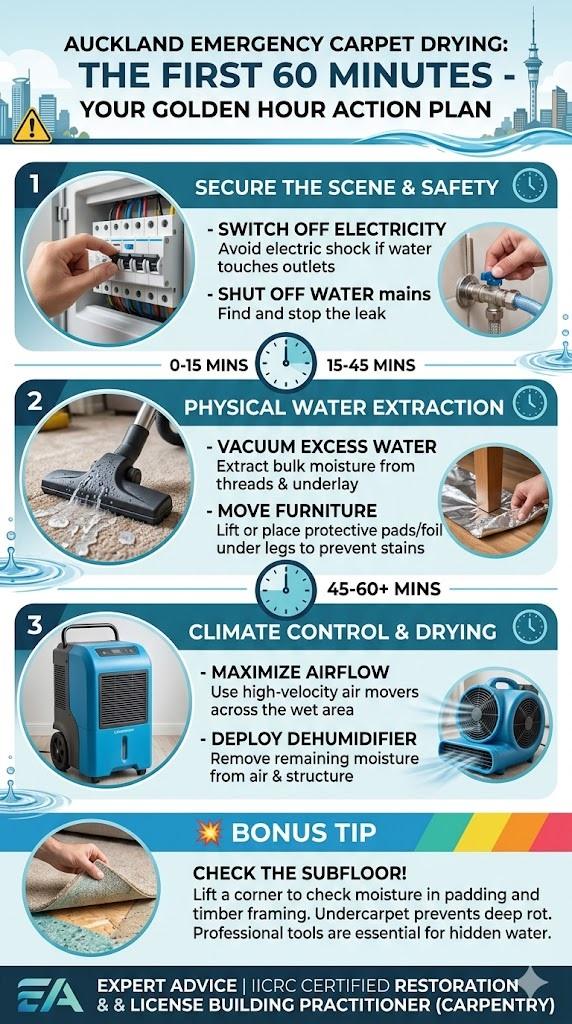
🛠️ Step 1: Secure the Scene and Safety First
Before you touch the water, think about safety. Switch off the electricity at the mains if the water has reached any wall sockets or appliances. As a Licensed Building Practitioner, I’ve seen how water travels behind skirting boards and into electrical channels faster than you’d expect.
Stop the flow immediately. If it’s a plumbing failure, turn off the mains water valve. In our experience servicing Auckland homes, many people forget that water hides in the underlay. If the source is “grey water” (like a dishwasher leak), you need to be even more careful with hygiene and protective gear.
From a carpentry perspective, prolonged moisture exposure causes timber framing to swell, which can permanently compromise the structural load-bearing capacity of your internal walls.
🌪️ Step 2: The Physical Extraction Phase
You need to get the bulk water out now. Use a wet/dry vacuum if you have one, but a standard shop vac won’t cut it for a whole room. Push down hard on the wand to suck moisture from deep within the carpet yarns. Don’t just skim the surface; the weight is in the underlay.
Move your furniture out of the wet zone immediately. Wooden legs will bleed tannin stains into the carpet threads, which are almost impossible to remove later. Metal feet will start to rust within the hour. Use plastic sheets or foil tabs under heavy items if you can’t move them.
🌬️ Step 3: Climate Control and Airflow
Once the standing water is gone, the air becomes the enemy. Auckland’s humidity often sits above 70%, which means the air is already too full of moisture to help your carpet dry. You need to create a “drying envelope” by closing the windows and using high-grade equipment.
Professional dehumidifier hire is the game-changer here. Commercial dehumidifiers are designed for higher moisture loads than typical household units. Point high-velocity air movers across the surface of the textiles to evaporate the moisture, then let the dehumidifier capture it.
Equipment placement and the drying environment need to be assessed for the affected materials. Moisture readings help determine whether drying is progressing and when equipment can be removed.
🏠 Long-Term Maintenance and Advice
Once the carpet feels dry to the touch, don’t assume the job is done. Moisture often lingers in the subfloor or the bottom of the yarns. Check the area daily for the next week. If you smell a “musty” odour, it means bacteria are growing, and you need professional intervention.
-
Check the Underlay: Lift a corner to see if the padding is still soaked.
-
Avoid Heat: Never use a clothes iron or a hairdryer on wool textiles; it can shrink the backing.
-
Steam Clean Later: Once dry, a professional steam clean will sanitise the materials.
Frequently Asked Questions
Can I dry my carpet with just a fan?
In Auckland’s climate, a fan alone usually isn’t enough. It moves the water around but doesn’t remove it from the room. You need a dehumidifier to actually extract the moisture from the air.
How long do I have before mold grows?
Aim to dry affected materials as quickly as possible, ideally within 24 to 48 hours where practical. The risk depends on the water source, materials, temperature and how long moisture remains.
Should I pull up the carpet?
Only if you know how to re-stretch it later. As a builder, I recommend letting a pro handle this so you don’t damage the tack strips or the carpet backing.
Key Takeaways for Auckland Homeowners
-
Extract First: Get 90% of the water out physically before trying to dry the rest.
-
Safety First: Kill the power before stepping into a flooded room.
-
Hire Pro Gear: Standard house fans won’t stop the rot in your floorboards.
-
Call Ernie: If the water covers more than a few square metres, you need an IICRC-certified expert.
How we assess water damage
We identify the water source and affected materials, take moisture readings where accessible, then document the drying setup and progress. Equipment is removed only after readings support the agreed drying target. See our Auckland restoration assessment process and a documented washing-machine leak restoration.
Need Flood Restoration or Carpet Drying in Auckland?
For urgent water extraction, moisture assessment and drying support, see our Auckland flood restoration and carpet drying service. You can also read why wet underlay may need further assessment.
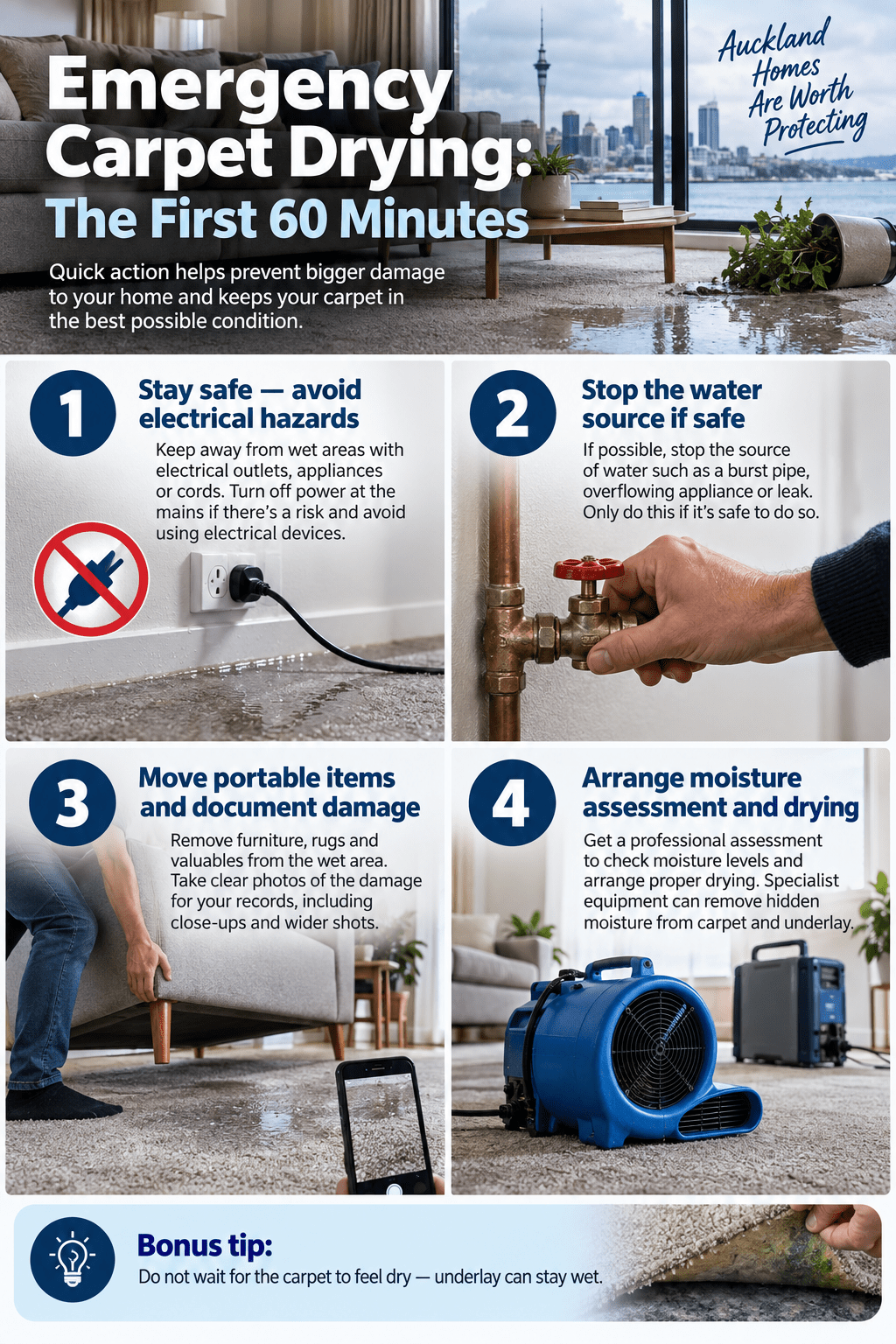
The First Hour: A Safe Carpet-Drying Checklist
Fast action can reduce the amount of water absorbed by carpet backing, underlay and nearby walls. Safety comes first: avoid electrical hazards and stop the source if it is safe to do so.
- Keep people away from electrical outlets, damaged wiring and contaminated water.
- Stop the water source where safe, then photograph the affected area for insurance records.
- Move portable items from wet carpet without dragging them through other rooms.
- Arrange moisture assessment and drying before odours or mould can develop.
When to Call a Professional Immediately
Call for help when water has reached underlay, walls, multiple rooms, stormwater or sewage. Our moisture-mapping guide shows why visible water is only part of the assessment.
Planning the cost after the first response
Once the immediate water risk is controlled, the next question is often the scope of drying and repairs. Our Auckland flood restoration cost guide explains the published cost components, equipment days and questions to ask before approving work.
Emergency carpet drying FAQs
What should I do in the first hour after a carpet is flooded?
Make the area safe, stop the water source if safe, avoid electrical hazards, remove movable items where practical and arrange assessment, extraction and drying as soon as possible.
Can I walk on wet carpet while it is drying?
Limit traffic where possible. Wet carpet and underlay can shift, become soiled or retain moisture below the surface; the drying plan should reflect the extent of saturation.
When is a wet carpet an emergency?
Urgent assessment is sensible after significant water entry, contaminated water, a burst pipe, or when water has reached underlay, walls or other building materials.