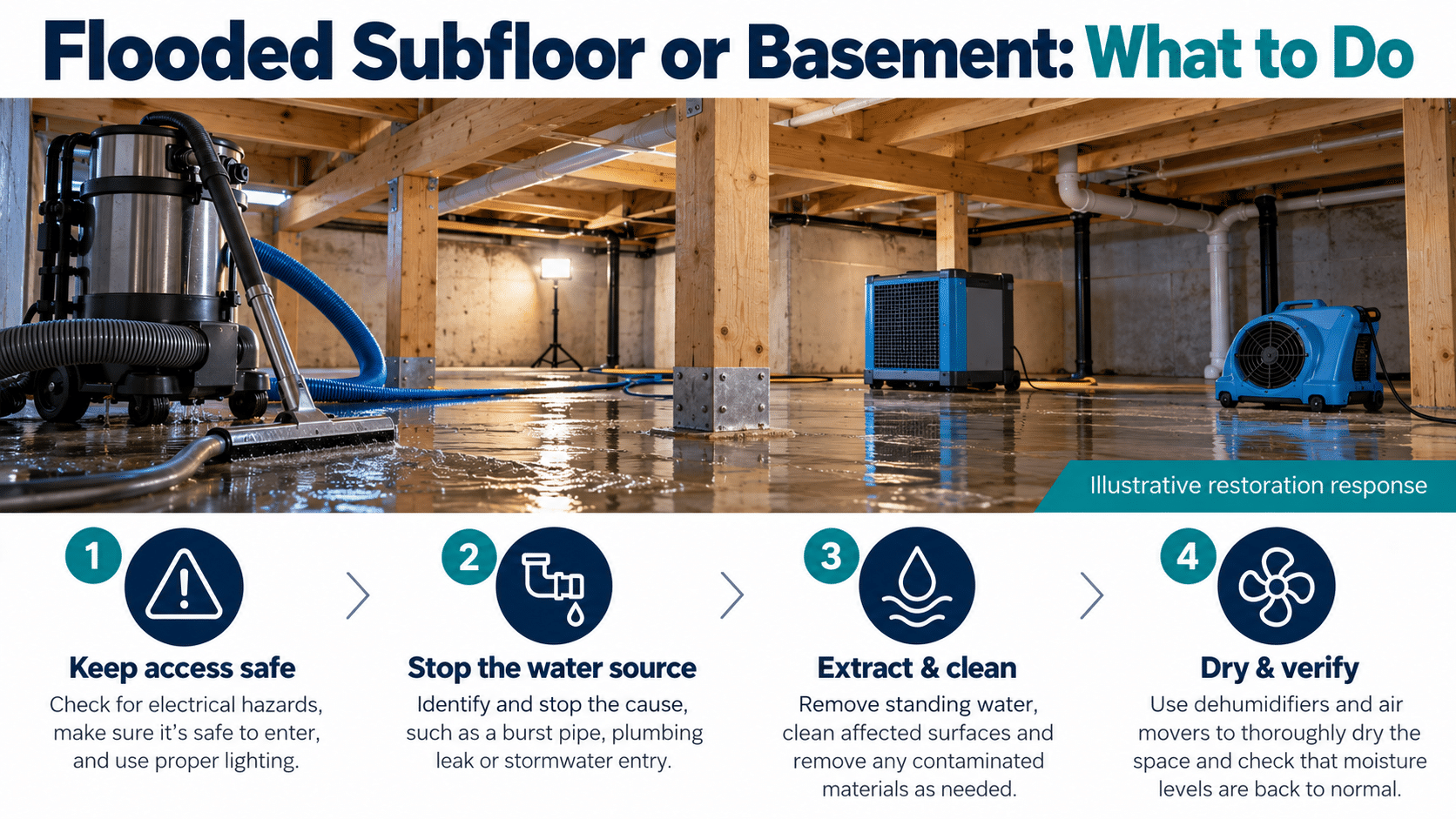
If a subfloor or basement floods, keep access safe, stop the water source where possible, arrange water removal and assess hidden moisture before covering the area or starting repairs. Water below a building can remain unseen after the surface seems dry. It may affect timber framing, flooring, insulation, services and indoor conditions above the flooded space.
Documented Auckland example: the first visible wet area may not show the full water path
| Recorded finding | Recorded response | Relevance and limits for a subfloor or basement |
|---|---|---|
| Water was initially identified in a garage and had travelled into a hallway, bedroom and wardrobe. | Water Claw extraction and air movers were used. The controlled drying programme ran for 17 days and was adjusted when slower-drying areas were identified. | This shows why an assessment should consider where water has travelled, rather than only the first wet surface. It was not a flooded subfloor or basement case, so it does not establish what materials, access, drying time or scope would apply below another building. |
Read the complete documented washing-machine-leak case record.
This is one documented restoration, not a promise of the same scope, cost, duration or outcome at another property. Water source, contamination, access, materials and measured moisture conditions determine the appropriate response.
What should you do first after a subfloor or basement flood?
- Do not enter an unsafe space. Treat standing water, electrical services, poor lighting and confined access as hazards.
- Identify the source. It may be a plumbing leak, burst pipe, stormwater entry, drainage issue or groundwater.
- Document the condition. Photograph access points, water depth where safe, the suspected source and any damage above the space.
- Arrange assessment and water removal. A restoration scope can address extraction, cleaning, moisture inspection, drying and any materials that require removal.
Subfloor and basement response chart
| Area to assess | What may be affected | Why it should be checked |
|---|---|---|
| Access and services | Electrical wiring, lighting, pumps and access routes. | Helps make the area safe before work begins. |
| Water source and drainage | Leaking pipes, stormwater routes, drains and groundwater entry. | Drying will not hold if the source or drainage issue remains active. |
| Timber and floor structure | Joists, bearers, subfloor sheeting and flooring edges. | Moisture may persist where it is not visible from above. |
| Insulation and linings | Insulation, wall bases and enclosed cavities. | Some materials may retain water or prevent effective drying. |
Why water below the floor needs a measured drying plan
Extraction removes standing water, but it does not confirm that a cavity, framing or flooring assembly has dried. Effective restoration may involve controlled air movement, dehumidification, moisture checks and staged follow-up visits. The goal is to address the wet structure before access is closed up or cosmetic repairs begin.
Common causes of flooded subfloors and basements
- Broken or leaking water pipes beneath the building.
- Stormwater entering through a low point, drain or foundation opening.
- Overflowing drainage, blocked gullies or sewer-related events.
- Appliance or bathroom leaks travelling through floor cavities.
For the first actions after a burst pipe, see our Auckland burst-pipe water-damage guide. For stormwater or overland flow, see our storm-flood cleanup guide.
When contaminated water may be involved
Where water came from a sewage backup, drain overflow or external floodwater, cleaning and removal requirements can change. Keep people and pets away and avoid spreading contamination from the affected space to living areas. Our contaminated-water cleanup guide explains the first safe actions.
Useful insurance documentation
Record the water source, when it was discovered, affected rooms, access limitations, plumber findings and visible damage. Keep photos, restoration scope documents, moisture records and invoices. Our insurance documentation guide provides a practical checklist. Insurance cover depends on the applicable policy and insurer.
Frequently asked questions
Can a flooded subfloor dry by itself?
It may eventually lose some moisture, but concealed spaces can dry slowly and unevenly. Assessment helps identify whether water remains in timber, insulation or flooring assemblies.
Should I enter a flooded basement or crawl space?
Only if it is safe to do so. Standing water, electrical risks, poor visibility and confined access can make entry hazardous.
How do you dry a flooded subfloor?
The approach depends on access, the source, materials affected and measured moisture conditions. It can include water extraction, cleaning, targeted air movement, dehumidification and monitoring.
Can floodwater under a house cause mould?
Persistent moisture can support mould growth. Removing water and addressing hidden moisture promptly reduces that risk.
Need subfloor or basement flood restoration in Auckland? Carpet Drying Force can assess the space, document the condition and provide a clear drying and restoration scope.