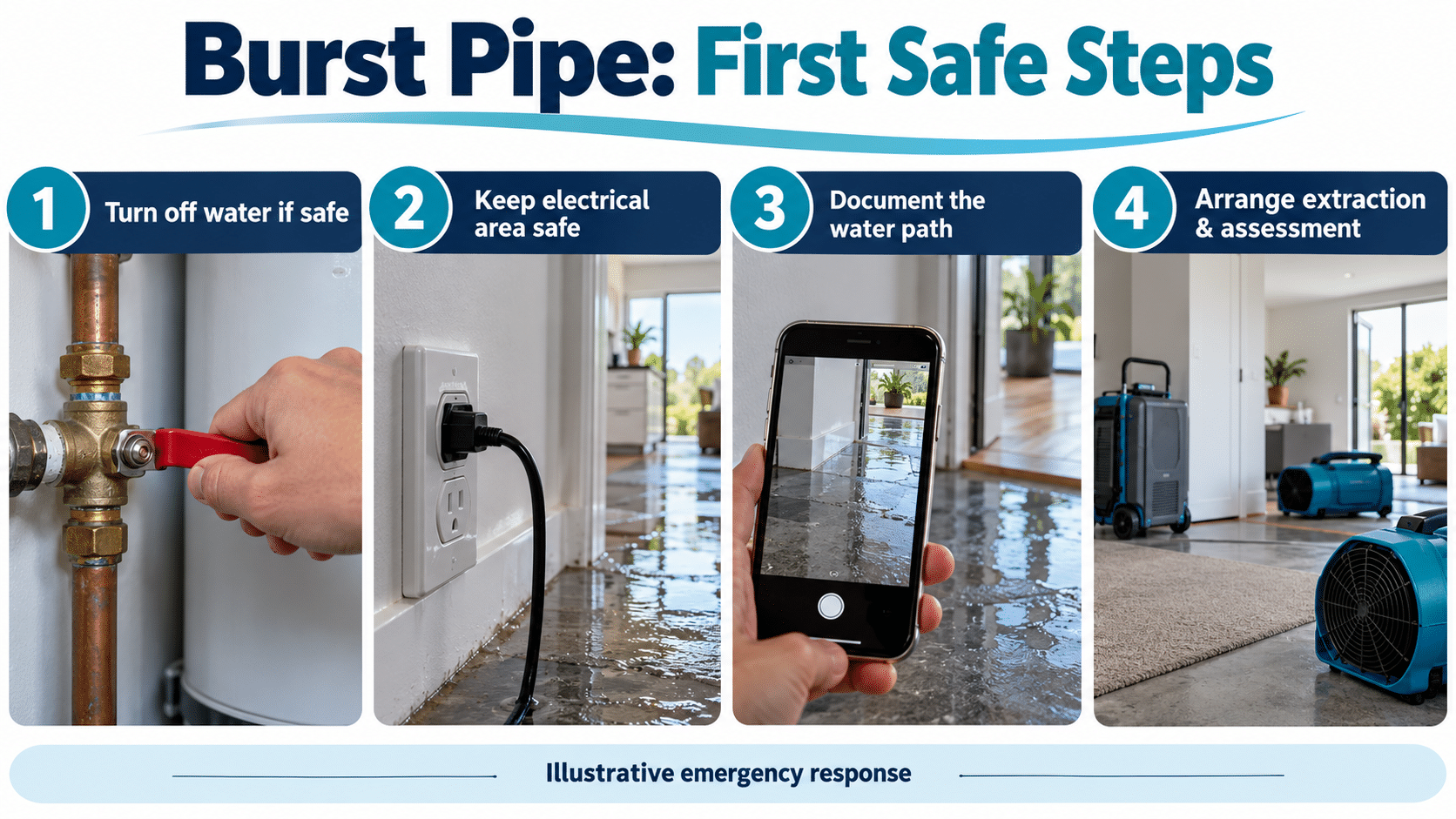
A burst pipe can send water through carpet, flooring, wall linings, cabinetry and ceiling cavities within minutes. First isolate the water if it is safe, keep clear of electrical hazards, photograph the affected areas, and arrange extraction and drying assessment. Fast mitigation can reduce secondary damage; your insurer and policy determine cover.
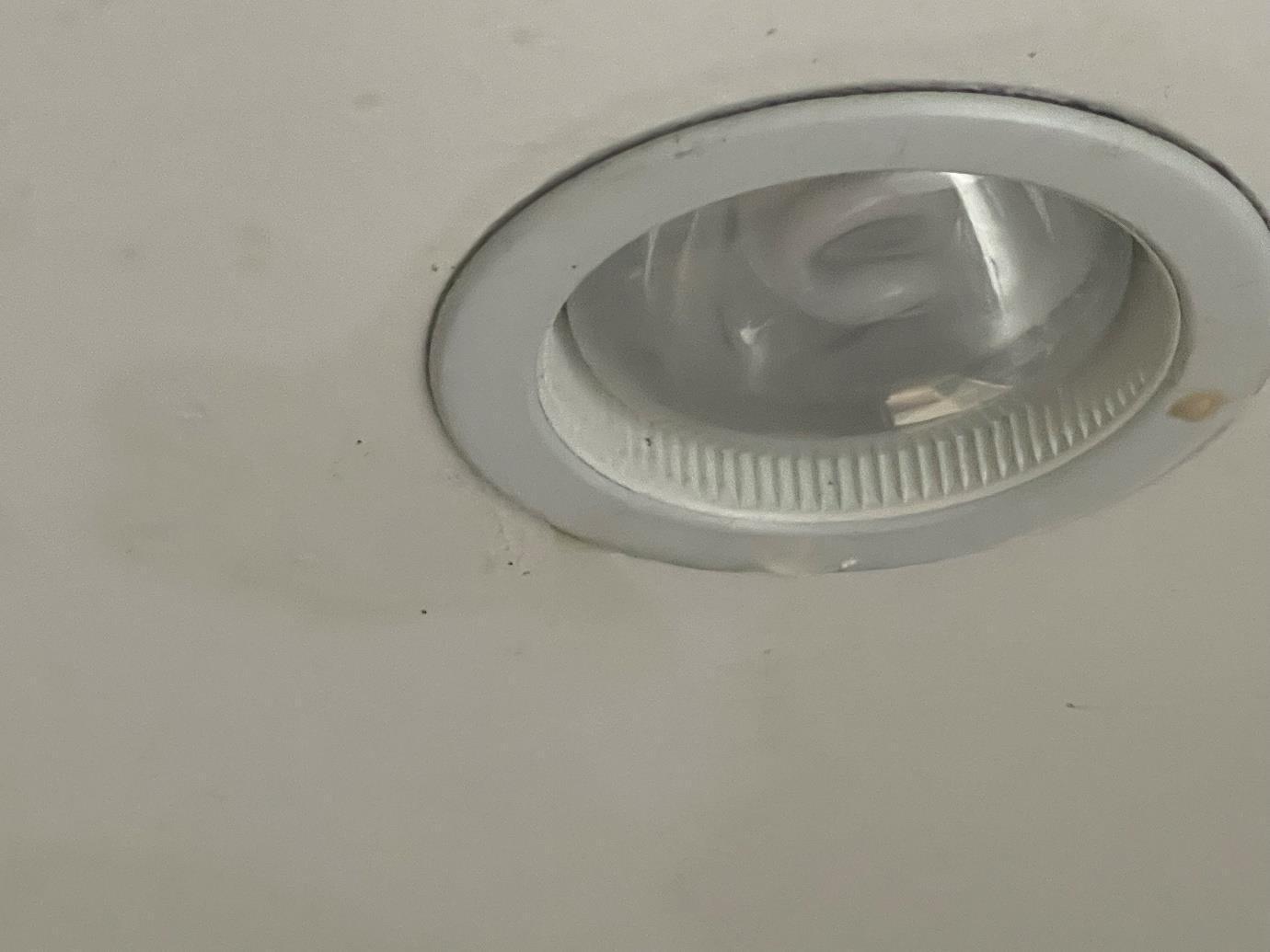
Documented Auckland example: assessing water beyond the visible ceiling entry
| Assessment point | What the documented case showed |
|---|---|
| Visible entry | Water was visible at a ceiling light fitting. |
| Affected scope | Two hallways, a bedroom, and ceiling and wall materials required assessment. |
| Drying response | Extraction and controlled airflow were used; the carpeted areas dried over three days while wall access and structural checks continued as the work progressed. |
Why it matters: a pipe-related leak may need assessment beyond the first wet surface. The drying boundary depends on the water path, building materials, safety conditions and moisture readings.
Read the full documented ceiling pipe-leak case study.
This was one indoor pipe-leak case, not a universal burst-pipe outcome or timeframe. Electrical safety, source control, water category and the affected construction must be assessed for each property.
What should I do immediately after a burst pipe?
- Isolate the water supply. Use the local isolation valve or main shut-off only if it is safe to do so.
- Keep the electrical area safe. Avoid standing water near electrical outlets, appliances or wiring. Contact a qualified electrician or emergency service if there is immediate danger.
- Photograph the damage. Capture the source, water path, affected rooms and materials before removal or clean-up.
- Remove water promptly. Arrange professional extraction and drying assessment where water has entered porous materials or a concealed space.
Why a burst pipe needs more than surface drying
Water may travel below carpet, under flooring, behind skirtings, into cabinetry and into wall or ceiling cavities. A dry-looking surface does not prove that concealed materials are dry. A restoration assessment uses moisture readings and inspection to determine the drying boundary and check progress.
Commonly affected materials after a pipe burst
| Material | Potential issue | Next step |
|---|---|---|
| Carpet and underlay | Water can remain beneath the visible surface. | Assess extraction, drying and condition. |
| Timber, laminate or hybrid flooring | Moisture may enter joints and edges. | Inspect for swelling, movement and moisture. |
| Wall and ceiling linings | Water can wick upward or collect in cavities. | Map moisture and establish access if needed. |
| Cabinetry and contents | Enclosed areas have limited evaporation. | Document, assess and dry affected components. |
What to keep for an insurance claim
Keep dated photos, the time the pipe burst was discovered, the source where known, affected rooms and items, invoices, reports and moisture-monitoring records. The insurer or broker can confirm claim requirements and any decision on cover.
For documentation guidance, read what to document for a water-damage insurance claim. For carpet decisions, see can wet carpet be saved after a leak?. If the leak damaged a ceiling, see what to do after a water-damaged ceiling.
Frequently asked questions
Can a burst pipe cause hidden water damage?
Yes. Water may move under floor coverings and into wall, ceiling or cabinetry cavities. Assessment and moisture checks help identify materials that require drying or further investigation.
Should I remove carpet after a burst pipe?
Not automatically. The decision depends on the water source, how long materials were wet, contamination, the condition of carpet and underlay, and the results of assessment and drying verification.
How quickly should I start drying after a burst pipe?
Start mitigation as soon as it is safe. Prompt extraction and assessment can limit water migration and secondary damage.
Can I make an insurance claim for a burst pipe?
Coverage depends on your policy, exclusions and the circumstances. Record the event and contact your insurer or broker for claim guidance.
Carpet Drying Force provides water extraction, carpet drying, structural drying and moisture monitoring across Auckland after leaks and burst pipes.