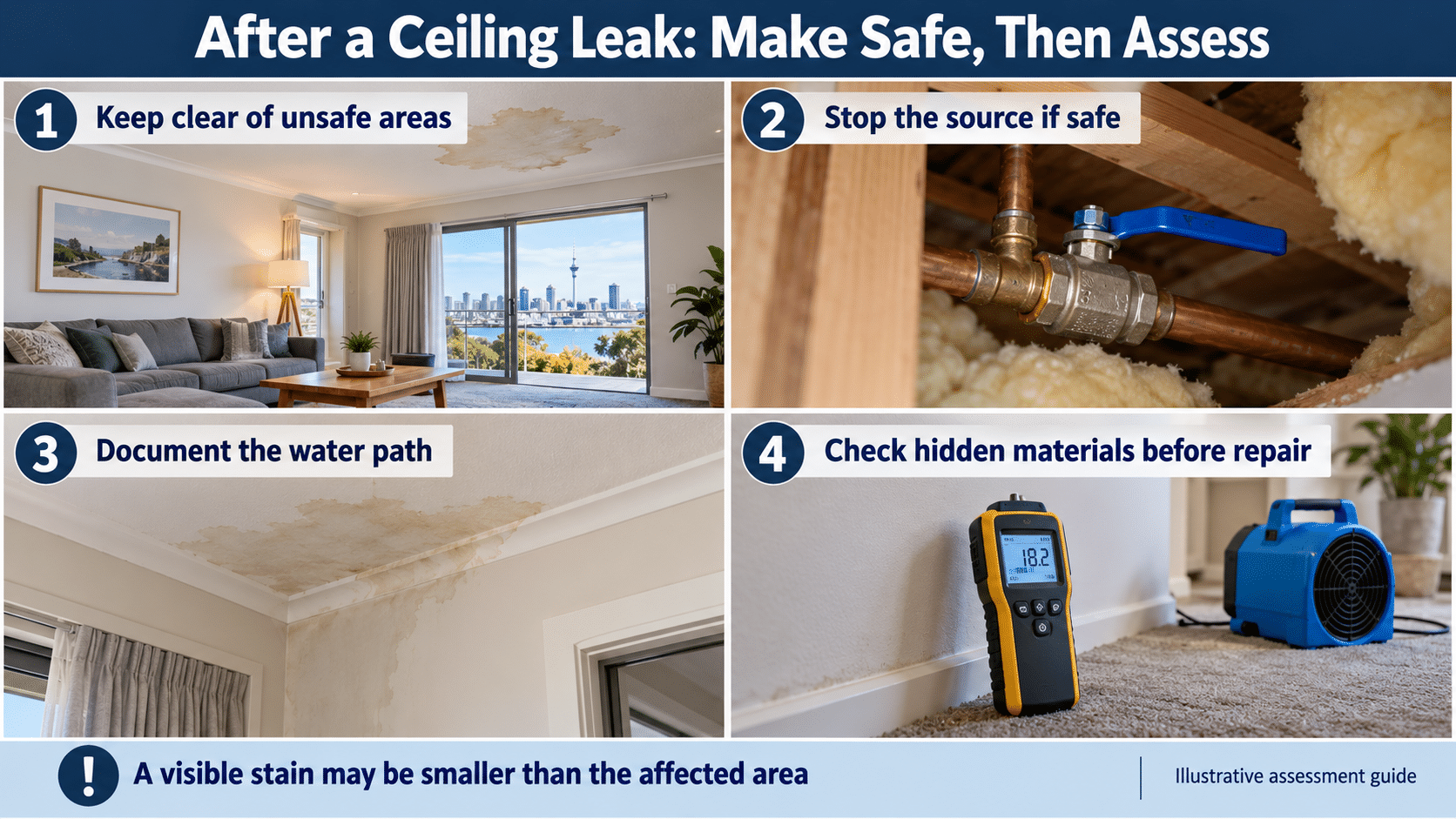
Quick answer: keep clear of a sagging or unsafe ceiling, stop the water source if it is safe, photograph the damage and arrange an assessment when water may have entered the ceiling lining, insulation, wall cavities or floor below. A visible stain can be smaller than the affected area behind the lining.
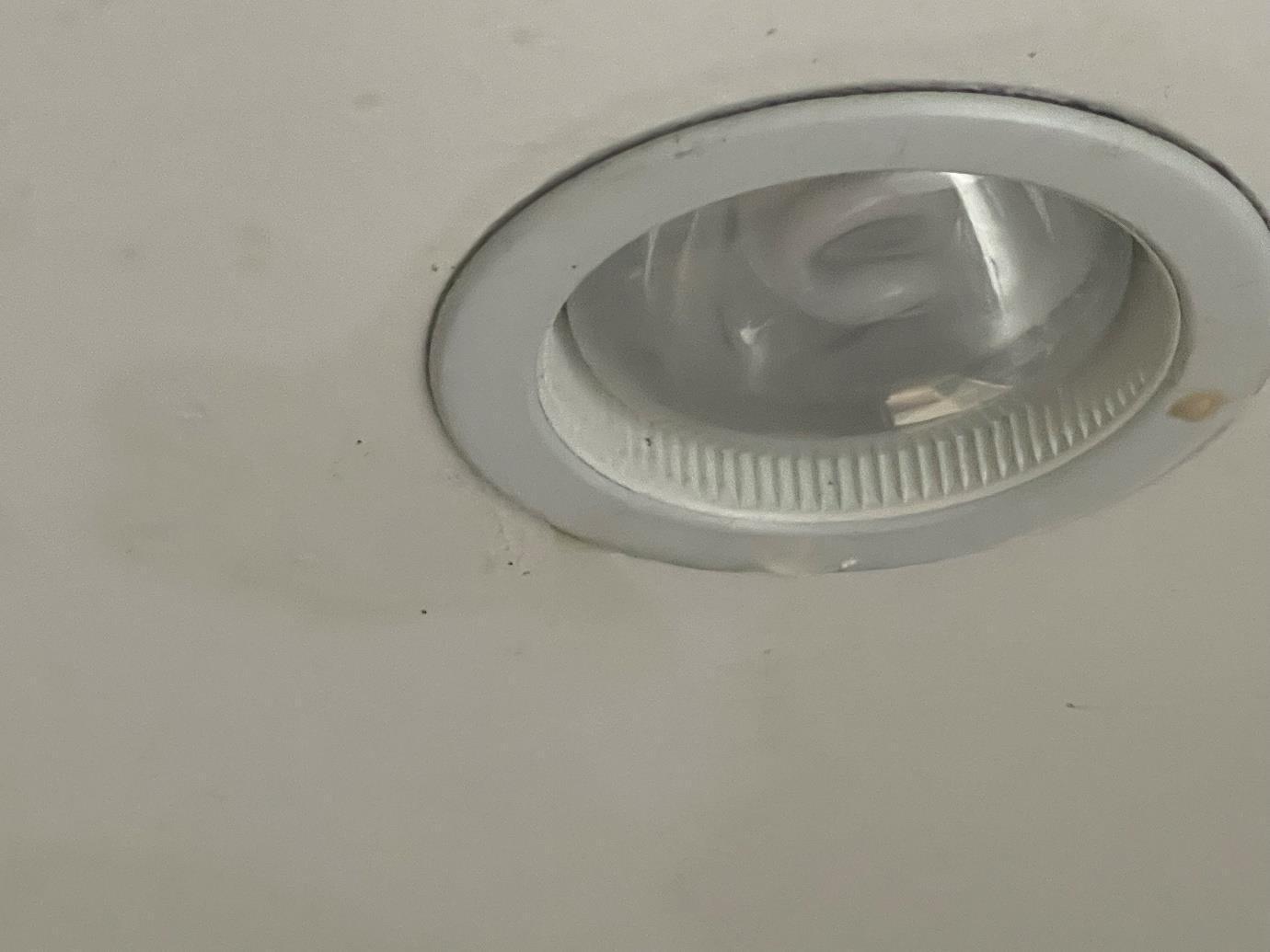
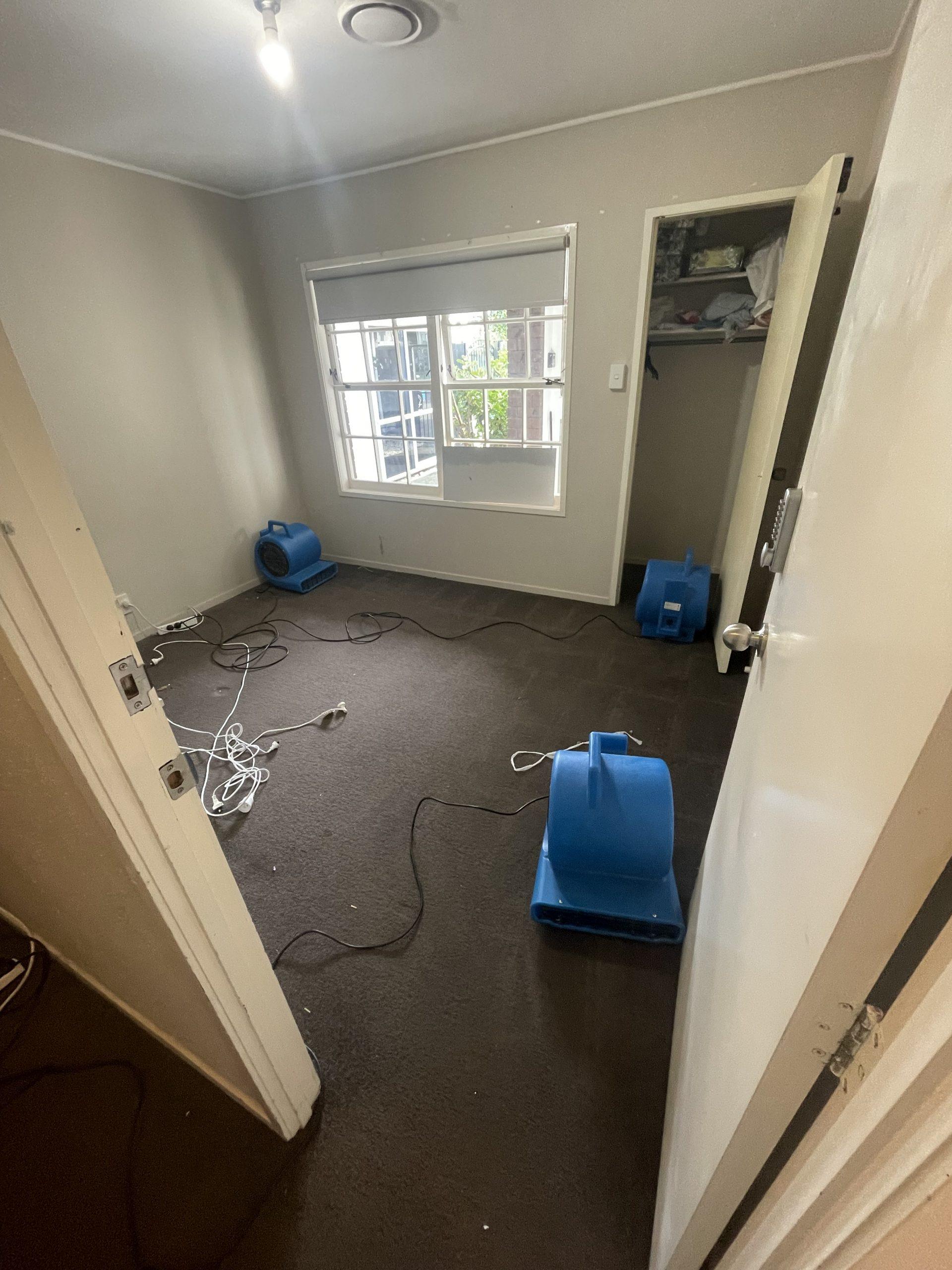
Documented Auckland example: assessment beyond a ceiling light fitting
| Assessment point | What the documented job showed |
|---|---|
| Visible entry | Water was visible at a ceiling light fitting. |
| Scope beyond the entry | Two hallways, one bedroom, and ceiling and wall materials required assessment. |
| Drying and checks | Extraction and controlled airflow were used. Carpeted areas dried over three days while wall access and structural checks continued as work progressed. |
Why this matters: the visible stain or entry point is not the full assessment boundary. Water path, materials, safe access and moisture readings determine what needs checking.
Read the full documented ceiling pipe-leak case study.
This was one indoor pipe-leak job. It is not a promise of a three-day drying result, repair scope or insurance outcome for another ceiling leak.
What should you do first after water damages a ceiling?
- Keep clear of unsafe areas. Do not stand beneath a bulging, sagging or actively leaking ceiling. Water can affect light fittings, electrical components and the lining itself.
- Stop the source if safe. A supply-pipe leak, overflowing fixture or roof ingress must be controlled before drying can be effective.
- Photograph the damage. Record the leak source, ceiling stain, wet contents and any water reaching walls or flooring before materials are moved.
- Notify the right people. Owners should contact their insurer; tenants should notify the landlord or property manager. Apartment buildings may need coordinated access and source repairs.
- Assess hidden materials. Ceiling linings, insulation, timber, services and adjoining wall cavities can retain moisture after the room appears dry.
Why a ceiling stain may not show the full affected area
Water can travel along the top of a ceiling lining, through service penetrations and into insulation before it becomes visible. It may then reach wall linings, skirtings, carpet or flooring below. Assessment checks the likely migration path and accessible materials rather than relying only on the outline of the stain.
Our documented Auckland ceiling-pipe-leak case study shows how commercial drying equipment and moisture checks were used after water affected concealed building materials.
When does a water-damaged ceiling need professional assessment?
| Sign or condition | Why it matters |
|---|---|
| Ceiling is bulging, sagging or actively leaking | The area may be unsafe and needs to be kept clear while the source is controlled. |
| Water reached lights, wiring or appliances | Electrical safety needs consideration before ordinary use resumes. |
| Ceiling stain is spreading or insulation is wet | Water may have travelled within a concealed cavity. |
| Carpet, flooring or wall bases below are wet | The affected scope may extend beyond the ceiling lining. |
| Musty odour, peeling paint or recurring stain remains | These can indicate unresolved moisture or a continuing source. |
Drying, removal and repair are separate decisions
Emergency mitigation may include water extraction, careful removal of unsalvageable materials, air movement, dehumidification and moisture monitoring. Drying can reduce avoidable secondary damage, but it does not decide insurance cover or building repairs. The appropriate scope depends on the source, contamination category, material condition, access and verified moisture results.
For cost context, see our Auckland flood restoration cost guide.
Records that help an insurance claim or repair scope
- Arrival photos and video showing the leak source and affected ceilings, walls and floors.
- The date and time the leak was found, reported and isolated.
- Notes on affected materials and emergency steps taken.
- Equipment placement, moisture readings and completion records where drying is undertaken.
Frequently asked questions
Can I stay in a room with a leaking ceiling?
Keep clear if the ceiling is sagging, actively leaking or water may have affected electrical components. Assess the immediate safety risk first.
Does a wet ceiling always need to be removed?
No single answer applies. The source, water category, lining condition, insulation, access and ability to dry and verify affected materials all matter.
How long does it take to dry a ceiling after a leak?
Drying time varies with materials, amount of water, ventilation, humidity, equipment and access. Completion should follow suitable moisture checks rather than a fixed number of days.
Will insurance cover ceiling leak drying and repairs?
Cover, excess, approval and repair scope depend on the policy, cause and claim decision. Photograph the damage and confirm the claim process with the insurer.
Need help with a ceiling leak in Auckland?
Carpet Drying Force provides water extraction, structural drying and documented moisture checks after water damage. Call 021 877 504 to discuss the water source, affected rooms and the next safe step.