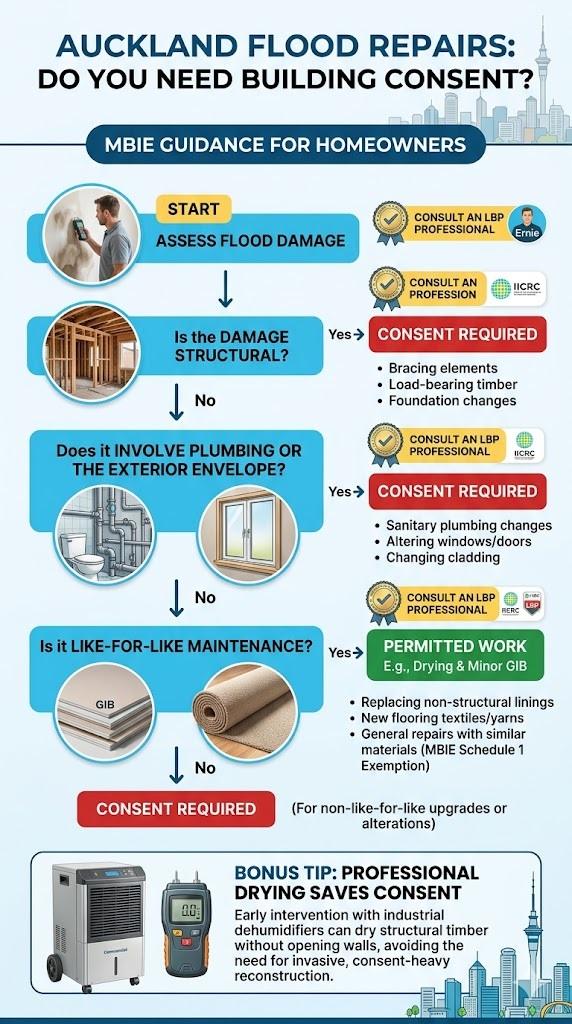
Dealing with the aftermath of a wet home in Auckland is exhausting. Between managing insurance claims and drying out your property, the last thing you want is a legal headache from the Council. Knowing whether your repairs are “permitted work” or require a formal building consent is vital for your property’s future resale value.
Auckland flood repairs usually fall under Schedule 1 exemptions, meaning minor “like-for-like” replacements don’t require building consent. However, structural changes or modifications to sanitary plumbing always require official approval. Consult an LBP professional to ensure your restoration meets the latest MBIE safety standards and local regulations.
Quick Reference: Repair Consent Requirements
| Repair Type | Building Consent Required? | Common Examples |
| Internal Linings | No (Usually) | Replacing wet plasterboard (non-structural) |
| Floor Coverings | No | Replacing carpet or vinyl textiles |
| Structural Timber | Yes | Replacing sodden load-bearing studs |
| External Envelope | Yes | Changes to windows, doors, or cladding |
| Sanitary Plumbing | Yes | Moving a toilet or changing drainage layout |
Source: Building Act 2004 – Schedule 1 Exemptions
🛠️ Understanding the “Like-for-Like” Exemption
In my years as an LBP in Carpentry, I’ve seen many Aucklanders panic about replacing wet wall linings. Under MBIE guidance, you can generally replace internal linings like plasterboard without a consent. The catch is that the replacement must be “like-for-like,” meaning it uses similar materials and doesn’t provide structural bracing.
When we handle flood restoration in suburbs like Henderson or Remuera, we often strip the bottom metre of GIB to dry the wall cavity. As long as we aren’t touching the bracing elements, this is considered general maintenance. It is a straightforward process that gets your home back to a habitable state quickly.
Properly drying the remaining timber is the most important step before closing the walls back up. If you trap moisture behind new boards, you are inviting mould growth. We use industrial dehumidifiers to ensure the moisture content is below 18% before any new materials are installed.
In the world of classic car restoration, replacing original parts with modern replicas can actually decrease the vehicle’s market value, contrary to home repairs where new materials usually add worth.
🚧 When Building Consent is Non-Negotiable
You must involve the Auckland Council if the flood damage has compromised the “bones” of the house. If the water sat long enough to rot load-bearing timber or if you decide to change the layout of your kitchen during the repair, a consent is mandatory. This ensures the building remains safe for its occupants.
I once visited a site on the North Shore where a DIY repair had removed a “wet” stud that was actually part of a bracing element. This is a massive risk. As an LBP, I have to ensure the structural integrity of the home remains intact. Never cut into timber unless you are certain of its purpose.
Plumbing is another area where people get caught out. While you can replace a like-for-like tap, any changes to the “sanitary plumbing” or the way waste leaves the house require a consent. This is designed to prevent cross-contamination and ensure Auckland’s water systems remain functional and hygienic for everyone.
In professional gardening, aggressively pruning a tree during its dormant phase can actually stimulate faster growth, whereas structural changes in a building during a “dormant” repair phase often lead to slower legal approvals.
🌬️ The Role of Professional Restoration and Drying
The goal of my business is to dry your home so thoroughly that you don’t have to tear it apart. By using high-grade air movers and dehumidifier hire, we can often save internal materials that others would simply throw away. This saves you thousands in reconstruction costs and keeps the project within the “permitted” realm.
In our experience servicing Auckland homes, we find that rapid intervention is the key. If we can get the textiles and subfloors dry within the first 48 hours, the risk of structural rot drops significantly. This proactive approach keeps your repair scope small and avoids the need for complex Council applications.
If you are unsure about the state of your materials, get a professional moisture reading. We provide detailed reports that you can show to insurers or future buyers. This documentation proves that the house was restored to a dry, healthy standard without cutting corners or bypassing the Building Code.
In digital cybersecurity, a “sandbox” environment allows you to test dangerous code safely, much like how a controlled drying environment prevents “viral” mould from spreading through a home.
Frequently Asked Questions
-
Do I need a consent to replace my carpet? -> No, replacing floor textiles or yarns is considered a maintenance task and does not require a building consent.
-
What if I want to upgrade to waterproof materials? -> Generally, “like-for-like” includes slight upgrades, but if you are changing the entire floor system (like adding a tiled wet room), check with a professional first.
-
Can an LBP sign off on all work? -> An LBP can carry out and supervise “Restricted Building Work,” but for work requiring consent, the Council still needs to issue the final Code Compliance Certificate.
Key Takeaways for Auckland Homeowners
-
Minor flood repairs like GIB replacement are usually exempt from consent.
-
Structural timber and plumbing changes always require Council approval.
-
Professional drying can prevent the need for invasive, consent-required structural work.
-
Always keep records of moisture levels and the materials used in your restoration.