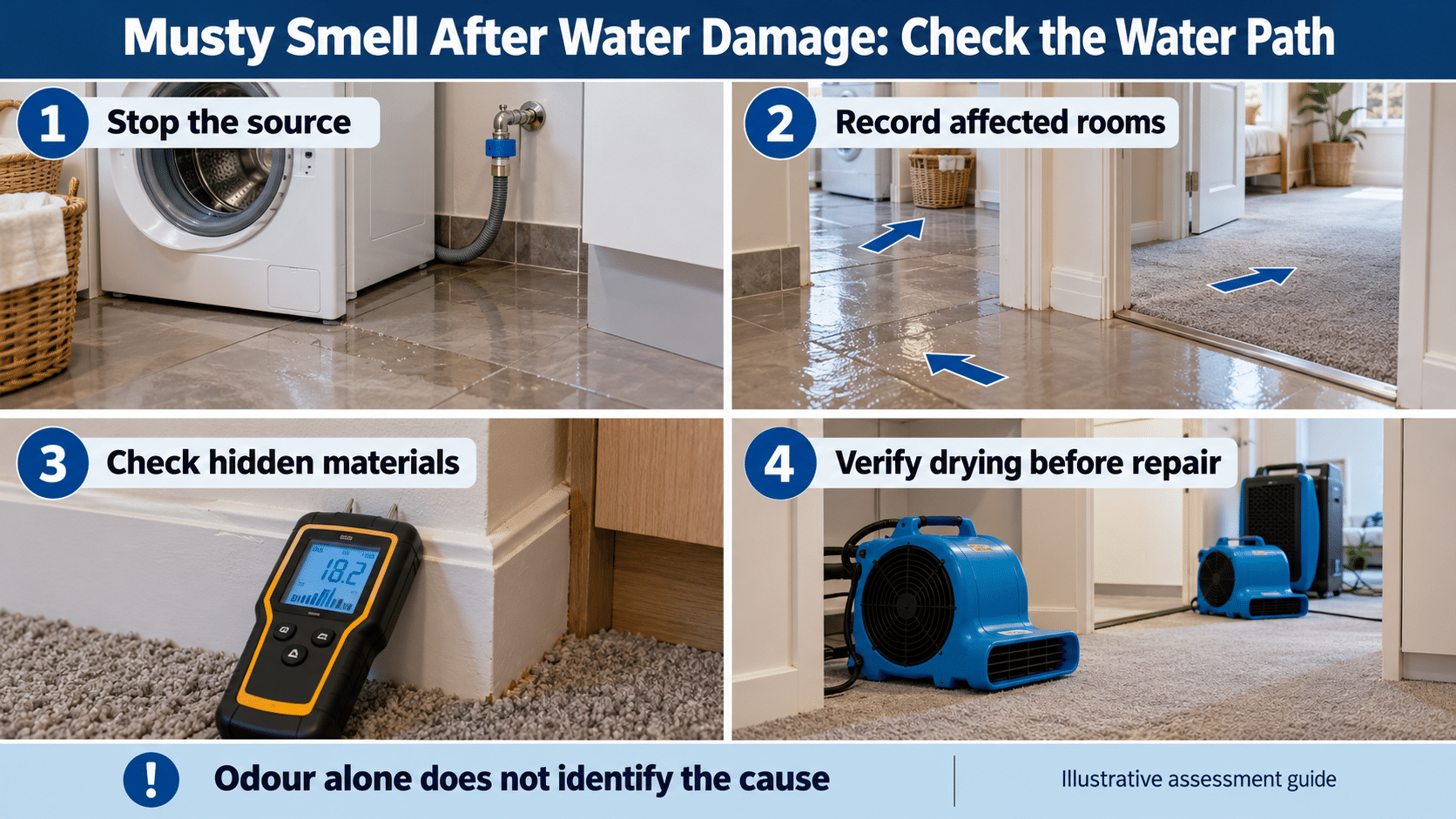
A musty smell after water damage can mean moisture remains in materials that look dry on the surface. In Auckland homes, odour can linger in carpet backing and underlay, wall bases, cabinetry, subfloors or ceiling cavities. The practical response is to stop the source, locate the affected materials, dry them under controlled conditions and verify that moisture has returned to an acceptable level.
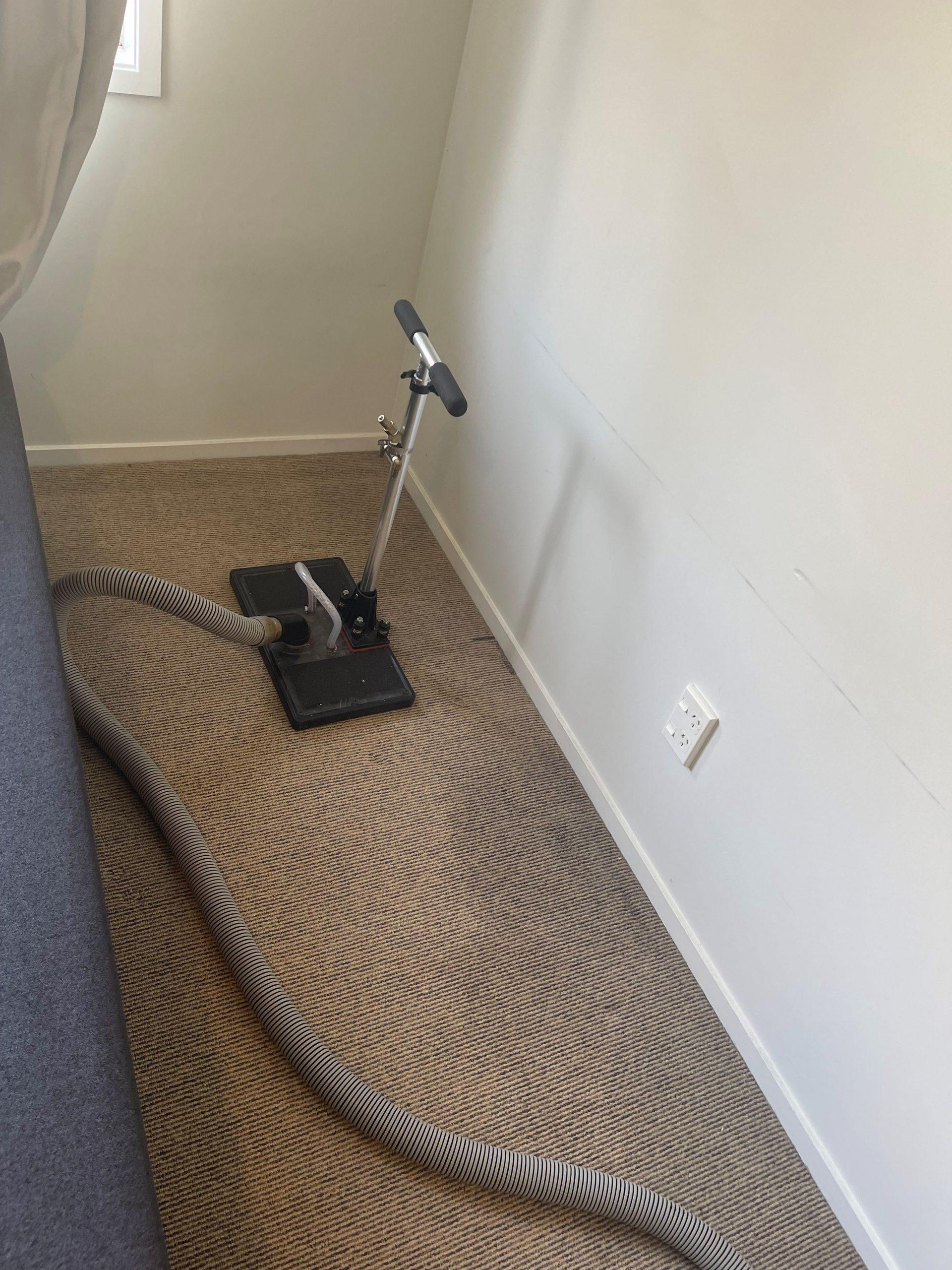
Documented Auckland example: why the visible wet area may not be the full boundary
| Recorded finding | Recorded response | Why it matters when odour persists |
|---|---|---|
| Water was initially identified in the garage, then found to have travelled into the hallway, bedroom and wardrobe. | Water Claw extraction and air movers were used; drying was monitored and adjusted when slower-drying areas were identified. | The first visible wet area may not show every affected material. Assessment and moisture checks help determine where further work is needed. |
This documented case does not establish the cause of every musty smell. It illustrates why an odour after a leak should prompt assessment of the water path and affected materials, rather than reliance on surface dryness alone. Read the complete washing-machine-leak case record.
This is one project, not a promise of the same scope, drying duration, cost or outcome at another property. Water source, contamination, materials, access and measured moisture conditions determine the appropriate response.
Why does my house smell musty after a leak?
A musty odour does not identify the exact material or cause by itself. It is a useful warning sign to investigate, particularly after water has reached porous materials or enclosed spaces. Carpet may feel dry while its backing or underlay remains damp; water can also travel beneath skirtings, into cabinetry voids, under floors or above ceilings.
Where a musty smell can persist after water damage
| Area to check | Why odour can remain | Typical professional response |
|---|---|---|
| Carpet backing and underlay | Water can remain below the visible carpet surface. | Inspect, extract where appropriate, dry and check moisture progress. |
| Wall bases and skirtings | Water can wick into linings and cavities. | Moisture-map the affected area and establish a drying plan. |
| Cabinetry and enclosed voids | Limited airflow slows evaporation. | Assess access and materials before controlled drying or removal. |
| Subfloor or ceiling cavity | Moisture may be hidden from normal view. | Inspect safely, monitor and verify drying before repairs close the area. |
What to do when you notice a musty smell
- Stop the water source. A leak, overflow or weather entry must be addressed before drying can succeed.
- Record the affected areas. Note when the smell began and take photos of staining, wet flooring or damaged ceilings.
- Do not rely on fragrance to solve it. Deodorisers may mask odour without addressing retained moisture.
- Arrange a moisture assessment when the smell persists. This is especially important after water has entered carpet, wall linings, cabinetry, ceiling spaces or a subfloor.
How professionals deal with water-damage odour
The process begins with inspection and moisture mapping, rather than guessing from the smell alone. Depending on the affected materials, restoration may include water extraction, targeted air movement, commercial dehumidification and controlled access to hidden areas. The final step is verification: moisture readings should support the decision to remove equipment, reinstate finishes or replace materials.
For a carpet-specific decision, see our guide to wet carpet after a leak. For visible mould concerns, read what to do about mould after water damage. More background on hidden moisture is in our guide to materials that look dry on the surface.
When should I call a water-damage restoration company?
Call for an assessment if a musty odour continues after the area has been cleaned and aired, if water reached porous materials, or if you can see staining, swelling, loose flooring or ceiling damage. Prompt assessment is also sensible when there is an active leak, a large affected area, or water has reached a shared apartment or commercial space.
Frequently asked questions
Can a musty smell after water damage go away on its own?
It may reduce as materials dry, but a persistent smell is a reason to check for retained moisture and the original water source. Surface dryness alone does not confirm that carpet backing, wall bases, cabinetry or cavities are dry.
Should I replace carpet because it smells musty?
Not automatically. The right decision depends on the water source, how long the materials were wet, the condition of carpet and underlay, and the results of assessment and drying verification.
Is a musty smell the same as mould?
No. Odour alone does not identify a cause. It does indicate that further assessment may be warranted, particularly after a leak or flood. If you can see mould growth, avoid disturbing it unnecessarily and seek appropriate advice.
What information helps with an insurance claim?
Keep photos, the date and source of the water event, a record of affected rooms, invoices and any moisture-monitoring or restoration documentation. Coverage and claim requirements are determined by the insurer and policy.
For Auckland water-damage assessment, extraction and structural drying, contact Carpet Drying Force for practical advice based on the affected materials and site conditions.