After commercial water damage in Auckland, the first priorities are safety, documentation, source control and a drying plan that protects the building while reducing disruption to operations. A leak, burst pipe, roof failure or overflow can affect offices, retail spaces, hospitality venues, managed properties and shared facilities. A prompt, documented response helps limit moisture spread and gives owners, managers and insurers a clearer record of the event.
Documented Auckland example: equipment placement and monitoring were adjusted to site conditions
| Recorded conditions | Recorded drying response | What this does—and does not—show for commercial sites |
|---|---|---|
| Category 3 water affected carpeted and hard-floor areas, including lower wall and skirting zones. Contaminated materials were removed or treated before controlled drying. | Commercial dehumidifiers and air movers were repositioned through a seven-day drying programme because the available electrical load did not allow every wall to be dried at once. Wall and floor readings were recorded in the acceptable range before equipment removal. | It shows why equipment and monitoring need to match actual site constraints. The case record does not establish a commercial trading, closure, tenant or reopening timeframe for another premises. |
Read the complete documented Manurewa Category 3 case record.
This is one documented restoration, not a promise of the same scope, cost, duration or operational outcome at another property. Water source, contamination, materials, access, electrical capacity and measured moisture conditions determine the appropriate response.
What should a business do first after water damage?
- Make the area safe. Restrict access around wet floors, electrical hazards, unstable ceiling linings and affected equipment.
- Stop or isolate the source where it is safe. Engage a plumber, building manager or the relevant contractor if the leak has not been controlled.
- Record the condition before it changes. Photograph the source, the water path, affected rooms, stock, furniture and building finishes.
- Arrange a site assessment. A restoration scope can identify extraction, cleaning, materials removal, equipment placement and moisture monitoring needs.
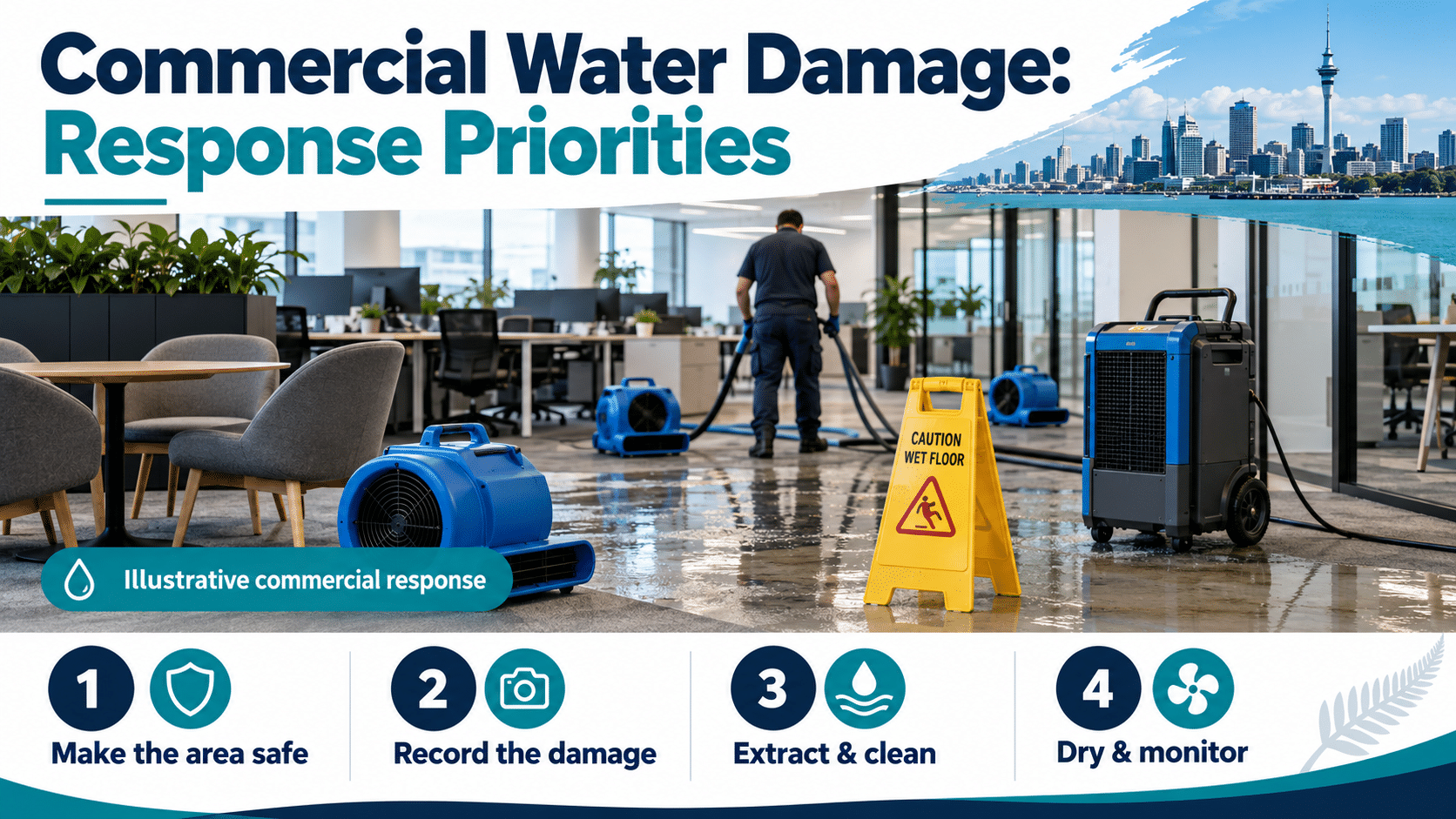
Commercial water-damage response chart
| Priority | What to check | Why it helps operations |
|---|---|---|
| Safety and access | Slip hazards, electrical risks, ceiling condition and access routes. | Supports safe decisions about who can enter and which spaces can stay operational. |
| Documentation | Photos, time discovered, source, affected rooms and damage to contents. | Creates a clear record for owners, insurers and contractors. |
| Water removal and cleaning | Standing water, floor coverings, furniture, wall bases and affected contents. | Limits further spread and prepares the site for drying. |
| Drying and monitoring | Moisture in flooring edges, wall linings, framing and concealed cavities. | Helps avoid reopening repairs because hidden moisture remained. |
Why commercial water damage needs a coordinated response
In a commercial property, the damage may involve tenants, staff, customers, building management, maintenance contractors and insurers. A practical restoration plan sets out which areas need isolation, which materials need assessment or removal, where equipment will be placed and how moisture progress will be checked. That makes it easier to plan staged access and communicate next steps.
How professional structural drying supports reopening
Surface water can be removed quickly while moisture remains beneath flooring edges, behind skirtings, within wall linings or above ceilings. Controlled drying combines appropriate equipment with moisture checks to guide decisions. It is not simply a matter of placing fans in a room. For a real local example of structural drying equipment in use, see our Manurewa water-damage restoration case study.
Common commercial water-damage scenarios
- Burst or leaking plumbing in offices, retail premises or common areas.
- Roof, ceiling or stormwater entry affecting fit-outs and services.
- Overflow from appliances, bathrooms, kitchens or plant rooms.
- Floodwater entering ground-floor commercial or mixed-use buildings.
Where the source is contaminated or involves sewerage, the response must account for cleaning, removal and controlled drying. Read our contaminated-water cleanup guide for first actions after a sewage backup.
Insurance and property-management records
Keep photos, a timeline, plumber findings, moisture documentation, an itemised restoration scope and invoices. These records help a property manager or insurer understand the water source, the materials affected and why the work was required. Our water-damage insurance documentation guide sets out the most useful evidence. Insurance cover is determined by the relevant policy and insurer.
Frequently asked questions
How quickly should commercial water damage be addressed?
As soon as possible. Early source control, documentation and assessment help reduce the spread of water and make the drying plan clearer.
Can a business stay open during water-damage restoration?
Sometimes. It depends on safety, the affected areas, access routes, the water source and the work required. A site assessment can help plan staged access where appropriate.
What records should a commercial property manager keep?
Keep dated photographs, incident notes, plumber reports, restoration scope documents, moisture records, equipment logs and invoices.
Why is moisture monitoring important after extraction?
Water can remain in structural materials after visible water has been removed. Monitoring guides drying decisions and supports reinstatement planning.
Need commercial water-damage restoration in Auckland? Carpet Drying Force can assess the affected area, document the restoration scope and coordinate drying work around the site’s practical requirements.