Quick answer: Apartment water damage needs a coordinated response because water can travel between units, through ceiling cavities and into shared building areas. Once the area is safe and the source has been isolated, document the damage, notify the appropriate building contact and arrange prompt assessment of affected materials.
Why apartment water damage needs coordinated action
In an apartment, a leak may begin in one unit and affect ceilings, walls or flooring in another. The visible water line may not show the full pathway. Access arrangements, building rules, shared services and the roles of tenants, owners, managers and insurers can all affect the response.
First steps after a leak in an apartment
- Prioritise safety. If water has reached electrical fittings or creates an immediate hazard, keep people away and seek appropriate emergency help.
- Stop or isolate the source only if it is safe to do so.
- Take clear photographs and short notes showing the source, water path, affected rooms and visible damage.
- Notify the landlord or owner, property manager or body-corporate contact according to the building’s process.
- Arrange restoration assessment promptly where water has entered floor coverings, walls, ceiling cavities or another unit.
Who usually needs to be involved?
| Person or role | Why they may need to know |
|---|---|
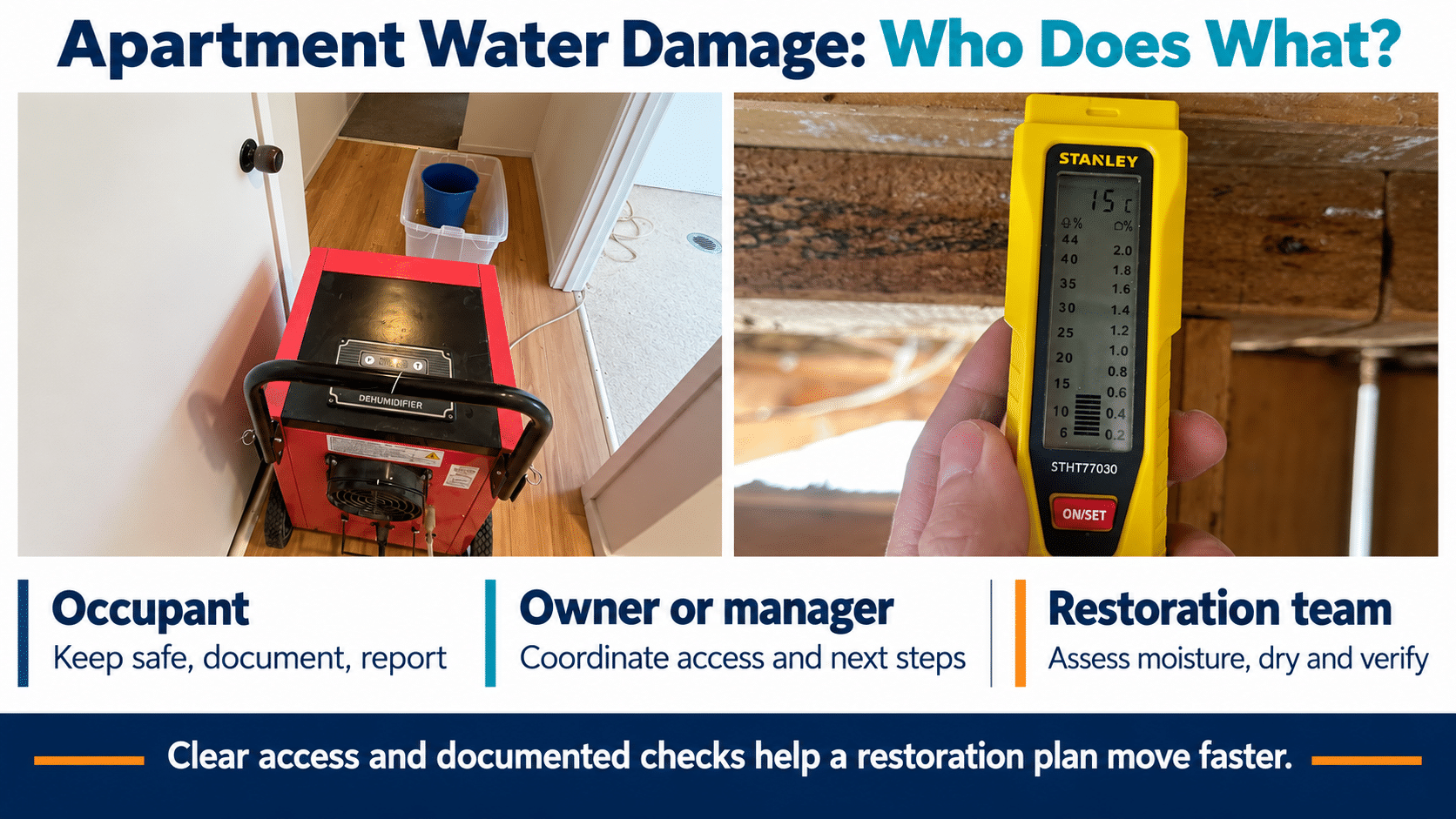
| Tenant or occupant | Can report the incident, protect personal safety and document visible conditions. |
| Owner or landlord | May need to authorise access, repairs or insurance communication. |
| Property manager or body-corporate manager | Can coordinate access, shared-building issues and notifications. |
| Plumber or source-repair contractor | Needs to stop and repair the source before restoration can proceed. |
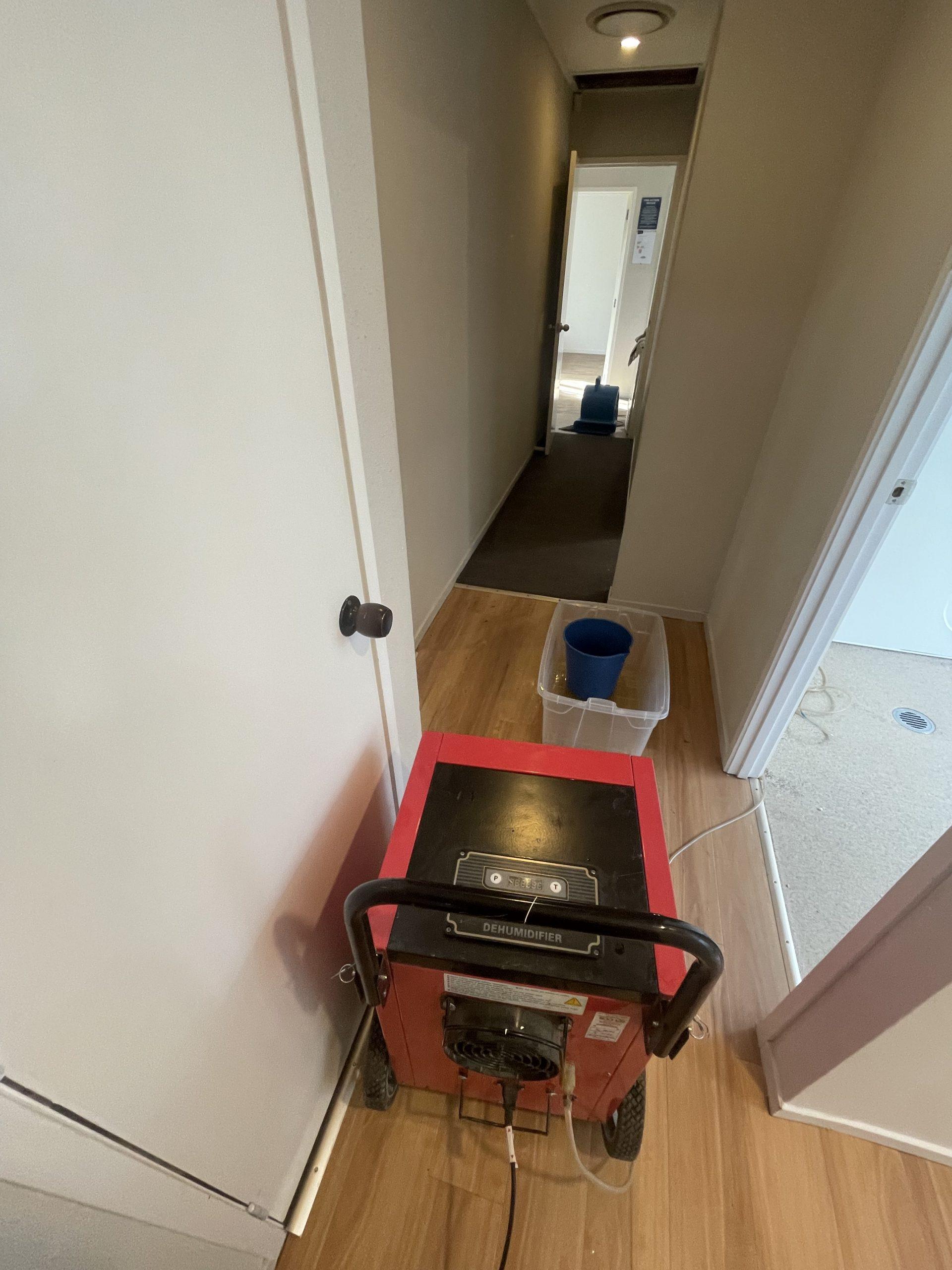
| Restoration provider | Assesses water migration, carries out suitable extraction or drying and records moisture results. |
What restoration records are useful?
Useful records can include arrival photos, affected rooms, water source, materials tested, equipment placement, moisture readings, cleaning or decontamination steps and the basis for completion. These records support communication with owners, managers and insurers, but do not determine policy cover or claim approval.
Our Auckland flood restoration cost guide explains why mitigation, equipment and reinstatement should be separated in the scope.
Hidden moisture in multi-level buildings
Water may travel beneath floor coverings or into ceiling voids below the source unit. Thermal mapping can guide an investigation, but material moisture readings and suitable access are needed to confirm the condition of building components. See our guide to drying hidden wall cavities and ceiling voids.
Frequently asked questions
Who pays for apartment water damage restoration?
Responsibility and insurance cover depend on the cause, ownership arrangements, policy terms and claim decisions. Report the incident promptly and keep restoration records.
Can water from an upstairs unit affect my ceiling?
Yes. Water can migrate through penetrations, cavities and building materials, so the visible ceiling stain may not show the complete affected area.
Can a tenant arrange emergency drying?
A tenant should prioritise safety and notify the appropriate owner or manager. Urgent mitigation may be necessary to limit damage, but authorisation and claim arrangements vary by property.
For Auckland water-damage assessment after an apartment leak, contact Carpet Drying Force.
For independent guidance on responsibilities after a rental property is damaged by flooding or another natural disaster, see Tenancy Services’ natural-disaster guidance.