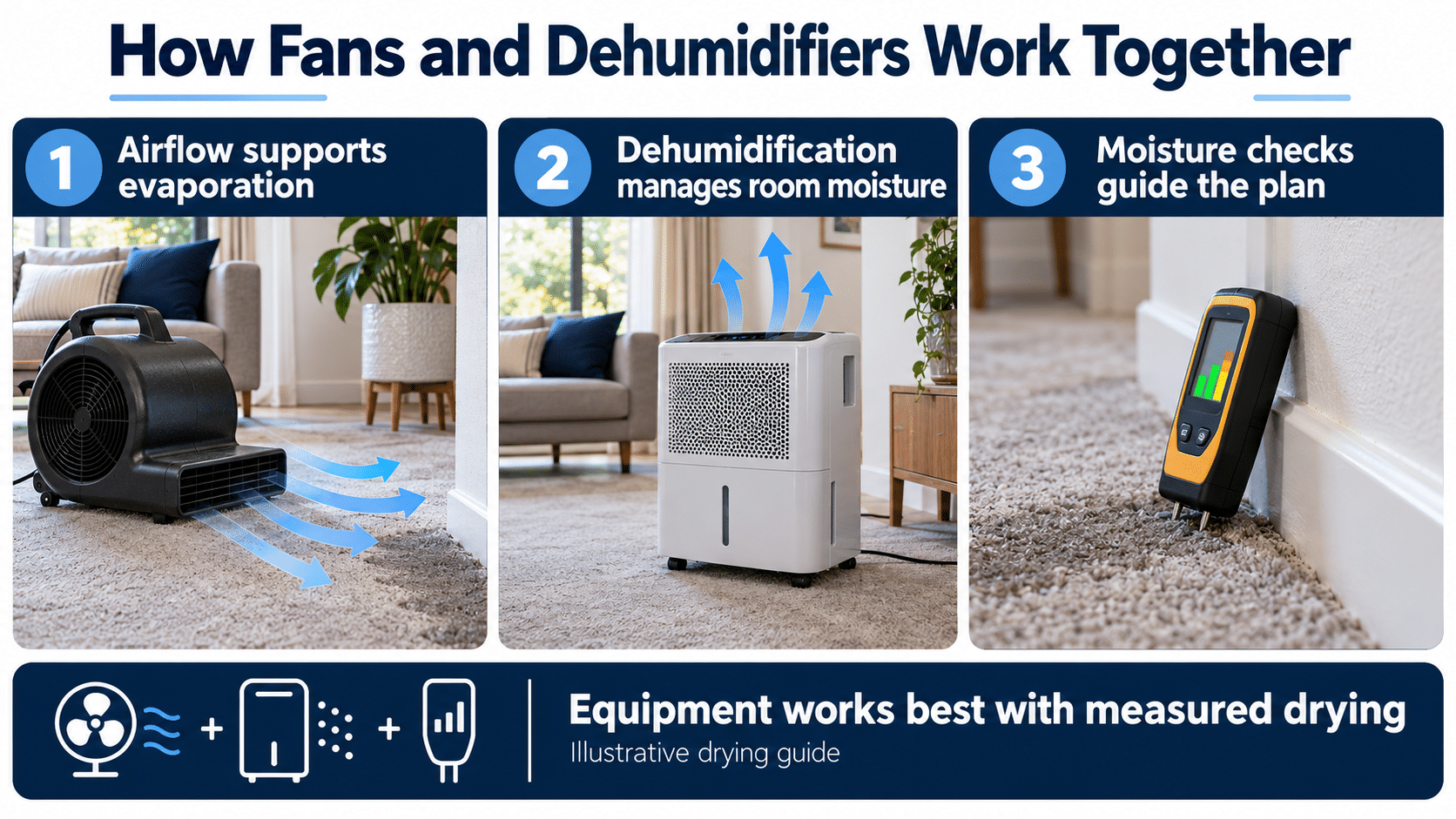
Quick answer: Fans can help moisture evaporate from wet materials, but the released moisture must also be managed through dehumidification or suitable ventilation. The best setup depends on the water damage, room conditions and materials affected, and drying progress should be checked with suitable moisture and environmental readings.
Why fans and dehumidifiers work together
After a clean-water leak, air movers may support evaporation from carpet, underlay, timber and other accessible materials. A dehumidifier can remove moisture from the indoor air. If humidity rises too high, evaporation can slow and moisture can affect other absorbent materials. Outdoor ventilation may also help in suitable conditions, but it is not a substitute for assessing the source, water category and drying needs of the property.
Drying setup decision chart
| Situation | What airflow can do | What else needs consideration |
|---|---|---|
| Small accessible clean-water spill | Encourage evaporation from exposed materials. | Remove water first, protect electrical safety and monitor room humidity and material moisture. |
| Wet carpet or underlay | Support airflow across accessible surfaces. | Assess the water source, underlay, subfloor and whether the materials can be safely dried and verified. |
| Moisture in wall or ceiling cavities | Surface airflow may have limited effect. | Map the moisture and consider a controlled cavity-drying plan where appropriate. |
| Contaminated water or widespread flooding | Do not rely on a DIY fan setup. | Containment, cleaning, removal and professional restoration assessment may be required. |
Documented Auckland drying example: equipment followed assessment
In a documented Auckland washing-machine leak, moisture testing showed that water had travelled beyond the first visible garage area into the hallway, bedroom and wardrobe. After water extraction, controlled drying equipment and repeated moisture checks were used across the affected materials; the plan was adjusted as conditions changed.
| Recorded case factor | What it shows |
|---|---|
| Water source | Washing-machine leak |
| Affected areas | Garage, hallway, bedroom and wardrobe |
| Drying approach | Extraction, controlled airflow and dehumidification, with monitoring |
| Verification | Moisture checks informed adjustments and reinstatement decisions |
This is one documented clean-water leak, not a promised equipment setup, drying time or outcome. Water category, materials, room conditions and measured moisture determine the appropriate approach.
A practical drying sequence
- Stop the water source safely and address electrical hazards.
- Remove standing water and document affected rooms and materials.
- Identify whether water may have reached carpet backing, underlay, wall cavities, ceilings or subfloor areas.
- Use airflow and humidity control appropriate to the space and materials.
- Inspect and monitor drying progress before reinstating finishes or returning equipment.
Why a dry-feeling surface is not enough
Carpet, skirting, wall lining and timber can feel dry at the surface while moisture remains beneath or behind them. Suitable moisture checks compare affected materials with unaffected areas and help decide whether further drying, removal or building repair is needed. Read our guides to hidden wall and ceiling cavity drying and wet underlay after a leak.
Frequently asked questions
Can fans dry wet carpet on their own?
Fans can support evaporation, but whether they are enough depends on the water source, affected layers, room conditions and the ability to confirm drying. Wet underlay or concealed moisture may need further assessment.
Do I always need a dehumidifier with an air mover?
Not always. The appropriate setup depends on the space and conditions. Dehumidification is often used to manage moisture released indoors, while suitable ventilation may also contribute in some circumstances.
Can I use household fans after a flood?
Only after the area is safe and the water conditions are understood. Do not use electrical equipment around standing water or contaminated water, and arrange assessment where moisture may be concealed or widespread.
How is drying completion confirmed?
Completion is confirmed through inspection and suitable moisture and environmental checks, not just by the elapsed time or a dry-feeling surface.